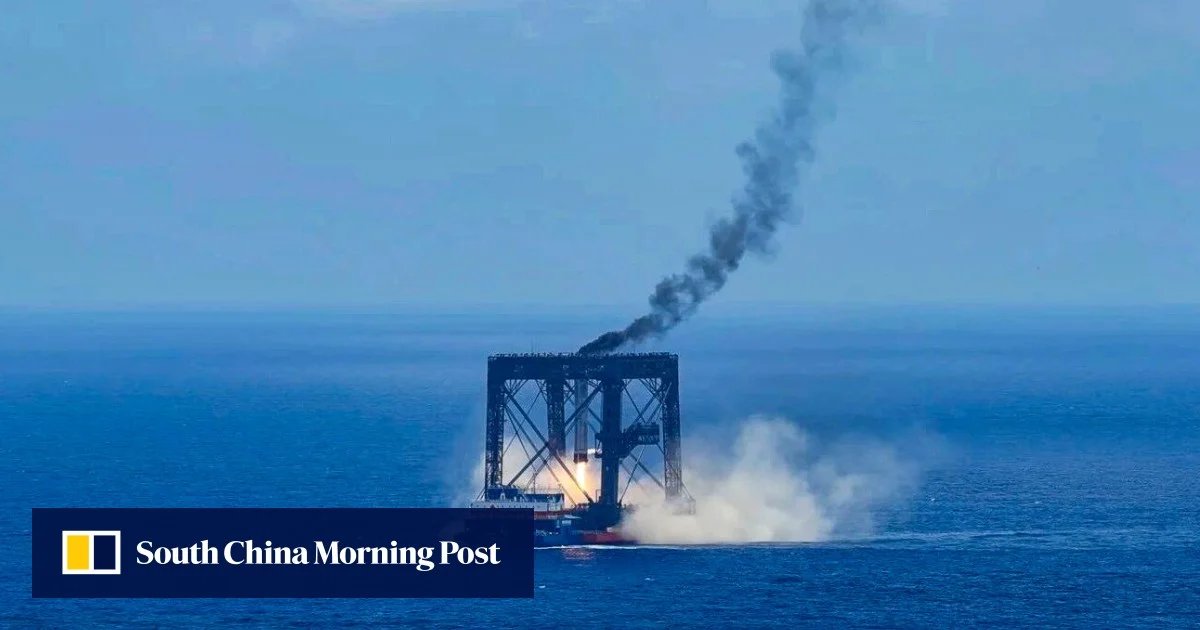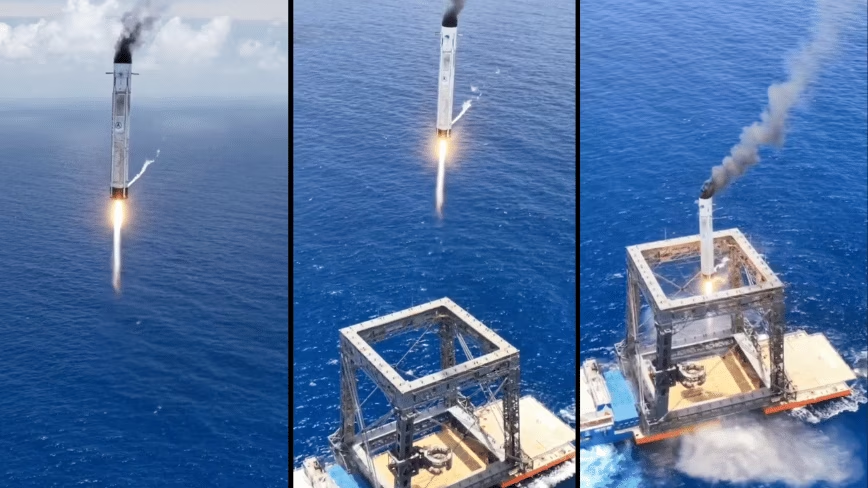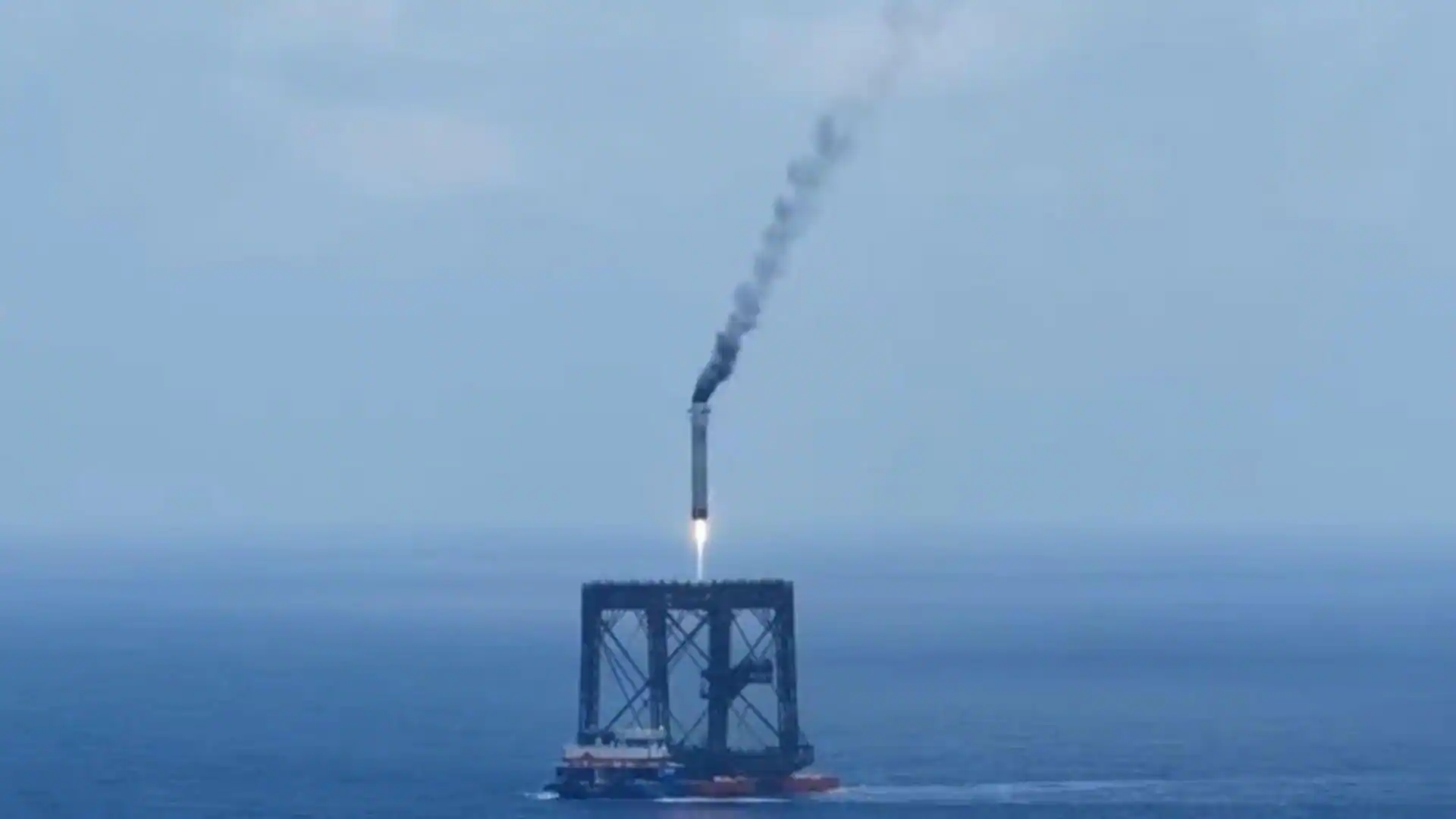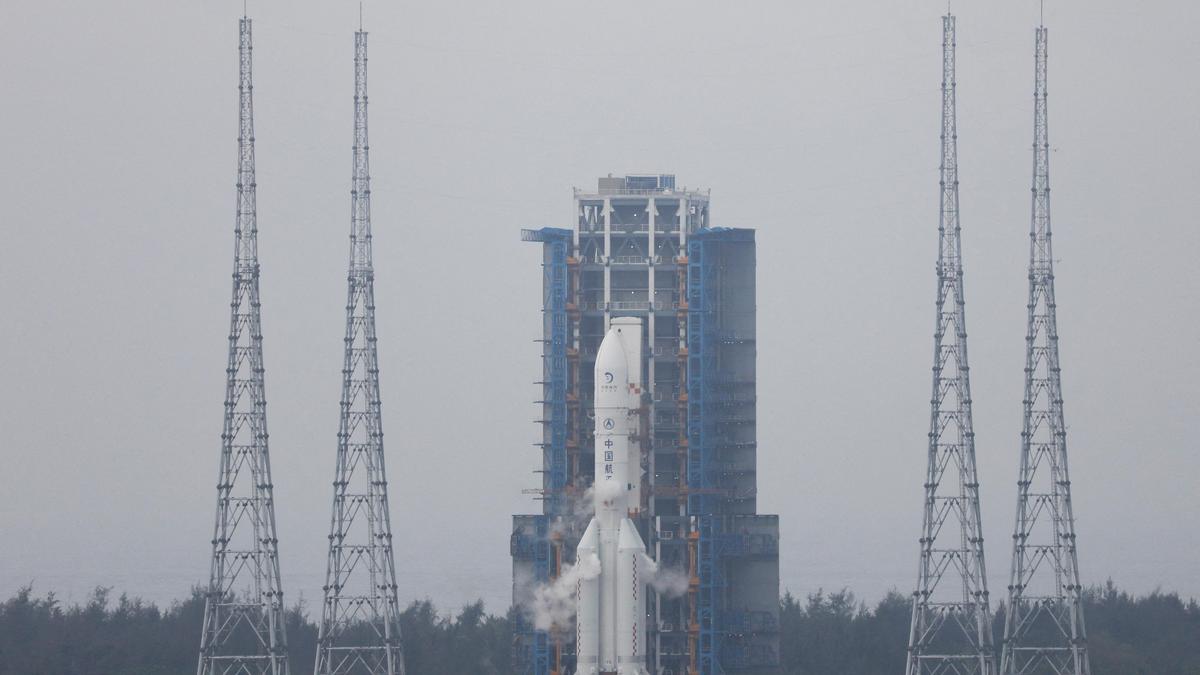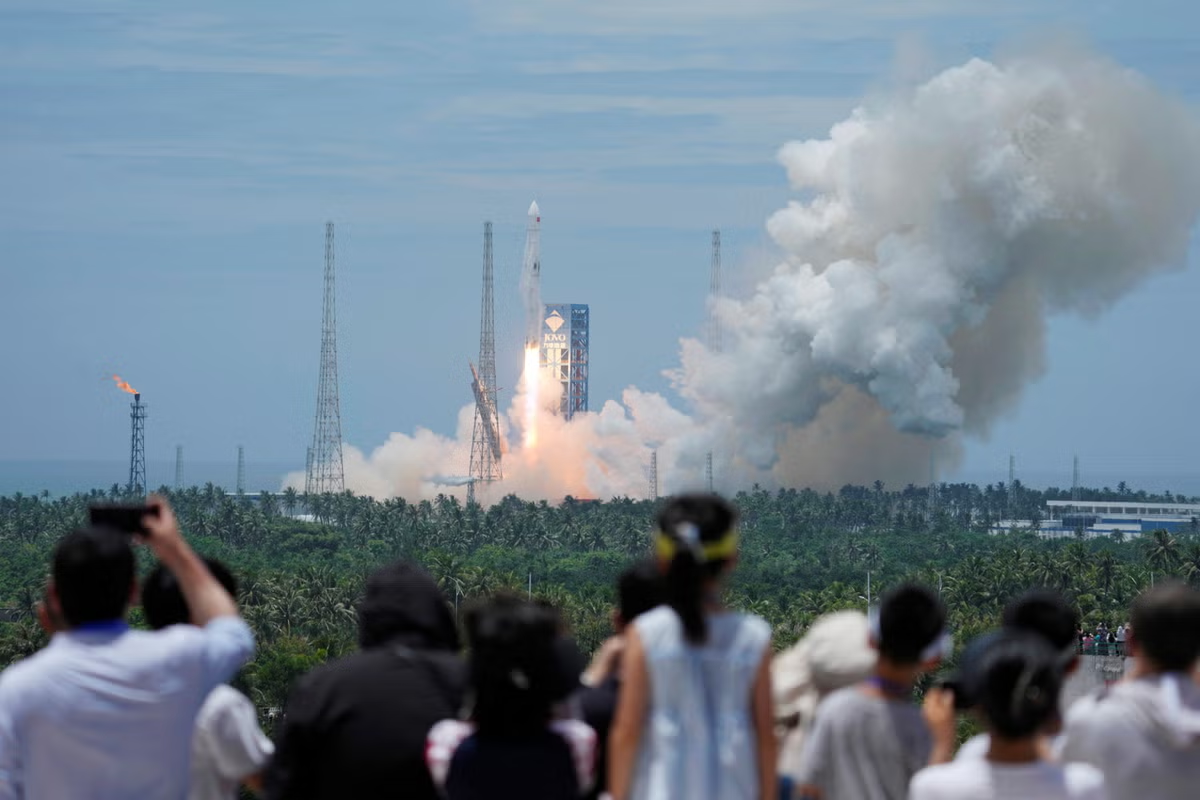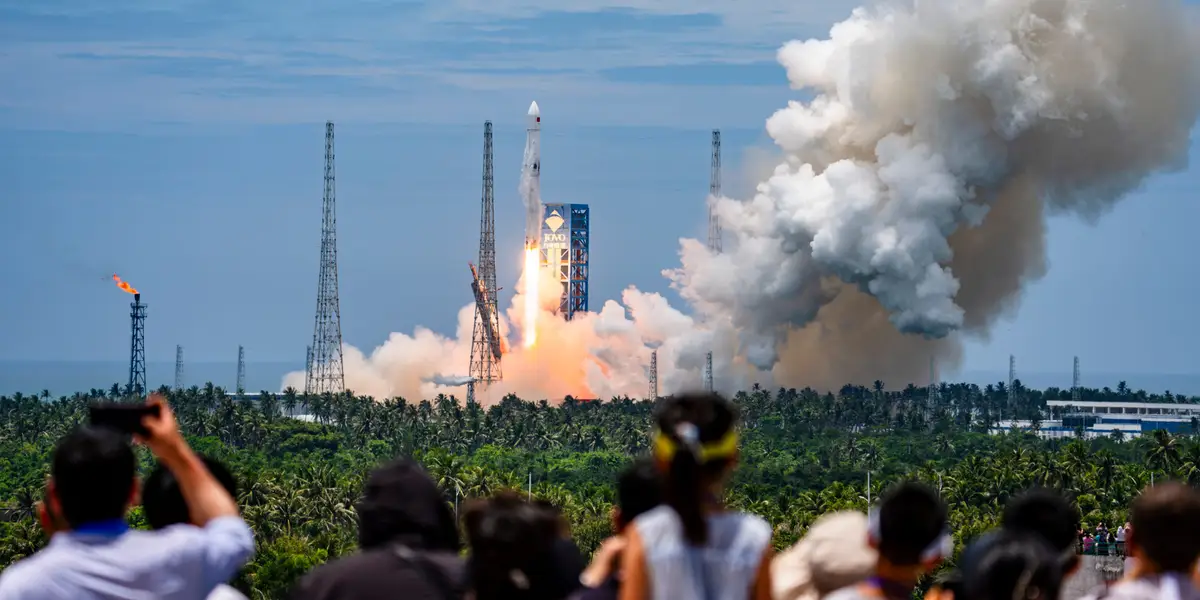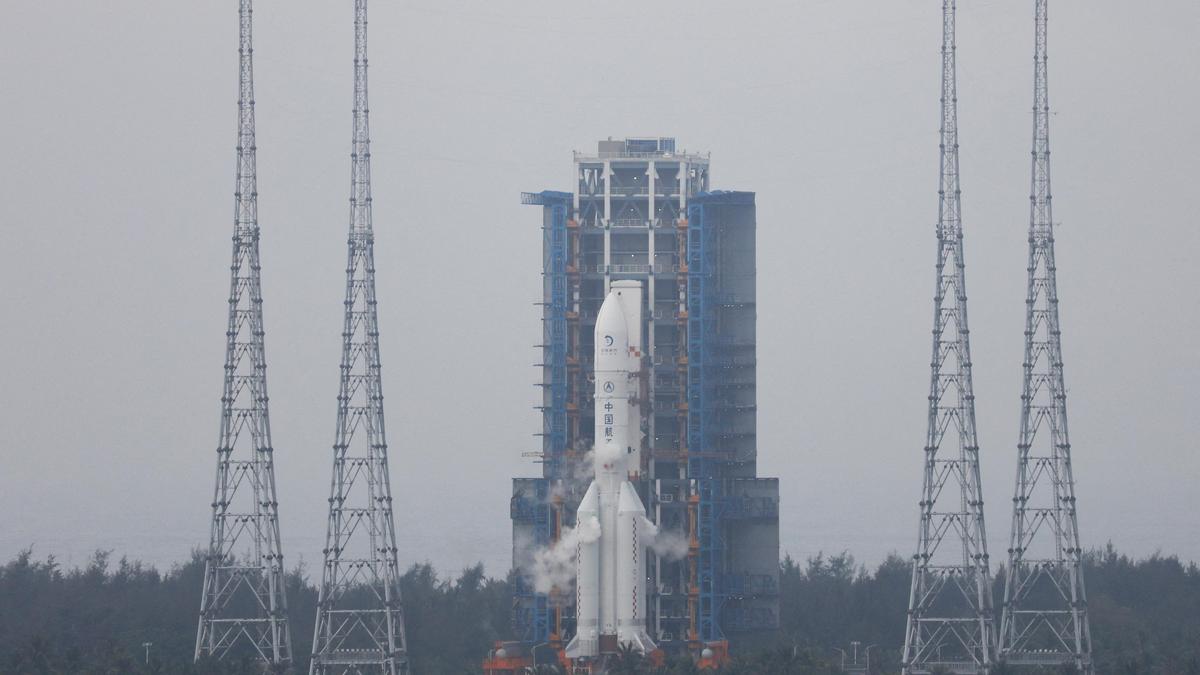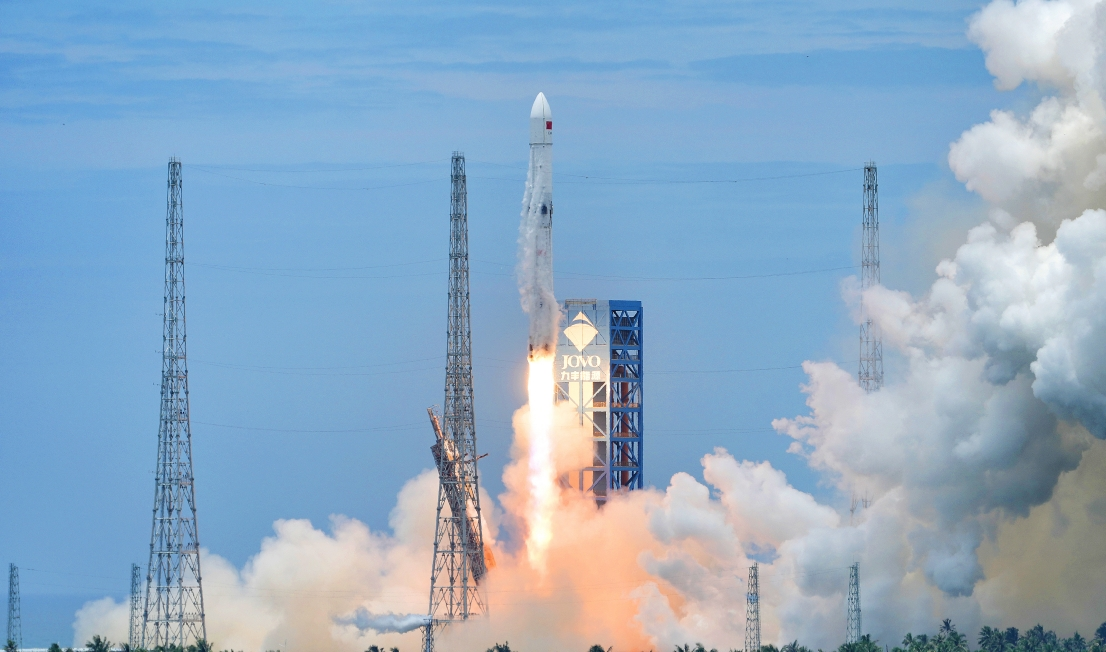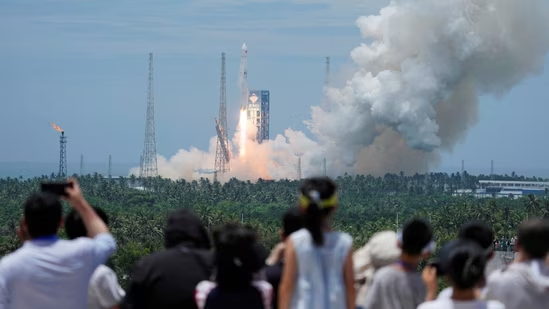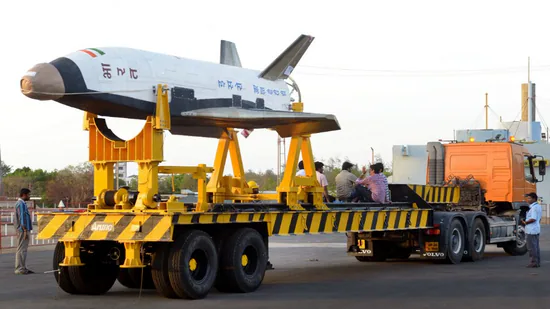
From helicopter drop-tests to a still-unscheduled orbital trial, what Isro's RLV programme has achieved, and how it differs from SpaceX and China. China's recovery of a rocket booster for the first time on Friday — using a net-and-hook system to catch the Long March-10B's returning first stage on a sea platform — has renewed attention on which nations and companies are chasing reusable rocket technology.Isro's winged vehicle in the RLV programme. (Courtesy: Isro)China is only the second nation, after the US, to recover an orbital-class rocket booster intact. The company behind Friday’s launch, China Aerospace Science and Technology Corporation, is the third in the world to master the feat — after SpaceX’s Falcon 9 in 2015, and Blue Origin’s New Glenn in November 2025.India has a programme too, though there’s no confirmed timeline for it as yet.India's programmeThe Indian Space Research Organisation (Isro) began working on reusable launch vehicle (RLV) technology in 2010, with the long-term goal of a two-stage-to-orbit (TSTO) launch vehicle. Under the plan, the first stage of the rocket — instead of being discarded — would fly back and be reused.The programme's first key flight test came on May 23, 2016, when Isro launched the Reusable Launch Vehicle-Technology Demonstrator (RLV-TD) from Sriharikota, Andhra Pradesh.The winged vehicle, similar to an aircraft with a fuselage, nose cap, double delta wings and twin vertical tails, was boosted to Mach 5 by a conventional solid booster before being released to test hypersonic flight, autonomous navigation and a reusable thermal protection system.Isro said that under the mission, known as HEX, the vehicle glided down towards a hypothetical runway over the Bay of Bengal. A precise landing on an actual runway was not among the mission's objectives, which meant that HEX validated the physics of hypersonic re-entry, but did not record an actual recovery.Isro returned to the runway-landing test seven years later. On April 2, 2023, it conducted the RLV Autonomous Landing Mission (RLV LEX) at the Aeronautical Test Range in Chitradurga, Karnataka.Also read: Over a decade after SpaceX, China successfully lands rocket booster with hooks & a net. How different is the tech?The Isro booster and the winged prototype (Courtesy: Isro)An Indian Air Force Chinook helicopter carried the winged RLV to an altitude of 4.5 km and released it mid-air. The vehicle then used its onboard navigation, guidance and control systems to approach and land autonomously on the airstrip, touching down at a landing speed of roughly 350 km per hour.Isro described the helicopter-drop method as a world first for a winged body.A second, tougher version of the test — RLV LEX-02 — followed on March 22, 2024, at the same range. This time, the winged vehicle, named Pushpak, was deliberately released off its ideal flight path — both sideways and along its approach line — to test whether it could correct course entirely on its own.It could. The vehicle adjusted mid-flight and landed precisely on the runway, braking to a stop using a parachute, its landing-gear brakes and a steerable nose wheel.The same airframe and flight systems used in LEX-01 were reused for LEX-02 after recertification, demonstrating the reusability of the flight hardware itself.S. Unnikrishnan Nair, then the director of Vikram Sarabhai Space Centre (VSSC) — Isro's lead centre for launch vehicle design — had said in an official statement that the repeated success helped Isro master autonomous terminal-phase manoeuvring and energy management, a critical step towards the agency's future missions.The next step is the planned RLV Orbital Re-entry Experiment (ORE), in which an orbital re-entry vehicle would be carried into orbit atop an ascent stage built using technology already proven on Isro's existing GSLV and PSLV rockets. It would then stay in orbit for a set period, before re-entering and landing autonomously on a runway: the first genuine test of an orbital-class Indian RLV. No date is known for this.Also read: India and Pakistan: Space competition and governance challengeThe winged vehicle's structure (Courtesy: Isro)How the technology differsThe three programmes — by the US's SpaceX, China, and India — are meant to recover a spent rocket stage intact, but with three different approaches.SpaceX's Falcon 9 booster performs a powered, vertical descent. Its Merlin engines execute a series of braking burns, and the booster touches down upright on landing legs, either on a ground pad or a floating drone ship.Also read: Vikram-1, India’s first private orbital rocket to launch this monthThe Falcon 9 rocket by SpaceX, at Cape Canaveral Air Force Station in Florida. (Reuters File)China's Long March-10B booster also returns vertically under engine power, but instead of legs, it deploys four hooks that catch a net strung across a sea-based platform — a design that its maker says simplifies the rocket’s onboard structure, cuts its mass, and adds payload capacity.Both are, fundamentally, propulsive landings: the rocket's own engines do the work of slowing and controlling the final descent.India's RLV differs fundamentally. It is an unpowered glider in its last phase, with Isro describing it as a “space plane” with a low lift-to-drag ratio and no engine fires during the landing itself. It is a lifting body that uses its wings, elevons (flaps on the trailing edge of the wings) and rudder to control an aerodynamic descent, much like an aircraft or a scaled-down space shuttle, before touching down horizontally on a runway using conventional landing gear, brakes and a parachute.There is no landing burn — the rocket-engine fire that SpaceX and China use to slow their boosters — and no vertical touchdown at all.Isro says the winged vehicle is a prototype that is meant to be scaled up into the first stage of a fully reusable two-stage orbital launch vehicle — conceptually similar to SpaceX and China's approach, but arriving back on Earth by a completely different route.Also read: Before India's space milestone, Isro had to put a 673kg satellite on a bullock cartIn this photo released by Xinhua News Agency, a drone photo shows the capturing of the returned first stage of Long March-10B carrier rocket on a seaborne platform via a net-capture system near Wenchang in southern China's Hainan province (Xinhua via AP)Where the programme standsSpaceX has been recovering and reflying Falcon 9 boosters routinely for a decade. China achieved its first-ever orbital-class booster recovery only on Friday — but it happened during an actual orbital satellite launch. India has not yet attempted an orbital-class recovery.Asked about the programme in February this year, Isro chairperson V. Narayanan said the space agency does not see itself as racing SpaceX. “We don't consider this as competition with anybody," he told reporters in Pune, while acknowledging that reusable rockets are more cost-effective and that Isro was actively working towards the technology.He described the programme as being at an experimental stage, without offering a timeline for operational deployment. The remarks came as Isro was also working through recent setbacks with its workhorse PSLV rocket after two mission failures in May 2025 and January 2026.Prerna Madan leads the explainers and immersives team at Hindustan Times, bringing more than eight years of editorial experience across India's three largest English-language newsrooms — Hindustan Times, The Times of India and The Indian Express. Her career spans the full range of modern news journalism: digital-first production, print news desks covering metro, national, and front-page, and editorial decision-making at the planning and commissioning stage. From managing coverage of Assembly elections and the Union Budget to steering the reporting, editing and production of in-depth reporting into the Delhi-NCR’s pressing issues, Prerna has honed journalistic storytelling that spans genres, topics and formats. Running through her current work is a facility for complexity — translating consequential, difficult material in the fields of policy, science, environment and politics into rigorous, accessible journalism that sets out to answer two critical questions: why it matters, and what happens now. Prerna holds a degree in English Literature from the University of Delhi and a postgraduate diploma from the Indian Institute of Mass Communication.Read More
SpaceX Falcon lands on legs, China's on a net — how will Isro's reusable rocket come home?
From helicopter drop-tests to a still-unscheduled orbital trial, what Isro's RLV programme has achieved, and how it differs from SpaceX and China. | India News
1,318 words~6 min read