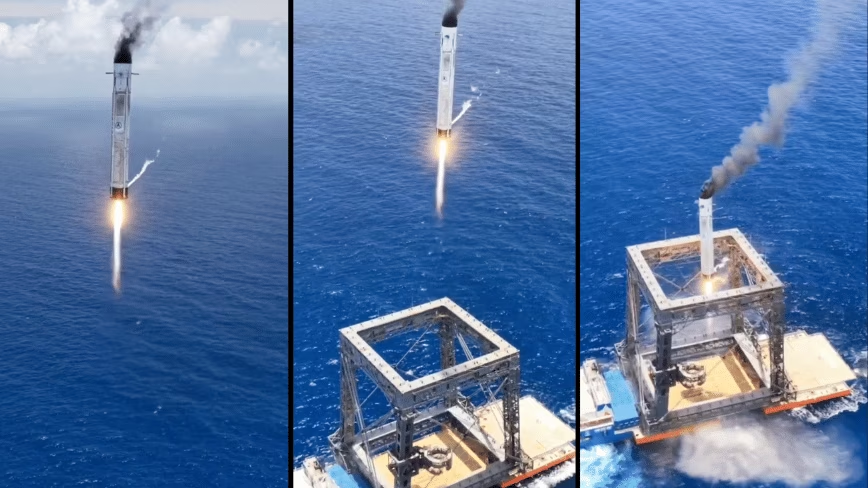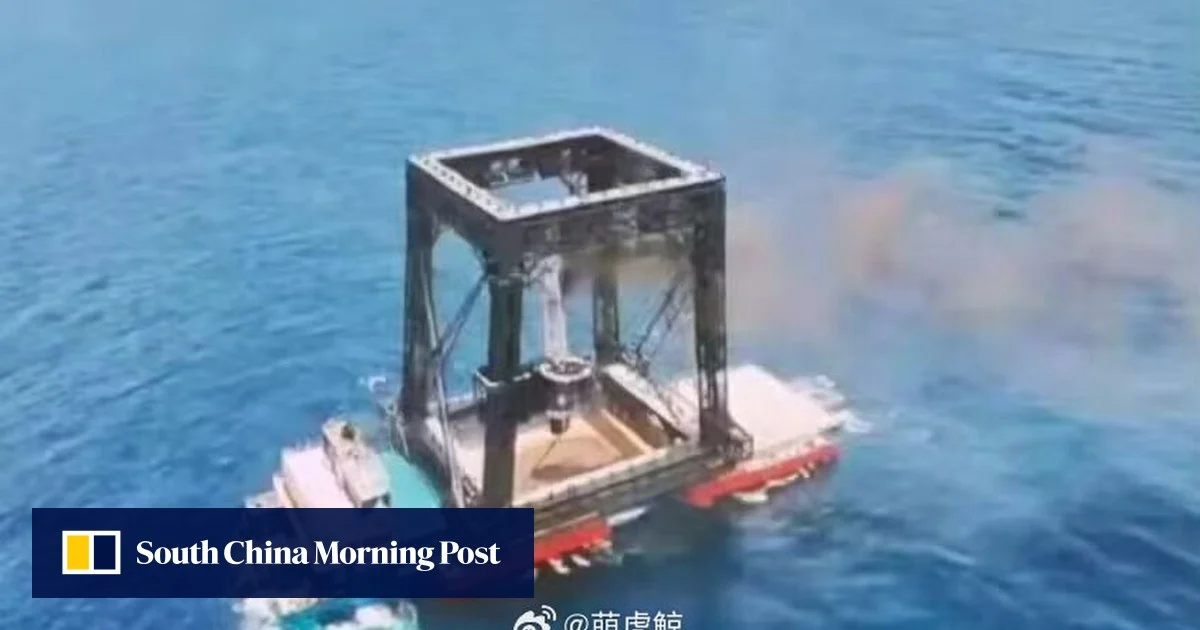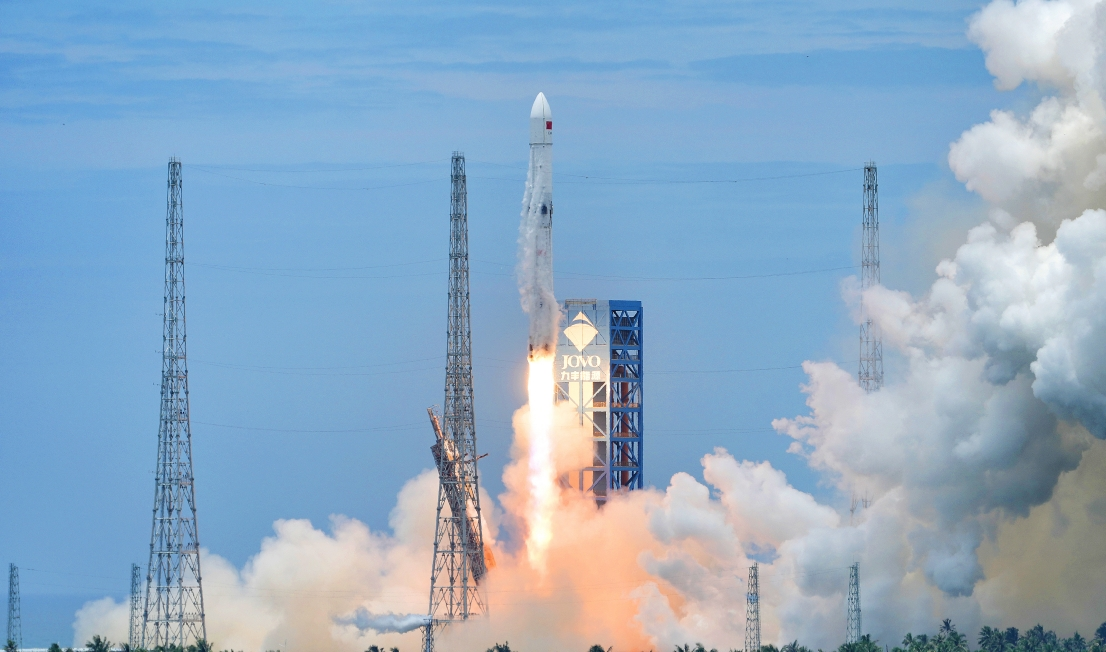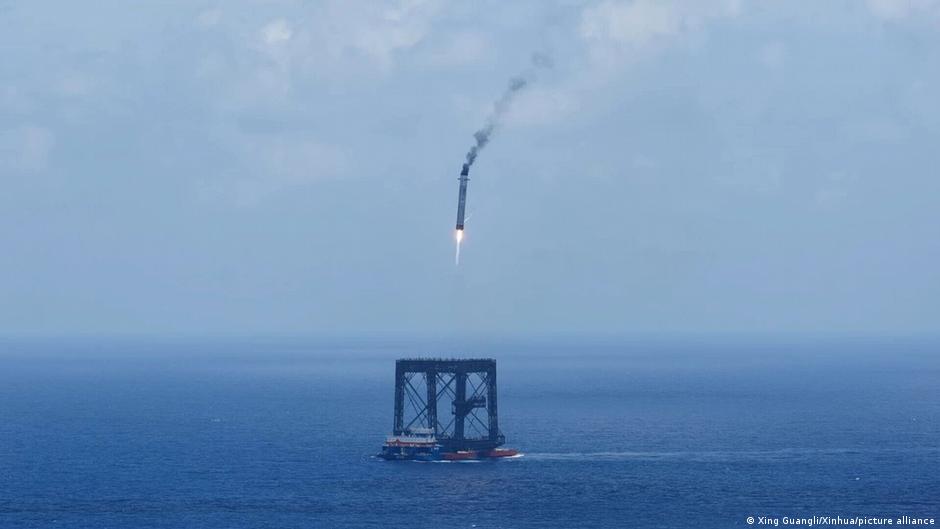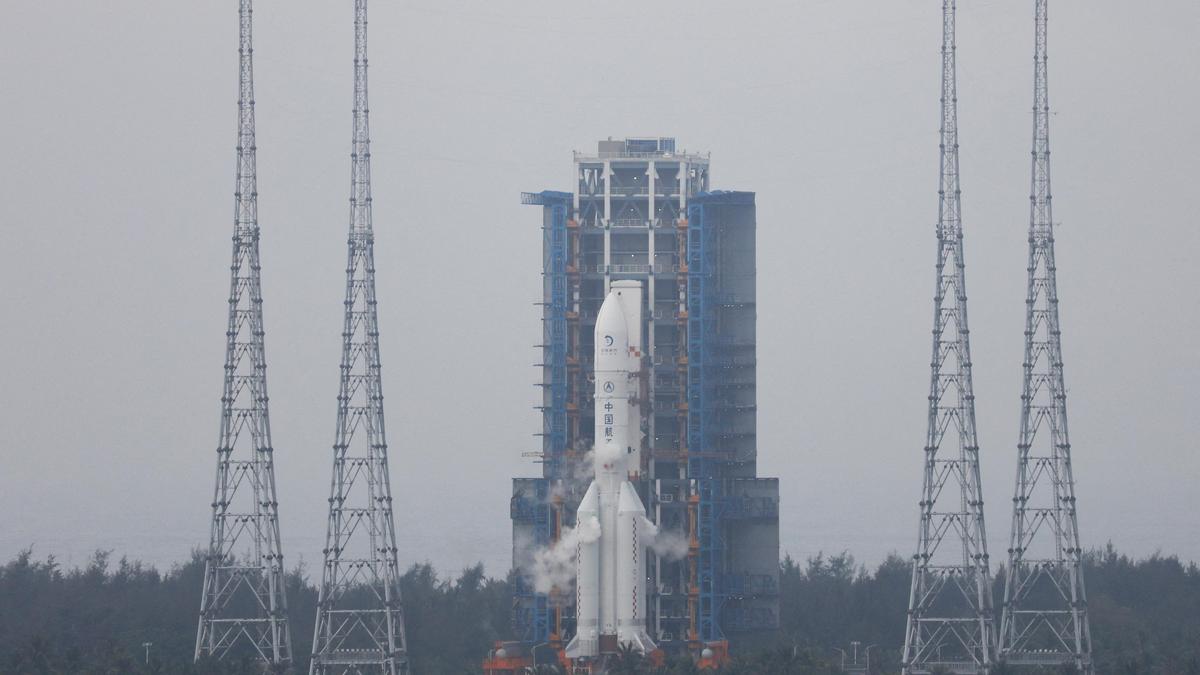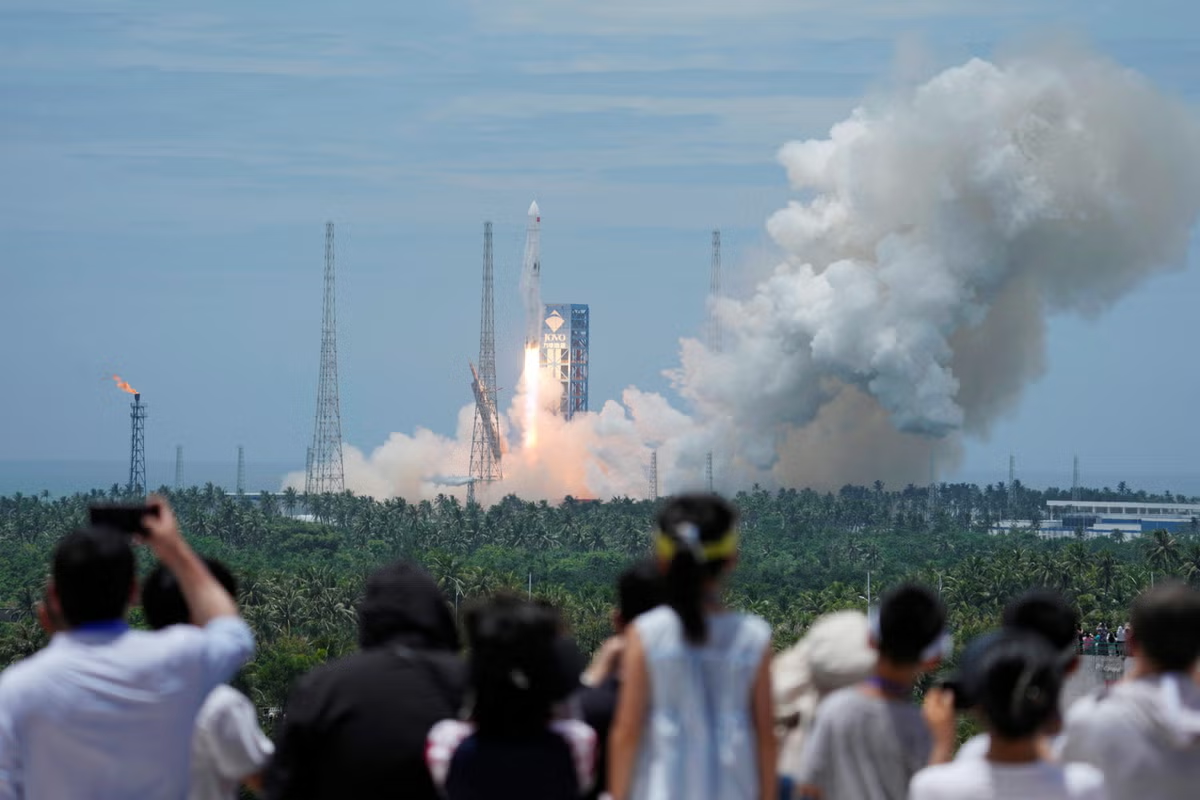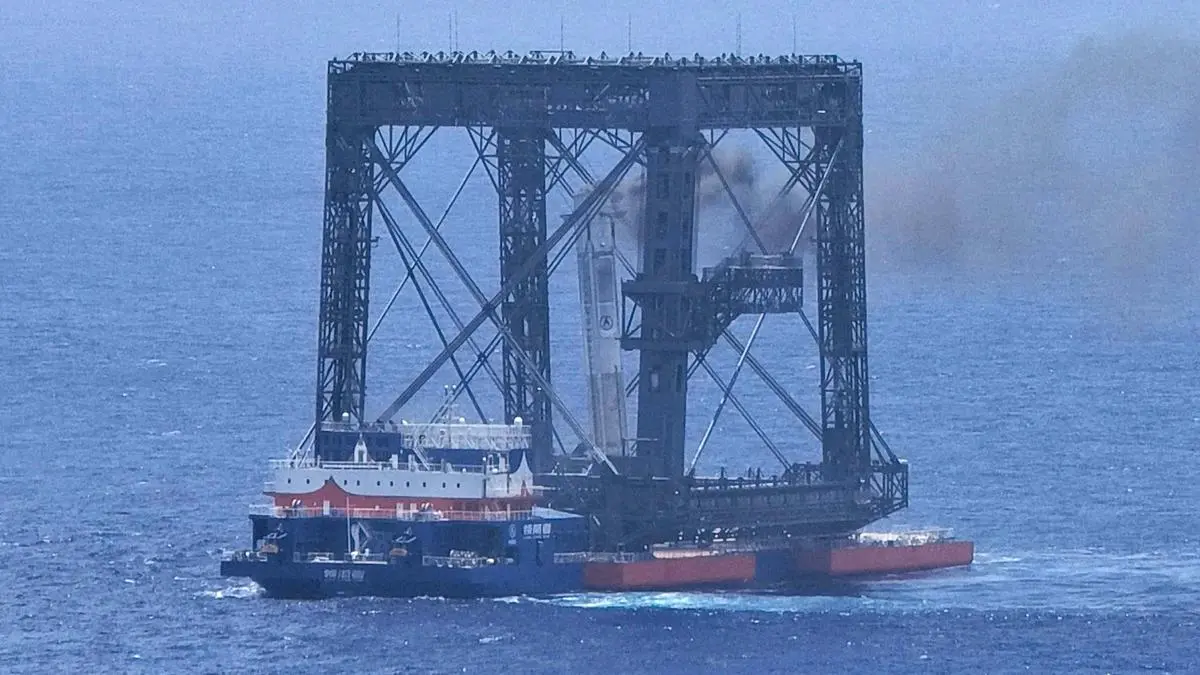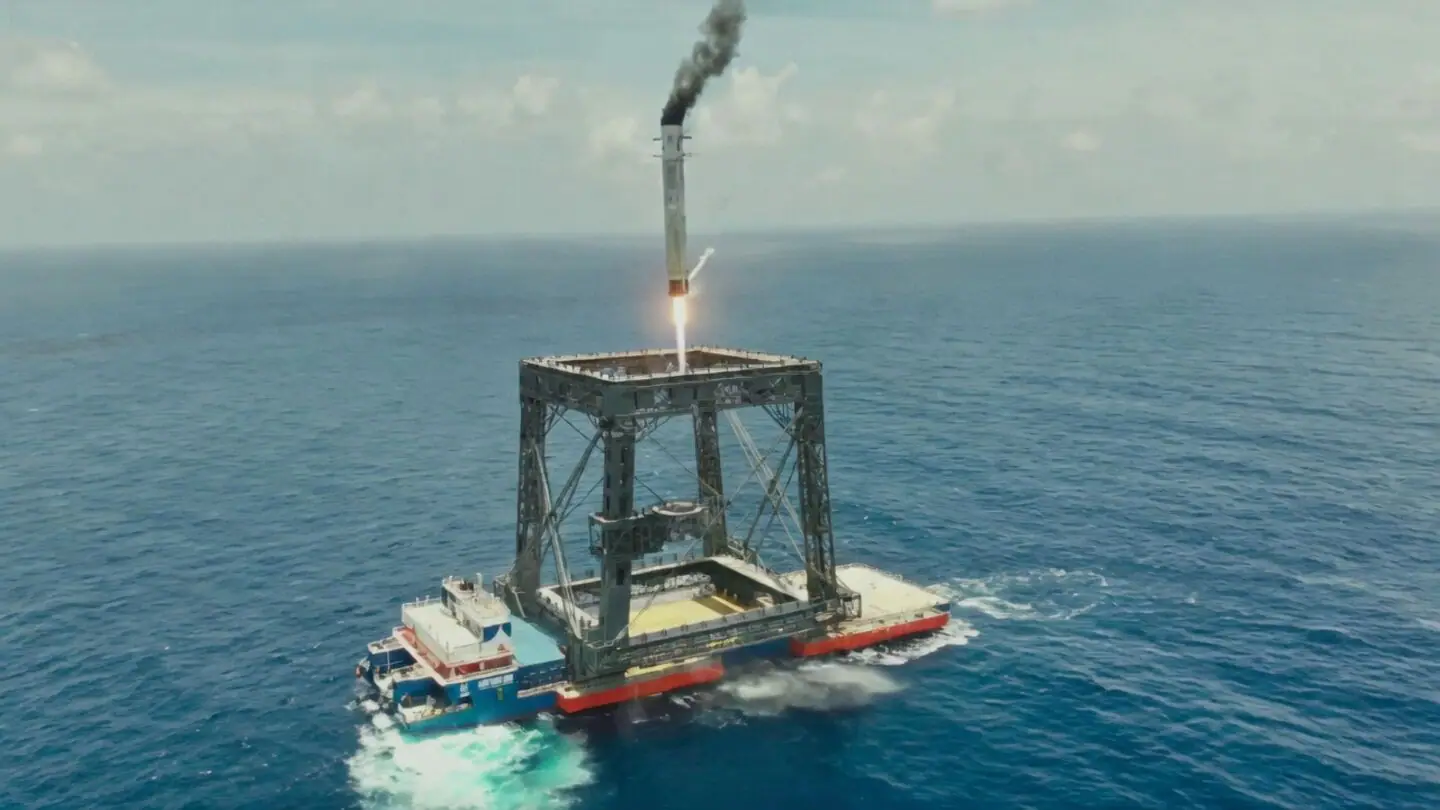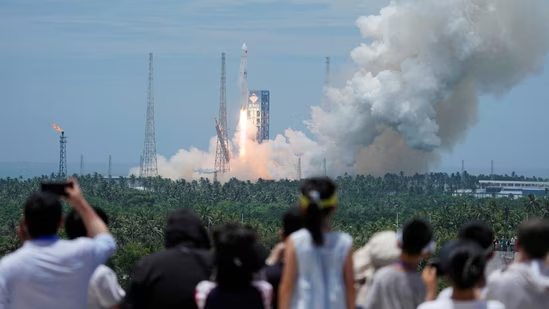
China recovered the first stage of a rocket for the first time on Friday, becoming only the second nation after the US, through Elon Musk's SpaceX, to master booster recovery.People watch as a Long March 10B carrier rocket takes off from Wenchang Spacecraft Launch Site, before returning vertically to an offshore platform for a controlled recovery, in Hainan province, China (via REUTERS)The Long March-10B lifted off from the Hainan commercial space launch site at 12.15pm local time (0415 GMT), state broadcaster CCTV reported, and placed a satellite into its preset orbit.According to Xinhua, the state news agency, the rocket's first stage separated from the second stage after liftoff and returned to a platform in the sea. CCTV said the booster came down vertically and was captured on the offshore platform roughly six minutes after separating from the upper stage.In its reusable configuration, the rocket is a liquid-fuelled vehicle standing about 63 metres tall with a five-metre diametre, generating a lift-off thrust of roughly 890 tonnes and a lift-off mass of around 760 tonnes. It can carry a payload of up to 16,000 kilograms (35,275 pounds) into low Earth orbit, Xinhua said.China Aerospace Science and Technology Corporation (CASC), the rocket's designer, becomes the third company worldwide — after SpaceX and Blue Origin — to achieve a controlled orbital-class booster recovery.The success follows setbacks elsewhere in China's reusable-rocket programme.Two Chinese reusable rockets attempted SpaceX-style vertical landings using grid fins and landing legs last December. Both the landings failed, the Hong Kong-based South China Morning Post had said. Two attempts last year by private firm LandSpace and state-owned CASC also fell short at the final step of landing and booster recovery.Also read: Indian-origin NASA astronaut Anil Menon to head to space on July 14 for eight monthsThe SpaceX featElon Musk's SpaceX was the first company to launch and reuse rocket boosters, debuting the technology with the Falcon 9, in December 2015 and marking the first such recovery. Blue Origin's New Glenn matched the feat only a decade later, in November 2025.Falcon 9 can carry a maximum payload of around 22,800 kilograms, according to SpaceX's website, and is regularly used to ferry astronauts and supplies to the International Space Station (ISS). The rocket now launches roughly 150 times a year — about three times a week — with individual boosters reused dozens of times over, Reuters reported.Also read: India and Pakistan: Space competition and governance challengeKey differencesThe clearest difference lies in where the booster comes down. SpaceX's Falcon boosters typically land upright on ground-based pads or drone ships at sea. China's Long March-10B, instead, returns to a platform near its own launch site.Rather than deploying landing legs, the booster uses four "landing hooks" that catch a net strung across the sea-based platform.“Net-based recovery helps simplify the rocket's onboard structure, reduces vehicle mass and increases payload capacity. It is also highly adaptable to landing-point deviations, as coordinated net systems can effectively expand the capture window,” Chen Muye, an expert at the China Academy of Launch Vehicle Technology (CALT) — the CASC-affiliated institute that designs and manufactures the Long March family of rockets — told Xinhua.The commercial logic applies to both the approaches. A booster that survives its return can fly again, drastically cutting the cost of putting satellites and other payloads into orbit.The Long March-10B belongs to the Long March 10 family that China is developing for crewed lunar missions it hopes to complete before 2030. Friday's recovery could feed data and validated technology into that broader programme, Reuters reported. China plans to refly the recovered booster by the end of the year, CCTV said.SpaceX still holds a wide lead, flying around 150 times a year against China's single successful recovery so far. But Friday's flight gives Beijing a working alternative to SpaceX's landing-leg approach, and marks a step forward for the country's ambitions in the global commercial launch market.(With inputs from agencies)
Over a decade after SpaceX, China successfully lands rocket booster with hooks & a net. How different is the tech?
With the Long March 10B launch, China is now the second nation after the US with reusable rocket booster technology. | World News
648 words~3 min read