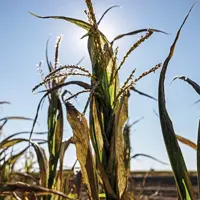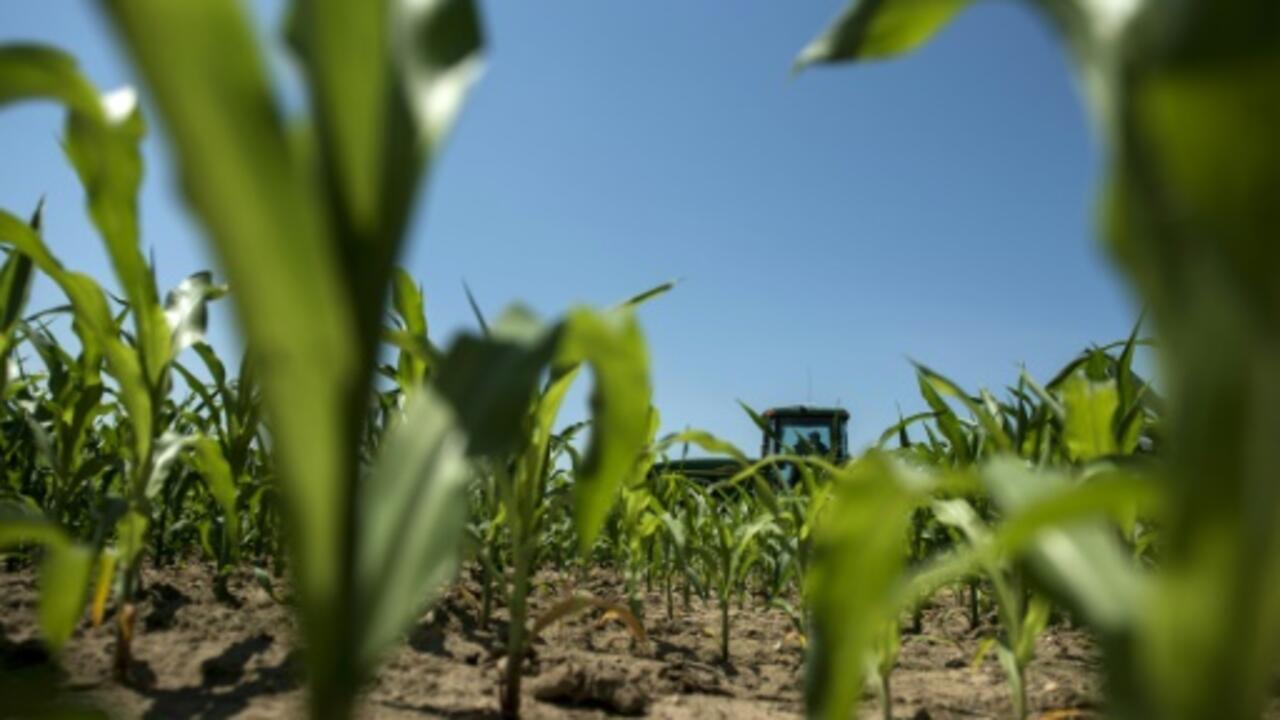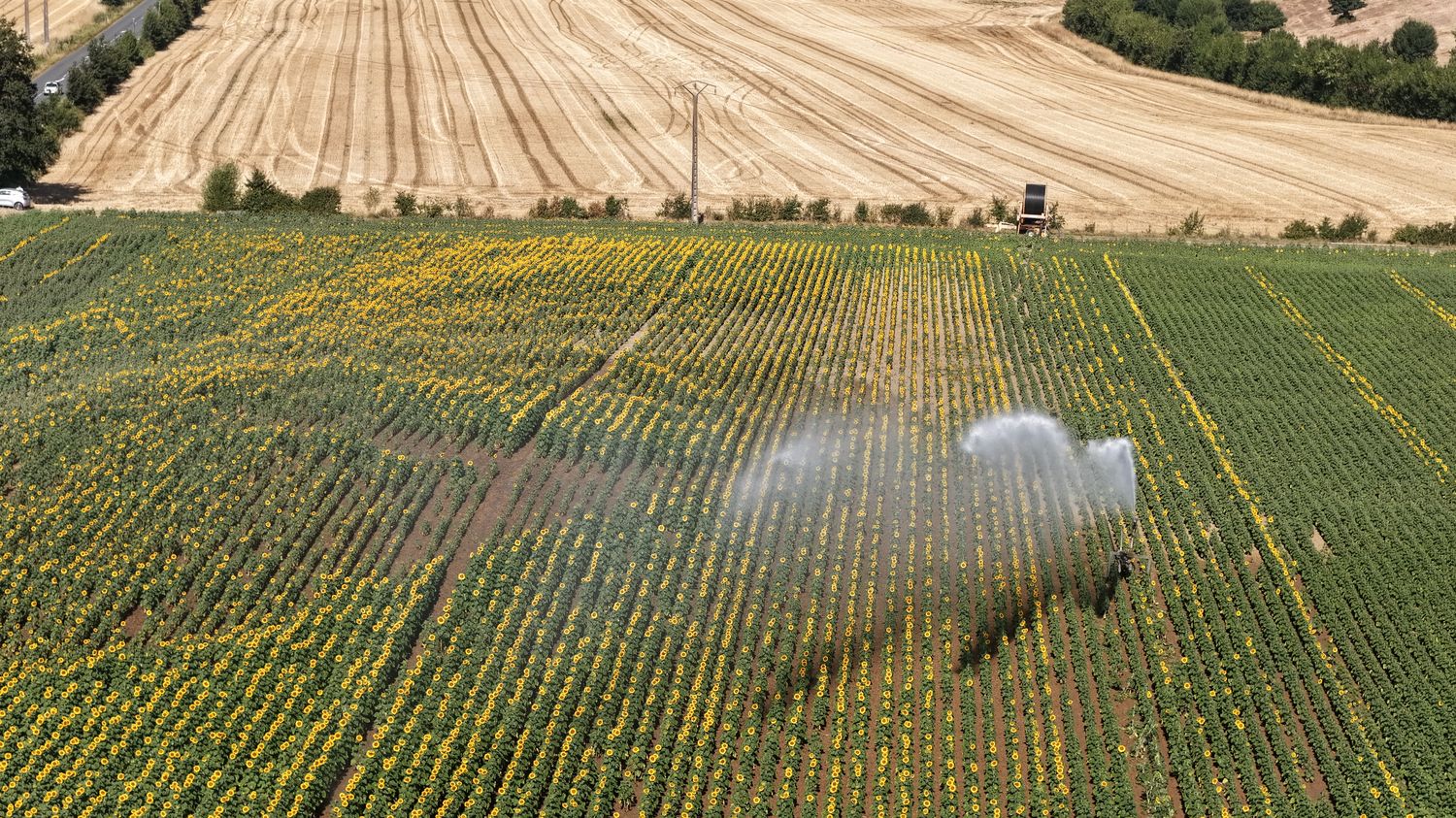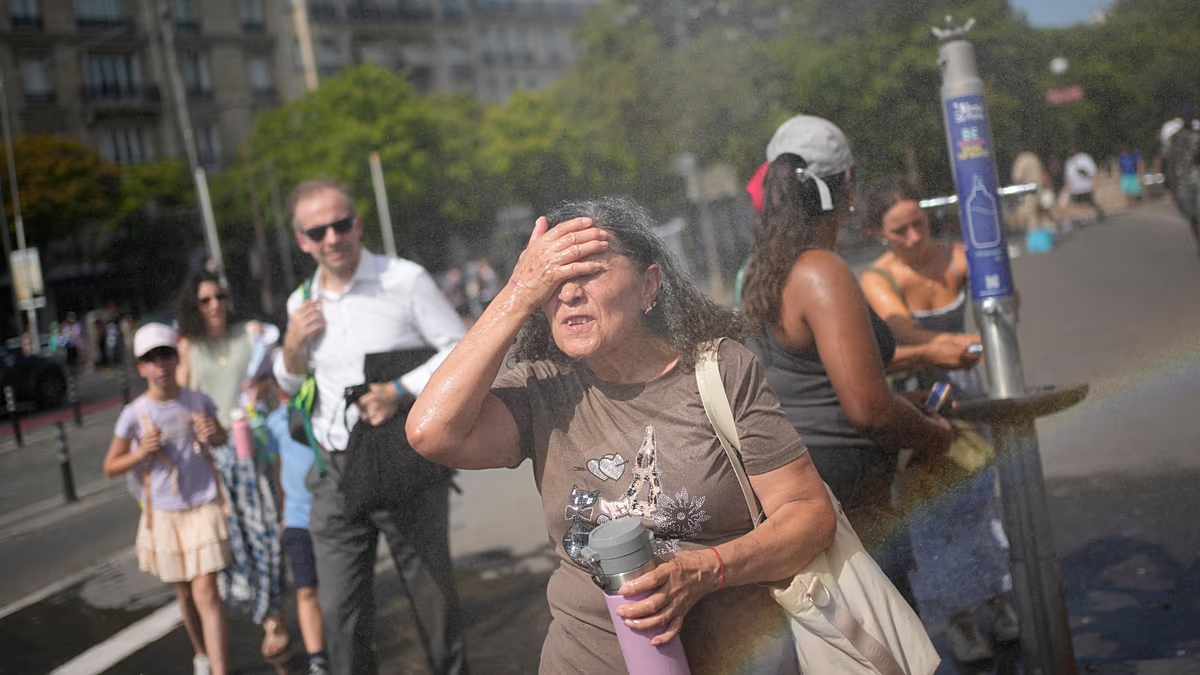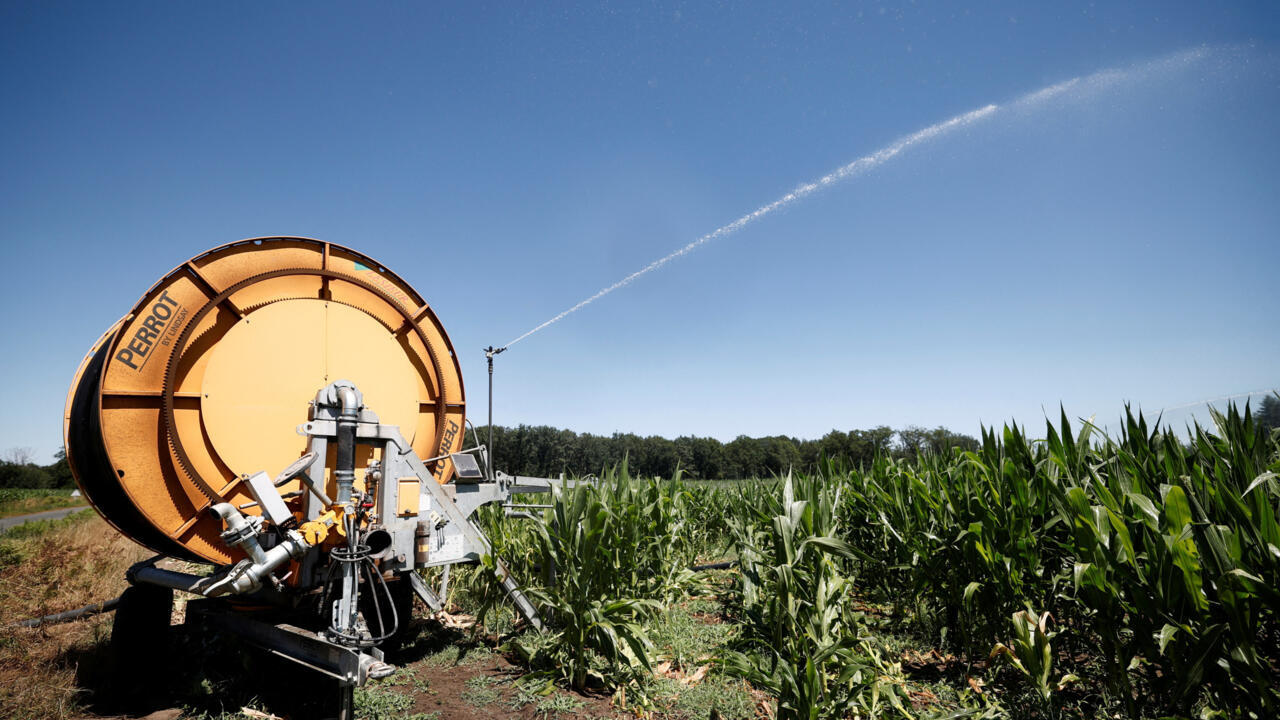
After weeks of sweltering heat and drought, farmers and analysts fear France's maize crop could be down by a third this year – making it the smallest in 35 years. Poultry farmers are also measuring their losses as many as 3 million broiler chickens died within a few days in in June. The losses are a result of three heatwaves that have already hit France this year, and are only set to intensify as climate change disrupts agriculture across Europe.
Temperatures have climbed above 40C in parts of France and elsewhere in Europe, affecting both crops and livestock. Harvests have started much earlier than usual in several regions, reflecting a longer-term trend linked to global warming. "The weather station on the farm is showing 38.8C," says David Vincent, who grows almost 200 hectares of cereals in the southern department of Aude. "The heatwaves since May have accelerated the end of the growing cycle for all our crops. So we started harvesting 15 days earlier than we used to. Clearly, our yields are down today," he told RFI. Winter rainfall helped replenish soil moisture, allowing crops to grow normally through spring. But the rain stopped in April. The harvest could potentially have been good at the beginning of May, Vincent said, but "by June, when we started harvesting, it was down by 10 percent to 30 percent in my area". Vincent grows a wide range of crops – durum wheat, soft wheat, barley, protein peas, sorghum, maize, sunflower and rapeseed. He said diversifying crops had become the best way to adapt to increasing climate uncertainty in the southern Occitanie region. Western Europe records hottest ever June as climate change drives heatwaves 'I thought I was ready' Livestock farmers have also been badly affected. Agriculture Minister Annie Genevard told the Senate that 9,127 tonnes of dead animals, mainly poultry, had been collected by the state after the heatwave at the end of June. The worst-hit livestock farms are in western France, and with a third heatwave now affecting much of the country, many farmers fear further losses. Pig farmer Bertrand Feugnet, from Rouillac in western France, said he had been anxious when temperatures of 43C were forecast. "It's true that 15 days ago, when they announced 43C – which we did get – I was really worried about how the animals were going to react." He said one neighbouring farmer lost 17 sows while they were giving birth in buildings where temperatures reached 34C. Thanks to a cooling mist system that lowered temperatures inside his buildings, Feugnet himself lost only three of his piglets.