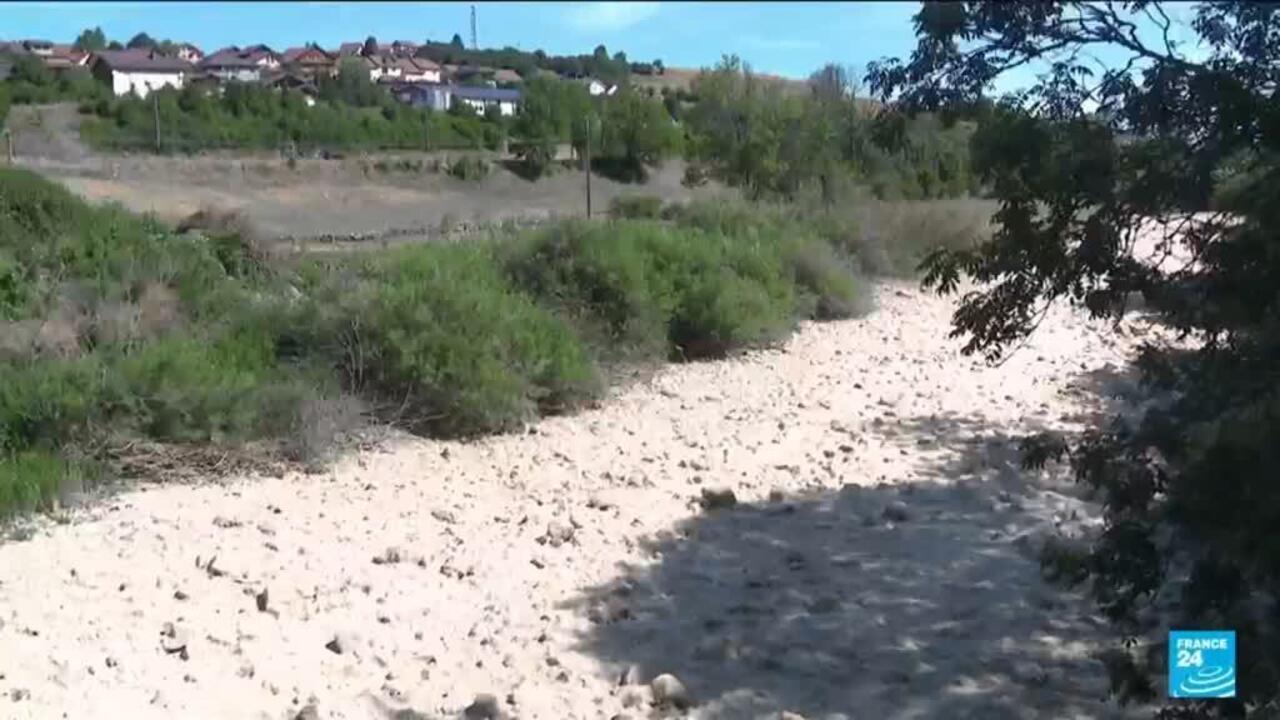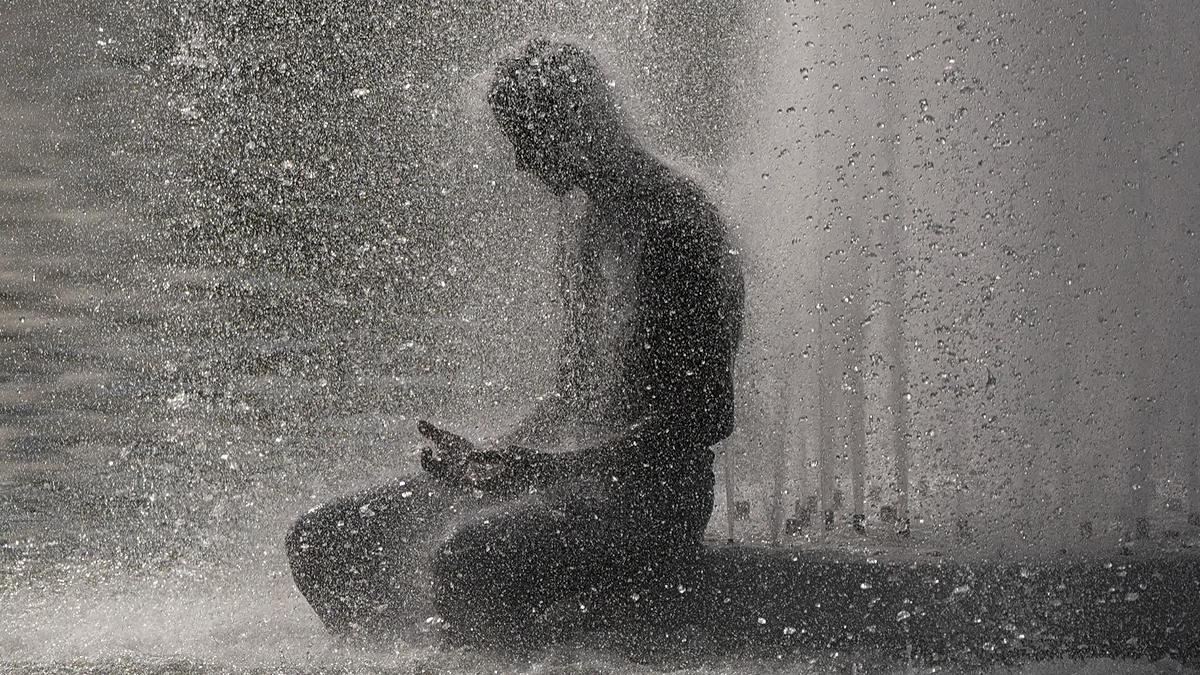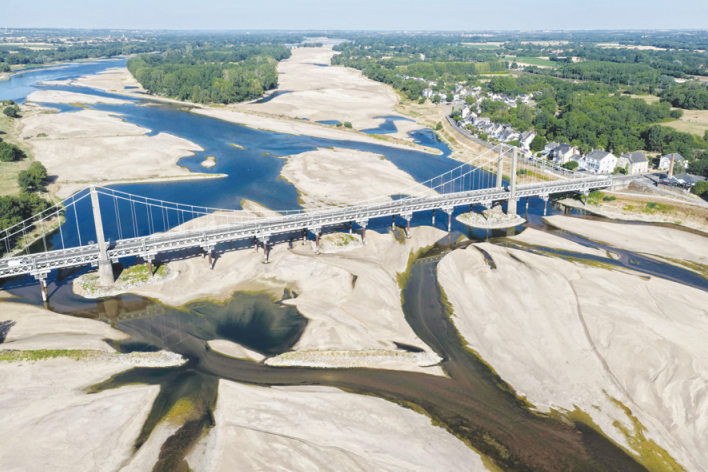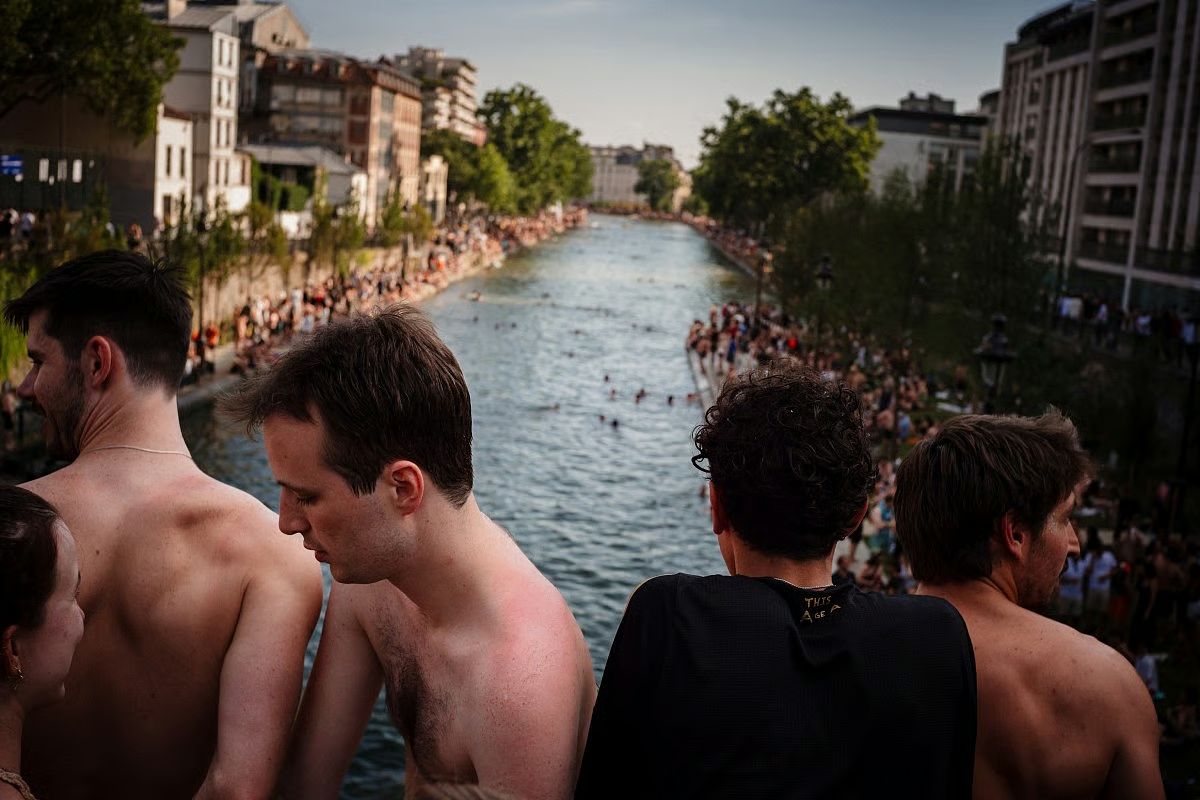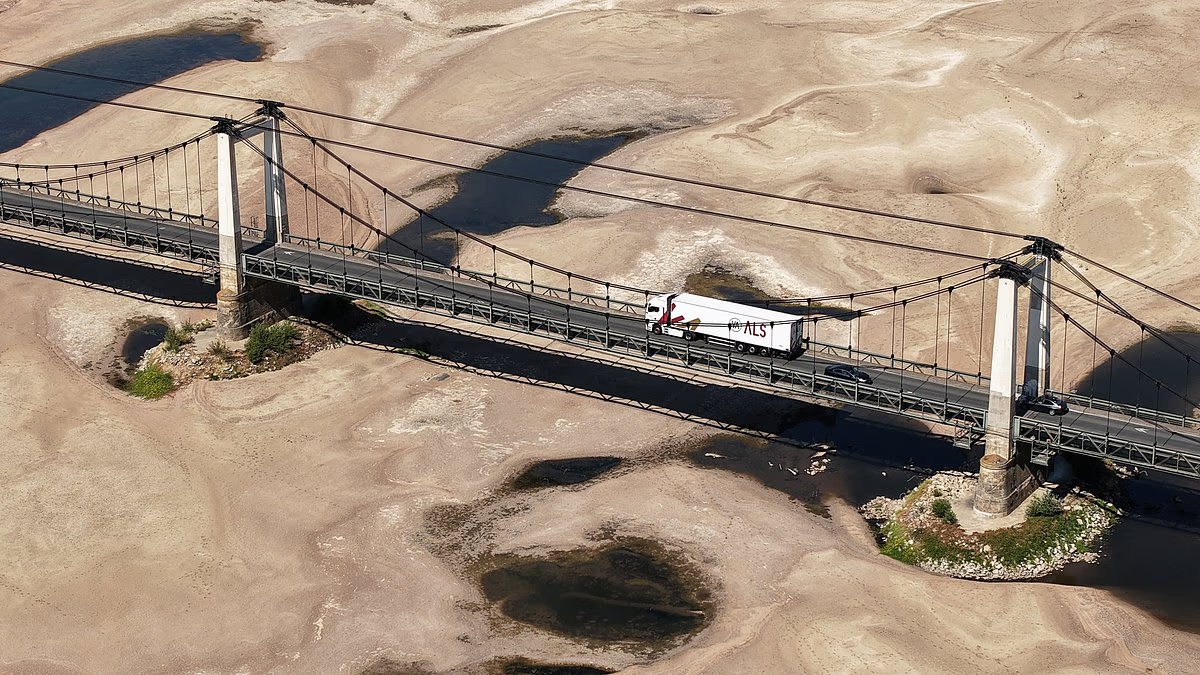
France's longest river has been reduced to a sandbank as deadly temperatures have soared across Western Europe amid a record-breaking heatwave.As Europe experienced its most severe ever recorded heatwave in June, drought conditions are worsening in France as shocking images show a completely barren Loire River in Montjean-sur-Loire.The dry river, which is 625 miles long, has been transformed into a desert-like landscape with only stagnant puddles that remain. The Doubs river in the Maisons-du-Bois-Lièvremont commune is also devoid of water as a result of the blistering conditions.The extreme temperatures have shut schools, knocked out power to tens of thousands of households and has claimed more than 2,000 lives across the country.Water reserves have been destroyed by the soaring temperatures and almost a dozen departments had at least one commune under the highest ‘crisis’ level for tap water.Households have been advised to restrict their water use and avoid watering plants, washing cars and filling private swimming pools.Last month was also the second-warmest June globally, and the planet experienced the highest June sea surface temperatures since records began, the EU's Copernicus Climate Change Service (C3S) said in a monthly bulletin.The average temperature in Western Europe last month was 20.74 degrees Celsius (69.3 degrees Fahrenheit), more than 3C above the average for June during 1991-2020, the data showed.France recorded its hottest day since records began nearly 80 years ago, when temperatures peaked at 44.3C in the south-western town of Pissos on June 24 and the nation was placed under a red heat alert. Drought conditions are worsening in France as shocking images from today show a completely barren Loire River in Montjean-sur-Loire A drone view shows a bridge with sandbanks of a branch of France's longest river The Doubs river in the Maisons-du-Bois-Lièvremont commune is also devoid of water as a result of the soaring heat (pictured on Thursday)It comes as 'catastrophic' wildfires ravaged Southern France on Monday, while poisonous clouds swept through Greece and Costa Brava in Spain was put on alert as temperatures across Europe are predicted to reach 40C.Hundreds of firefighters were battling blazes that have devastated more than 19,000 hectares (42,000 acres) of land - an area more than twice the size of Manhattan - across Portugal, Spain, France and Greece.In southwestern France near the city of Perpignan, 700 firefighters backed by special aircraft battled to control a 'gigantic' blaze spreading in a hard-to-reach remote area, with more than 10,000 local residents evacuated.Fanned by wind, intense heat and exceptionally dry air, the fire has nearly tripled in size since early Sunday, devouring 4,600 hectares and leaving a firefighter and a resident injured, local authorities said.The extreme weather is being driven by a persistent pattern that traps hot air over the region for days, allowing temperatures to keep rising. Scientists say such events are being intensified by global warming.'Climate change is here, we are living the consequences and it is only the start of July,' said French fire service Colonel Eric Belgioino as he appealed to people near the Pyrenees inferno to take precautions to avoid starting fires.'The season is going to be long for the soldiers fighting fires. You have to help us,' he pleaded.Western Europe has now suffered three intense heatwaves in as many months, with countries including Spain and Portugal in the grip of another this week.'June 2026 underscored how profoundly the climate is changing,' said Samantha Burgess, strategic lead at the European Centre for Medium-Range Weather Forecasts. 'The result is increasingly intense heatwaves, a persistently warm ocean, and growing risks for people, ecosystems and infrastructure across Europe and beyond.' The Loire River pictured just days before on Saturday, though the water levels were considered very low
France's heatwave 'desert': River is reduced to sandbank
As Europe experienced its most severe ever recorded heatwave in June, drought conditions worsen in France as images show a completely barren Loire River in Montjean-sur-Loire.
926 words~4 min read