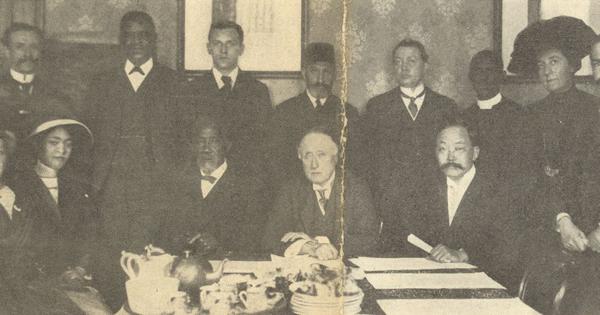
In July 1911, more than 2,000 delegates from 50 countries and 22 governments gathered at the University of London for what was a truly ambitious international conference. The Universal Races Congress, as it was called, had set itself no ordinary task. It sought to examine, “in the light of science and the modern conscience”, relations between the peoples of the West and the East, between “so-called white and so-called coloured peoples”, in the hope of fostering greater understanding, friendship and cooperation.To many who attended, the Congress embodied cautious optimism. As the globe-trotting Indian journalist S Nihal Singh wrote in the American Review of Reviews, the delegates believed that peace among nations and unity between races could be achieved through sustained collaboration and future congresses. Their faith proved tragically short-lived. Within three years, the First World War had shattered those hopes.Yet the Universal Races Congress did not emerge in isolation. It was the culmination of nearly two decades of growing international concern over the “race question”. As empires expanded and anti-colonial movements gathered strength, some people across the world searched for ways to address the inequalities that empires had created. The Congress was an expression of that search.Bold visionFew people articulated the urgency of the moment as well as WEB Du Bois. Speaking at the 1900 Pan-African Conference, the African American writer and political thinker declared: “The problem of the twentieth century is the problem of the color line, the question as to how far differences of race – which show themselves chiefly in the color of the skin and the texture of the hair – will hereafter be made the basis of denying to over half the world the right of sharing…the opportunities and privileges of modern civilization.”Du Bois’s warning reflected a world in which racial discrimination continued to flourish despite the formal abolition of slavery in the United States after the Civil War. At the same time, international diplomacy appeared to be entering a more hopeful phase. The Hague Conventions of 1899 and 1907 sought to establish principles for arbitration between nations in times of conflict, suggesting that international cooperation might offer solutions to problems that individual states could not resolve.
When Gandhi and other Indian thinkers joined the world to take on the race problem
In 1911, delegates from across the globe gathered in London to imagine a more just international order. Just three years later, war intervened.
1,472 words~7 min read