Introduction
When people think about artificial intelligence in healthcare, they often imagine AI diagnosing diseases or replacing doctors. In reality, some of the most impactful AI applications are solving a much simpler but incredibly important problem: documentation.
Veterinarians spend a significant portion of their day documenting consultations. Every appointment generates patient histories, clinical observations, assessments, treatment plans, discharge instructions, referral letters, and updates to the clinic's Practice Management System (PMS). While documentation is essential for continuity of care, it also consumes valuable time that could otherwise be spent interacting with patients and their owners.
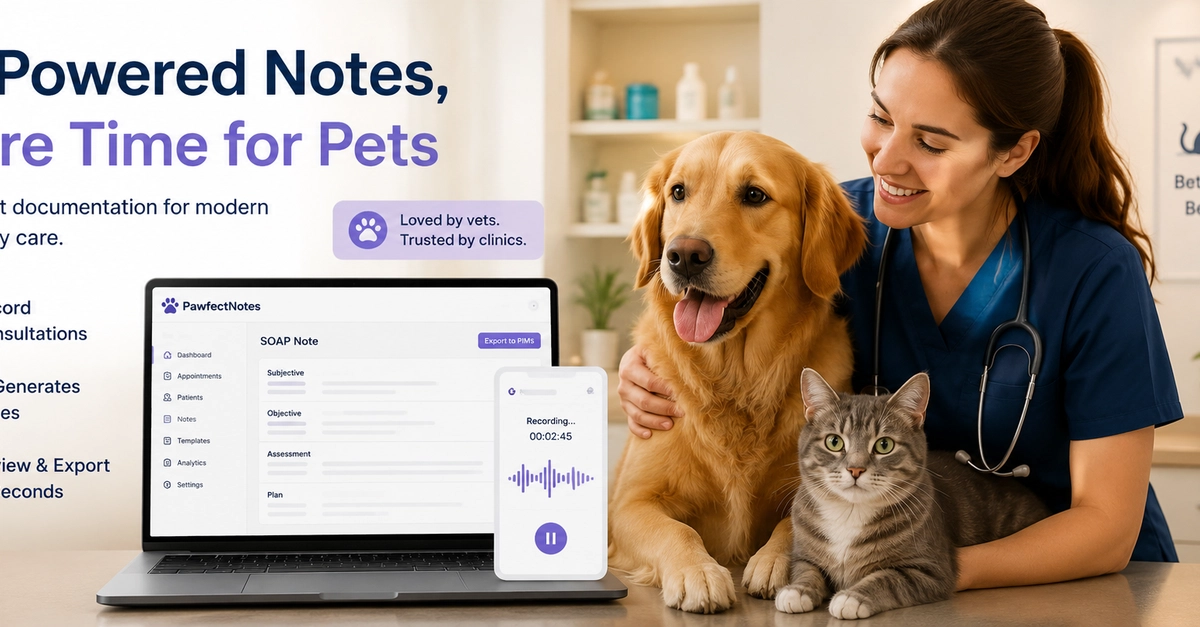
This is where AI-powered documentation assistants such as "PawfectNotes" come into the picture. Rather than replacing clinical expertise, they act as intelligent assistants that automate repetitive administrative work while keeping veterinarians in complete control of the final medical record.
In this blog post, you will be guided on how these platforms work from both a clinical and engineering perspective, making it easy for beginners to understand the technologies behind them.