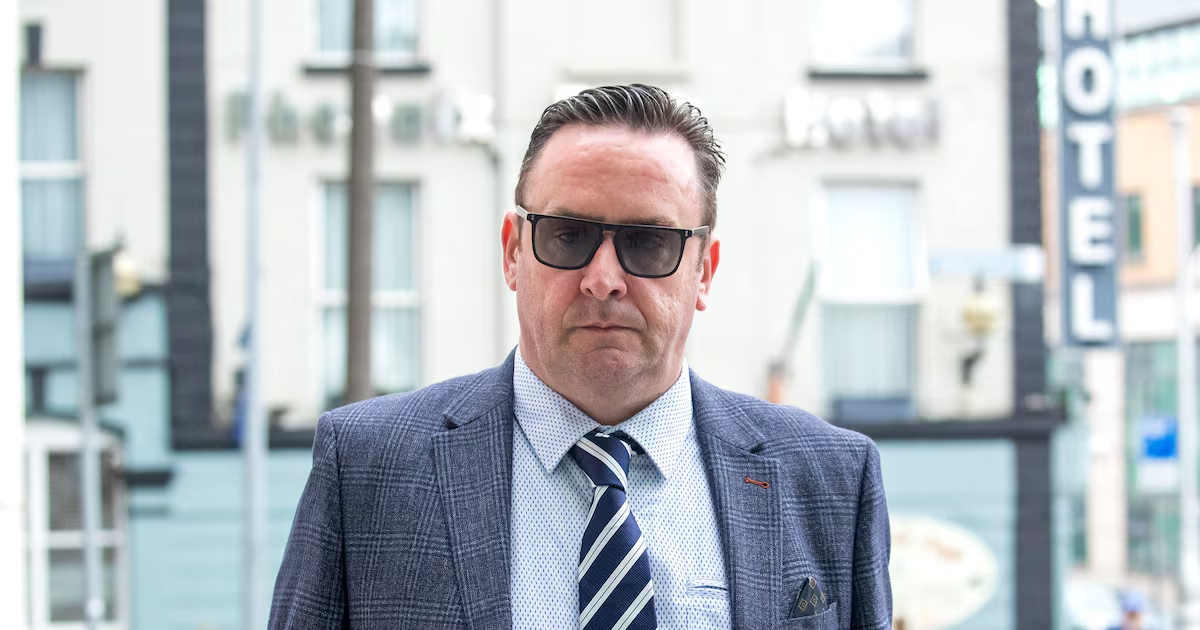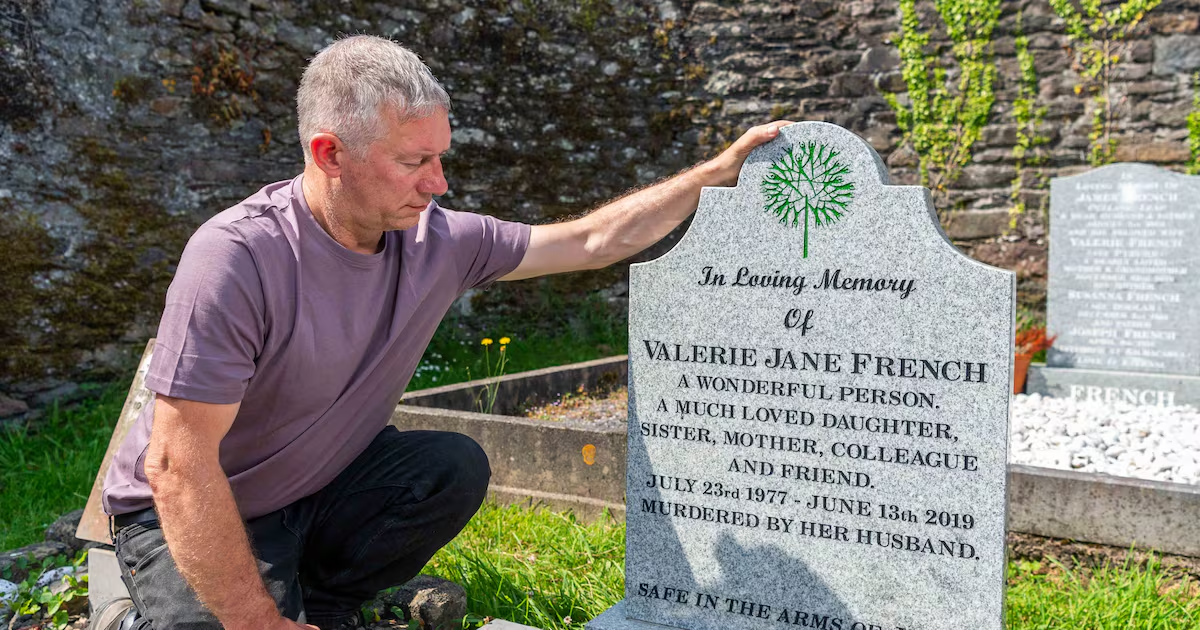
The number of women murdered in Ireland is “not going in the right direction”, the Taoiseach said in the Dáil on Wednesday.Micheál Martin was responding to a question asked by Labour leader Ivana Bacik, who noted that eight women have been killed violently in Ireland to date this year – more than the total number last year.This week’s murder of Jamey Carney – the American woman whose body was discovered at her home in Killarney, Co Kerry, on Tuesday – is among the most recent names added to that list.Almost every violent death of a woman leads to a national conversation about what can be done as a society to protect women from harm. No family wants to be – or thinks they will be – at the centre of that discussion.“For us, it was a million miles away – until it happened,” David French says.His sister, Valerie French, was killed in June 2019 by her husband at their home near Westport in Co Mayo. James Kilroy was sentenced to life in prison in July 2024. Valerie was 41-years-old when she was strangled and stabbed, leaving behind three young sons.Valerie French was killed in June 2019 by her husband James Kilroy at their home near Westport in Co Mayo. “The homicides make the news, but you know, the women with the black eyes aren’t,” David French says.Many women killed by their partners have previously been physically assaulted by them, French says, but this isn’t always the case. The abuse could be more subtle, such as coercive control or emotional manipulation.“I think people have the impression of, ‘If he hits me, I’ll leave’ ... Well, if he stabs you, you don’t get a chance, that’s the end of it.”Hindsight is 20/20, and the family naturally “saw stuff afterwards”, French says, but there were not “warning signals”. Kilroy “wasn’t a violent man, per se” – until he killed his wife. “He was incredibly entitled ... a very manipulative person,” he says.French “strongly” believes Kilroy killed Valerie after she told him she was leaving him. French says he is 'massively concerned' about the manosphere and especially about violent pornography. Photograph: Andy Gibson Noting that femicide often follows a “pattern”, French says: “The victims are, kind of, just every normal person. “The killers tend to be entitled men who either can’t take no for an answer or can’t stomach the idea that their marriage is probably going to split up or whatever. They feel they own the kids and they own her.”News reports of women being killed also usually follow a familiar, grim pattern, French says.“Woman’s body found and then, within a few hours, a man known to the victim is being picked up, next thing he’s charged, next thing he’s the husband, the ex-partner, the boyfriend, whatever,” he says.“Change the names and it’s any woman’s story.”Valerie is one of 286 women who have died in violent circumstances in Ireland since 1996, according to figures from Women’s Aid. Since 2020, 82 women have been killed violently on the island of Ireland – 52 in the Republic and 30 in the North.Six in 10 of these women were killed in their own homes and almost nine in 10 knew their killer.Sarah Benson, chief executive of Women’s Aid, says femicide is intrinsically linked to domestic and sexual violence, noting that one in three women are subjected to domestic abuse of some kind.‘I don’t get pushback on social media or the rest of it and I think women do if they talk about this stuff’— David FrenchBenson expressed concerns about how many young men in particular are exposed to pornography that normalises violence against women. The proliferation of the manosphere – an online community that promotes misogyny and opposes feminism – is also spreading “toxic” views about how women should be treated, she says.Because so much of our lives is online nowadays, these narratives have been “absolutely integrated” into some people’s world views, Benson says. Apps that platform such content are “profiting off harm” and will “fight ferociously to protect” a business model that is profitable, she says, but need to be held to account.David French says people also need to stop 'victim blaming' women. Photograph: Andy Gibson French says he is “massively concerned” about the manosphere and especially about violent pornography. He says the fact that Kilroy “grew up before the manosphere and the internet got popular” shows there has always been “madly patriarchal” men.French says men need to call out certain behaviour from other men, even if it’s just “people testing the waters with sexist jokes”.Men and women are treated differently in countless ways, he says, even when it comes to victims’ families.“I don’t get pushback on social media or the rest of it and I think women do if they talk about this stuff,” he says.“I get zero because I’m privileged as a man. I’m entitled to be angry, whereas if a woman shows up as angry – if one of my sisters shows up as angry – it’s like, ‘Oh, you know, she’s this or she’s that.’”French says people also need to stop “victim blaming” women who don’t leave violent relationships. “The old chestnut: ‘Why didn’t she leave?’ It’s like, why the hell didn’t he leave? He could have left.”French campaigned for years for legislation to ensure that a parent convicted of killing the other parent of their children does not automatically retain guardianship rights over them. The Guardianship of Infants (Amendment) Bill 2026, more commonly known as Valerie’s Law, recently passed through the Oireachtas, as did another piece of legislation aimed at protecting women from violence.Veronica, David (speaking) and Hilary French outside the Central Criminal Court after James Kilroy of Kilbree Lower, Westport, Co Mayo, was given the mandatory sentence of life in prison after being found guilty in 2024 of murdering his wife Valerie French in June 2019. Photograph: Collins Courts Under the Domestic Violence (Judgments) Register Bill 2026, abusers convicted of serious domestic violence will have their names included on a publicly available register for the first time. The legislation will be known as Jennie’s law in honour of Jennifer Poole, a 24-year-old mother of two who was murdered by her former partner Gavin Murphy in 2021.French is hopeful both Acts will soon be signed into law by President Catherine Connolly. For women who fear leaving an abusive relationship, Benson says support is available. “The crucial thing is to reach out. Don’t wait until something feels like a crisis ... do not suffer in silence,” she says.Women’s Aid 24-hour national freephone helpline: 1800 341 900; womensaid.ie National male advice line: 1800 816 588; mensnetwork.ie/mal
‘Change the names and it’s any woman’s story’: The grim pattern of femicide in Ireland
‘People think, ‘If he hits me, I’ll leave’, Well, if he stabs you, you don’t get a chance,’ says brother of Valerie French, killed by her husband in 2019
1,104 words~5 min read