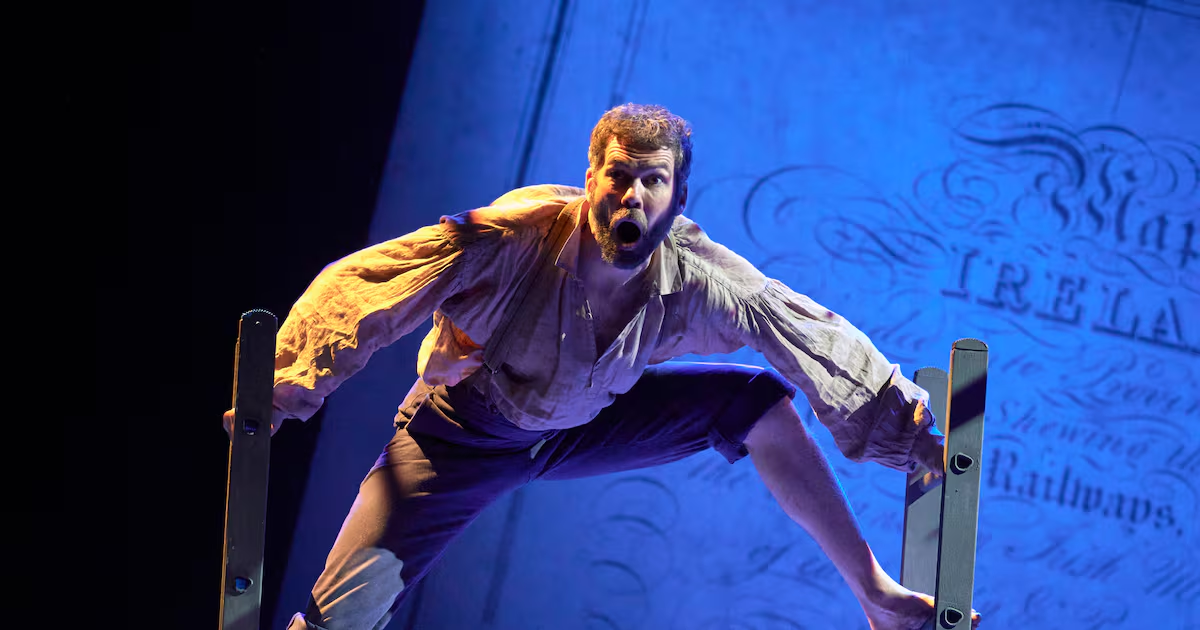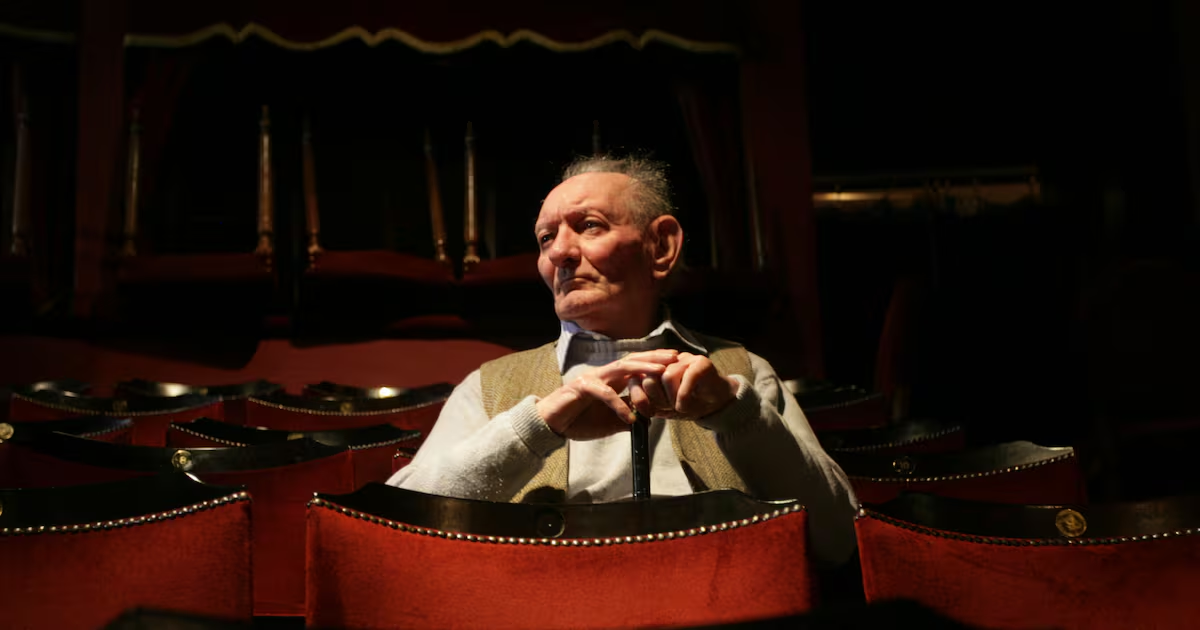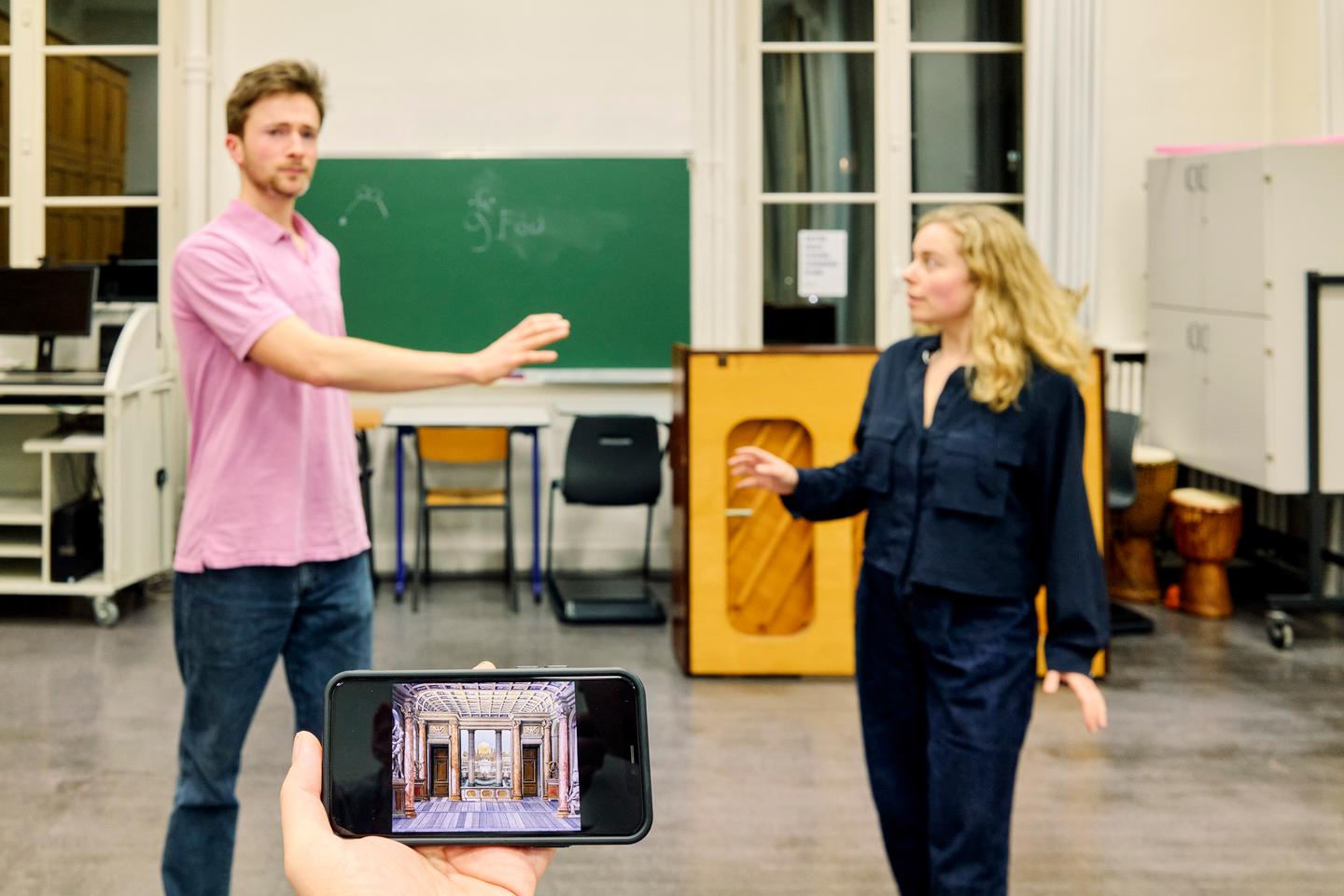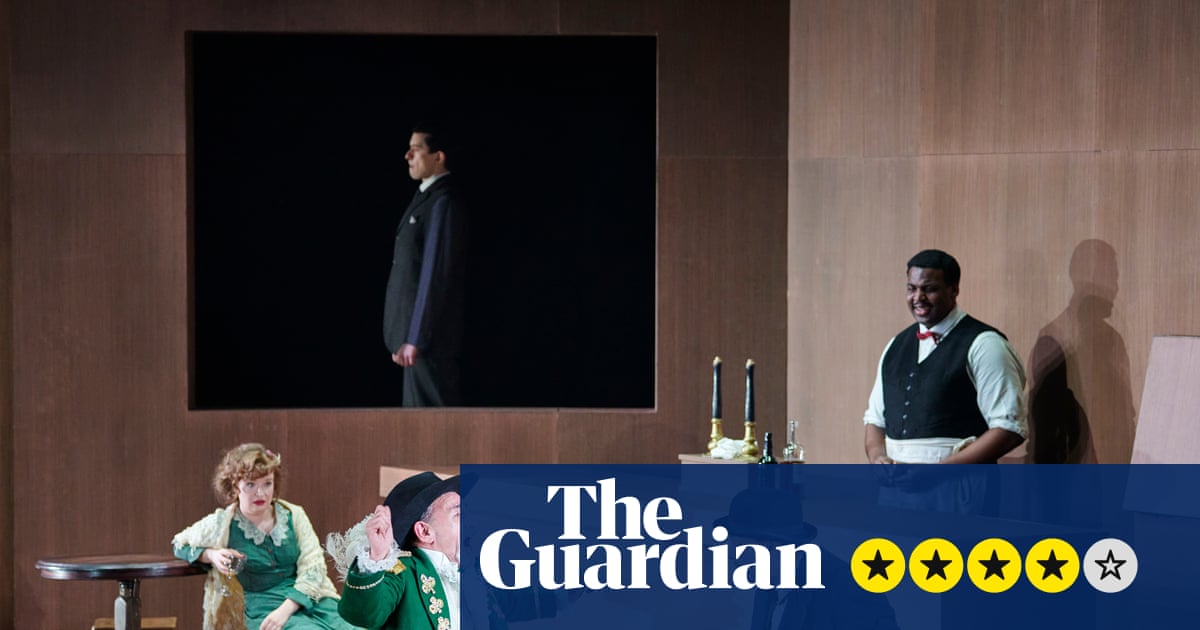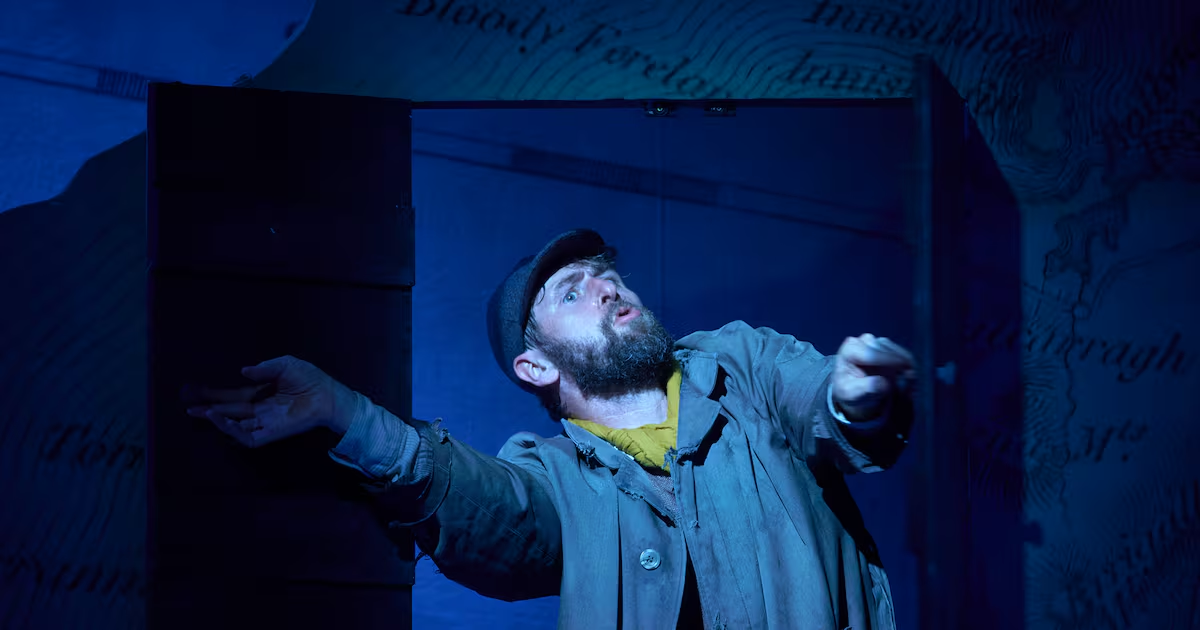
When Dion Boucicault died, in 1890, The New York Times described him as one of the most conspicuous dramatists of the century, and it’s true that, during his lifetime, his melodramas packed venues in New York, making him one of the richest men in theatre. His reputation declined rapidly after his death, however. Tastes shifted towards realism and psychological drama, and Boucicault’s elaborate plots, heightened emotions, florid dialogue and larger-than-life stage-Irish characters came to seem old-fashioned. By the time WB Yeats and Lady Gregory founded the Abbey, Boucicault had become almost everything they wanted Irish drama to reject. His reputation never quite recovered.Which makes Druid’s decision to stage The Shaughraun – the cast includes Eileen Walsh, Marie Mullen, Aaron Monaghan, Rory Nolan and Megan Cusack – all the more intriguing. Far from treating it as a historical curiosity, the company’s artistic director, Garry Hynes, argues that Boucicault lies at the root of modern Irish theatre. By pairing the play with Eugene O’Neill’s Moon for the Misbegotten in the company’s new season, which it’s calling Strange Country: Ireland in United States, Druid isn’t simply tackling the challenge of reviving a Victorian melodrama. It is inviting audiences to reconsider Boucicault: his legacy, his politics and the extent to which his work echoes through the plays that followed.The central problem, Hynes says, is that you can’t treat The Shaughraun as modern psychological realism. Melodrama is a highly codified theatrical form, with its own rhythms, conventions and logic. Ignore those rules and the play falls apart.“There’s this balancing act between obeying the roots of an old form and connecting with the audience who are actually seeing it. Because that’s all that matters.”This is Hynes’s second encounter with The Shaughraun. She first directed it in 1982. “I returned to the play because I’ve always loved it. I did it then with the perspective and experience of a 30-year-old. Now I’m doing it with the perspective and experience of a 73-year-old. So all that experience is feeding into it.“We’re also bringing everything theatre has learned since Boucicault back into the room. We believe he influenced much of what came after him, and we’re bringing that experience to the way we stage his work today.”Garry Hynes of Druid Theatre Company. Photograph: Ailbhe O'Donnell A question remained in Hynes’ mind: why now? The answer came when she began thinking of pairing it with A Moon for the Misbegotten.Though radically different in style, the plays are part of the same conversation, she says. Boucicault wrote The Shaughraun for an Irish audience in the United States, addressing a diaspora displaced by the Famine. O’Neill, the son of Irish immigrants, who moved to the US as a child, wrote from within that diaspora. “It suddenly seemed to me that maybe these plays could talk to each other,” Hynes says. “The melodramatic form began to die out towards the end of the 19th century. But you can still see elements of the melodramatic form in Moon for the Misbegotten”, which O’Neill wrote in the early 1940s. “There’s trace elements of the form.”That dialogue extends into the productions’ visual language. Rather than creating two separate worlds, their designer, Francis O’Connor, has conceived a single set for both plays. Dominating the stage is a 19th-century Ordnance Survey map of Ireland, a potent image that links Boucicault’s west of Ireland with O’Neill’s United States. “When we arrived at the map notion, it just felt right for both plays,” O’Connor says. “The Shaughraun unfolds on Ireland’s Atlantic edge, looking west towards United States; A Moon for the Misbegotten is set on a lonely Connecticut farm; it’s meant to feel like the edge of the world.”Hynes points out that the survey, celebrated as a triumph of cartography, was equally an instrument of colonial administration. By mapping Ireland in unprecedented detail, the British state could more effectively tax, govern and control it. The conceit inevitably recalls Brian Friel’s play Translations, in which the same survey becomes a metaphor for cultural conquest through language and geography. Hynes sees an “underground kinship” between Friel’s masterpiece and The Shaughraun. Boucicault’s hero is forever losing his bearings, struggling to read the landscape around him, so the map looming over the stage takes on a surreal, even sorrowful dimension.The map also provides a practical playground for Boucicault’s exuberant theatrical imagination. Built into its surface are concealed doors, levels and reveals that allow the company to realise prison escapes, clifftop chases and sudden disappearances without relying on big-budget machinery. “Boucicault was such a showman,” O’Connor says. “All of that spectacle is in the writing.” The challenge has been finding contemporary theatrical equivalents that capture the spirit of the original rather than reproducing its effects.Designing the productions simultaneously has had another purpose. O’Connor hopes the shared visual environment will subtly, even subconsciously, shape the actors’ performances, allowing echoes to emerge between the two plays. Druid has found this before, he says. When the company staged Riders to the Sea and Macbeth together, in 2025, each production informed the other, for the actors and the audience.Druid Theatre Company's revival of Dion Boucicault's play. Photograph: Ros Kavanagh O’Connor says his designs are shaped by Druid’s commitment to sustainability. “We can create big shows with small footprints.”The company routinely repurposes scenery and props from earlier productions. Sets are designed to travel and to be used again, with the effect of reinforcing the company’s distinct aesthetic. The moon that hangs over this season, for example, is the moon that appeared in Waiting for Godot. “It’s Druid’s moon,” O’Connor says.The challenge in the rehearsal room is to obey the over-the-top script while finding the emotional reality to ground it. Rather than treating Boucicault as camp, or inviting the audience to laugh ironically at the play’s melodramatic conventions, the cast have approached the material with complete seriousness. “There’s nothing funny about comedy,” Rory Nolan, who plays the villain Corry Kinchela, says. “You have to play it so real, so poker-faced, for it to actually land.”Nolan admits his first instinct was to think of the great silent comedians who inherited Boucicault’s theatrical vocabulary. “You immediately think of Charlie Chaplin and Buster Keaton,” he says. Then he found himself drawing connections with other roles he has played, particularly after returning from performing Endgame in New York. He saw echoes of Beckett characters such as Pozzo in Corry Kinchela, but he soon realised that was taking him away from Boucicault.Jamie Beamish as Harvey Duff and Rory Nolan as Corry Kinchela in Druid Theatre Company's revival of Dion Boucicault's play. Photograph: Ros Kavanagh “You have to keep going back to the text,” he says. “If you start putting a concept on it, or thinking: ‘Aren’t we very funny?’, then it becomes lacking. You’re not trusting what he’s written. You’re not trusting this great adventure play with all of these twists and turns and brilliant characters.“You ask yourself why this guy is like this. Maybe it’s unrequited love. Maybe he just made a few wrong decisions.” Nolan believes that, by searching for the character’s humanity, you can actually make the villain more unsettling. “The last thing I want is for people to think, ‘Here’s the funny fellah.’ I want them to think, ‘I wouldn’t like to be caught in a lift with him.’”Aaron Monaghan, who plays Conn – the Shaughraun – has reached a similar conclusion. Modern audiences, he says, have been conditioned by film and television to distrust heightened emotion. “It feels twee for the first 10 seconds,” he says. “But if you really lean into it – if you really mean it – you have an actual emotional response. I think the audience feels it too. You can’t be embarrassed about it.”If Boucicault’s reputation has long been clouded by accusations of pandering to stage-Irish stereotypes, Monaghan believes that reading misses what the playwright is actually doing. He first encountered The Shaughraun as a young actor, playing another part in the Abbey Theatre’s 2004 revival, and has since been in two other of Boucicault’s plays. “I inherited this idea of Boucicault as a straightforward crowd-pleaser,” he says. “Somewhere along the way I realised I’d vastly underestimated this writer. I think he’s kind of a genius.”The Shaughraun: Dion Boucicault. Photograph: Harvard Theatre Collection Part of that reassessment comes from looking more closely at Boucicault’s politics. “The heroes of the piece are always the peasants,” Monaghan says. “They’re not the quintessential heroes standing there, arms akimbo, on a rock with the wind blowing in their hair.” Instead it’s ordinary people who repeatedly outwit the establishment. “They’re the smartest people on the stage. They’re always three steps ahead of everyone else. “He’s much more politically alive than I gave him credit for,” Monaghan says. “He’s far from exacerbating the idea of the stereotypical Irishman. He’s turning it on its head.” The more deeply he researched Boucicault, the more the actor became convinced that something different was happening under the surface of the play.[ Playwright Conor McPherson: ‘You’re better off getting hammered than a three-star review’Opens in new window ]Writing for audiences in London and New York, Boucicault had to work within familiar stereotypes while quietly undermining them. “He’s managing to keep them happy but giving them a different version of things,” Monaghan says.In The Shaughraun, the informer, rather than the British soldier, receives the harshest treatment, while the priest is presented as a man of unwavering moral integrity.Most strikingly, the rogues and vagabonds whom English and American audiences might have expected to dismiss as drunken layabouts become the play’s true heroes. “Boucicault takes that image and kind of goes, ‘These are the heroes of the play,’” Monaghan says. “These are the people who can move between the cracks of things ... and undo the villain’s plot.”Boucicault himself played the leading role, and Monaghan believes that actor’s instinct is embedded in every scene. “He knew how to hear a gag,” he says. “He knew the rhythms of an audience. He knew how to deliver lines.”Like Shakespeare, Boucicault understood what worked in performance because he had stood on stage himself. “This text is written to be spoken by actors,” Monaghan says. “Once you realise that, it gives you a great sense of it.”Rory Nolan sees Boucicault’s influence running through almost every big Irish playwright who followed.“The breadth of work we’ve done, from Beckett to Synge to O’Casey, he’s in all of them,” the actor says. “Whether they wanted him to be or not, they were all keenly aware of his work. To my ear, he echoes down through Irish theatre. He echoes down through the ages.”The Shaughraun is at the Town Hall Theatre, as part of Galway International Arts Festival, from Wednesday, July 15th, until Saturday, July 25th, with previews on Monday, July 13th, and Tuesday, July 14th. A Moon for the Misbegotten is at the Town Hall Theatre in September
Aaron Monaghan on The Shaughraun: ‘I’d vastly underestimated Boucicault. He’s kind of a genius’
Galway International Arts Festival 2026: Druid Theatre’s revival leans into the Victorian melodrama’s surprising political undercurrent
1,801 words~8 min read