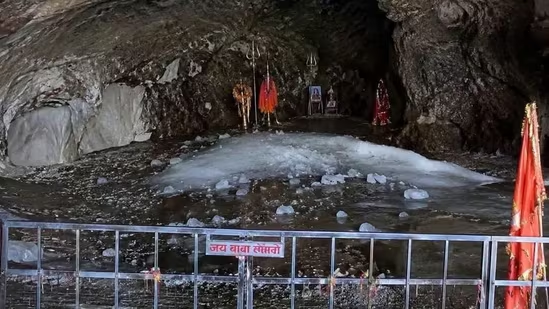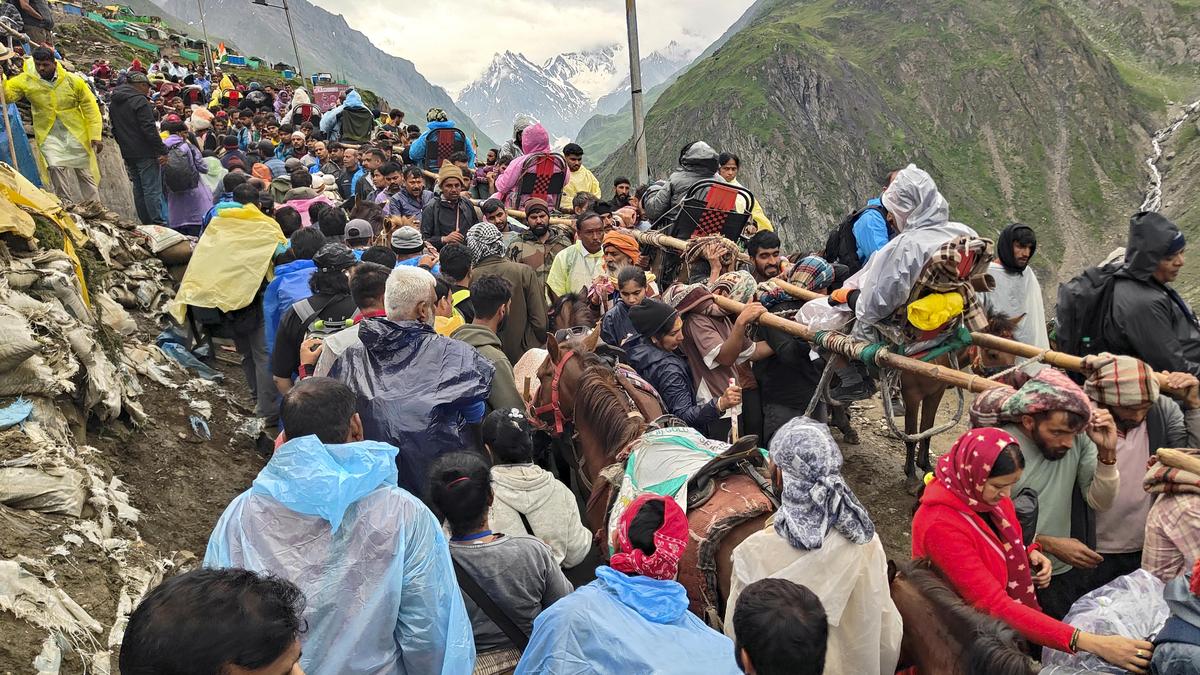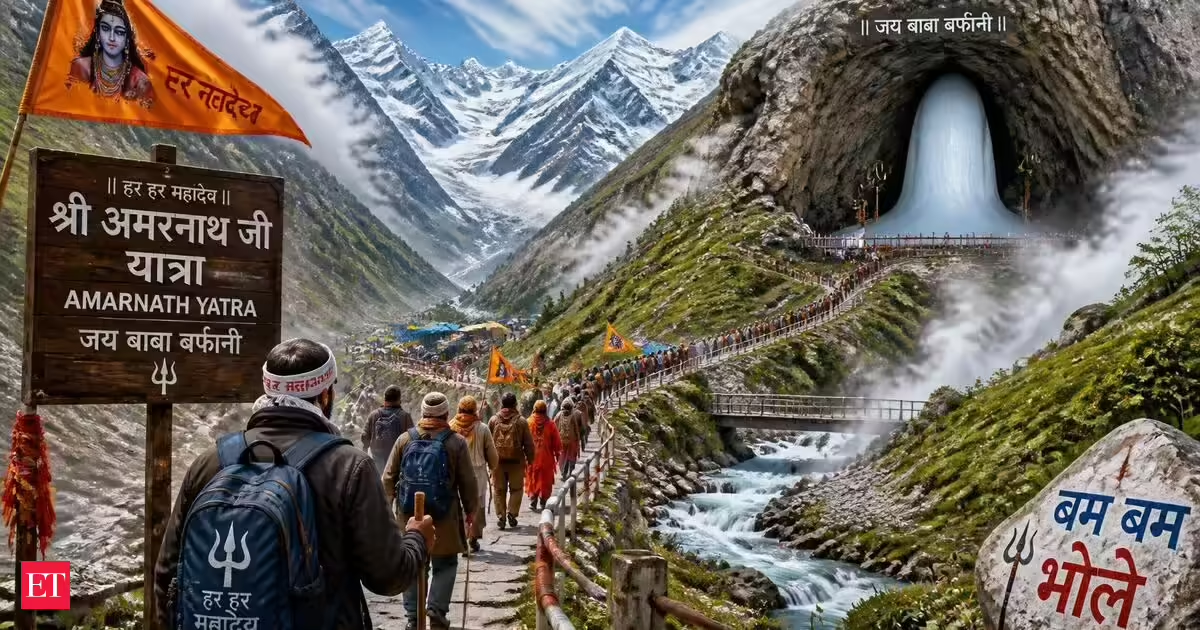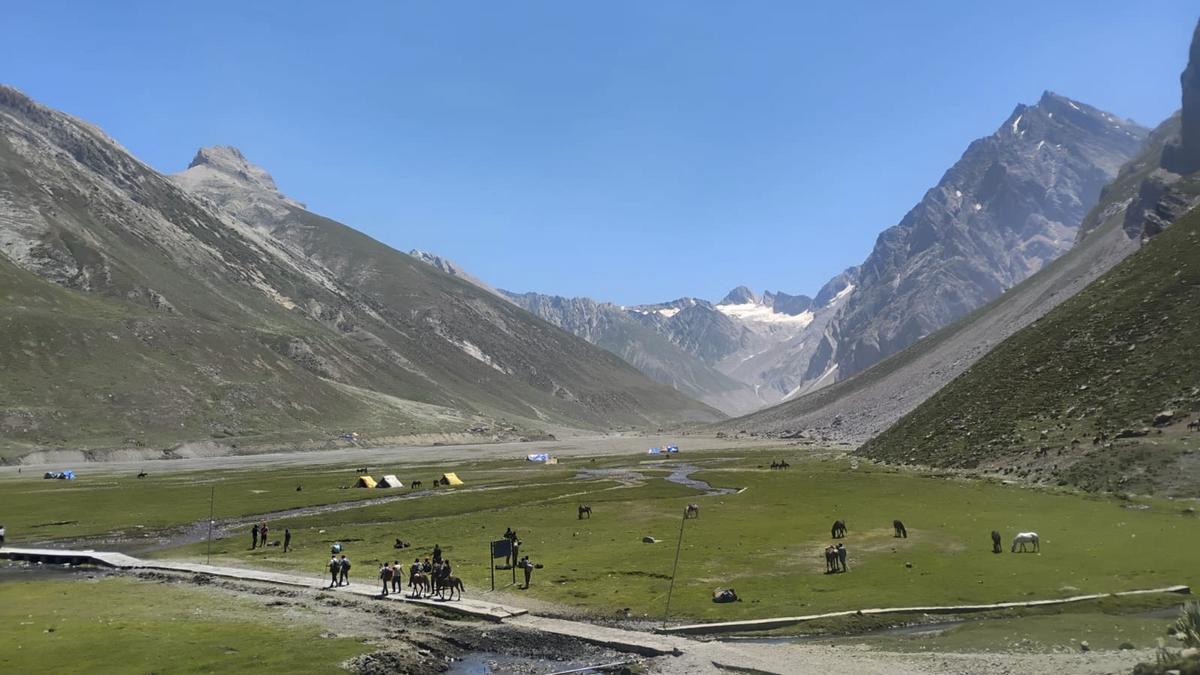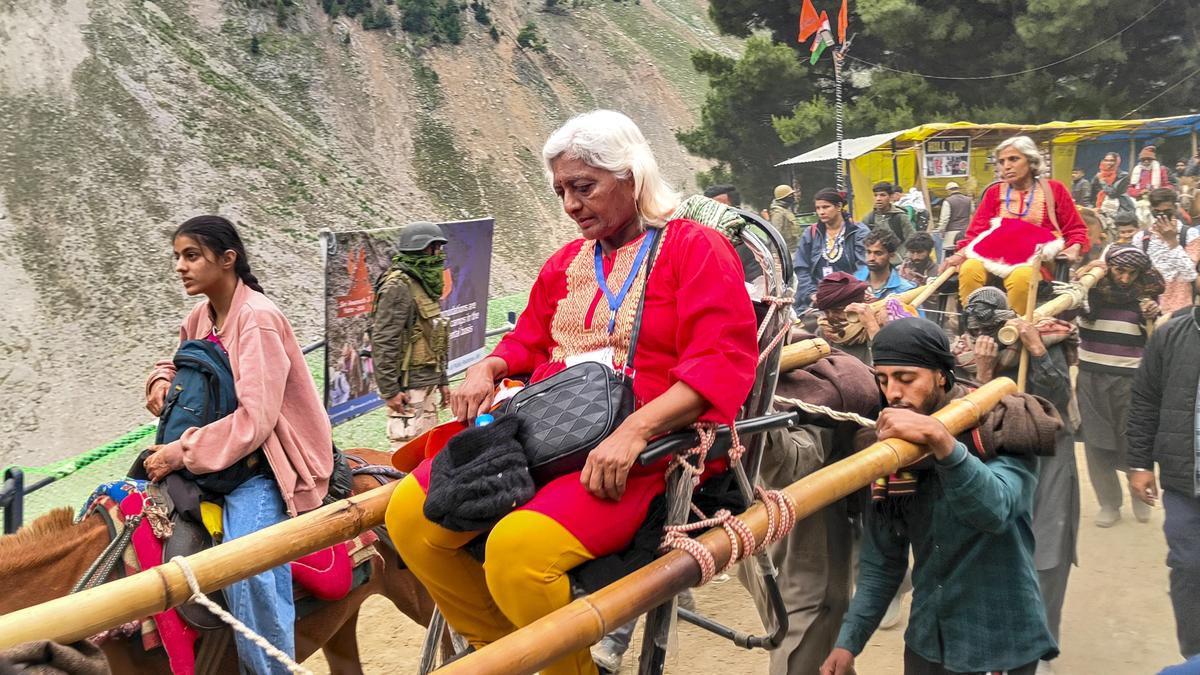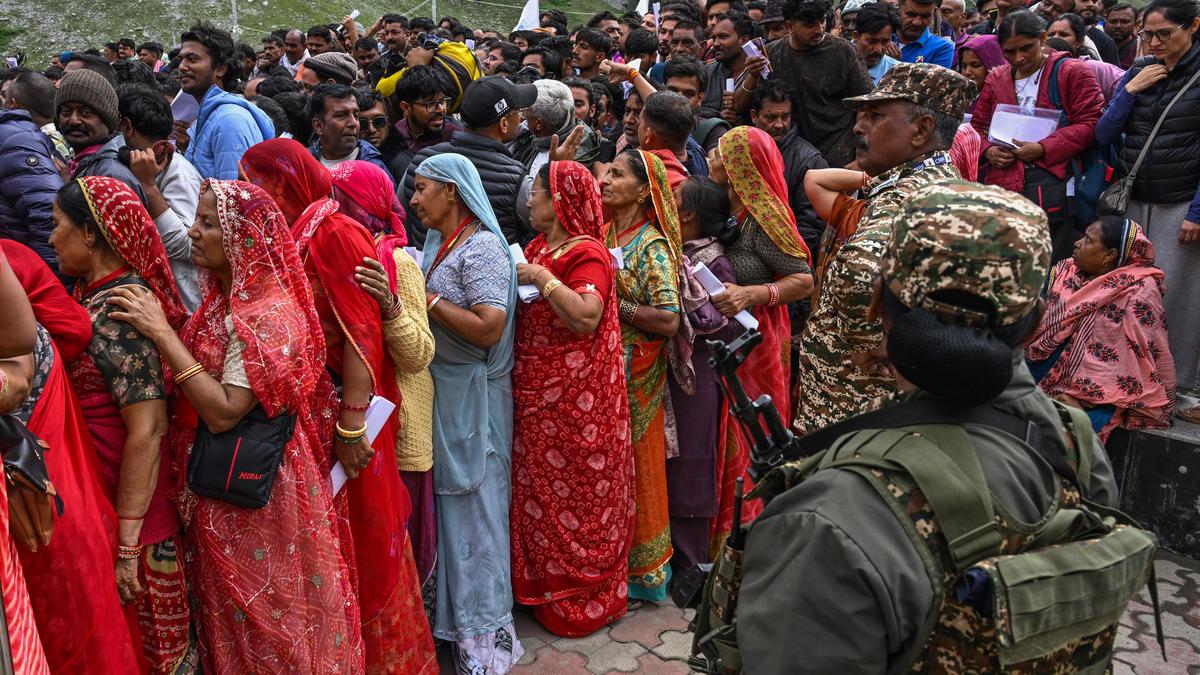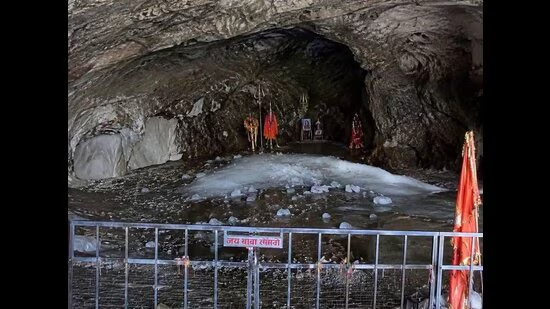
The Amarnath Yatra, which began on July 3 has received an overwhelming response. But recent reports are suggesting that the naturally formed ice lingam, also called the Baba Barfani, has melted by over 90%, just days into the pilgrimage.It melted within 29 days in 2018, 38 days in 2020, 28 days in 2022 and within about a week in 2024. (File)The Amarnath cave shrine is located at an altitude of about 3,888 metres (12,756 feet) in Jammu and Kashmir’s Anantnag district. It’s nestled beneath the Lidder Valley in the Kashmir Himalayas. Pilgrims can reach the shrine via the traditional 48-km Pahalgam route or the shorter but steeper 14-km Baltal route.While the J&K administration has hailed the record number of devotees returning to the Amarnath cave shrine, many in the union territory have raised an alarm over the quick melting of the ice lingam.Lieutenant governor (LG) Manoj Sinha, who was in Baltal base camp, said Lord Shiva is omnipresent.“Try to understand..it has been stated in our Shastras (scriptures) that Astitva (existence) of Lord Shiva doesn’t cease with the melting (of ice lingam). He is invisible and omnipresent,” he said.On a visit to Baltal base camp on Friday, Sinha personally took stock of various arrangements and facilities being provided to the pilgrims.“The Yatris have appreciated the facilities being provided to them. I am satisfied with the arrangements. Our officials, J&K Police, Shrine Board, J&K government, security forces and civil society are doing everything possible so that pilgrims go back with good memories,” he said.Meanwhile, political leaders have reacted to this. Peoples Democratic Party leader Iltija Mufti, expressing concern, wrote; “Only a week into Amarnath Yatra, and the naturally formed lingam has already melted. Climate change from mindlessly axing trees, illegal mining, waste mismanagement & dangerous depletion of water levels are major factors. Unfortunately, the environment has become a casualty in Kashmir’s politics.”It is pertinent to mention that Ice Shivlingam has not melted early for the first time. It melted within 29 days in 2018, 38 days in 2020, 28 days in 2022 and within about a week in 2024.Professor GM Bhat, former head of the department of geology at the University of Jammu, attributed the reduced accumulation to below-normal snowfall during the winter. “There was less snowfall in the hills of Kashmir this winter. When the source itself is limited, accumulation is naturally lower. Snow melts every year, but with reduced snowfall, the overall accumulation was bound to be less,” he said.He also said that increasing infrastructure development and human activity were also affecting the region’s ecology. “At the same time the formation may not have taken place properly this year, and climate change is a significant factor behind this phenomenon,” he said.
Baba Barfani ice lingam ‘melts over 90%’ just days into Amarnath Yatra
The Amarnath cave shrine is located at an altitude of about 3,888 metres (12,756 feet) in Jammu and Kashmir’s Anantnag district
451 words~2 min read