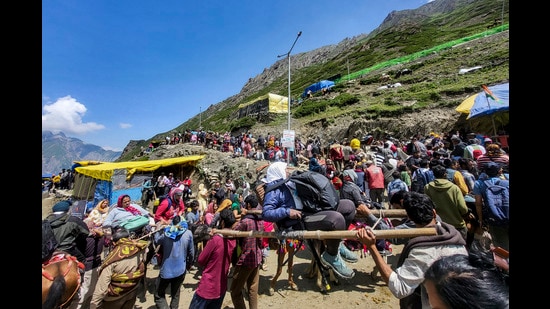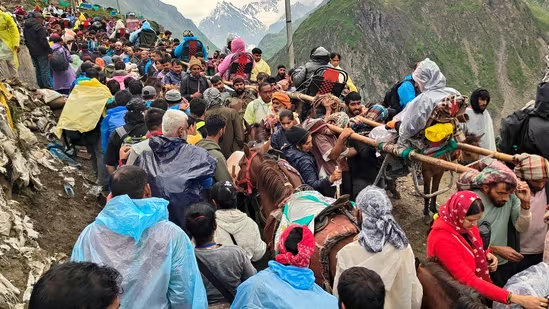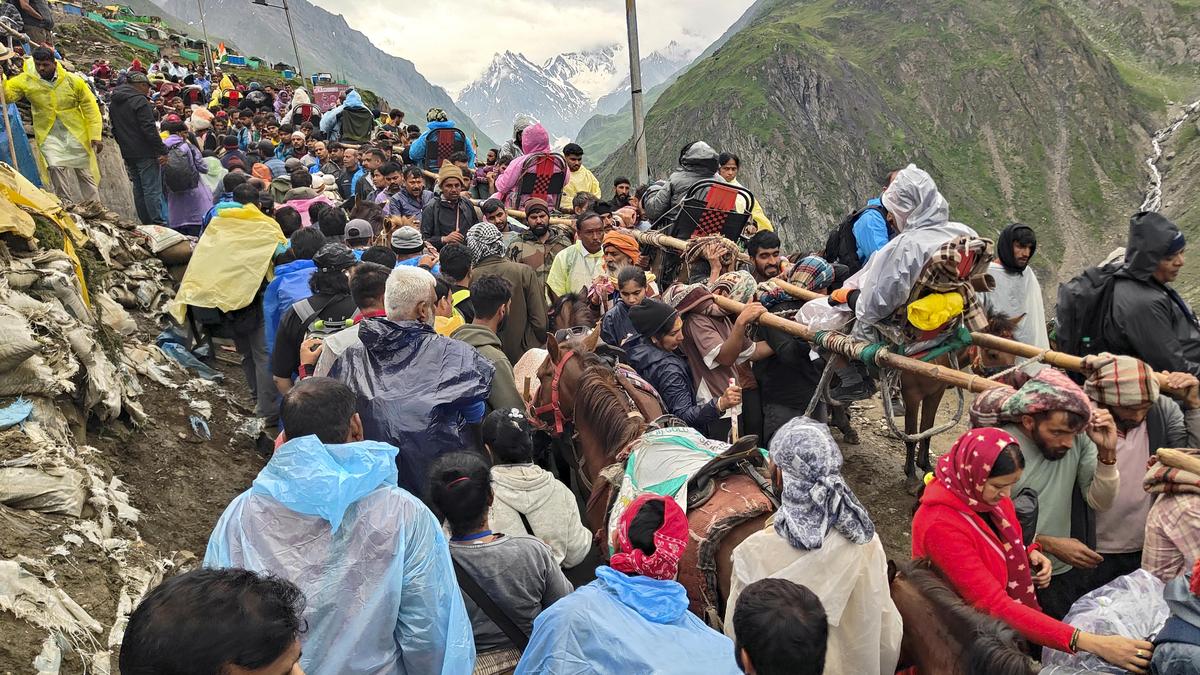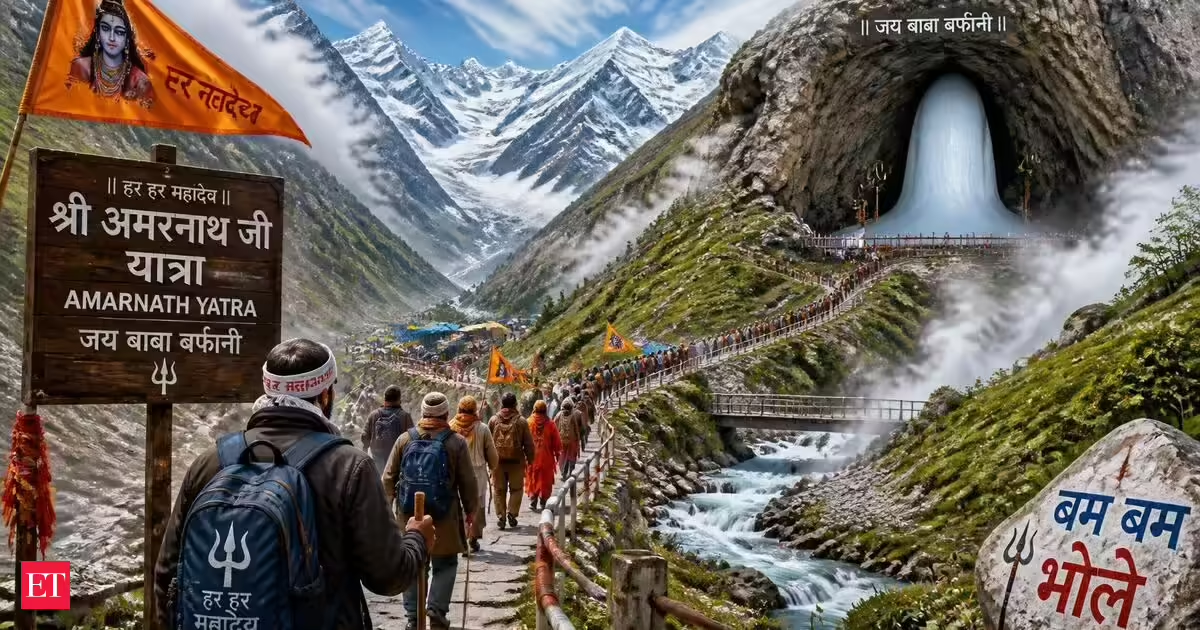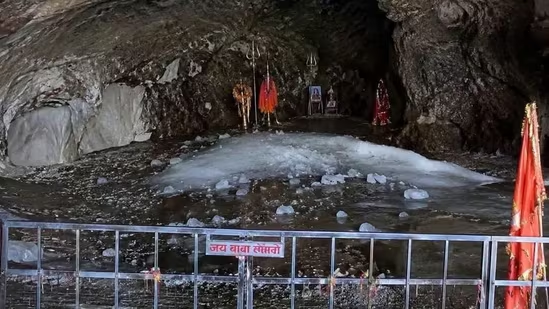
One of India’s most physically demanding and spiritually significant Hindu pilgrimages, the Amarnath yatra stands as a living, breathing testament to Kashmiriyat — the region’s unique ethos of syncretic culture, interfaith harmony, and legendary hospitality. Every year, lakhs of pilgrims brave the Himalayas’ rugged terrain and harsh weather to reach the Amarnath cave shrine, located at an altitude of about 13,000 feet in Anantnag district of southern Kashmir, where a naturally forming ice stalagmite, revered by millions of Hindus as a manifestation of Lord Shiva, is housed.This year, the 57-day pilgrimage began on July 3 and is set to conclude on August 28.Devotees can take either the traditional 48-km Nunwan—Pahalgam route in Anantnag or the shorter 14-km Baltal route in Ganderbal district of central Kashmir.For centuries, the smooth conduct of this arduous journey has relied on a close bond between visiting devotees and the local community, the majority of whom are Muslims. Long before modern administrative infrastructure existed, local residents played a vital role in facilitating the pilgrimage. Every summer, braving unpredictable mountain weather, sudden downpours and oxygen-depleted heights, local pony owners, palanquin bearers, porters and tent operators help the pilgrims navigate the challenging terrain.They provide essential logistical support and often assist or rescue stranded travellers. While the pilgrimage sustains the livelihoods of many local families, it has also nurtured a tradition of hospitality.Local residents welcome pilgrims as honoured guests, offering drinking water, walking sticks and warm cups of kahwa (a traditional variety of green tea) to weary yatris along the route. In 2025, following the Pahalgam attack on April 22, around 4,10,000 pilgrims visited the cave, a decline of around 1,00,000 from the previous year. Inclement weather had forced its early conclusion in about 35 days that year.Amid growing polarisation elsewhere, the snow-capped trails of Amarnath become a space where different faiths actively coexist and sustain one another. The warmth, compassion, and silent acts of kindness extended by ordinary Kashmiris define the true spirit of the pilgrimage, sending a powerful message of unity and enduring humanity to the rest of the world.Photo:
News in Frames | A sacred trail of faith and fellowship
The Hindu's News in Frames on July 12, 2026
590 words~3 min read