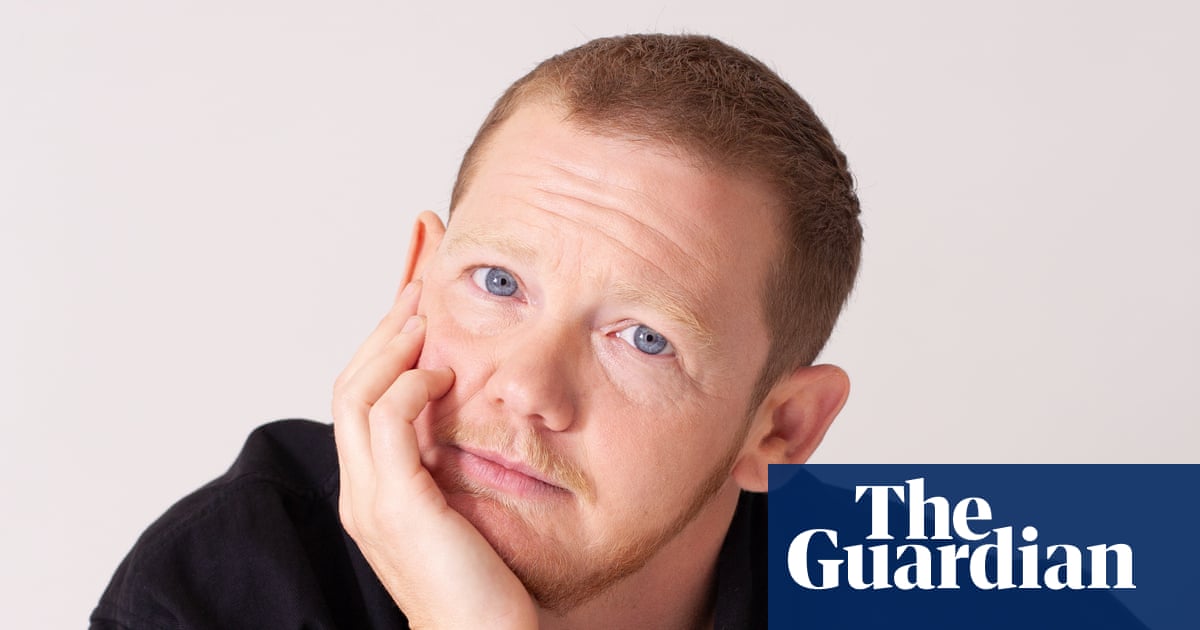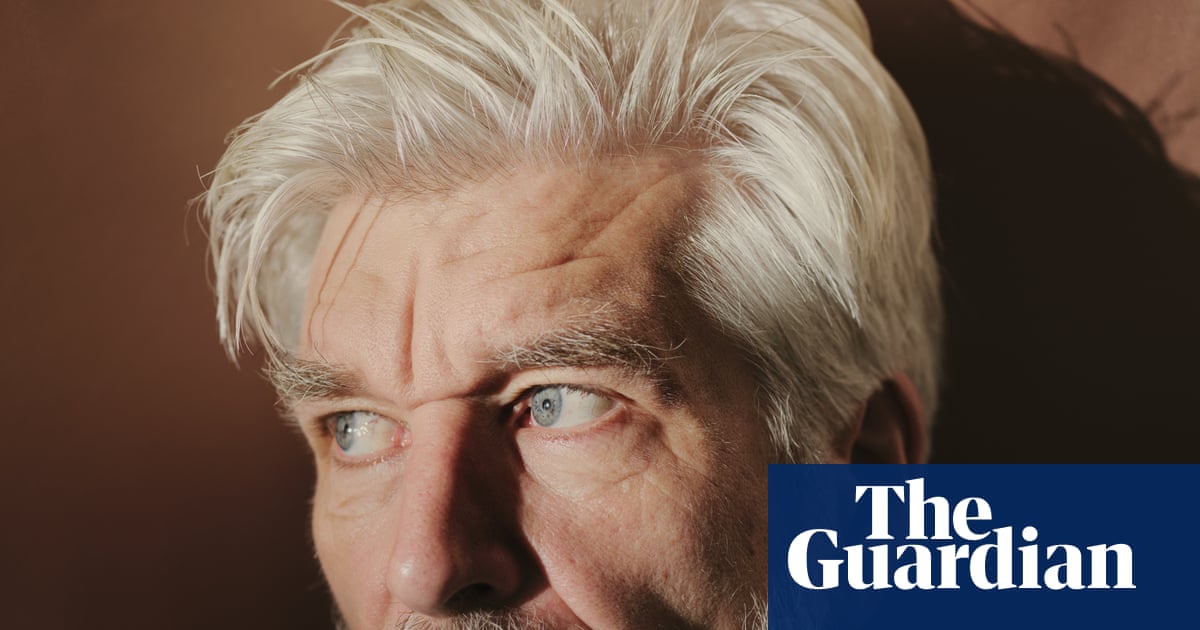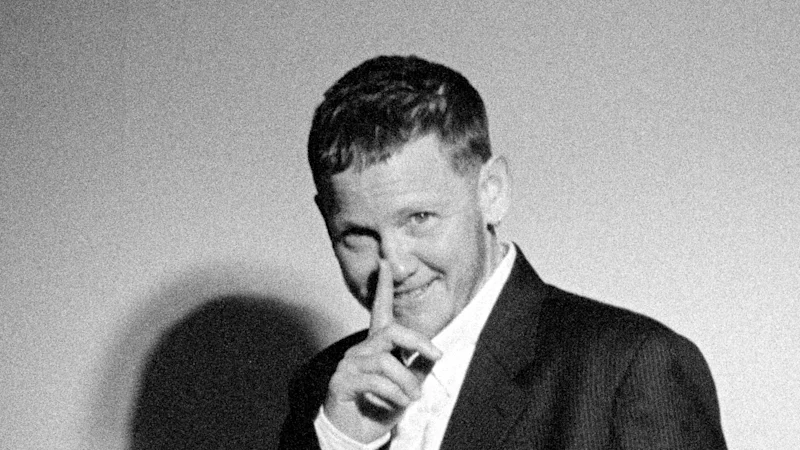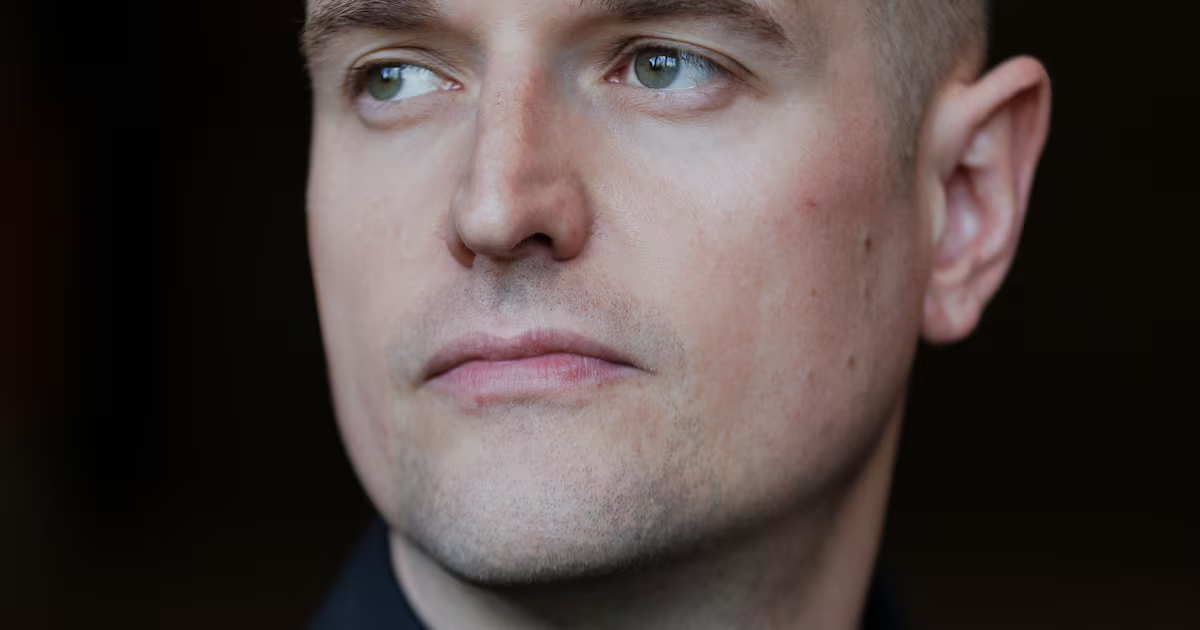
The 35-year-old Scotsman talks politics, poverty, activism and addiction on the back of the novel’s releaseGraeme Armstrong: 'Not all my friends had happy endings, but I was lucky to escape through using literature as a tool for survival.' Photograph: Robert Ormerod Tell us about your new novel, Raveheart.You could call Raveheart an alternate history. The real-world Criminal Justices and Public Order Act 1994 quarrel was my starting point to envision a new party of UK government, which, after sweeping to power, manages to ban electronica. DJ Turbo, an everyday hero and resident spinner in his local Coatbridge ice disco, launches a rave revolt with a motley crew of techno paramilitaries. Think 1984 versus Human Traffic – that’s my elevator pitch, anyway. It’s a political parable about the state of modern Britain and a bonkers rave quest – it’s a lot of fun, even for those who aren’t necessarily rave fanatics, as I am. It features an ultranationalist regime led by “The New Greatest Britishest Party”. Rangers fans are traditionally unionist, but do you favour Scottish independence? I think it’s fair to say the colour of many Scots’ scarves in the stands also dictate their politics, but I’m sure there are some Rangers fans who would be glad to see the back of Westminster. You never know, there might even be a few green and whites who would prefer to maintain the political status quo for their own reasons! I’m agnostic about the whole debate and tend to work at community level, out of party politics. Constitutional wrangling aside, there are a number of challenges in Scotland that require attention – not least a re-emergence of serious youth violence. That’s where my focus and heart is. Scotland’s rave scene also inspired your Bafta-nominated documentary, Scotland the Rave (2022). Tell us more.Scotland the Rave was inspired by Raveheart the novel and became my first foray into documentary making for the BBC. Honestly, it was a brilliant thing to be involved in. We spoke with 1990s pioneers who started the scene in Scotland, and my generation of teenage bedroom bootleggers – the so-called PCDJs – not-for-profit have-a-go heroes from working class communities who made endless remixes of classic tracks and competed among themselves. Totally illegal – great times. You’re also a community activist, working with young people to combat gang violence. How did you get involved?As a young man I was involved in Scotland’s endemic teenage territorial violence, an experience that was par for the course for many youngsters growing up in the 2000s in the aftermath of post-industrial decline. This was literally kids running around armed with knives, swords, machetes, baseball bats, defending imaginary lines in the sand across our most deprived communities. Not all my friends had happy endings, but I was lucky to escape through using literature as a tool for survival, education, finding Christian faith and recovery from addiction. I went on to publish The Young Team in 2020 with Picador. This meant I was invited to work in the prison estate, which quickly evolved into youth work in schools and communities as a new violence crisis emerged. Challenging? Always… but extremely rewarding. It’s been the making of me, and this work continues, including alongside senior leaders in education, law enforcement, social work, and local and central Scottish government. Change is slow – but only a concerted team effort can stop history repeating itself, as I fear it already is. You lost friends to heroin overdose as a teenager. Then reading Irvine Welsh’s Trainspotting inspired you to return to education?Three of my mates lost their lives in a single year to opioid deaths. One overdosed on heroin right in front of me, and I saved his life – his best mate yanked the phone cord out as I spoke to the ambulance operator – he lived that day but went on to die of another overdose. Life had become a hopeless thing for me back then but finding Trainspotting through a female classmate’s recommendation led to an awakening. The powerful recognition of these themes from Welsh’s Edinburgh spoke so personally to me. I went on to take a BA in English studies at the University of Stirling after being totally transfixed and inspired by it. I was still a gang member and yet to experience the most serious violence – including being stabbed in my honours year – but something within had changed. This experience was lifesaving to me. Your debut novel The Young Team (2020) won several awards and is being made into a six-part TV series. How close to home was it? Did it help you make sense of your past?My debut novel is the fictionalisation of my own lived experience growing up in gangs. That said, it’s fiction and Azzy Williams becomes a persona to explore the same themes I faced as a young person from a safe distance. The novel led into years of close-quarters community work facing the same challenges now as an adult trying to prevent violence, rather than a young person promoting it through a lifestyle. Writing it all down was a healing thing, but a difficult road for sure. It’s written in dialect. How important was that choice?During the submission process, I soon realised how challenging it is to achieve publication as a Scots speaker and writer. Many of the novel’s 300 rejections were due to the authentic linguistic portrait captured in my work. Only afterwards did I realise its importance in terms of representation and access to the text by readers from my own community. Men in jail told me it was the first book they’d ever read. Young people said it felt like their mate telling them a story. Standard English, the way I’m speaking just now, is the foreign language. Scots language is fundamental to both my identity and creative practice. This is 100 per cent non-negotiable.Reality is often more violent than fiction, you’ve said. Does fiction have limitations?Real life often doesn’t make much sense and neither does it satisfy a convenient narrative arc. My early life in gangs was full of dead ends rather than avenues. The cavalry didn’t always ride in and save the day, and I lost pals without any great revelation about masculinity or the nature of violence. Many of the lives I capture in my work ended with the whimper, rather than the bang. Using fiction to distil traumatic lived experience was the right decision for me at 21 when I was at the beginning of a long recovery and healing process. Now at nearly 35, I’ve been working on the memoir version for my PhD thesis and it’s much more challenging and painful. The truth behind the story is a serious thing and needs to be handled with care and respect. James Kelman, Janice Galloway and David Keenan are also influences? Tell us about them. What other Scottish writers should we be reading?Janice Galloway mentored me after being writer-in-residence at Stirling Uni and was instrumental in my career as a writer. She recognised I came from a tough place and had a story to tell probably before I did. Kelman is an undeniable Scottish lit godfather, and fellow Airdrieonian Keenan is sound as a pound and mad as a brush. My two favourite Scottish writers are Jenni Fagan and Kerry Hudson, who have both used their challenging early lives to write phenomenal novels and memoirs confronting what it means to grow up at the sharp end of modern poverty, experiencing gender-based violence, and in Scotland’s forgotten communities. They are generational talents and literary heroes of mine. Which projects are you working on?I’m writing the screenplay for The Young Team, which is in production as a BBC drama, and I’m pre-viva on my PhD, writing the true story of my early life in Scotland’s youth gang culture. An excerpt of this was used in the Granta Best of Young British Novelists anthology, The Cloud Factory. Spinning too many plates probably but I’m getting there. What is the best writing advice you have heard?F**k writing advice, honestly – just write and enjoy the ride. Maybe something will happen, maybe not. You are supreme ruler for a day. Which law do you pass or abolish?Make poverty illegal. I won’t hold my breath though. What is your favourite quotation?“My language and my culture have the right to exist and no one has the authority to dismiss that” - James Kelman’s 1994 Booker Prize address. No caption required.A book that might move me to tears?Ootlin, Jenni Fagan’s memoir. It’s a masterclass and a damning indictment of how badly our societies let down the most vulnerable children. Something like two-thirds of young offenders at the Polmont facility in Scotland have been in care. That tells the true story about the cycle of victimhood. Hurt people hurt people. Victims create victims. It’s brutal work but its essence remains hopeful. Raveheart is published by 4th EstateIN THIS SECTION
Graeme Armstrong: ‘You could call Raveheart an alternate history’
The 35-year-old Scotsman talks politics, poverty, activism and addiction on the back of the novel’s release
1,488 words~7 min read