Story audio is generated using AI
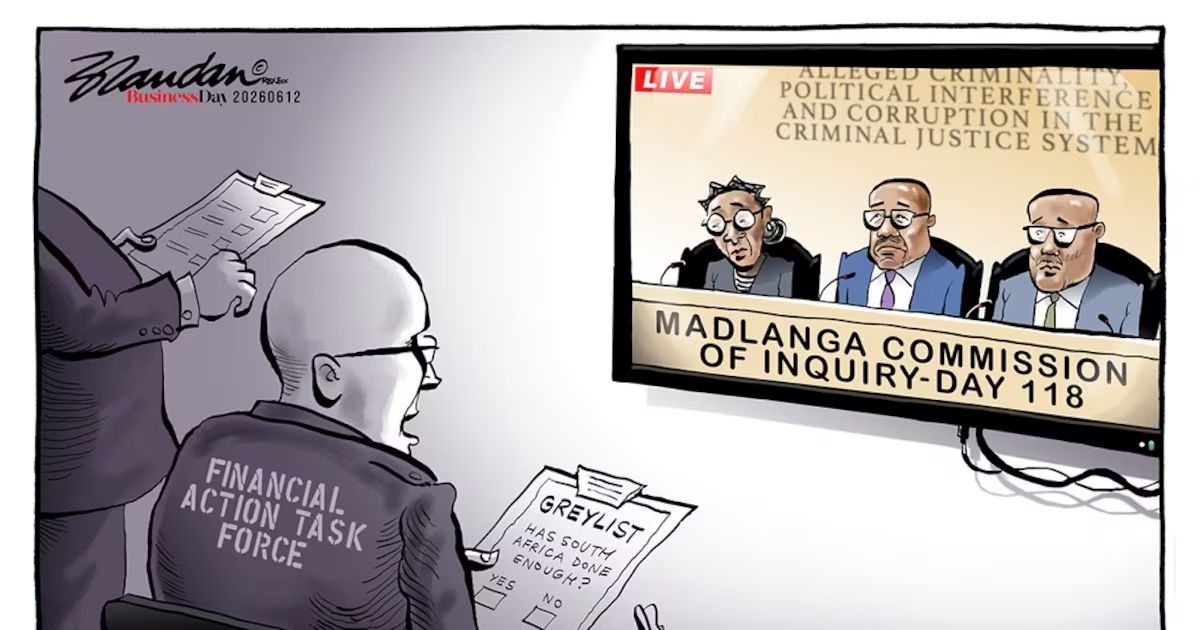
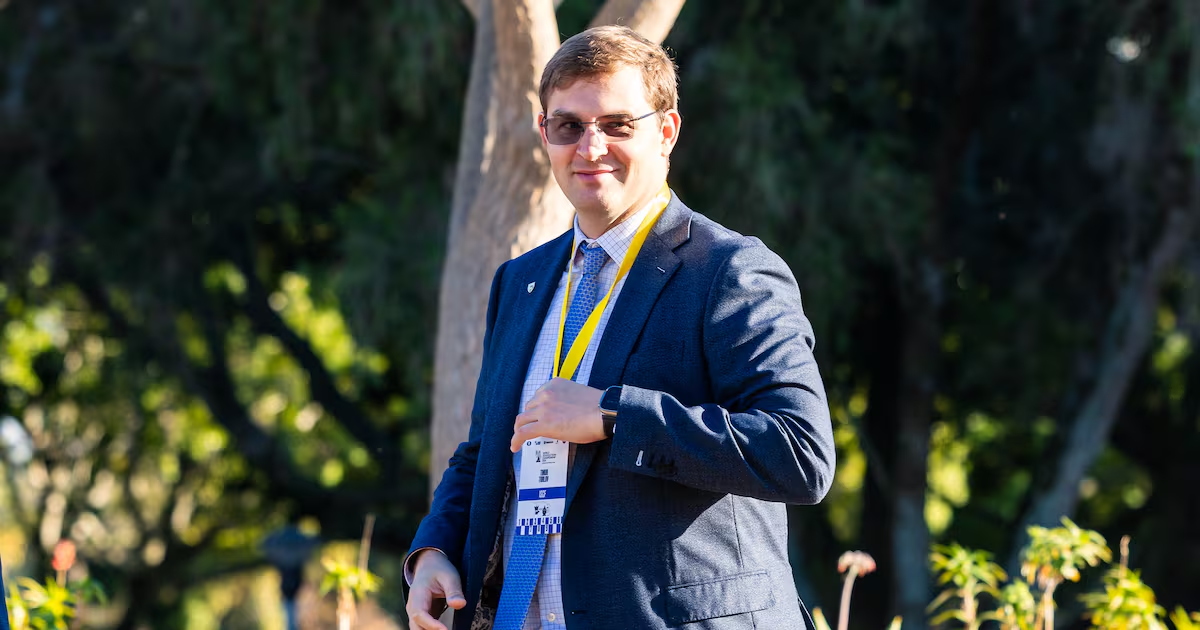
South Africa’s removal from the Financial Action Task Force (FATF) greylist and tightening of safeguards against money laundering refreshed an already strong appetite from investors across the globe to invest in the sophisticated and well-regulated market.This is according to Russian-born Kazakhstani entrepreneur, financier, and Freedom Holding Corp. CEO Timur Turlov, who told Business Times this week his Turlov Family Office Securities (TFOS) service always considered South Africa an appealing market.“I founded this company a bit more than two years ago, and my dream was to better understand what the South African market is. In Freedom Holding, we had a lot of experience dealing in Central Asia and in Europe and a little bit in the US, but I realised that South Africa has experienced regulators.“It is one of the wealthiest markets in Africa, in capital, and a strong interest to financial markets; the developed stock market in the country; the developed culture of investments; implementing a modern trading platform; and building all the connectivity to the global markets through our platform to US, European, Asian and African markets, of course [made the market appealing].”TFOS opened an office in Stellenbosch two years ago. The private securities brokerage is regulated by the Financial Sector Conduct Authority (FSCA).Turlov said South Africa remained “a good continental jurisdiction” and a great platform to attract investors. He said TFOS was interested in developing a retail approach to deliver investment opportunities to its customers. According to Forbes, Turlov has a net worth of about $6.8bn (R110bn). “We have found strong demand for our services [in South Africa], and our business is growing a bit beyond expectation. “We don’t just have South African customers; we also have some international customers, who still trust this jurisdiction, who know that South Africa is a neutral jurisdiction with good perception of global regulators and good standing in terms of compliance and anti-money laundering initiatives.”Turlov said cryptocurrencies had become an essential offering for modern brokers and should be available to customers as another financial instrument. “You can buy and sell cryptocurrencies just as you can buy and sell US dollars. They are another instrument for payments, money transfers and savings. “I think the most widely used cryptocurrency is still a stable currency. That’s USDT and USDC. All those cryptocurrencies still meet the needs of most customers. Of course, you may buy and sell all others, like Bitcoin and Ethereum. All other classic cryptocurrencies, which are not stable. “I’m not a big crypto enthusiast. I don’t have much vision of how this cryptocurrency can change the world. In my opinion, it’s just an asset class like gold or like other sorts of commodities. Because the value of this cryptocurrency will depend only on consumer faith.”Harry Scherzer, CEO of Future Forex, said bad actors in the crypto industry shouldn’t be allowed to exploit consumers. South Africa’s approach to cryptocurrency regulation will be critical. While cryptocurrencies have significant potential, he believes overregulation could limit their usability, while underregulation would leave consumers more exposed to scams.“I believe cryptocurrencies should be regulated. It’s somewhat paradoxical because they gained popularity largely due to a mistrust of governments. However, we’ve also seen scams and cases where the creators of newly launched coins took profits while speculation was high, leaving those coins with little or no value.“As an asset class, crypto is still largely unproven, in my view. Where it has demonstrated real value is as a cross-border payment rail. The industry is working with regulators to incorporate cryptocurrency into exchange controls, and hopefully that will strike the right balance between protecting consumers and avoiding unnecessary friction. At the end of the day, blockchain has huge potential to make cross-border transactions faster, more efficient and more cost-effective.”Testament to the strong regulatory environment of the local financial market, the South African Reserve Bank announced on Thursday that it has imposed administrative sanctions on Southeast Exchange Company SA, an authorised dealer in foreign exchange with limited authority (ADLA). “It should be noted that the administrative sanctions were imposed due to certain weaknesses detected in the ADLA’s control measures, which inhibited its ability to conduct ongoing due diligence as mentioned in its Risk Management and Compliance Programme (RMCP) and adhere to the risk-based methodology outlined in its RMCP.”The statement said the ADLA also failed to appoint an anti-money laundering compliance officer and provide training to its staff. Administrative sanctions imposed five financial penalties amounting to R600,000 for failure to comply with various provisions of the Financial Intelligence Centre Act.Business Times