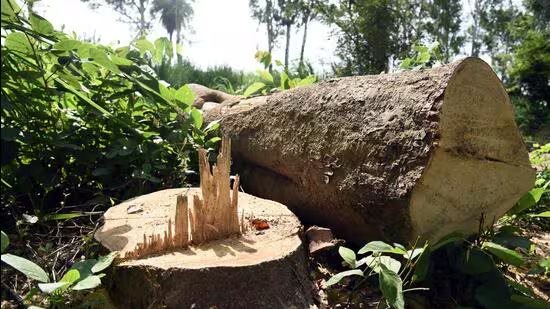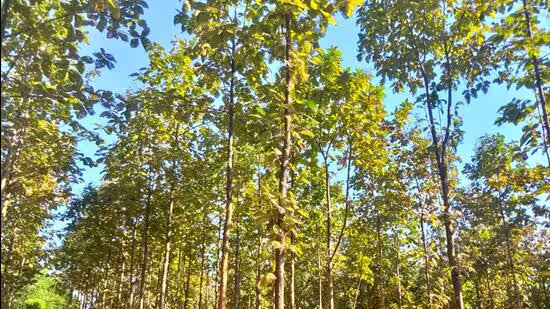
In a significant relaxation of Delhi’s tree-felling norms, the forest department has proposed exempting five commercially grown tree species from the existing permission regime for felling on private land, in a move aimed at promoting agro-forestry and reducing pressure on natural forests.Delhi govt proposes easier felling norms for five commercial tree speciesThe department of forests and wildlife has issued the draft *Delhi Preservation of Trees (Agro-forestry and Exempted Plantation Species) Rules, 2026*, proposing to exempt poplar (Populus deltoides), eucalyptus, sejhana (Moringa oleifera), gamari (Gmelina arborea) and Malabar neem (Melia dubia). A public notice inviting objections and suggestions was issued on July 8.At present, felling or heavily pruning a tree on private land without written permission from the forest department is prohibited under the Delhi Preservation of Trees Act, 1994. Landowners must apply through the department’s portal with proof of ownership, details of the trees proposed to be felled and the reasons for doing so. If permission is granted, they are required to undertake compensatory plantation at the rate of 10 saplings for every tree removed and bear their maintenance cost for seven years. Officials said the approval process, including a site inspection by a tree officer, can take up to 60 days.Under the draft rules, owners will first have to register plantations of the exempted species on the department’s portal by uploading geo-tagged photographs, ownership documents, and details of the species and number of trees. The portal will then generate a plantation registration certificate.“At the time of harvesting, the owner will upload the registration certificate and geo-tagged photographs of the trees proposed to be felled. Permission will be issued within seven working days for up to 10 trees, while applications involving more than 10 trees will require a site inspection within 14 days,” an official said.The draft also proposes allowing timber and other produce from the exempted species to be transported within or outside Delhi without a separate transit permit. Trees felled under the proposed framework will also not attract compensatory plantation under Section 8 of the Act.The department said existing rules governing the felling and transport of fast-growing commercial tree species have discouraged agro-forestry on private land, while the absence of a dedicated regulatory framework has deterred landowners.It said promoting agro-forestry on private land would increase green cover, enhance carbon sequestration, supplement timber supply and reduce pressure on natural forests.“Several states and Union territories have adopted simplified regulatory mechanisms for plantation and agro-forestry species on private land, balancing environmental protection with ease of doing business,” the draft states.The department, however, said the proposed framework seeks to align the Delhi Preservation of Trees Act, 1994, with national guidelines while ensuring that forests, ridge areas and trees protected under existing laws or court directions remain outside the scope of the exemptions.
Delhi govt proposes easier felling norms for five commercial tree species
In a significant relaxation of Delhi’s tree-felling norms, the forest department has proposed exempting five commercially grown tree species from the existing permission regime for felling on private land, in a move aimed at promoting agro-forestry and reducing pressure on natural forests | Latest News Delhi
460 words~2 min read