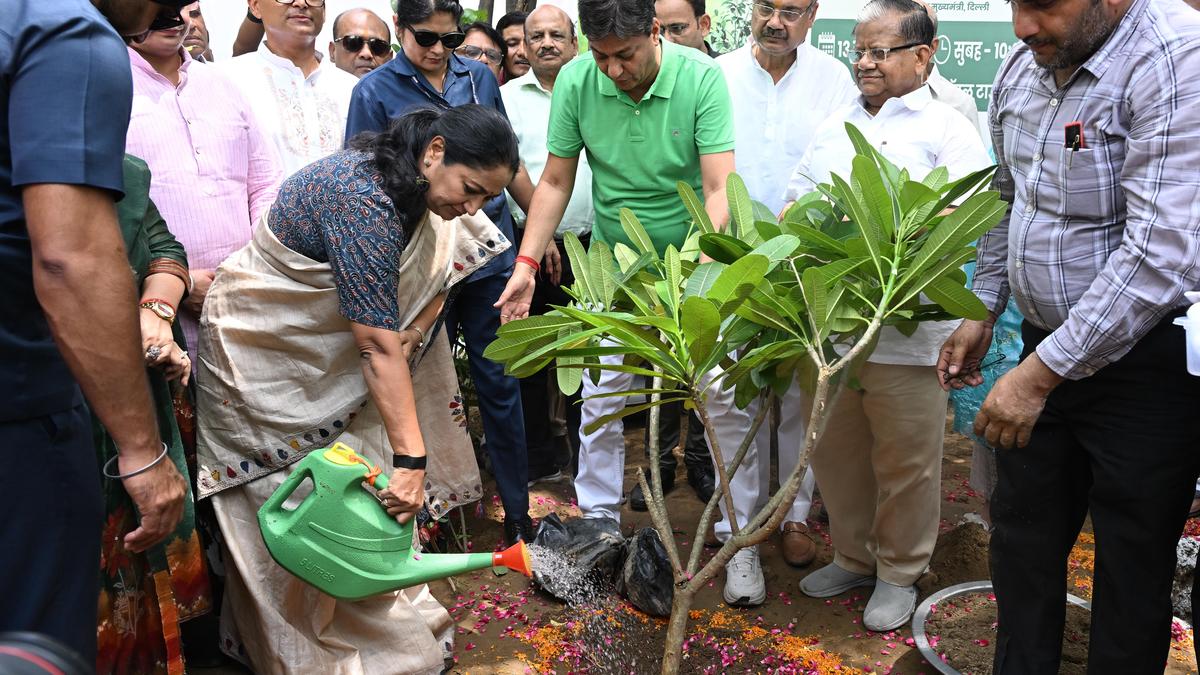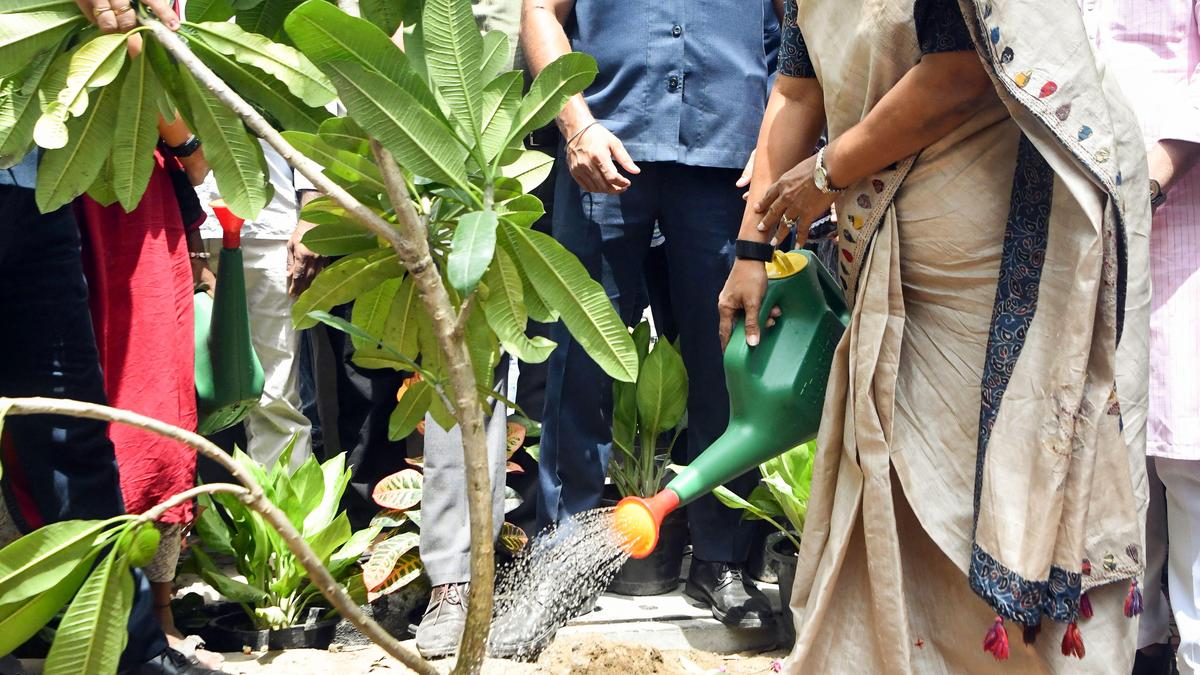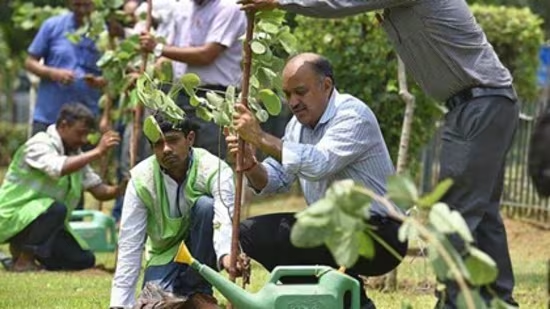
The Delhi government has started work on an afforestation drive to plant more than 7 million saplings across the capital using the “Aranya dense forest technique”. The initiative will use a layered plantation model, geo-tag every sapling and monitor survival rates digitally, officials said.Officials said the technique replicates the composition of a natural forest by planting three layers of vegetationOfficials said saplings will be planted at multiple sites under the city’s mega plantation campaign. Unlike conventional avenue plantations, the Aranya technique involves planting saplings close together to recreate the structure of a natural forest, creating dense green patches that require less maintenance.To facilitate the drive, the Delhi Development Authority (DDA) has floated tenders for fencing plantation sites under the “Aranya Policy” at locations including Picnic Hut Park and Tehkhand Phase-I. The work includes installing GI wire mesh fencing supported by wooden ballies to protect newly planted saplings. The project is estimated to cost ₹27.99 lakh and is scheduled to be completed within 45 days.Officials said the technique replicates the composition of a natural forest by planting three layers of vegetation including tall canopy trees, medium-sized trees, and shrubs or undergrowth to create a dense ecosystem that supports biodiversity.“The plantations are being developed using the Aranya methodology, where different native species are planted in close proximity to create self-sustaining forests. Every sapling will be geo-tagged so that its growth can be monitored individually. If any plant does not survive, it will be replaced during the maintenance period,” a senior Delhi government official said.The official said geo-tagging would enable authorities to monitor survival rates and maintain records of every plantation site and sapling.According to officials, plantation sites will be protected with fencing made of eucalyptus logs and GI wire mesh to prevent grazing, vandalism and accidental damage during the initial years of growth.The plantations will primarily use native species suited to Delhi’s climate. Officials said mixed plantations improve ecological resilience by reducing dependence on a single species while creating habitats for birds, insects and other fauna.The Aranya model involves preparing nutrient-rich soil, planting saplings at high density and allowing natural competition among plants to accelerate growth. As the vegetation matures, leaf litter forms a natural mulch that helps retain moisture, reduces the need for frequent irrigation and gradually suppresses weed growth.Officials said the plantation drive is part of the government’s broader strategy to expand the city’s green cover and improve urban ecology through scientific planting methods.
Delhi to plant over 7 million saplings using Aranya dense forest technique
The Delhi government has started work on an afforestation drive to plant more than 7 million saplings across the capital using the “Aranya dense forest technique” | Latest News Delhi
404 words~2 min read