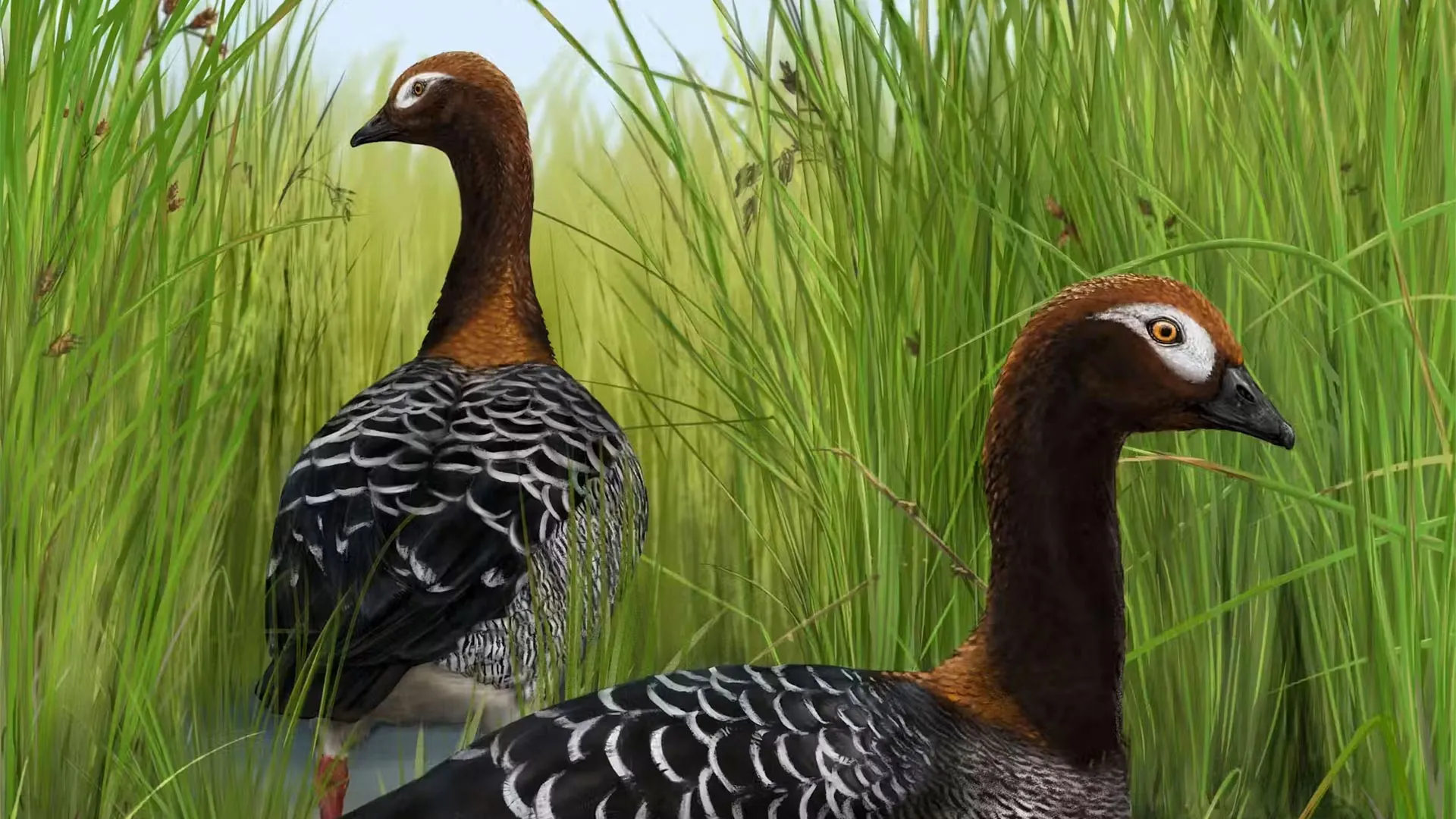
A rare fossil goose discovered in the remains of an ancient lake in Central Otago is changing scientists' understanding of how New Zealand's unique bird life evolved. According to researchers from the University of Otago -- Ōtākou Whakaihu Waka, the find adds to growing evidence that the origins of Aotearoa's birds were far more dynamic than previously believed.
Associate Professor Nic Rawlence, Director of the Otago Palaeogenetics Laboratory, is a co author of the new study, which investigates the fossil and its evolutionary relationships.
The research, published in Historical Biology, was carried out by an international team from the University of Otago, the Museum of New Zealand Te Papa Tongarewa, and the University of Cambridge (UK). The scientists examined fossil material recovered from the well known St Bathans fossil deposits.
A New Species Hidden Among Fossils
Rawlence explained that although waterfowl fossils are abundant at St Bathans, goose remains are much less common.