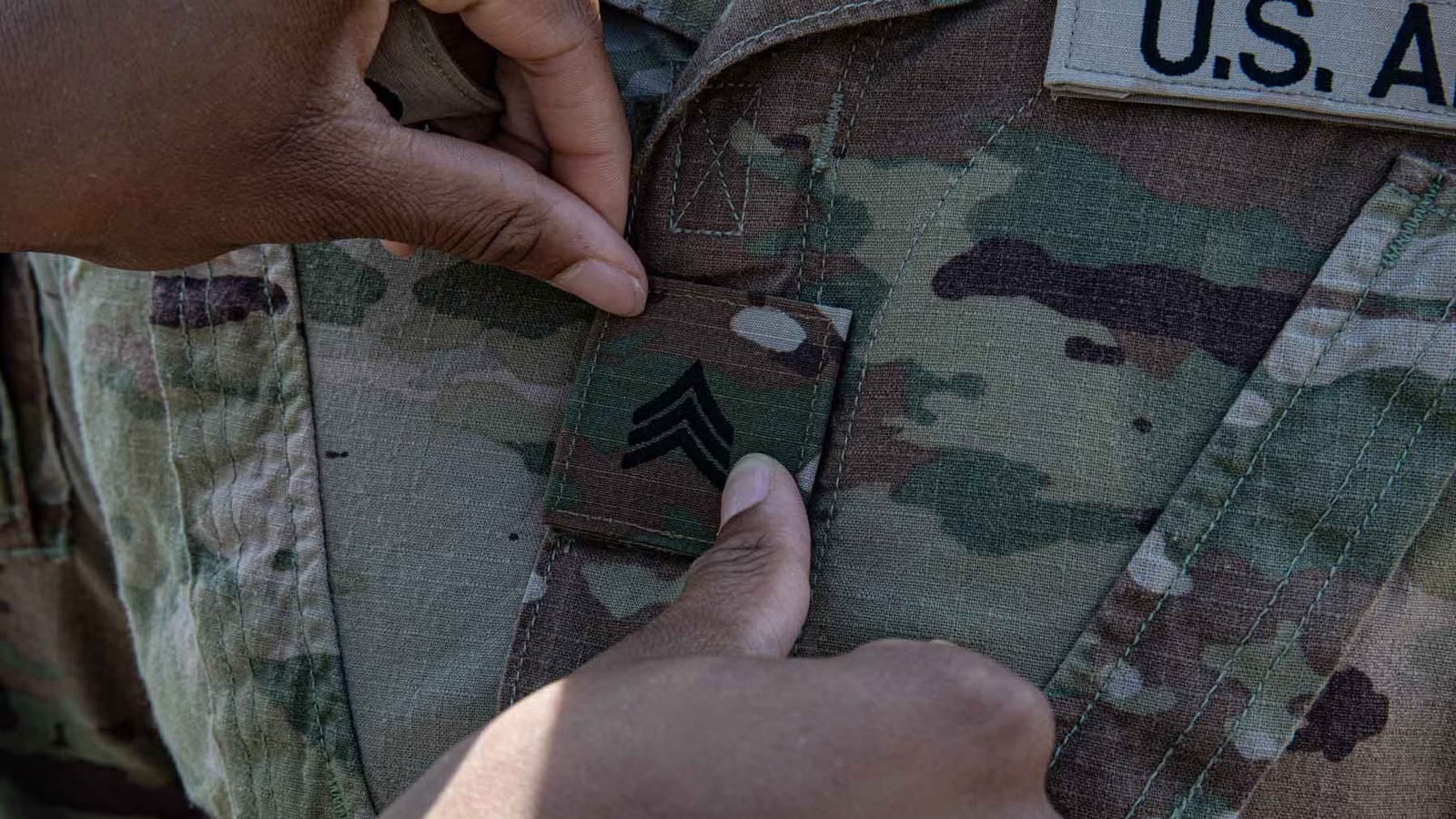
The U.S. Army is organized into three main rank groups: enlisted soldiers (E-1 to E-9), warrant officers (W-1 to W-5) and commissioned officers (O-1 to O-10). Each group reflects a different level of responsibility, expertise, leadership and pay. Enlisted soldiers make up 82% of the Army and get hands-on training, including for any career field that interests them. They perform most of the hands-on work, from combat roles to technical tasks, logistics, administration and more. As they advance into the noncommissioned officer (NCO) and senior NCO ranks, they become responsible for training, mentoring and managing lower-ranking soldiers. Warrant officers are highly specialized experts in their technical fields. They typically begin as enlisted soldiers and are selected for their deep knowledge in areas like aviation, intelligence, cyber operations and maintenance. Warrant officers (W-1 to W-5) bridge the gap between the enlisted and officer ranks, often serving as key advisers and technical leaders. Commissioned officers are the Army's decision-makers and unit commanders. They plan missions, lead troops, manage resources and oversee operations. Officers enter the Army through ROTC, Officer Candidate School (OCS) or the U.S. Military Academy at West Point, New York. Their ranks range from platoon leaders to generals commanding entire divisions. Jump to:
Army Ranks: A Complete Guide to Enlisted and Officer Ranks
Explore U.S. Army ranks from private to general. Learn rank structure, pay grades, insignia and promotion paths in this complete guide.
3,763 words~17 min read