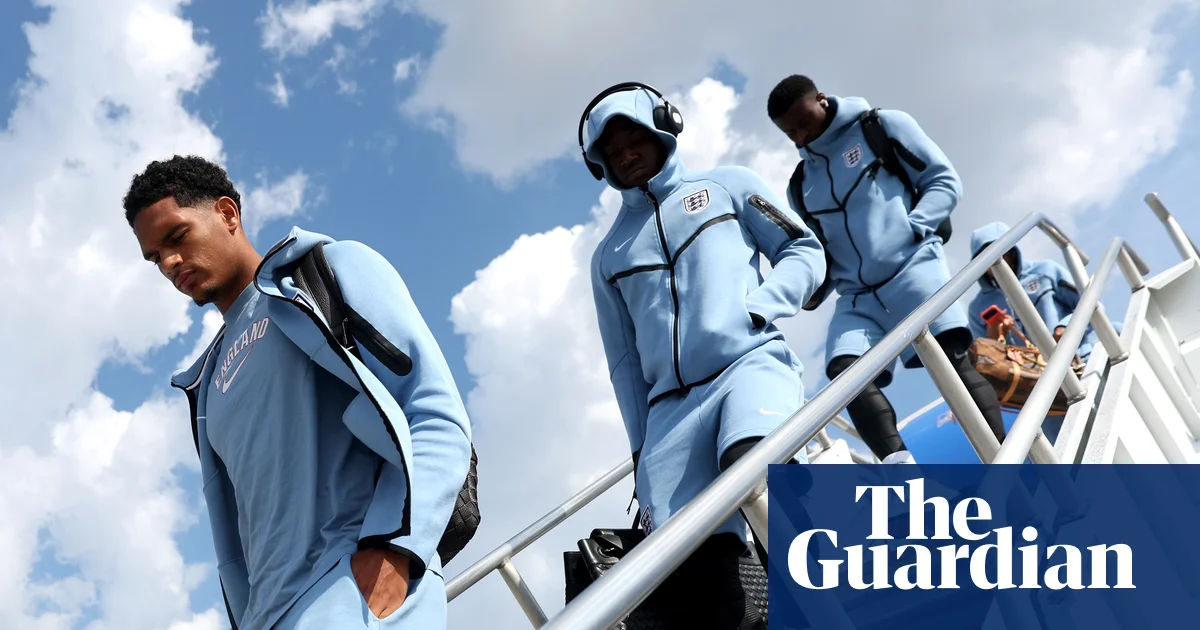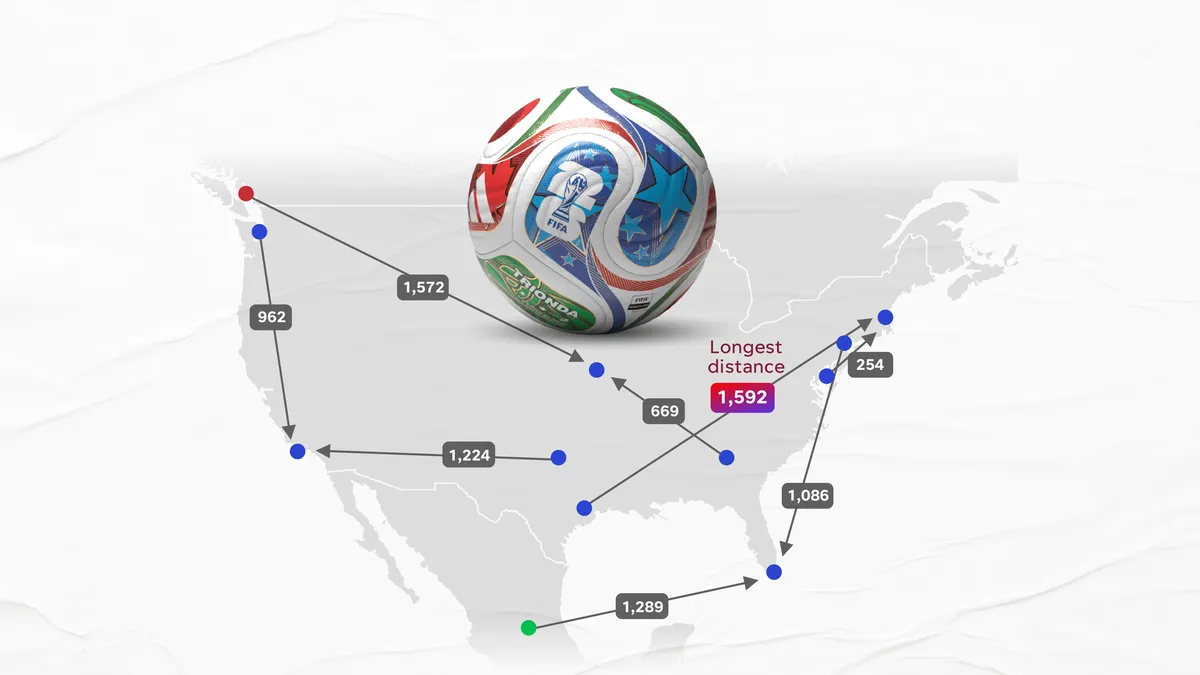
England has racked up nearly 13,000 miles of air travel to reach the World Cup quarterfinals. France, playing on the same continent in the same tournament, has logged roughly 2,000 miles. That’s not a typo. One team is basically commuting across seven cities spanning three countries while the other has been casually hopping between East Coast venues like a consultant on a regional sales route.
The disparity is striking, and it highlights something that matters far beyond the pitch: when you design a mega-event across a landmass the size of North America, logistics become a competitive variable. And that has implications for how we think about fairness in billion-dollar sporting events, the economics of host city selection, and what happens when FIFA’s ambitions outpace geography.
The mileage gap, explained
England’s itinerary reads like a budget airline’s route map having an identity crisis. The squad has bounced between Kansas City, Dallas, Boston, New Jersey, Atlanta, Mexico City, and Miami. Each leg means a flight, a new hotel, a new training facility, and another round of disrupted sleep cycles.
France, meanwhile, has been living the dream. Their schedule has kept them concentrated along the US East Coast, with matches in Boston, New Jersey, and Philadelphia. Those are bus-ride distances by American standards. Certainly not the kind of travel that requires crossing multiple time zones or, say, international borders.