Foundation models have transformed text, images and time-series forecasting, but tabular data has remained dominated by traditional machine learning algorithms that must be trained separately for every new dataset.
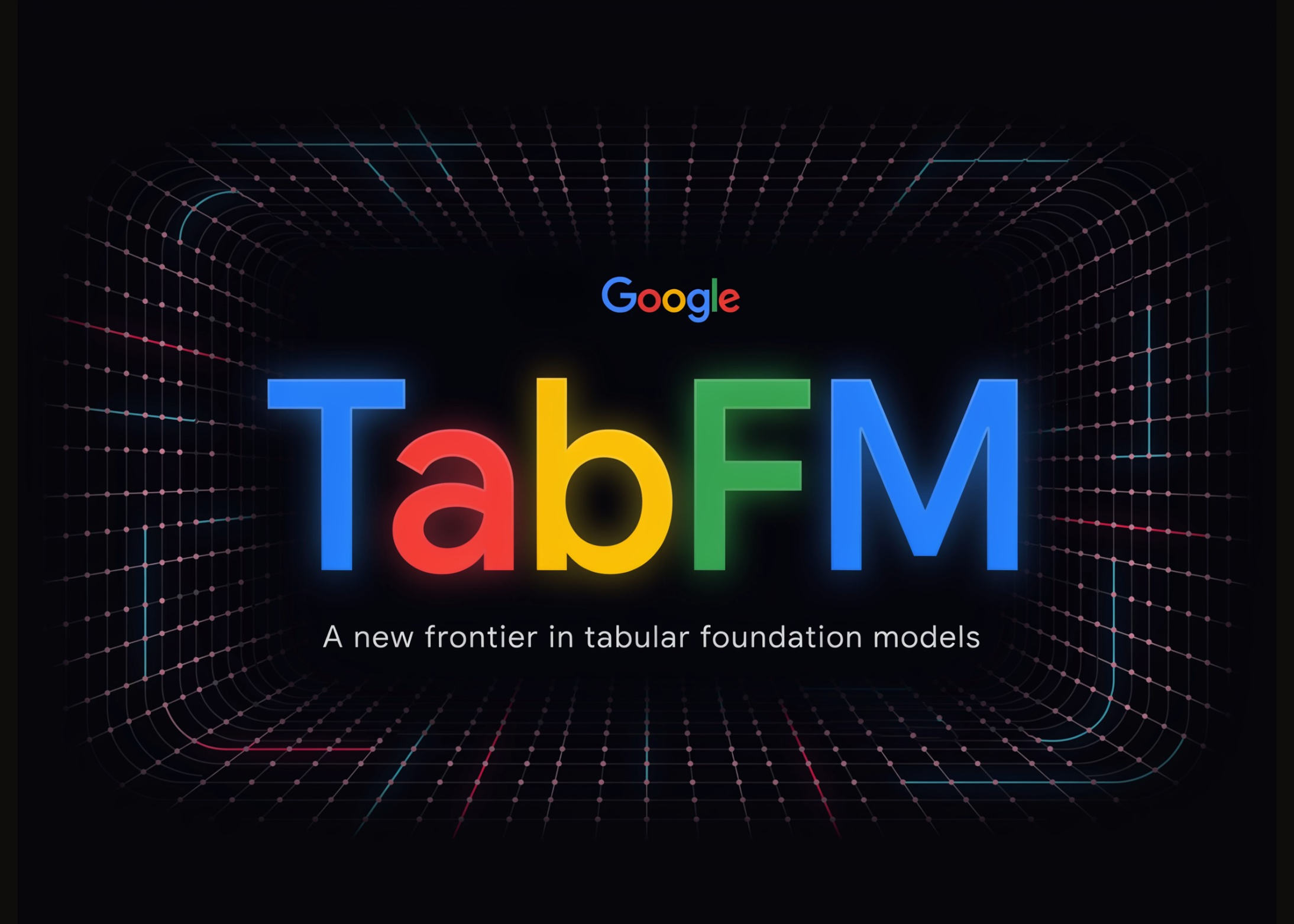
Google is seeking to change that with TabFM, a foundation model that brings zero-shot, in-context learning to structured enterprise data, allowing users to generate predictions without manual model development.
The company said the model is intended for enterprise use cases ranging from fraud detection and customer analytics to financial forecasting and other structured data applications that have historically relied on algorithms such as XGBoost and random forests.
Instead of fitting a model to each new dataset, TabFM treats an entire table as context for in-context learning. Historical examples and unlabeled target rows are processed together, enabling the pretrained model to learn task-specific relationships during inference rather than through additional training. This allows predictions to be generated immediately in a single forward pass on previously unseen datasets.
The model uses a hybrid architecture that combines alternating attention across rows and columns with compressed row embeddings before applying transformer-based inference.