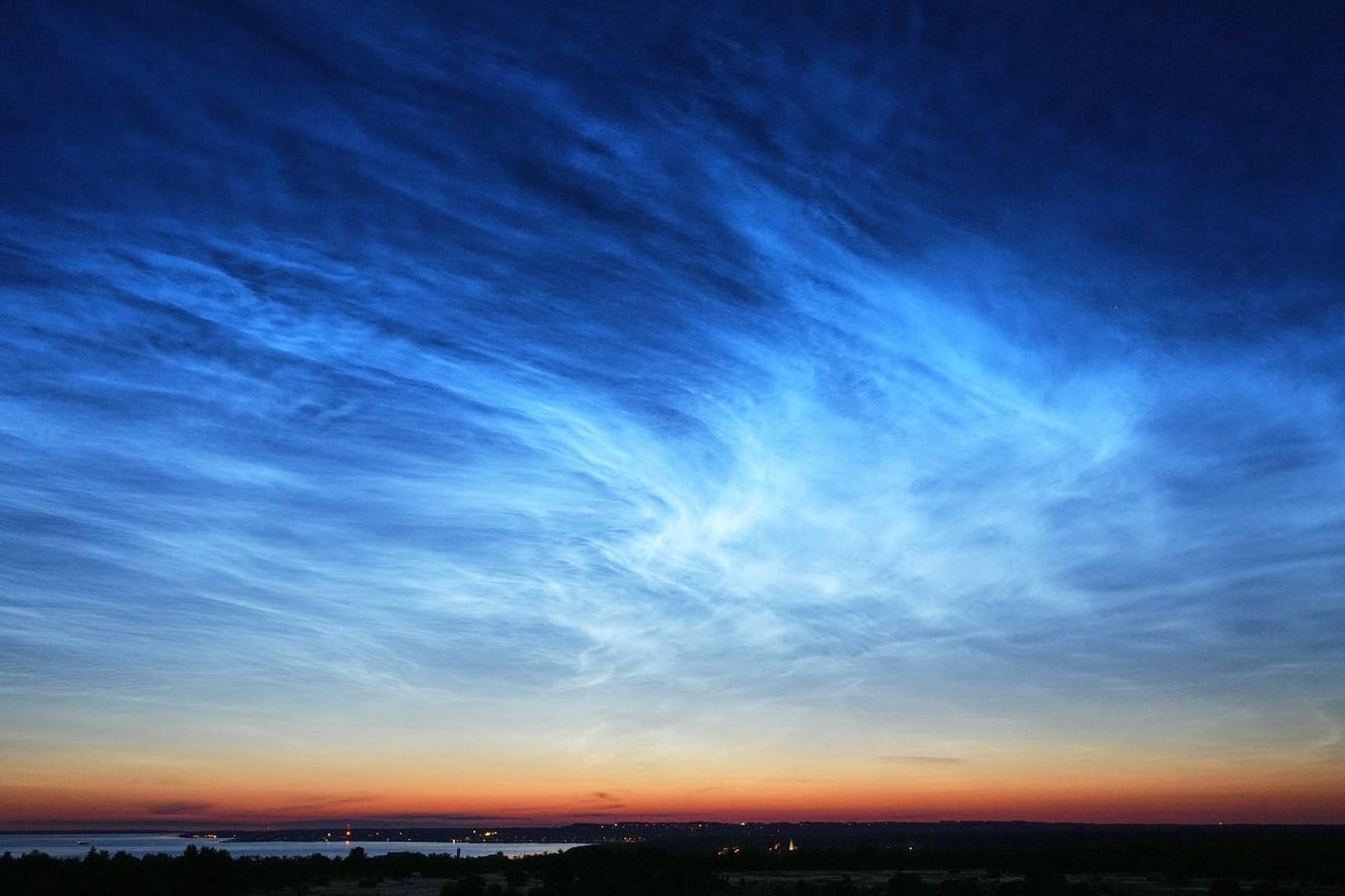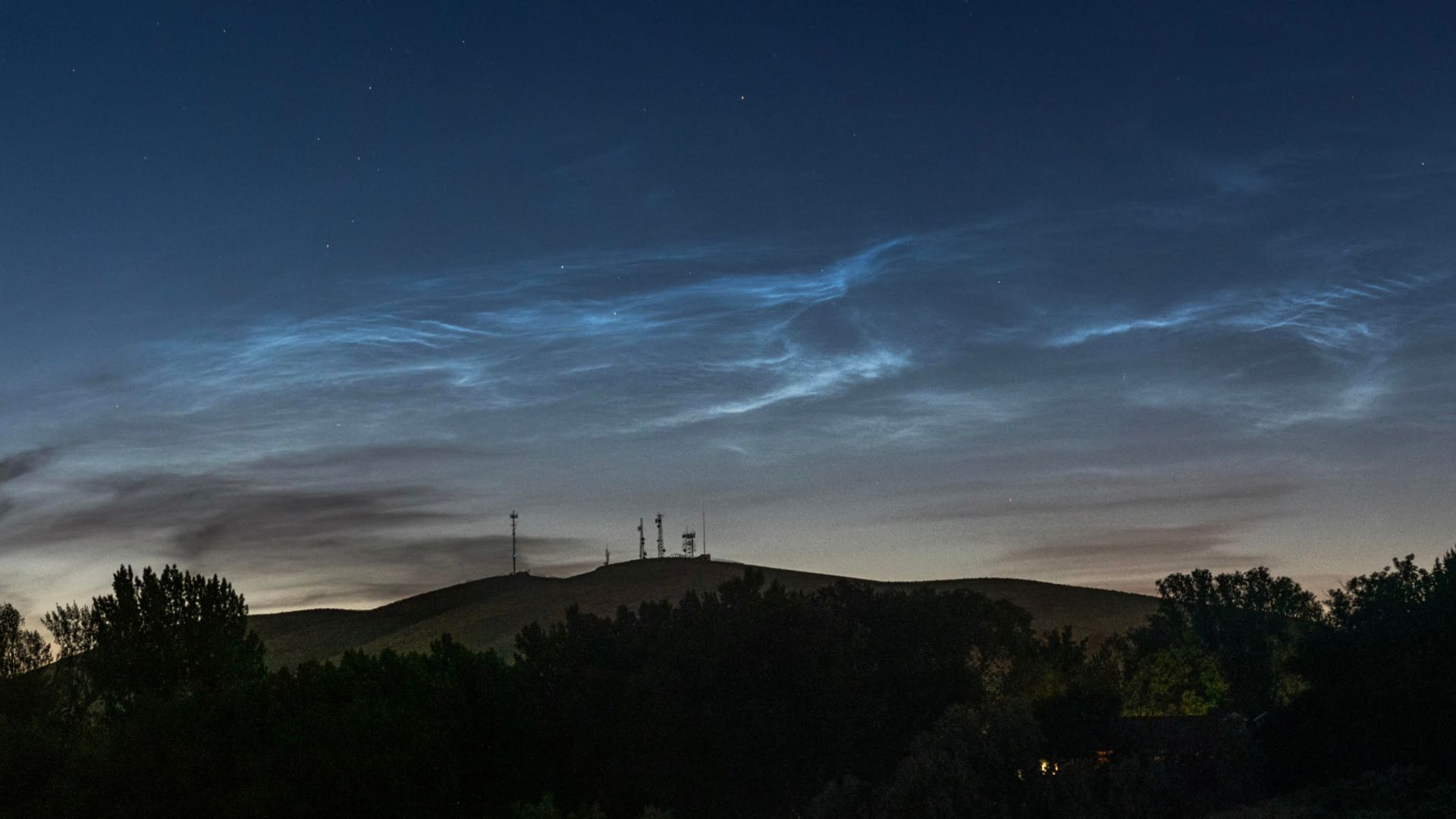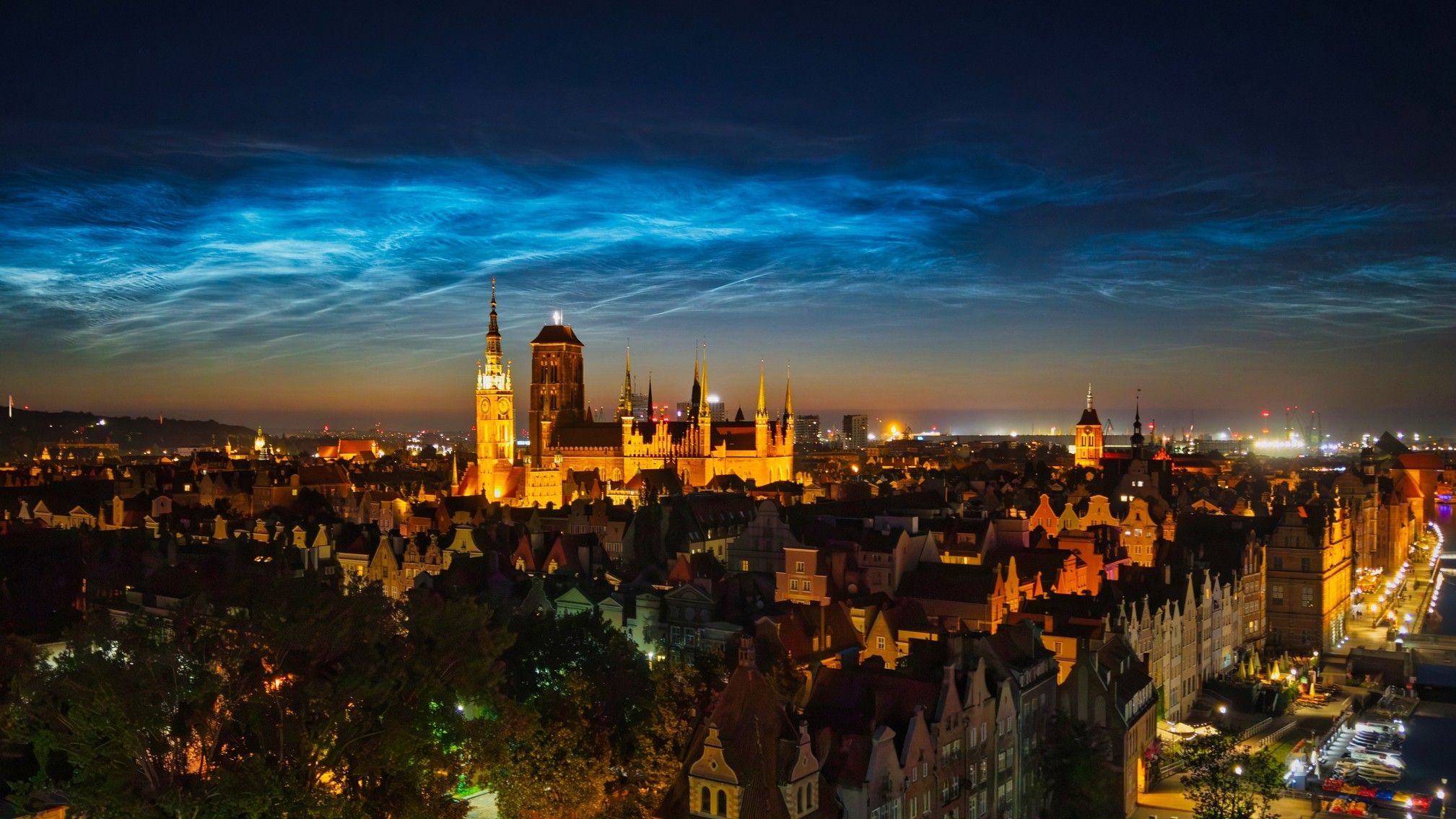
Noctilucent clouds season runs from May through September. In this photo, noctilucent clouds shine over Gdansk, Poland.
(Image credit: Patryk_Kosmider via Getty Images)
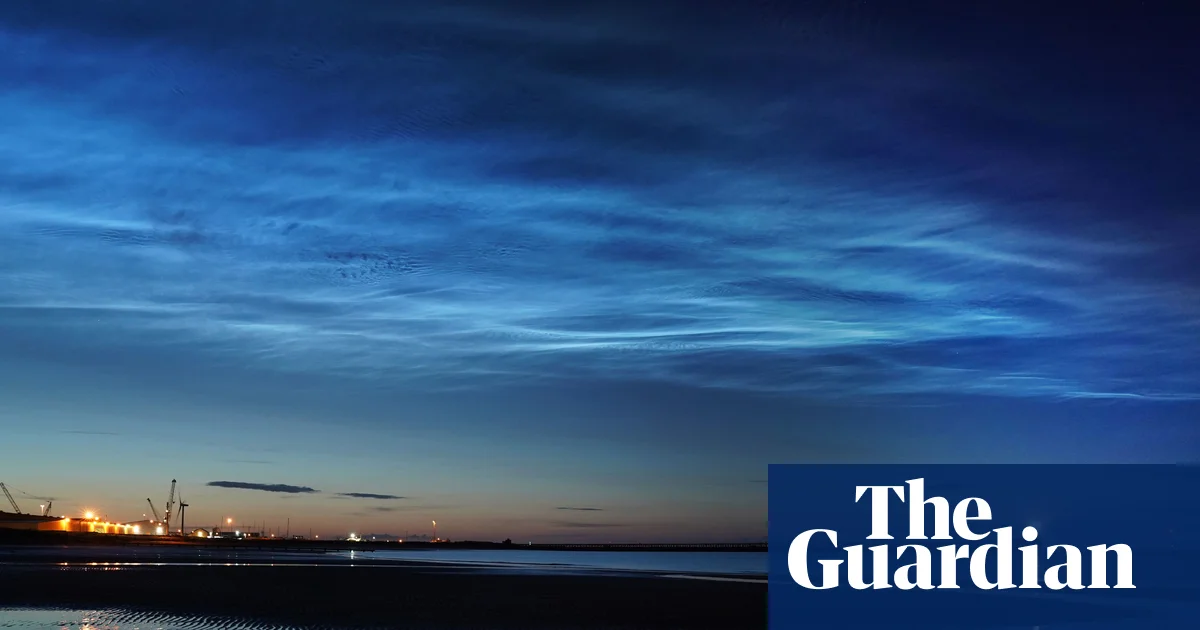
Should stargazers also be cloudspotters? Everyone knows clouds are the first thing you see as soon as you get under a dark sky or buy a new telescope — it's almost guaranteed! However, by early July, I usually start actively looking for a special kind of noctilucent or "night shining" cloud — and they can be a magnificent sight to rival anything celestial.At its core, the search for these so-called "space clouds" is the flip side of the seemingly never-ending twilight in July in mid-northern latitudes of the Northern Hemisphere. You wait all winter for tolerable temperatures, then summer arrives and the night sky never properly commits to darkness. At my latitude, the northern horizon glows all evening in early-to-mid July like somebody forgot to turn the sun off completely. Serious stargazing gets harder as even bright constellations seem washed out by lingering light.Cue noctilucent clouds. Peer at the northern sky during twilight between late May and August, and you may see strange silver-blue ripples. Delicate yet bright, they can look artificial — thin electric-blue strands stretched across twilight, with a texture like smoke. They seem entirely detached from the normal atmosphere.Noctilucent clouds are an accident. They are caused by sunlight striking ice crystals roughly 50 miles above Earth, near the edge of space, where ice crystals can only form under extremely cold conditions. They exist so high in the mesosphere — a layer of Earth's atmosphere above the stratosphere and below the thermosphere — that they continue to glow long after sunset, because the sun is still shining on them even though it has set as seen from beneath.Water vapor should not exist in the mesosphere, a dry layer on the edge of space. Yet under the right conditions, trace amounts of water vapor can freeze onto tiny particles, creating the ice crystals that make noctilucent clouds possible.While greenhouse gases warm the Earth's surface, they cool the mesosphere, allowing the increased moisture to freeze. There is growing evidence that changing upper-atmosphere conditions and increasing atmospheric moisture may be affecting how often noctilucent clouds appear and how far south they are seen.Perversely, noctilucent clouds arrive exactly during the brightest weeks of the year, when many stargazers are complaining that there is nothing worth observing. Cloudspotting on summer nights was probably not on your stargazing wishlist when you started, but for some of us, the chance of noctilucent clouds is all we have for a few weeks. See them once, and they'll fast become a seasonal delight you'll wait all year for.What's happening and when to look