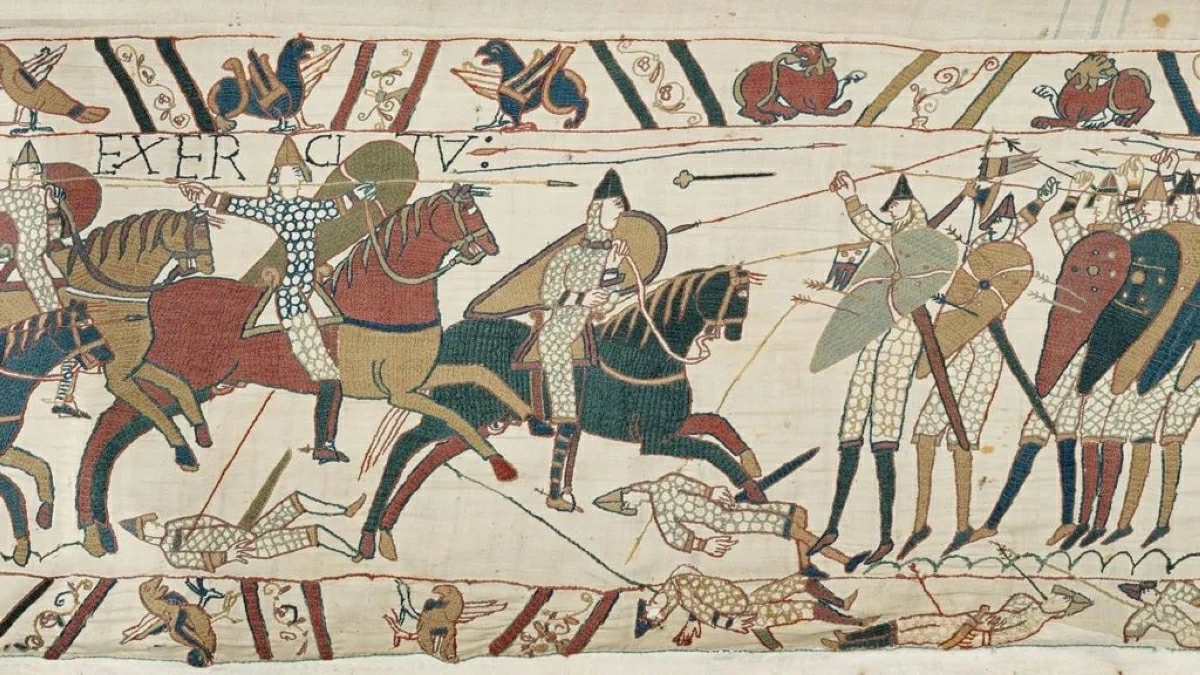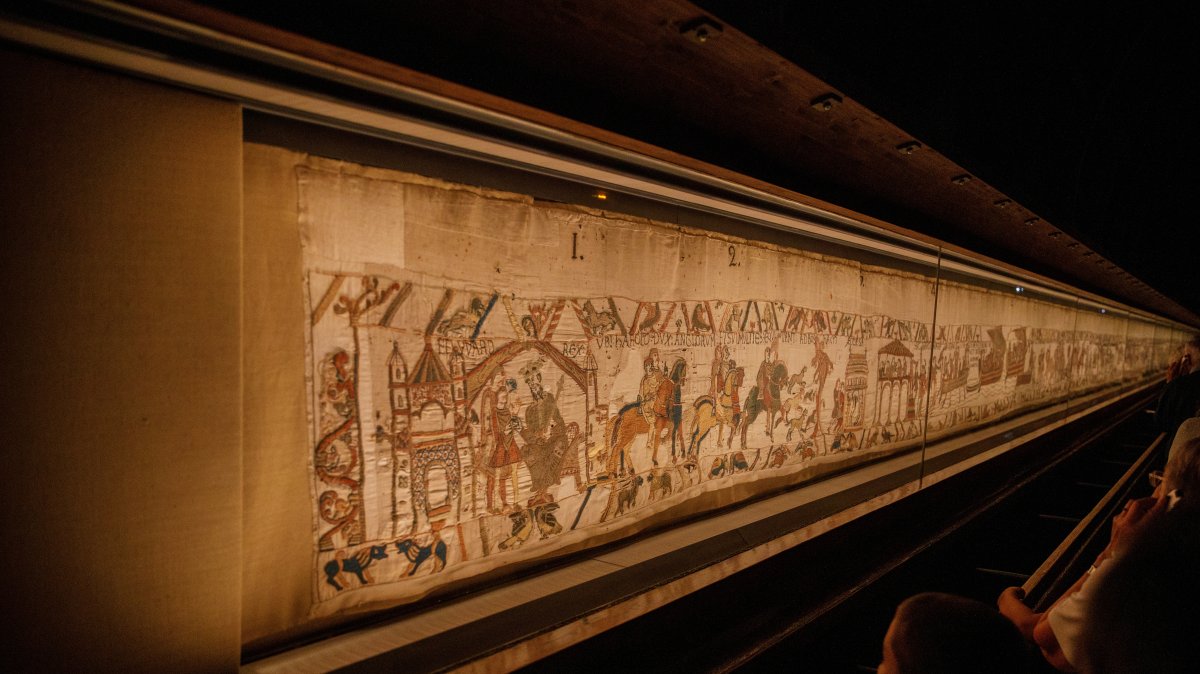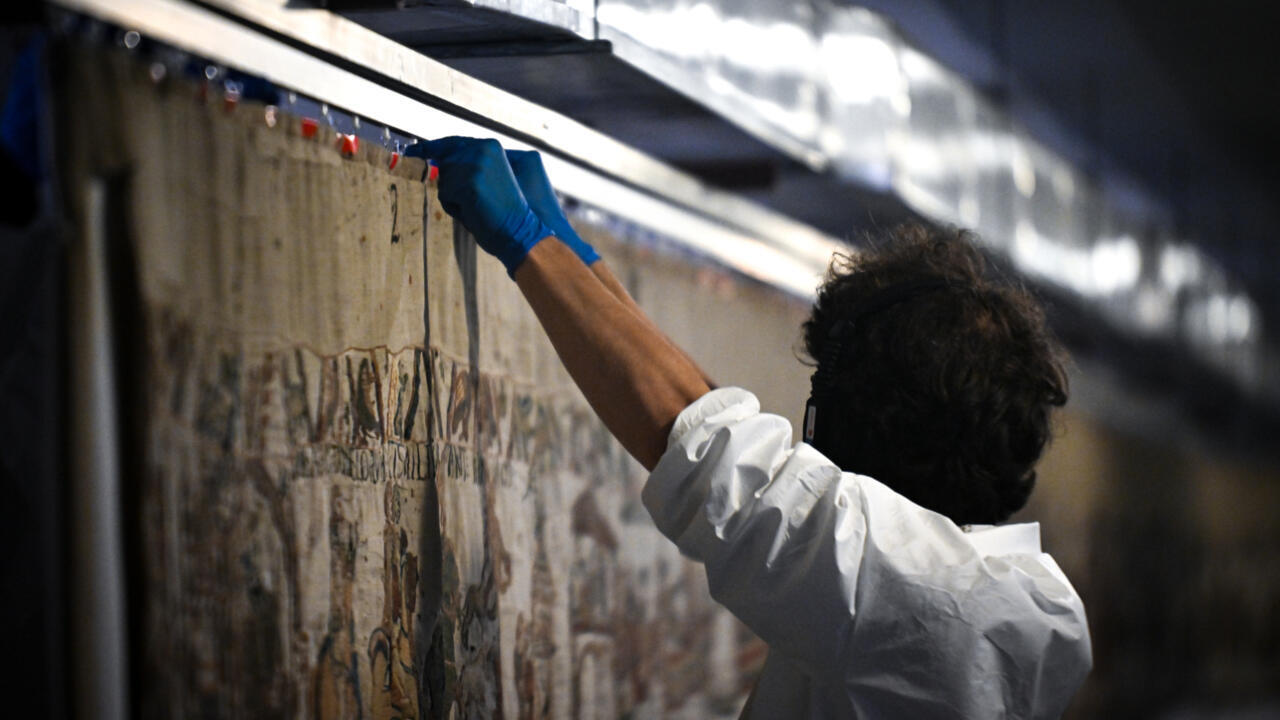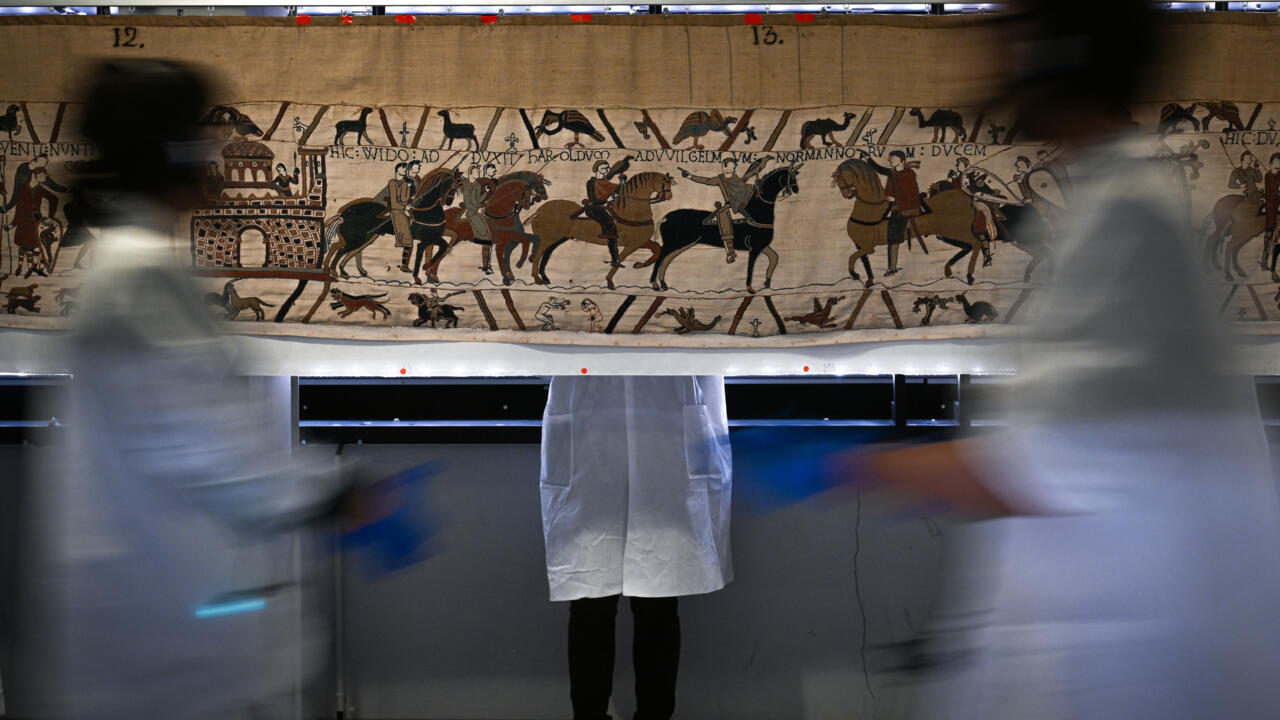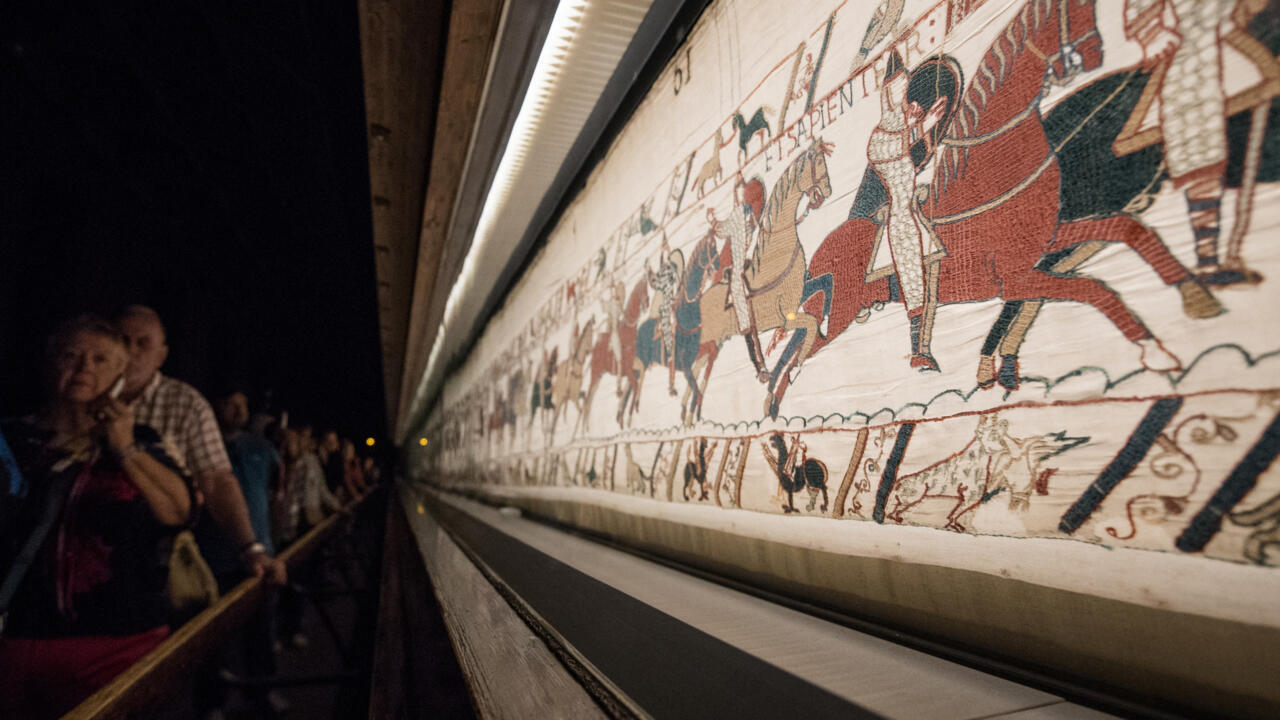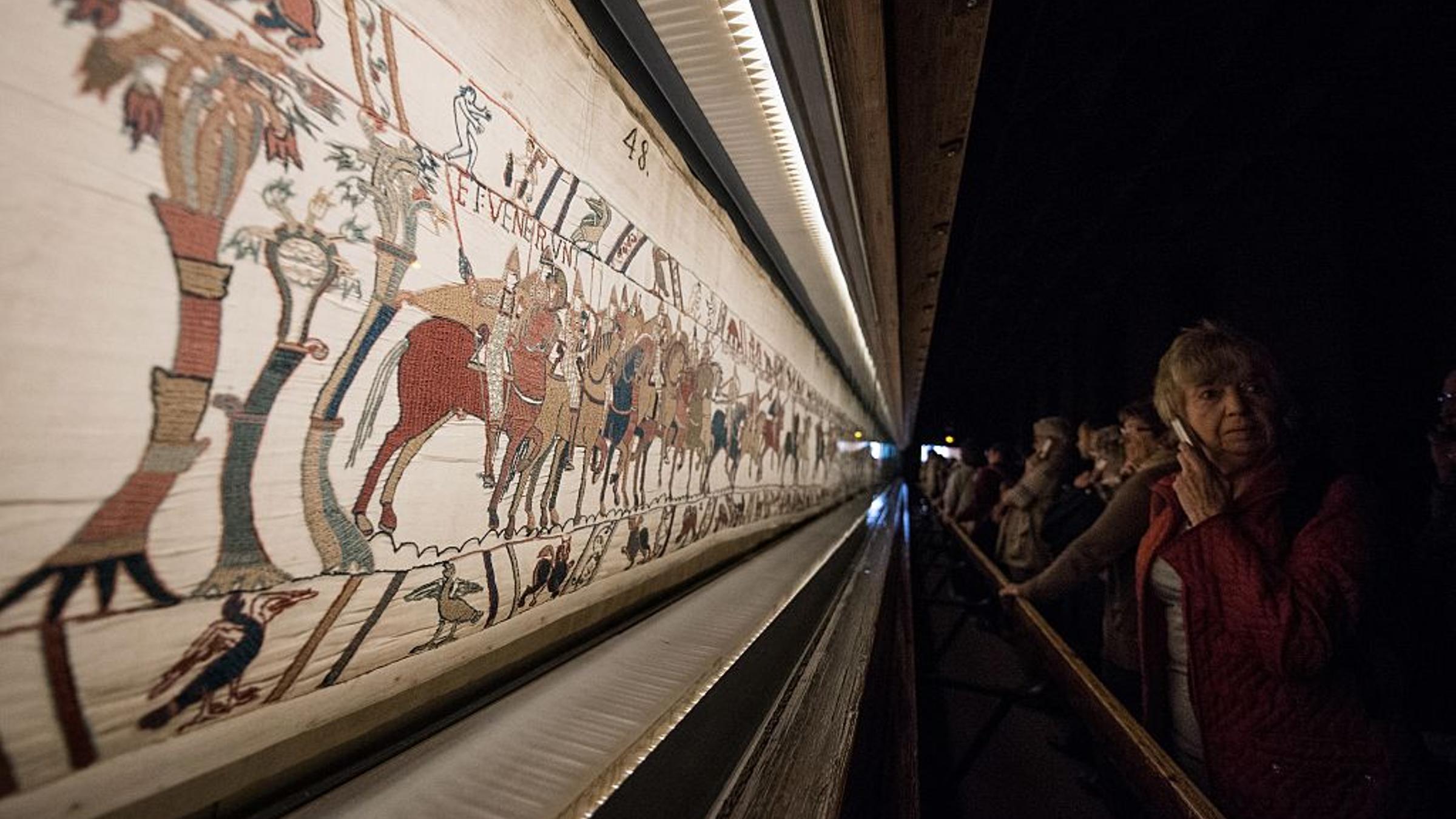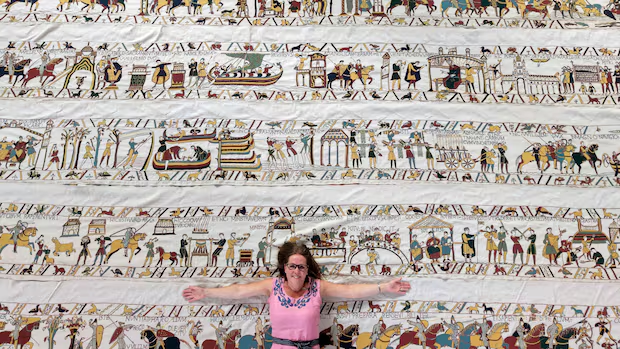
World·PhotosThe Bayeux Tapestry has arrived in Britain for the first time in nearly 1,000 years ahead of a sell-out exhibition at the British Museum, travelling under police escort during a meticulously choreographed journey from France.How do you move a delicate work of art from France to England? Very carefullyThomson Reuters · Posted: Jul 10, 2026 9:55 AM EDT | Last Updated: 1 hour agoListen to this articleEstimated 3 minutesThe audio version of this article is generated by AI-based technology. Mispronunciations can occur. We are working with our partners to continually review and improve the results.Don't worry: this is not the real Bayeux Tapestry depicting William the Conqueror's invasion of England. Mia Hansson poses with a replica she made, in Wisbech, England, on July 1. Actually lying on the embroidery like this would cause an international incident. The real 11th-century artwork was transported to England from France overnight in a meticulously planned and secretive journey. (Darren Staples/AFP/Getty Images)The Bayeux Tapestry has arrived in Britain for the first time in nearly 1,000 years ahead of a sell-out exhibition at the British Museum, travelling under police escort during a meticulously choreographed journey from France.The 70-metre embroidery, which depicts the 1066 Norman Conquest of England, was transported in an air-conditioned, anti-vibration crate under French police escort to the Eurotunnel before crossing the Channel. It was then handed over to British authorities for the final leg of its journey to London.Workers unload a specially designed crate carrying the Bayeux Tapestry at the British Museum in central London early Friday. (Richard A. Brooks/AFP/Getty Images)Escorted by police, the truck backed slowly into a loading bay at the museum, where workers gingerly eased the container, the size of a small car, to the ground. Museum staff and British and French diplomats who had been watching in hushed silence broke into applause.The medieval masterpiece, believed to have been made by English embroiderers, has already generated nearly $4.7 million in ticket sales, making it the museum's best-selling exhibition ever."It was like trying to get tickets to Glastonbury," British Museum director Nicholas Cullinan said as he waited outside the museum in the dark, referring to the U.K.'s famous, near-yearly music festival. "I don't take for granted that people care that much about a 1,000-year-old embroidery. I think that's an amazing thing."Workers unload the tapestry in London. (Kwiyeon Ha/The Associated Press)Stitched in wool thread on linen fabric — technically an embroidery, rather than a tapestry — the artwork depicts events leading up to the Battle of Hastings in October 1066, when William, the Duke of Normandy, defeated King Harold's Anglo-Saxon army. The invasion ended Saxon rule, made William the Conqueror the first Norman king of England and bound Britain and France more closely together.A visitor points at the tapestry at the Bayeux Museum in France in 2019. (Charles Platiau/Reuters)Historians believe the tapestry was commissioned by Bishop Odo of Bayeux, William's half brother, and was probably sewn by women in England — possibly nuns — before being taken across the Channel. It has spent most of the last millennium in the town of Bayeux in northwest France, apart from two short periods at the Louvre in Paris.A scene on the Bayeux Tapestry depicts horsemen and Mont Saint-Michel, believed to be one of the earliest known visual representations of the French landmark, while on display in Bayeux, France, on Aug. 29, 2025. (Ardee Napolitano/Reuters)The tapestry's arrival in London has been widely anticipated, but due to security concerns all details of when and how it would arrive were kept under wraps."It feels extraordinary that after so much work and planning and care and thought that it's actually happening," Cullinan said."It's the first time in 1,000 years that such an important piece of British — French too — history is going to be on these shores," he said. "It's incredibly exciting."British Museum director Nicholas Cullinan, right, poses with France's ambassador to the U.K., Hélène Tréheux-Duchêne, in front of the truck that transported the Bayeux Tapestry to the British Museum in central London on Friday. (Richard A. Brooks/AFP/Getty Images)The tapestry will undergo condition checks before being installed within a custom-built showcase ahead of the exhibition's Sept. 10 opening.France confirmed the loan last July during President Emmanuel Macron's state visit to Britain as a guest of King Charles. The transfer of the cultural treasure is seen as a symbol of closer ties between the countries after the discord caused by Britain's 2016 vote to leave the European Union."This ... is a gesture of trust, a tangible expression of a long-standing friendship and a sign of our shared desire to see France and the United Kingdom build their future together," Macron wrote in the Times newspaper.With files from The Associated Press
How do you move a delicate, centuries-old work of art from France to England? Very carefully | CBC News
The Bayeux Tapestry has arrived in Britain for the first time in nearly 1,000 years ahead of a sell-out exhibition at the British Museum, travelling under police escort during a meticulously choreographed journey from France.
782 words~4 min read