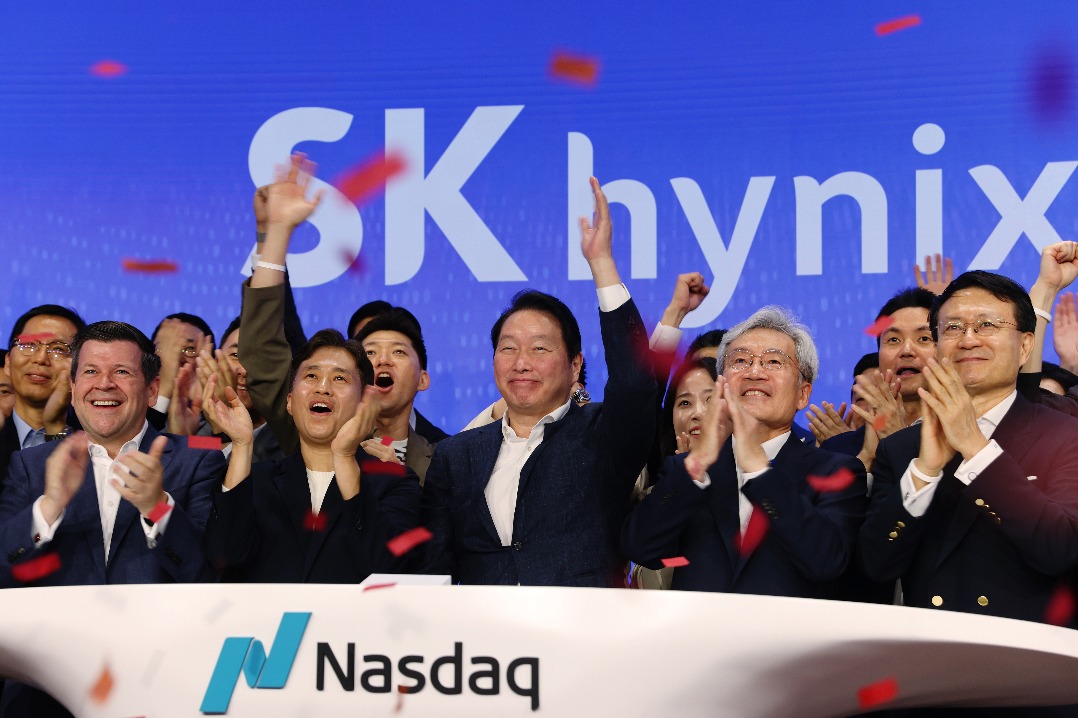
SK Hynix will begin trading in the US on Friday after a $26.5 billion share sale, giving American investors direct access to one of the biggest winners of the artificial intelligence boom. The listing comes at a tricky time for chip stocks. Semiconductor shares have pulled back in recent weeks after a sharp rally, as investors question whether AI spending can keep rising at the same pace.SK Hynix itself has fallen about 25% from a record high hit two weeks ago, though the stock is still up 650% over the past year. The South Korean chipmaker sold American Depositary Receipts at $149 each. The price was at a 2.7% premium to its average share price over the past three trading days. Ten ADRs equal one common share. SK Hynix shares rose 2.2% in Seoul on Friday to 2.233 million won.SK Hynix IPOThe share sale is the second-largest in the US after SpaceX’s record IPO last month. The proceeds will help SK Hynix build new factories and expand its access to the world’s deepest investor pool.The company is the world’s largest maker of high-bandwidth memory, or HBM, chips. These chips are used in AI processors made by companies such as Nvidia and AMD. As Big Tech spends heavily on AI data centres, demand for HBM chips has surged and supply has remained tight.That has made SK Hynix one of the clearest plays on the AI memory cycle. The question now is whether US investors will buy SK Hynix at the expense of Micron, its American rival, which has already rallied 711% over the past 12 months.What analysts say about SK Hynix listingAnalysts say the US listing could help narrow the valuation gap between the two companies. SK Hynix trades at about 5.8 times forward earnings, compared with Micron at about 7 times, according to LSEG data cited by Reuters. A Nasdaq listing gives SK Hynix wider access to global funds that may have found it harder to buy the Seoul-listed stock."This is the purest large-cap way for US investors to own the AI-memory theme, and Hynix deliberately picked Nasdaq to tap that demand and the higher valuations US chip names command versus Seoul," Giuseppe Sette, co-founder of investment analysis platform Reflexivity, told Reuters.Also Read: Global Market: European shares edge higher as miners, airlines offset tech weakness; benchmark set for weekly lossHe added that SK Hynix was getting the deal done on the strength of its story, while companies coming after it may face a tougher and more selective market.The deal is also a test of whether investors are still willing to pay up for AI-linked companies after a year of huge gains. Chipmakers have been among the biggest beneficiaries of AI spending, as investors see them as key suppliers to the infrastructure buildout."Global semiconductors is the most crowded trade in the world right now," Thomas Hayes, chairman at Great Hill Capital in New York, told Reuters. "The bankers and the issuer, in this case SK Hynix, are meeting demand where it is. They’re seeing excessive valuations, and they want to take advantage of it," he said.AI investments to boomAccording to various reports, spending on AI infrastructure is still expected to grow. Global cloud and AI infrastructure capital expenditure may approach $1.5 trillion by 2027, a 40% to 50% year-on-year jump, according to a BofA Securities note cited by Reuters.Still, investors are starting to ask whether Big Tech will get enough returns from such massive spending. If returns disappoint, hyperscalers may slow down spending, which could hurt demand for AI chips and memory.Memory markets are also known for boom-and-bust cycles. A rush to add capacity can later create oversupply, putting pressure on prices and margins.For SK Hynix, the US debut gives it a bigger stage and a larger investor base. For Micron, it brings a new direct competitor for AI-memory money inside the US market.(Disclaimer: Recommendations, suggestions, views and opinions given by the experts are their own. These do not represent the views of Economic Times)
SK Hynix makes US debut today. Will investors sell Micron to buy the AI memory leader?
SK Hynix begins US trading after a $26.5 billion ADR sale, expanding investor access to its AI memory chip business. The Nasdaq listing could narrow its valuation gap with Micron, while testing investor appetite for AI-linked semiconductor stocks.
664 words~3 min read