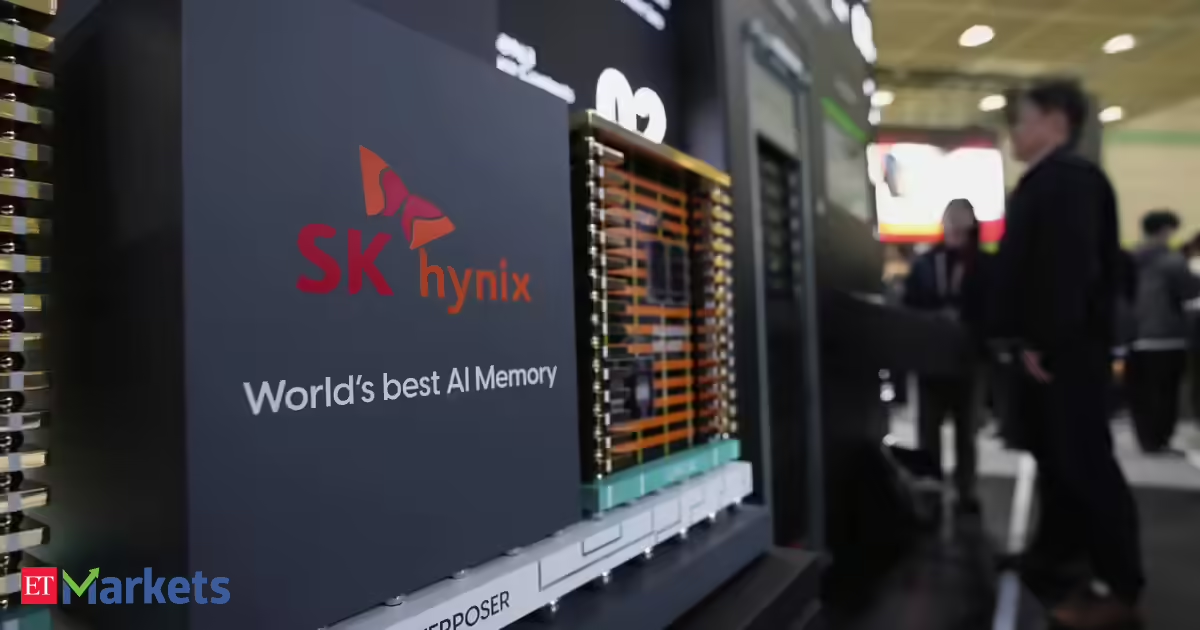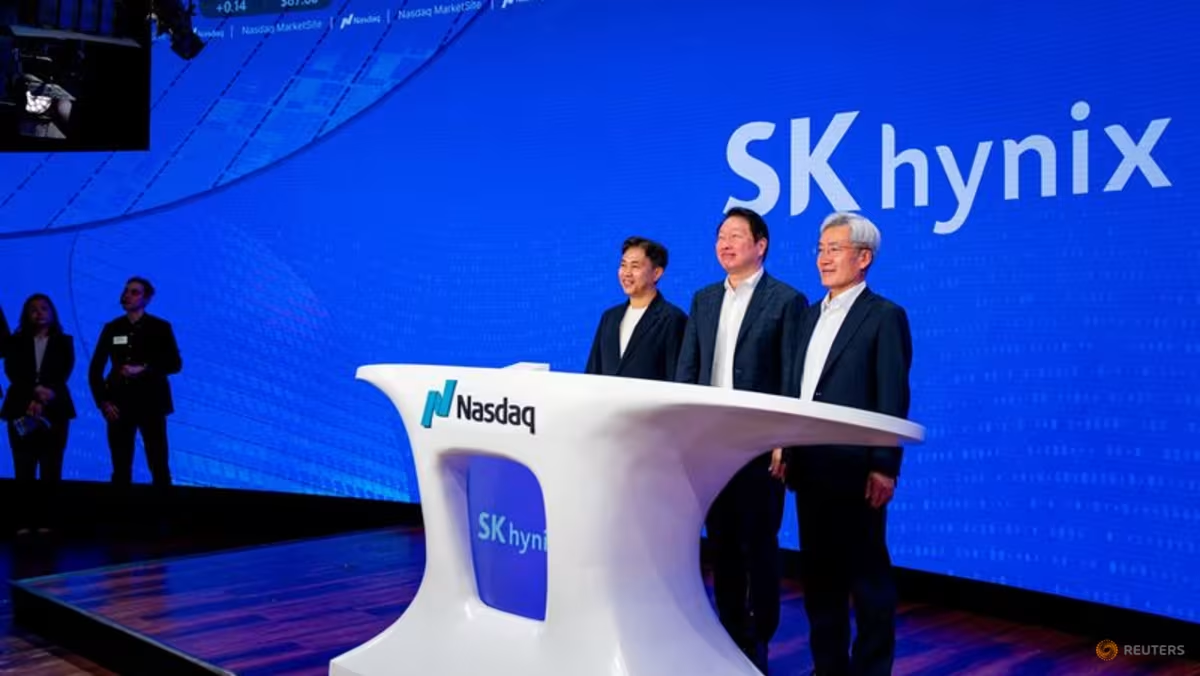
July 10 : SK Hynix's U.S. trading debut on Friday following a $26.5 billion share sale will be a key test of investors' belief in the durability of the AI boom, coming after a recent pullback in semiconductor stocks.Chip stocks have lost some momentum in recent weeks after a stellar run, partly due to investor concerns about slower AI spending. SK Hynix shares have dropped a quarter from their record high hit two weeks ago. Even so, the company's stock is 650 per cent higher than a year ago.The South Korean chipmaker is the latest to ride a frenzy of investor interest in firms perceived as reaping big gains from the AI revolution that has spawned hundreds of billions of dollars in capital spending."Global semiconductors is the most crowded trade in the world right now," said Thomas Hayes, chairman at Great Hill Capital in New York.
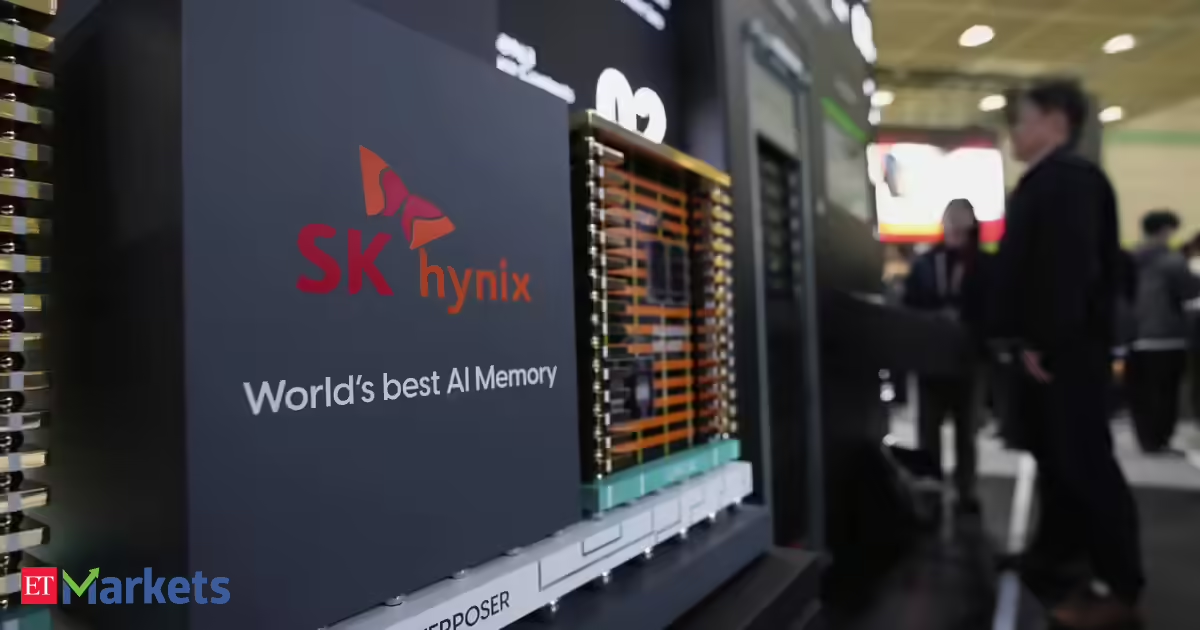
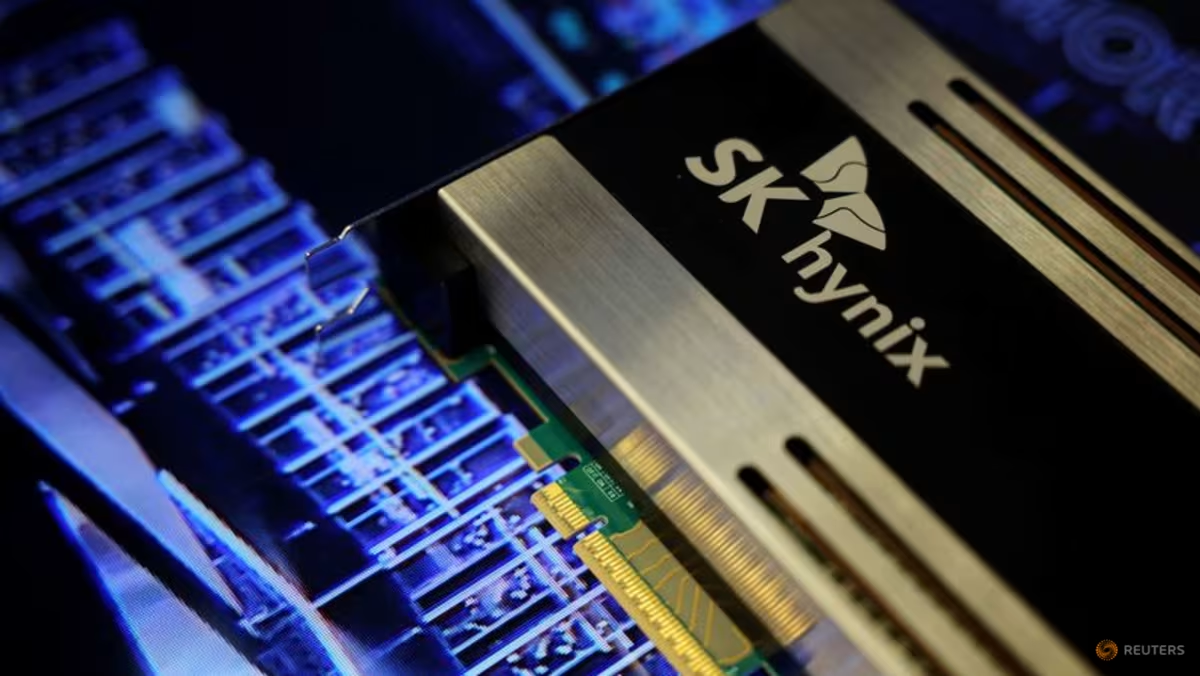
"The bankers and the issuer, in this case SK Hynix, are meeting demand where it is. They're seeing excessive valuations, and they want to take advantage of it."SK Hynix shares rose 2.2 per cent to 2.233 million won ($1,479.98) in Seoul on Friday after it sold American Depositary Receipts at $149 apiece, a 2.7 per cent premium over its average share price in the last three trading days. Ten ADRs are equivalent to one common share.BIG INVESTOR POOLThe offering, the second-largest share sale in the U.S. after SpaceX's record IPO last month, will bring in funds for SK Hynix to build new factories and give the chipmaker direct access to the world's largest pool of investors."This is the purest large-cap way for U.S. investors to own the AI-memory theme, and Hynix deliberately picked Nasdaq to tap that demand and the higher valuations U.S. chip names command versus Seoul," said Giuseppe Sette, co-founder of investment analysis platform Reflexivity."SK Hynix gets its deal done on the strength of the story, but companies coming after it may face a tougher, more selective market."The Icheon, South Korea-based company is the world's biggest maker of high-bandwidth memory (HBM) chips, which are essential for the vast amounts of data processing in AI-focused graphics processing units (GPUs) produced by the likes of Nvidia and AMD.A big-tech splurge on these advanced processors has turned HBM chips into a scarce commodity, driving up prices and turning manufacturers into some of Wall Street's hottest bets, as investors view the industry as the "picks and shovels" suppliers to the AI boom.Micron, SK Hynix's U.S.-based competitor, has also rocketed 711 per cent over the past 12 months. Analysts say SK Hynix's U.S. listing will help close a valuation disparity between the two companies by expanding its investor base and accessibility. Despite its HBM dominance, SK Hynix trades at around 6.8 times forward earnings versus Micron at around 13 times, according to LSEG data.Tech giants competing for faster and smarter AI models are pouring hundreds of billions of dollars into the infrastructure powering the technology, raising equity and tapping debt markets to fund the costly expansion.Analysts expect that spending will continue to grow in the near term. Global cloud and AI infrastructure capital expenditure is expected to approach $1.5 trillion by 2027, a 40 per cent to 50 per cent jump year-over-year, according to a BofA Securities note this week.However, questions are growing about the returns on these massive investments, sparking worries that hyperscalers could eventually be forced into a spending slowdown."Investors will weigh the strength of the past year's rally against this latest volatility ... Oversupply fears are inherent to the industry," said Matt Kennedy, senior strategist at Renaissance Capital, a provider of IPO-focused research and ETFs.($1 = 1,508.8000 won)