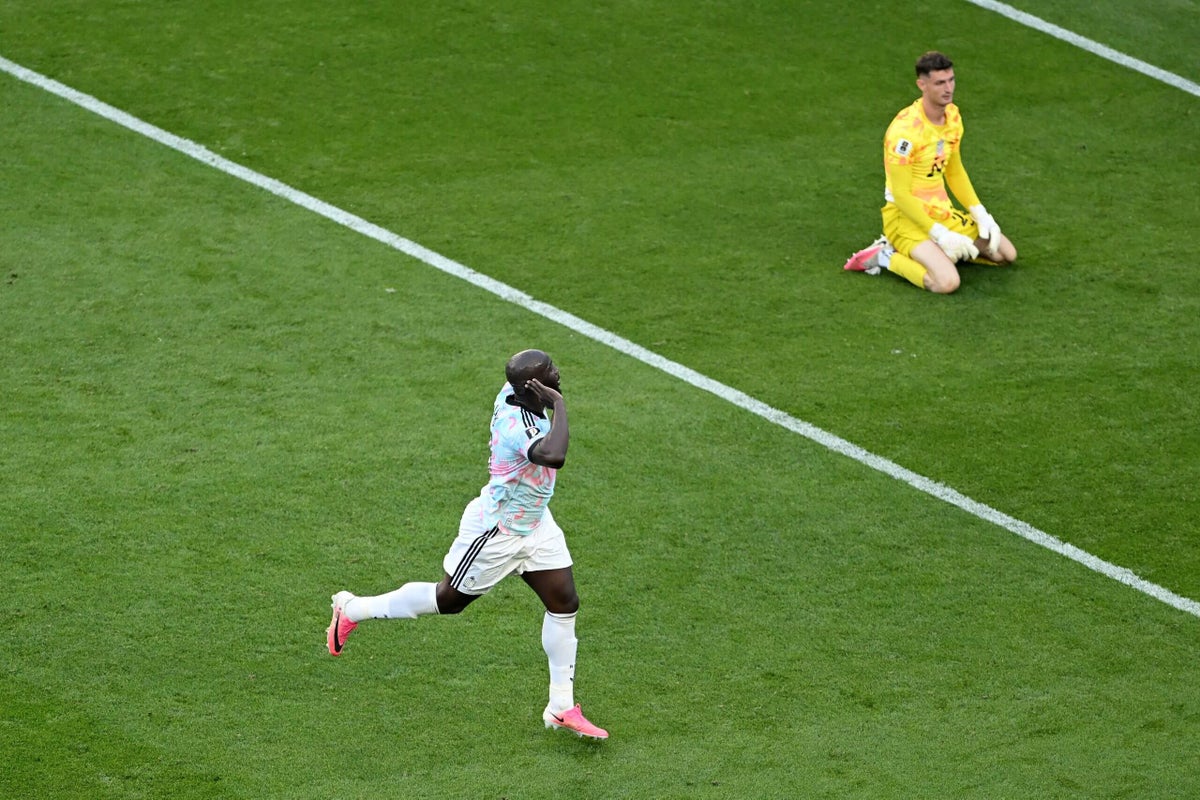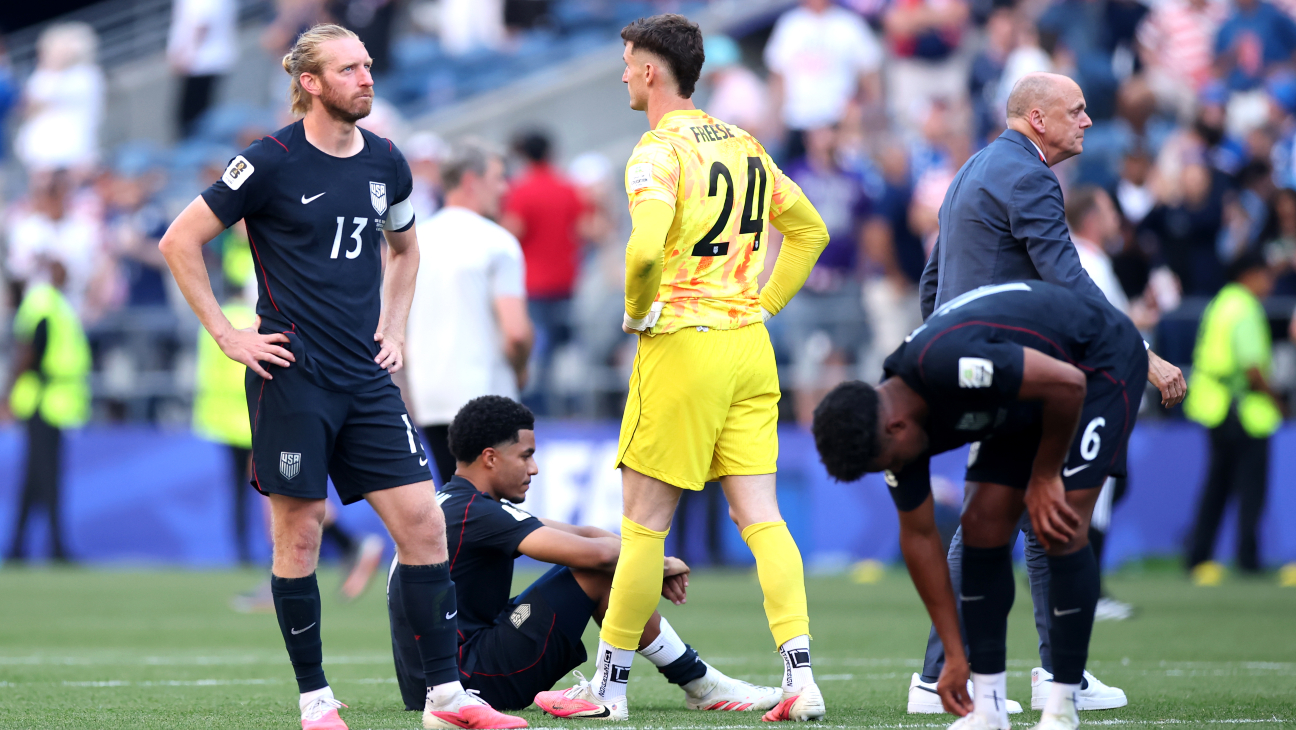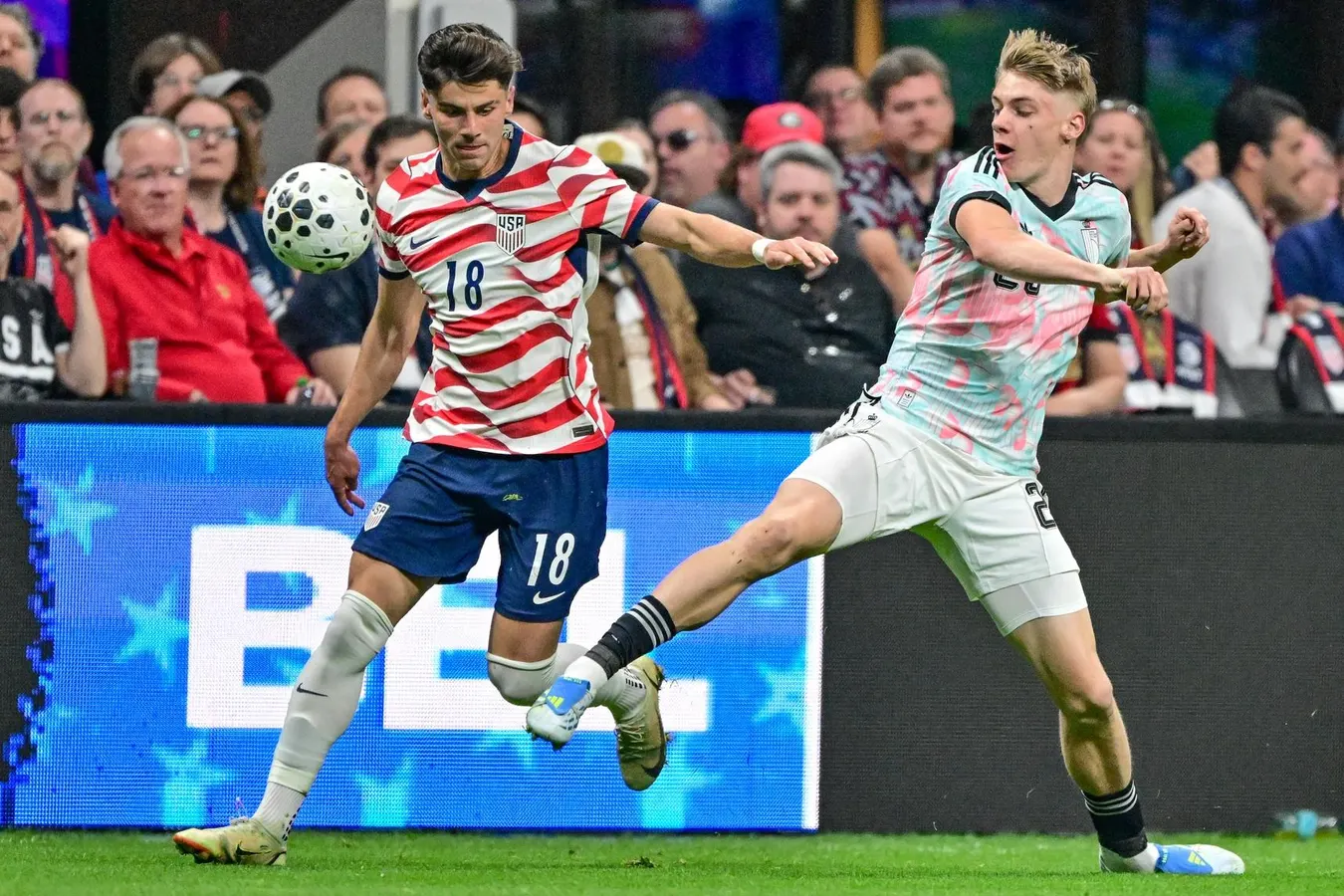
Lionel Messi of Argentina is a prolific goal scorer, having the most goals ever in World Cup play. He's considered one of the greatest to have ever played the game. (Photo by Hector Vivas - FIFA/FIFA via Getty Images)FIFA via Getty ImagesGetting beaten badly this week by the Belgian national team in the Round of 16 at the World Cup had (social) media personalities and pundits up in arms, as an inquest began around the long history of struggles by the United States men’s soccer team in the biggest sporting event in the world. It’s not about athleticism or fitness. And it’s certainly not a matter of athlete size. Rather, cultural factors may play an important role in contributing to the lack of success.At the World Cup, each country fields a team of all stars, meaning a selection of their best players with a particular nationality, all of whom play professionally for clubs scattered throughout the world. Remarkably, for these elite players the off-season often only consists of a couple of weeks, as club football training starts up again soon and the season runs through May.These soccer stars are sometimes considered the fittest among professional athletes. But this depends on how we define fitness. If the test is, how long can a person run, soccer players win easily. They run, jog or walk between six and 9.5 miles a game. This obviously requires healthy and efficient cardiovascular and aerobic systems. But if the definition of fitness is how much force a body can generate in a single second, National Football League players appear fitter.Generalizing, if we compare soccer to, say, American football, one could say that the main fitness difference is endurance during games and an extraordinarily long season versus short, explosive bursts in games in a relatively short season. But because the fundamental physical demands of each sport are completely opposite, comparing them is like apples to oranges.To compete at the highest level in any sport requires athleticism or a combination of physical attributes, such as speed, strength, power, agility and coordination. There’s certainly not a lack of athletic prowess in America. The country has plenty of great athletes who engage in a wide variety of sports. Americans excel at many sports, as evidenced by its Olympic game medal tally and their comparative predominance in three of the four most popular professional sports in the country: Baseball, basketball and (American) football. While it’s not surprising that many Americans participate as these are sports with American origins, both baseball and basketball have a large international presence, on the field and court and among the fan base. Ice hockey is the one professional sport (of the four most popular ones in the country) in which Americans are outnumbered by international players. Yet even so, Americans now make up nearly 30% of National Hockey League rosters.MORE FOR YOUAn oddly jingoist discussion around athleticism has ensued. With America’s favorite spectator sport, the NFL, about to begin in less than two months, some have turned the discussion into a debate on the supposed superior athleticism of wide-receivers, running backs and defensive cornerbacks in (American) football. The claim is that they would likely be exceptional soccer players had they grown up playing the sport. Commentators suggest that if these top athletes focused on soccer, the United States would be the best team in the world. This presumes that their athletic ability would translate onto the soccer pitch. This is an open question and subject to debate as the athletic qualities distinct to each sport are so different. Surely, the size and strength of the vast majority of NFL players aren’t necessary attributes in soccer. Nor is the height of most basketball players a major factor in soccer. Elite soccer players don’t have to be tall or particularly strong. At 5 feet 7 inches (1.70 meters) tall, the Argentinian Lionel Messi is proof of this. Notably, Messi had a growth deficiency as a child, for which he was treated. His fellow countryman Diego Maradona was shorter still at 5 feet 5 inches (1.65 meters). Other greats like the Brazilian Pelé stood at 5 feet 8 inches (1.65 meters). And in a nation known for its tall people, the legendary Dutchman Johan Cruyff wasn’t exactly a giant at 5 feet 10 inches with a wiry frame.But more importantly, the idea that if American athletes devoted their time to soccer instead of football, basketball or baseball they’d be world beaters elides differences in culture. Just like any sport, becoming a great soccer player first requires innate talent. Without that, no matter how much work a person puts in they’re not going to be elite. Then there’s the mastery of technical skills, physical conditioning, tactical intelligence, vision and mental toughness. And these are gained on the streets as much as they are in youth development programs. It’s no secret that many of the world’s greatest superstar players come from humble and sometimes impoverished backgrounds.The soccer I grew to love watching in gritty neighborhoods in Utrecht and Amsterdam when I lived in the Netherlands was all about unstructured play and kids’ passion for the sport. We can talk all we want about a lack of institutional infrastructure in the U.S., but perhaps what we’re missing is more spontaneous youth play, in the form of pick-up games or just practicing skills like dribbling, shooting and goal-keeping one-on-one.The youth spend countless hours in public parks and on concrete or asphalt surfaces hone skills and creativity through daily, casual street football before some of them enter the famous academies established by professional clubs such as Ajax of Amsterdam.And they can do so on public Cruyff Courts, named after the late Johan Cruyff and established by his foundation. These are small areas, generally in urban neighborhoods in the Netherlands and internationally, on which soccer is played on a surface made of artificial grass.Besides the Cruyff courts initiative, there are numerous small public asphalt or concrete areas in cities like Amsterdam where the sport is played. These are naturally conducive to a highly skilled, fast-paced style of play that requires a lot of agility in tight spaces.Perhaps if America’s best athletes played soccer, the men’s team would be better. It’s doubtful, though, as this perspective narrowly focuses on particular forms of athleticism, some of which are irrelevant in soccer. Acquiring, refining and maintaining the particular skills required in soccer often mean playing nothing else from early childhood, starting out in an unstructured way.
U.S. Men's World Cup Soccer Woes Cultural, Not Lack Of Athleticism
Perhaps if America’s best athletes played soccer, the men’s team would be better. But it's doubtful as this view narrowly focuses on particular forms of athleticism.
1,078 words~5 min read