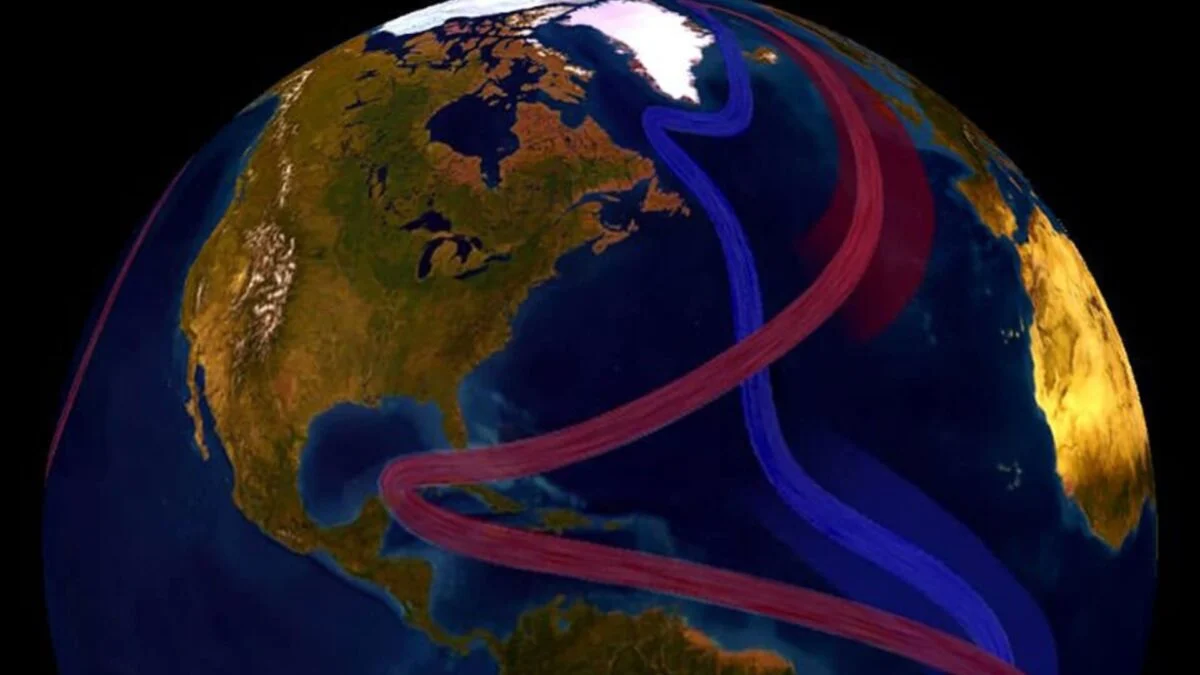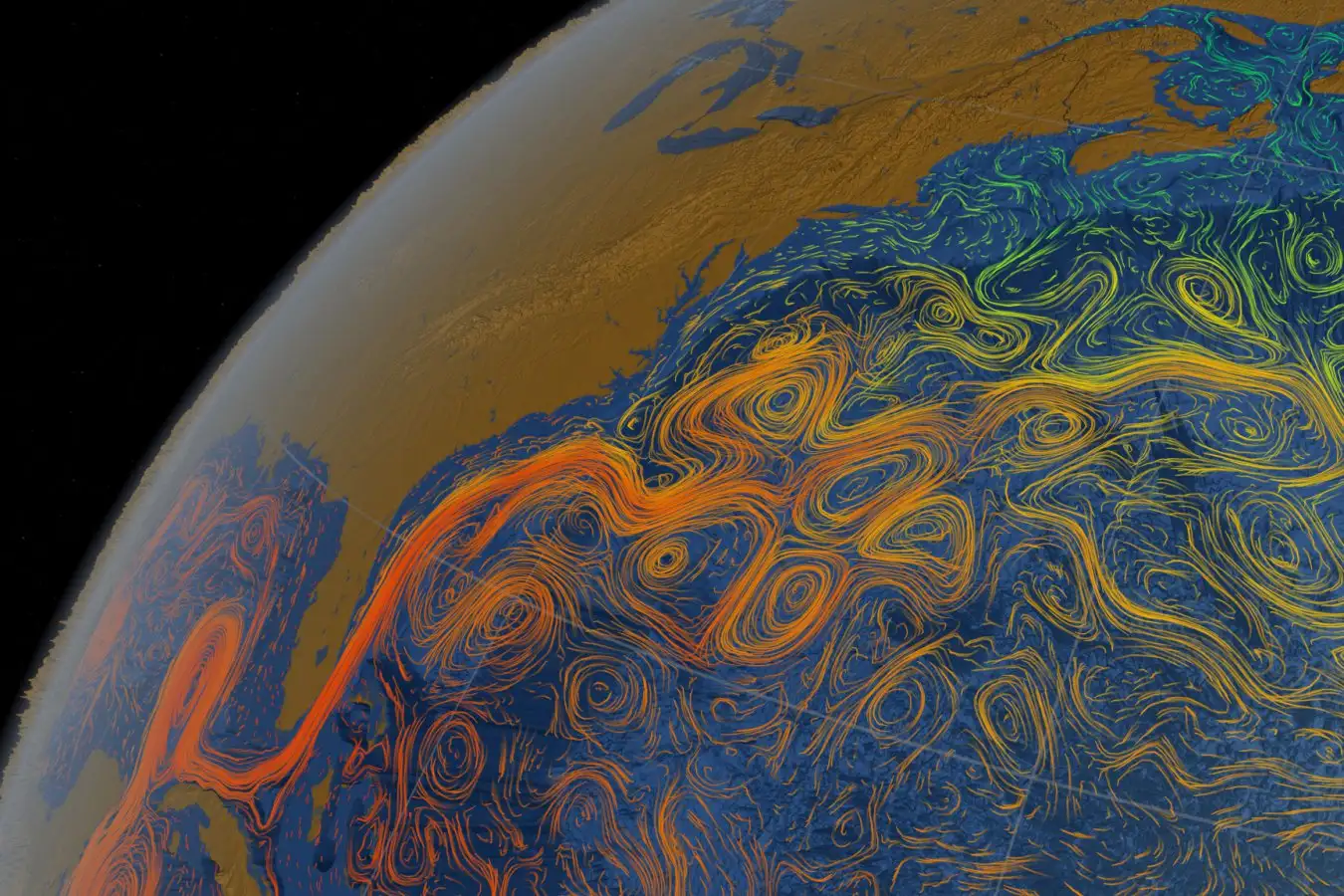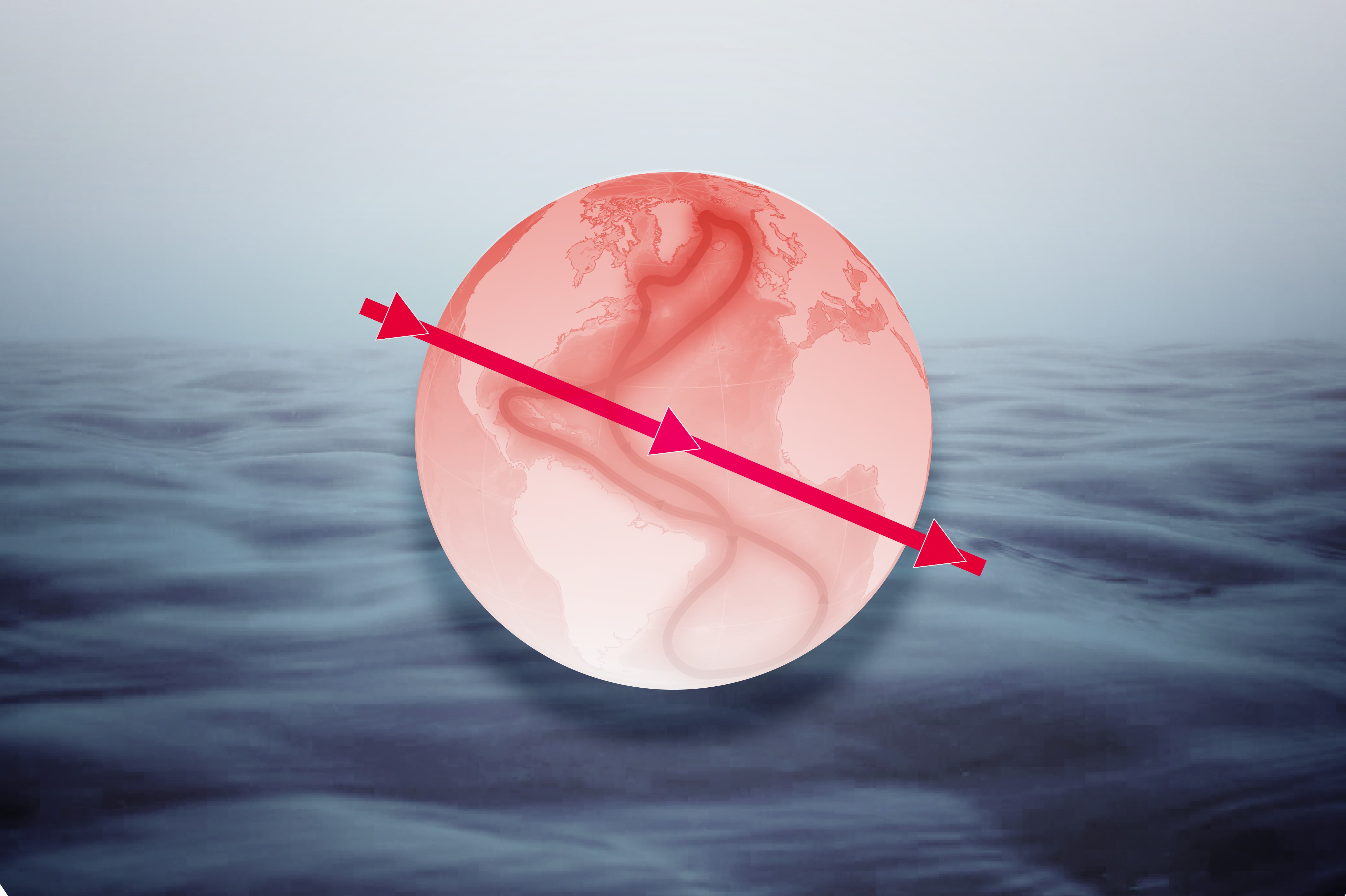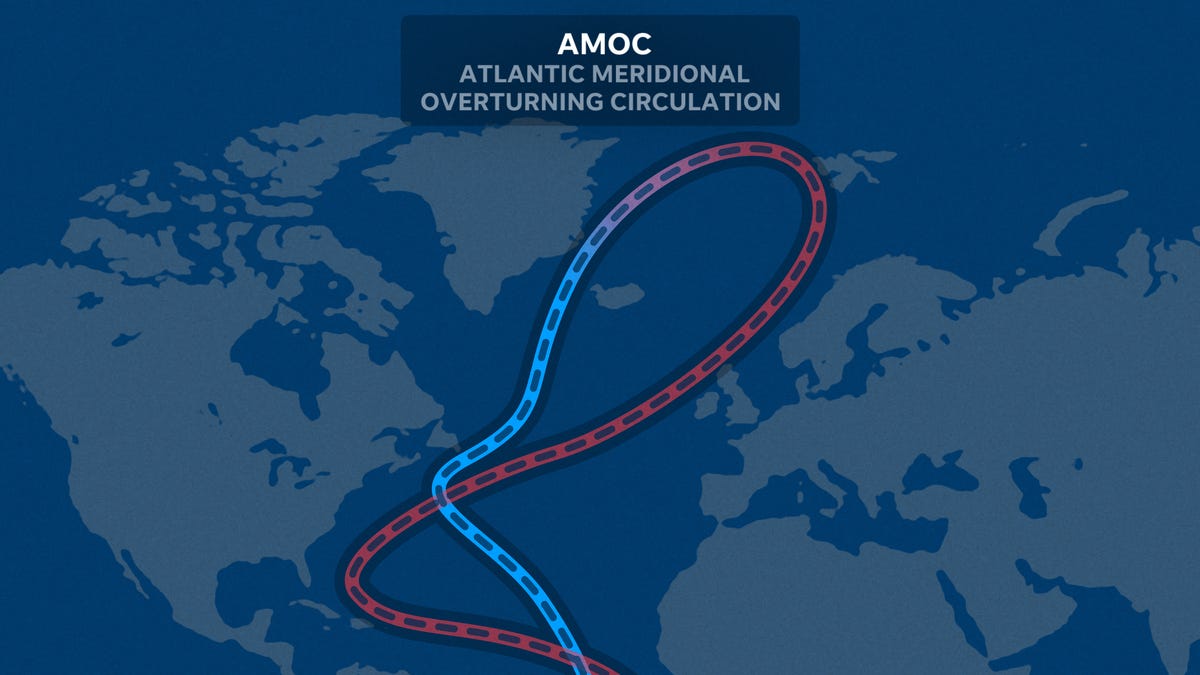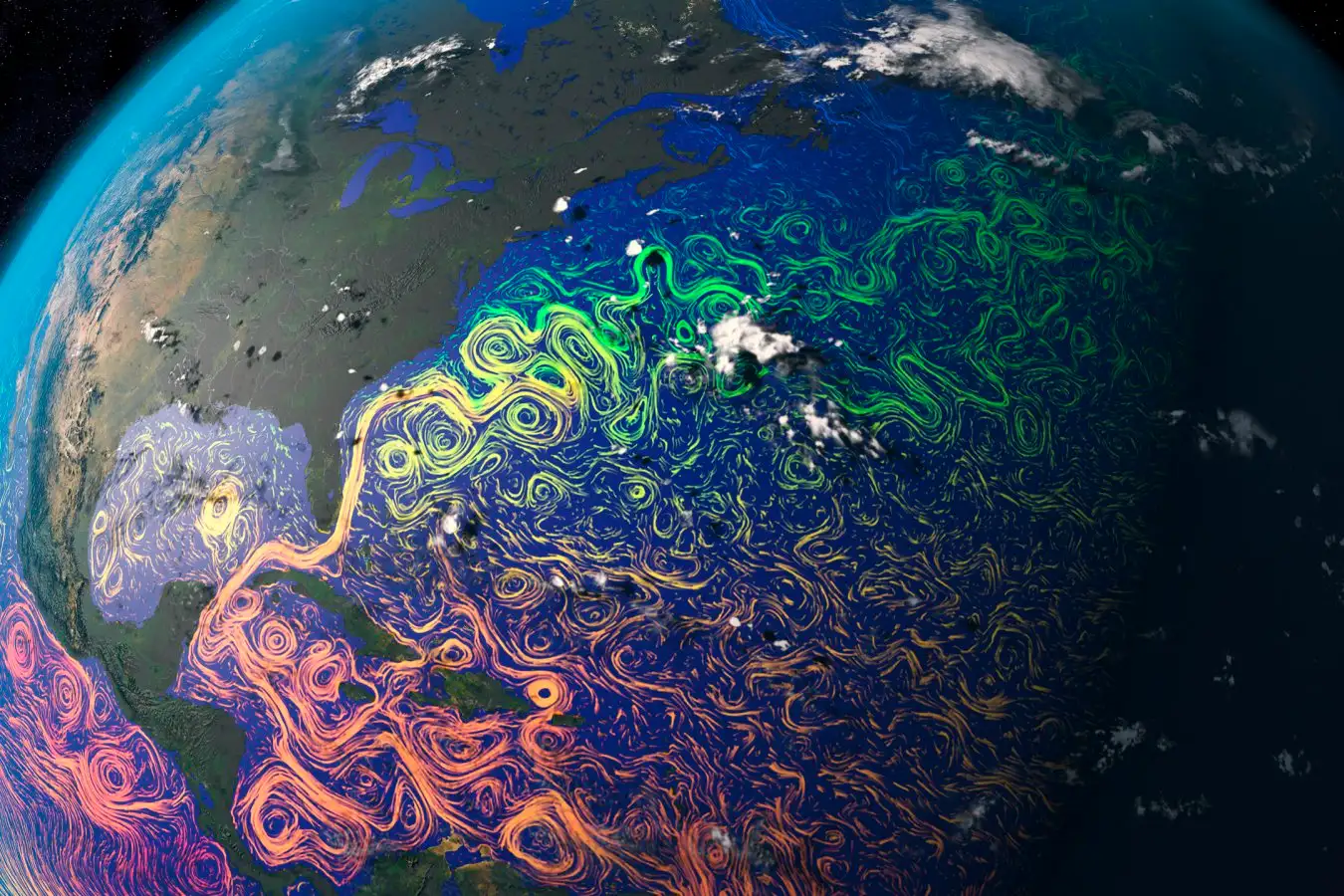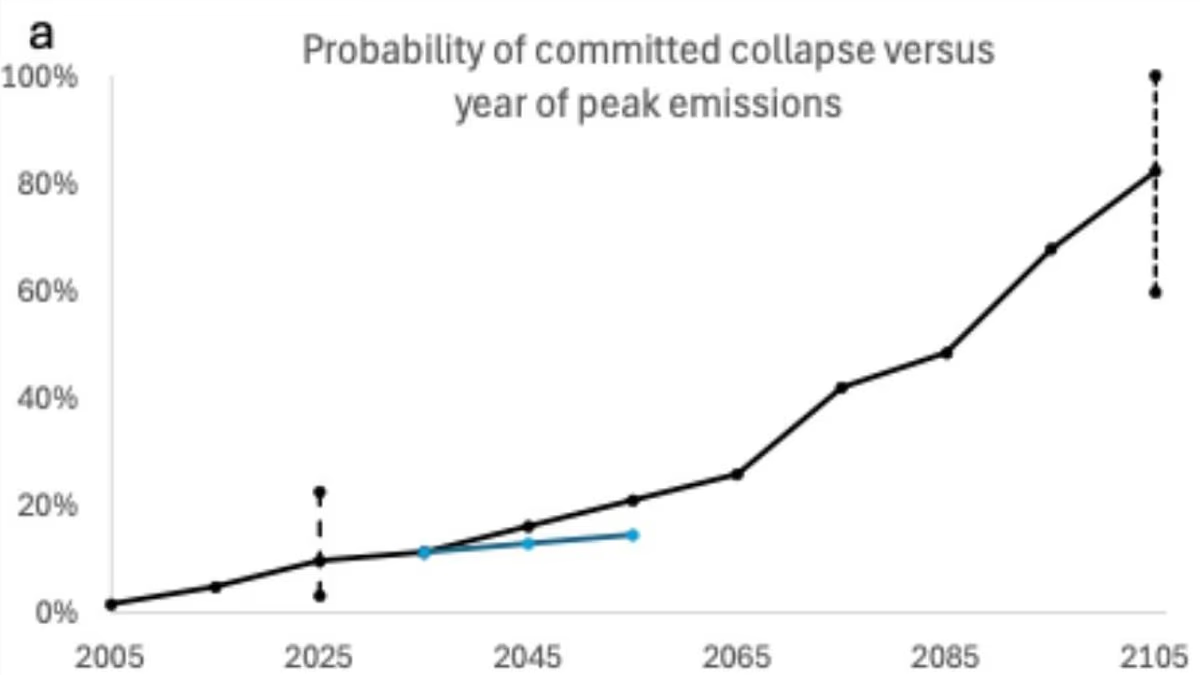
The collapse of one of Earth's most important ocean currents may already be locked in, according to an ominous new study.The Atlantic Meridional Overturning Circulation (AMOC) is a vast ocean-wide system of deep water circulation that carries warm, nutrient-rich waters to Europe.Previous studies have warned that AMOC's failure would trigger temperatures in Northern Europe to plummet – plunging the UK into a 'new Ice Age'.Now, scientists say there is an almost one-in-four chance that this catastrophic collapse is already inevitable.Even in the most optimistic scenario, they found that there is a 10 per cent chance that the current's collapse has already been locked in.But if the world doesn't start on the path towards Net Zero until 2100, the probability of an inevitable collapse rises to 80 per cent.Co-author Dr Jesse Abrams, of the University of Exeter, told the Daily Mail: 'Even if the world got emissions and temperatures back down to roughly where they were before the AMOC tipped, that alone likely would not be enough to restart it.'The only reliable lever is preventing that threshold being crossed in the first place, which is only possible by rapidly reaching net zero.' There is a 10 to 24 per cent chance that the collapse of one of Earth's most important ocean currents may already be locked in, according to an ominous new studyAMOC plays a crucial role in keeping the planet's current climate stable by moving heat, nutrients, and carbon around the world.The 'engine' driving this global conveyor belt is the cold, salty waters that form in the North Atlantic around Greenland.As this dense water sinks towards the bottom of the ocean, warm water from the Tropics is pulled northwards, and the cycle keeps the current moving.However, scientists are concerned that fresh water from Greenland's melting glaciers is disrupting this process by diluting the water and making it less dense.Studies have shown that AMOC has already slowed by about 15 per cent since the mid–20th century due to climate change, and could be driven into total collapse in the future.Scientists believe that AMOC could hit a 'point of no return' at some point in the next few decades, but it has been tricky to see exactly when this tipping point will arrive.In this new preprint paper, the researchers modelled 21 scenarios, each charting a possible combination of Greenland ice melt and emissions reduction.These models assumed that greenhouse gas emissions would fall to hit Net Zero 35 years after reaching their peak. If emissions start to fall this year, there is still a 23 per cent chance that AMOC's collapse is inevitable. But if progress towards Net Zero doesn't start until 2100, there is an 80 per cent chance of collapse The 'red flags' that hint the AMOC could collapse The AMOC current strength has weakened by five per cent over 10 years.The Gulf Stream has shifted north around North Carolina.The amount of water being transported by the Gulf Stream is reducing. More northern areas of the ocean are experiencing warmer temperatures. Ocean warming is focused on the western edge of the continental United States. In the most optimistic scenario, greenhouse gas emissions peaked in 2025, and the Greenland ice sheet adds just 54 millimetres to sea-level rise by 2100.This would put the chances of inevitable AMOC collapse at just 10 per cent, but the data suggests this happy outcome is unlikely.More realistic assumptions about Greenland suggest that ice melt will add 274mm to sea-level rise by 2100, as suggested by current research.If this holds true, there is a 23 per cent chance that we are already locked into AMOC collapse even if greenhouse gas emissions start to fall immediately.The longer we delay progress towards Net Zero, the worse the outcomes look for humanity.If nothing is done to curb greenhouse gas emissions by the end of the century, there is an 80 per cent chance that AMOC's collapse becomes inevitable.Studies have shown that this collapse would trigger rapid cooling in the Northern Hemisphere, making the chilliest winters in the UK up to 7°C (12.57°F) colder on average.Meanwhile, the Southern Hemisphere would warm, with temperatures over the Antarctic soaring more than 10°C (18°F).
Scientists warn collapse of key ocean current may already be locked in
The collapse of one of Earth's most important ocean currents may already be locked in, according to an ominous new study.
1,137 words~5 min read