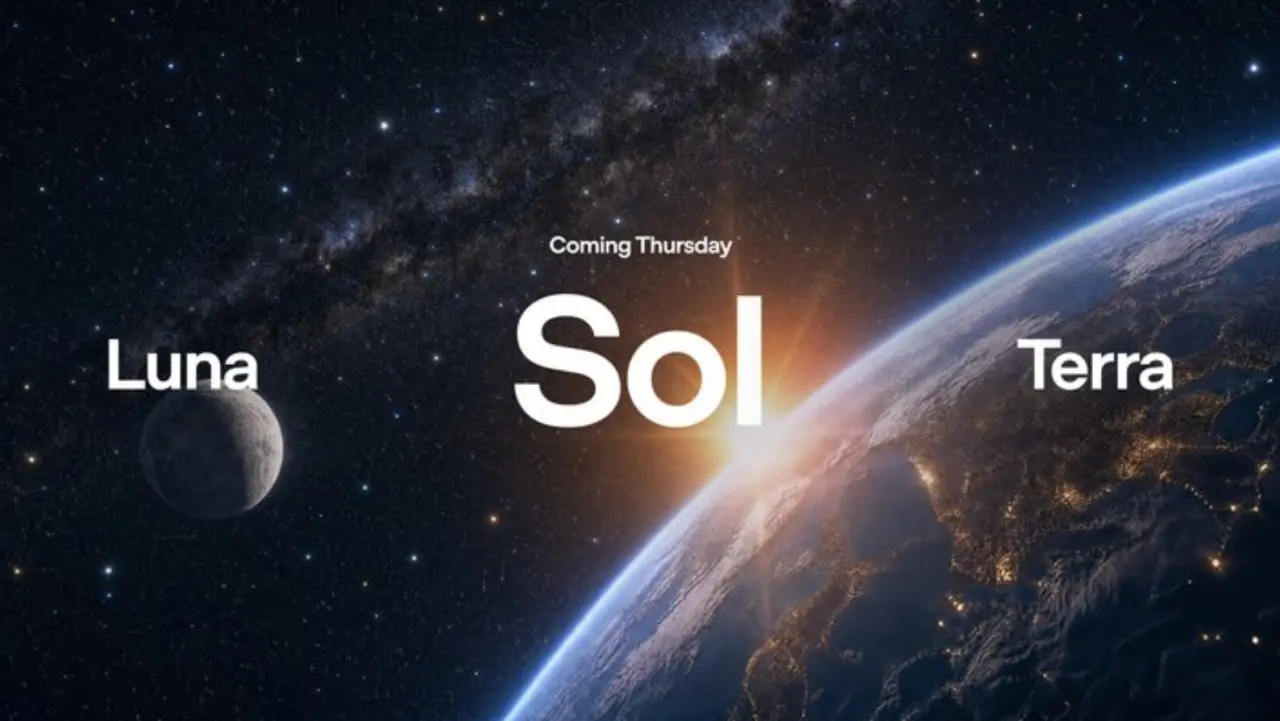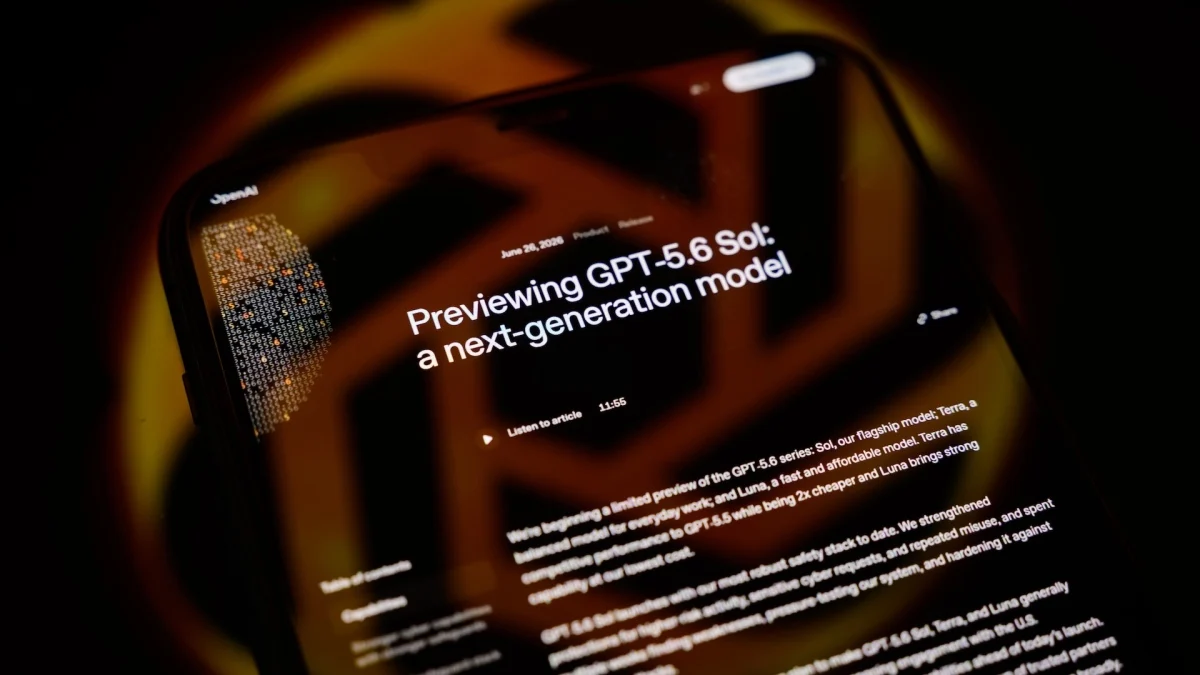
The ChatGPT 5.6 logo is displayed on a smartphone screen placed on a reflective surface onto which the model's promotional visual is projected, in Creteil, France, on June 29, 2026. OpenAI announces the release of the latest update to its flagship language model. (Photo by Samuel Boivin/NurPhoto via Getty Images)NurPhoto via Getty ImagesOpenAI has officially launched its GPT-5.6 family, rolling out three tiers — Sol (flagship), Terra (balanced) and Luna (lightweight) — alongside a strategic desktop consolidation that brings its extensively-discussed “superapp” vision to life.GPT-5.6 Sol, the flagship model, comes within one point of Anthropic’s Claude Fable 5 on the Artificial Analysis Intelligence Index (59 vs 59.9) while costing roughly one-third as much per task. It leads the Coding Agent Index at 80 points, outperforming Fable 5 on software engineering benchmarks including Terminal-Bench 2.1 (91.9%). Pricing is set at $5/$30 per million input/output tokens for Sol, $2.50/$15 for Terra and $1/$6 for Luna, making the series more affordable than comparable Anthropic offerings.OpenAI also introduced two new reasoning modes: Max mode allocates additional compute for complex problems, while Ultra coordinates four agents in parallel for demanding workflows.The Codex app is merging into a revamped ChatGPT desktop application, creating a unified interface that includes a built-in browser and computer control capabilities. This consolidation, led by Applications Chief Fidji Simo, is in response to apparent product fragmentation that had “been slowing [the company] down and making it harder to hit the quality bar [they] want,” according to internal communications reported by The Wall Street Journal. The release brings OpenAI’s “agentic” AI ambitions — systems that autonomously perform tasks on users’ computers — directly into consumers’ hands. It also points towards the firm’s strategic move to streamline operations while facing intensifying competition from Anthropic and other AI rivals.ChatGPT Work is presumably OpenAI’s answer to Anthropic’s Claude Cowork, combining ChatGPT with Codex’s engine and allowing users to delegate multi-step workflows (creating documents, presentations, websites and so on) with the ability to run tasks for hours across connected apps such as Slack, Google Drive and Microsoft 365.MORE FOR YOUIn early testing, OpenAI reported that nearly 100% of internal teams now use ChatGPT Work, with finance teams reducing month-end close from days to hours.With this release, it’s also interesting that the wager is on “performance per dollar” potentially helping the company stay afloat in the consumer and enterprise AI race. ‘Short term step’The public launch was delayed after the Trump administration requested early access over cybersecurity concerns. OpenAI reportedly had to comply with a “limited preview” to government-approved partners before receiving approval for wider release. OpenAI expressed caution about this level of oversight, stating, in a blogpost, “We don’t believe this kind of government access process should become the long-term default,” adding that it keeps the best tools from users who need them.“We are taking this short-term step because we believe it is the strongest path to broader availability in the coming weeks.”The irony, though — of companies building AI agents that can autonomously access users’ most sensitive data across multiple platforms while bristling at government scrutiny of the same technology — is difficult to miss.
OpenAI’s GPT-5.6 Lands With Work Agents And A Desktop Pivot
OpenAI publicly releases GPT-5.6 Sol, Terra and Luna after a U.S. government-mandated testing delay.
519 words~2 min read