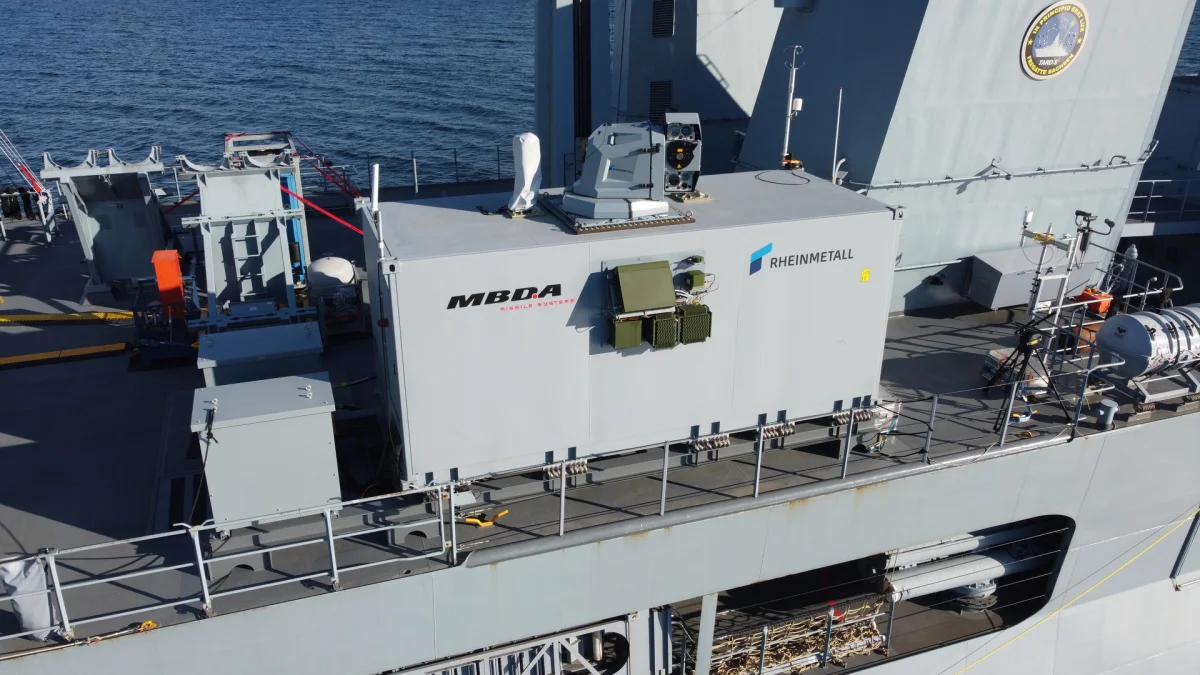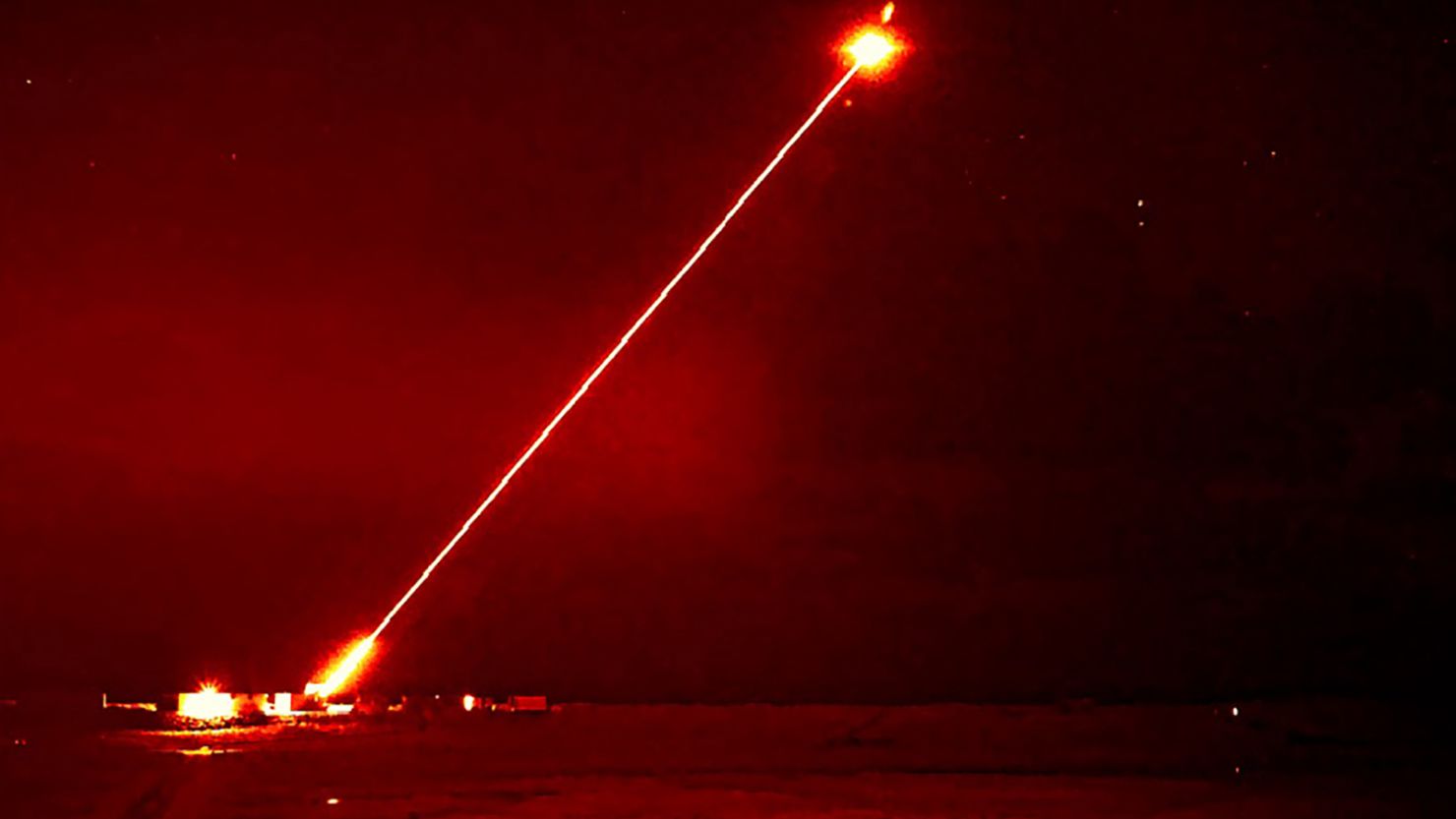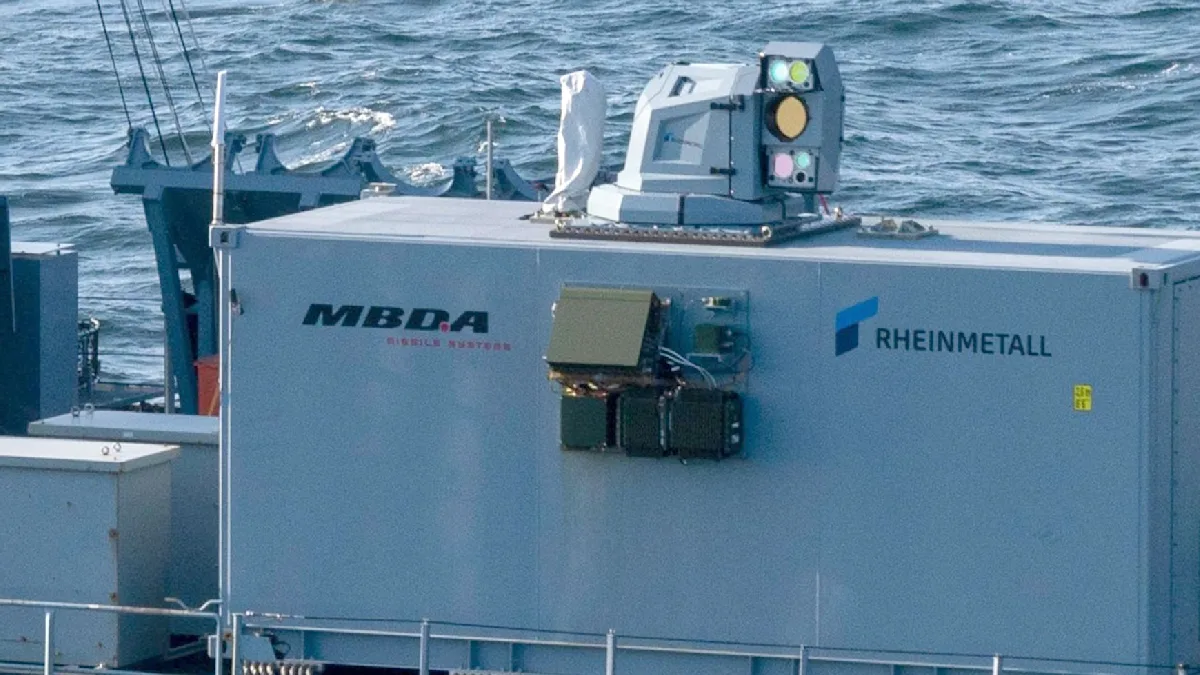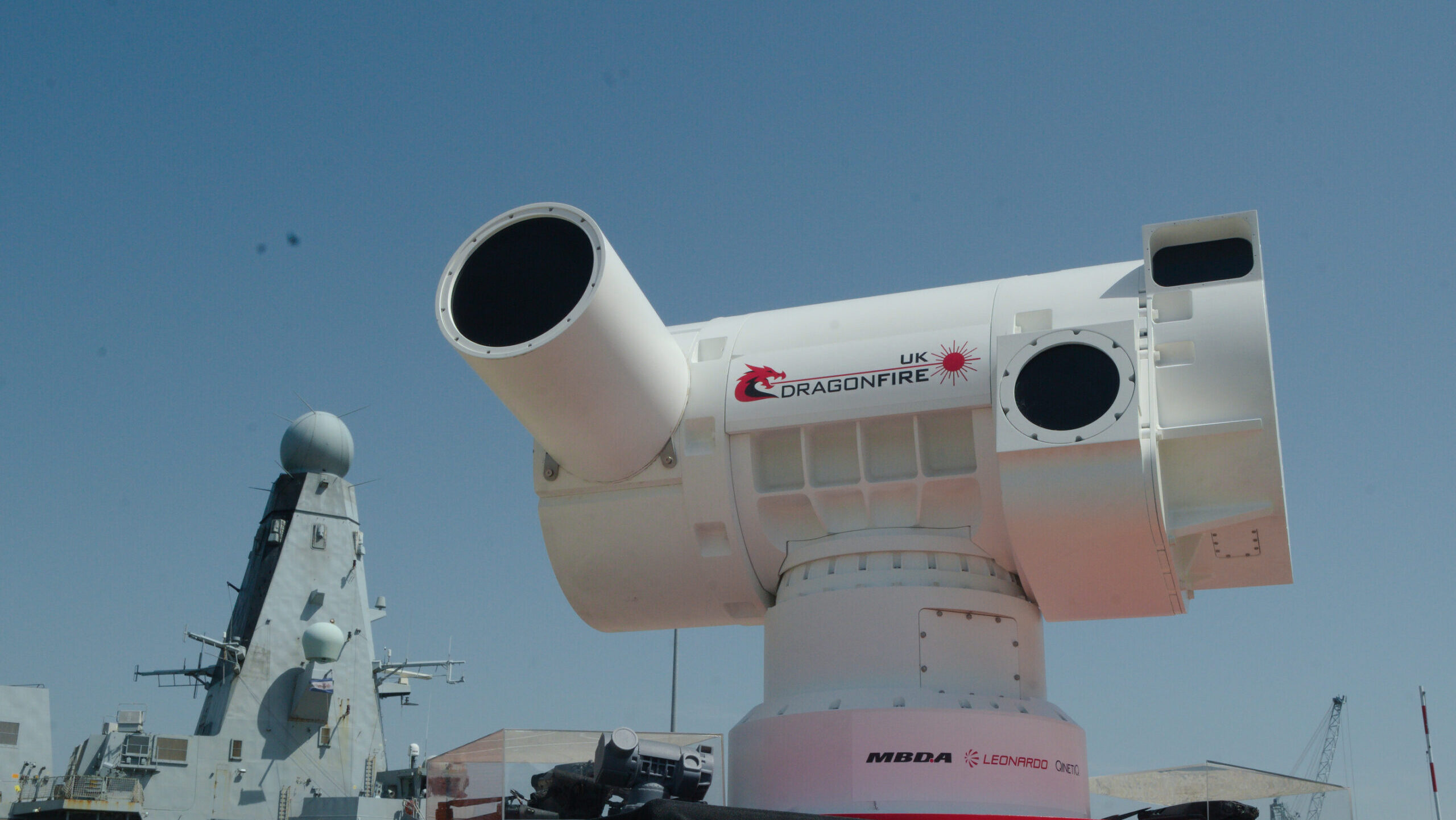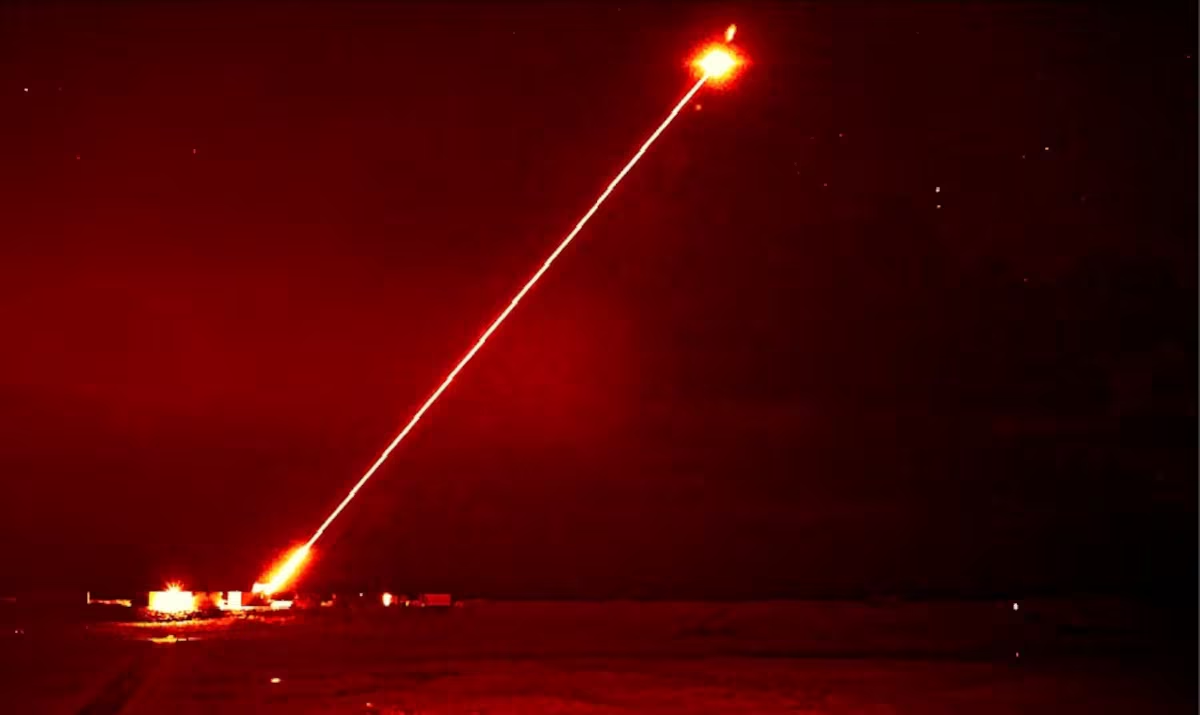
Directed EnergyWestern sea services are racing to field cost-effective air-defense weaponry on their warships. Jul 10, 2026, 10:59 AMThe British Royal Navy plans to deploy the DragonFire laser directed-energy weapon on its ships, as Rheinmetall and MBDA work on similar tech for Germany. (British Defence Ministry)PARIS — Rheinmetall and MBDA will develop a high-energy laser weapon for the Germany Navy that builds on previous work by the two companies on a laser demonstrator, with the weapon system expected to be operational in 2029.The equipment office of the German armed forces signed a contract with MBDA Deutschland and Rheinmetall Waffe Munition in June to develop the full system, from reconnaissance to target tracking and engagement, the companies said in statements on Thursday. The contract value is in the “mid three-digit” million-euro range, Rheinmetall said.Several European navies are working on laser weapons, with the United Kingdom’s Royal Navy planning to fit the DragonFire directed-energy weapon on a destroyer by 2027, in work led by MBDA in partnership with Leonardo and QinetiQ. Naval vessels are particularly suited to deploy powerful lasers, as they can provide the physical space, electrical power, sensors and cooling required.The German military has tested an Rheinmetall-MBDA laser weapon demonstrator aboard the frigate Sachsen. (Rheinmetall)“The laser weapon system will provide our personnel deployed on naval vessels with a significantly higher level of protection, particularly when it comes to countering drones,” Roman Koehne, head of Rheinmetall’s weapons and ammunition division, said in a statement.The laser weapon system from MBDA and Rheinmetall has a “very high level” of technological maturity, the companies said. The demonstrator has been deployed on the German frigate Sachsen, covering 28,000 nautical miles from the Baltic Sea to the Mediterranean, and firing over 1,000 shots at air, sea and land targets in more than a year of testing, according to MBDA and Rheinmetall.The containerized laser effector will also be a cost-effective weapon for port security, MBDA Deutschland Managing Director Thomas Gottschild said. The system can focus power on an area measuring just a few centimeters, and has proven to be effective even in adverse weather conditions, according to Rheinmetall and MBDA.The MBDA-Rheinmetall joint venture will place “particular emphasis” on German supply chains and local systems expertise to secure national sovereignty in the technology, the companies said. Serial production will “largely” take part in Germany, according to Koehne.In other weapon-development news, the French-German Research Institute of Saint-Louis said it tested its electromagnetic railgun outdoors for the first time in June, moving the system out of laboratory conditions. The institute will now work on higher energy levels and longer distances as a path towards a possible future deployable system, it said in a statement on Thursday.Railguns use electromagnetic acceleration rather than chemical propellants to fire a projectile, and could provide a possible counter to hypersonic threats.Meanwhile, Belgium said in will buy 20 of Rheinmetall’s Skyranger 30 anti-drone cannons as well as 14 Thales GM200 radars, in addition to a previously announced plan to buy 10 NASAMS air-defense systems from Kongsberg. The country is investing €3.1 billion ($3.5 billion) to build up a layered air defense system, after two decades of going without, Defense Minister Theo Francken said.Rudy Ruitenberg is a Europe correspondent for Defense News. He started his career at Bloomberg News and has experience reporting on technology, commodity markets and politics.
Rheinmetall, MBDA to develop laser weapon for German Navy
Rheinmetall and MBDA aim to field an operational laser weapon for the German Navy in 2029.
552 words~3 min read