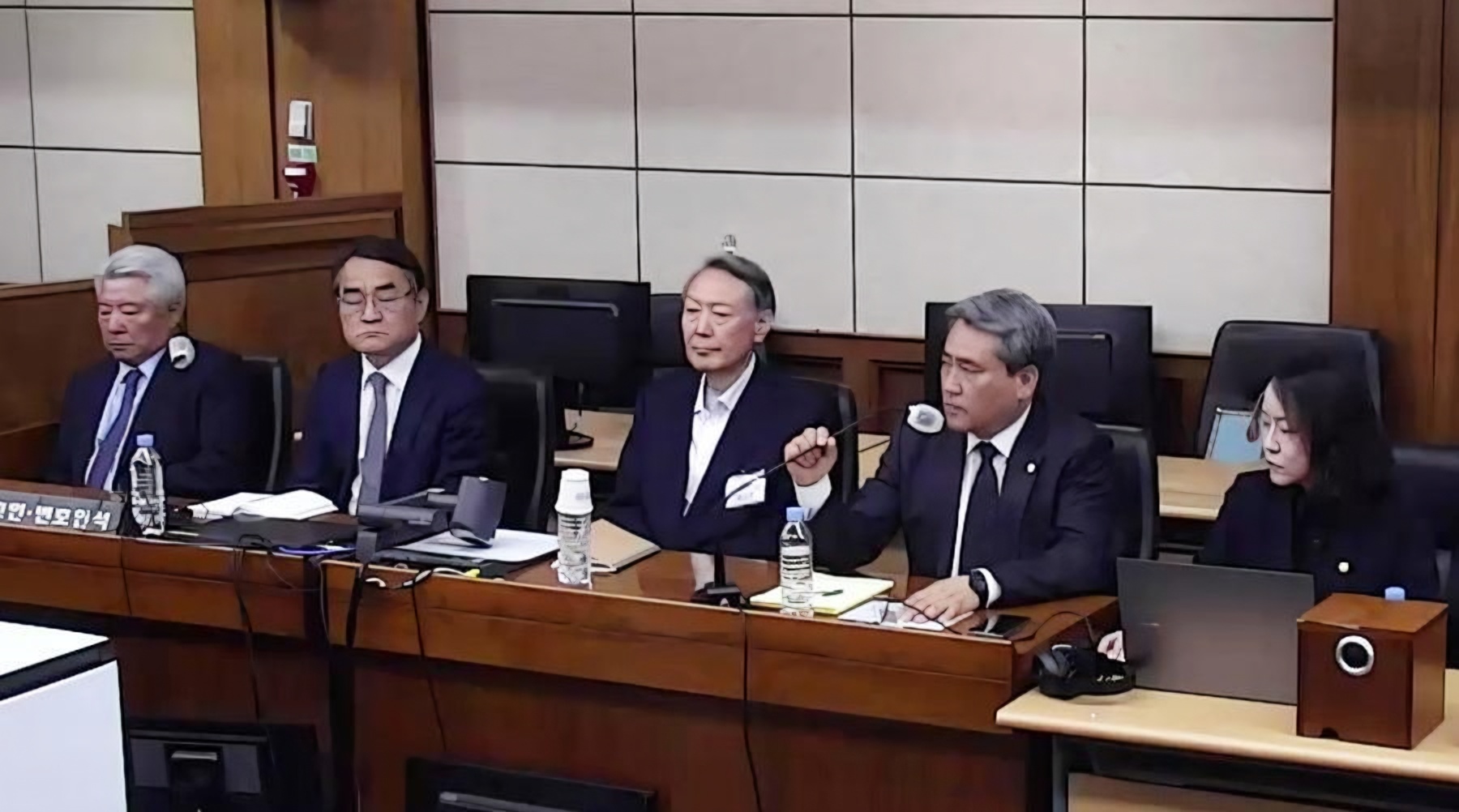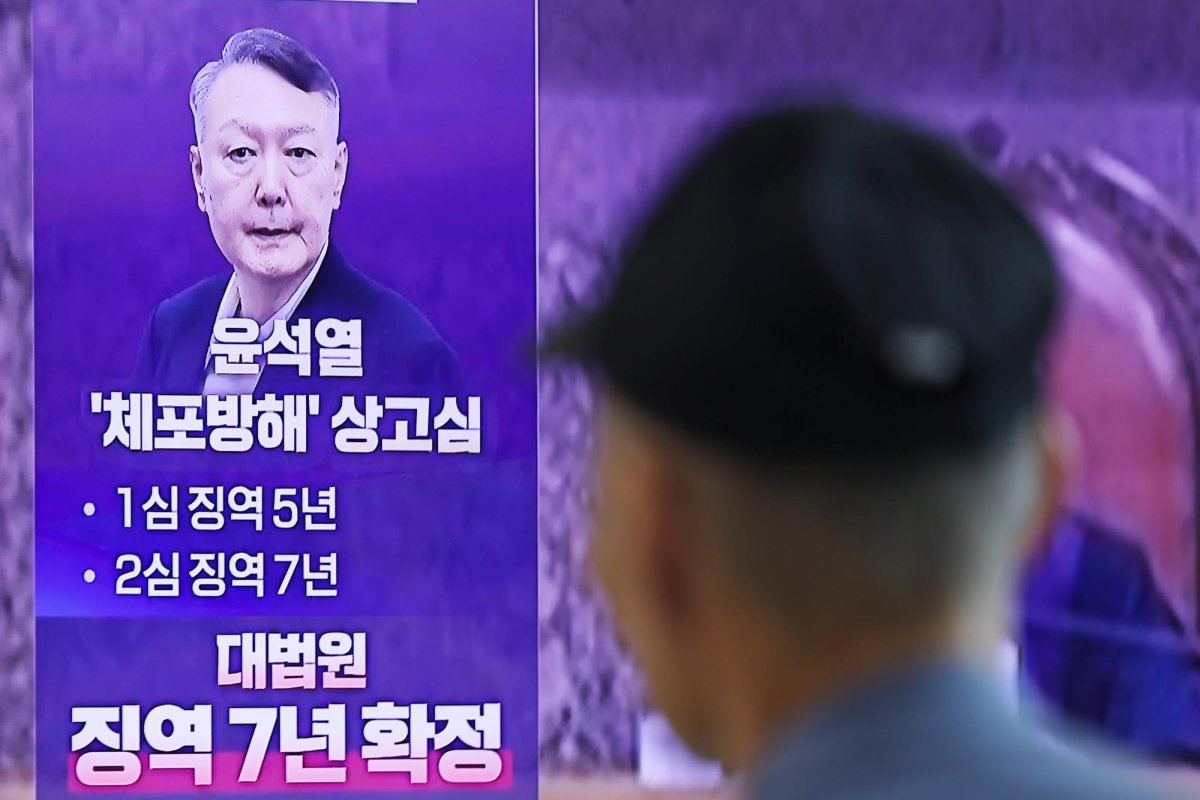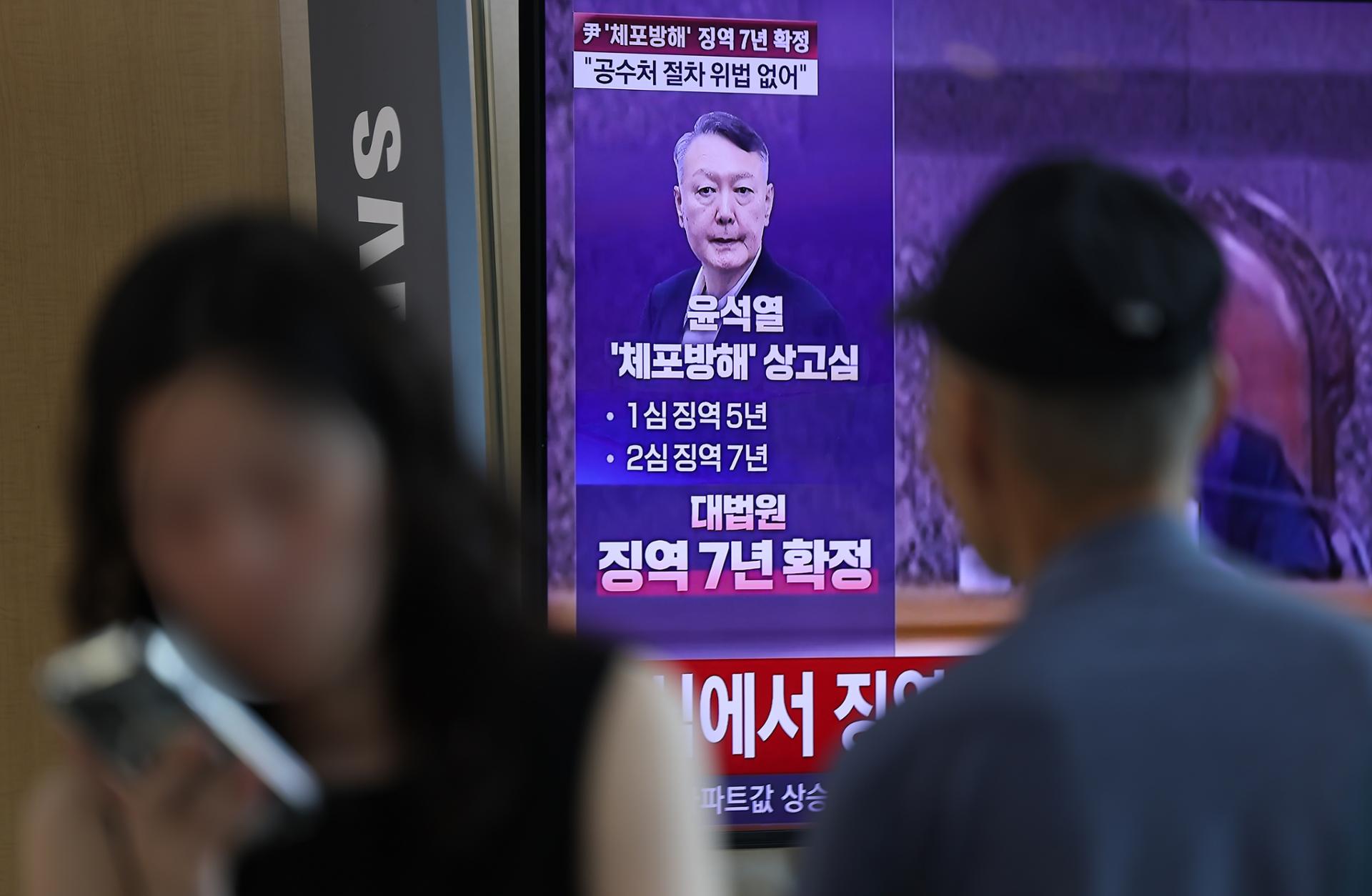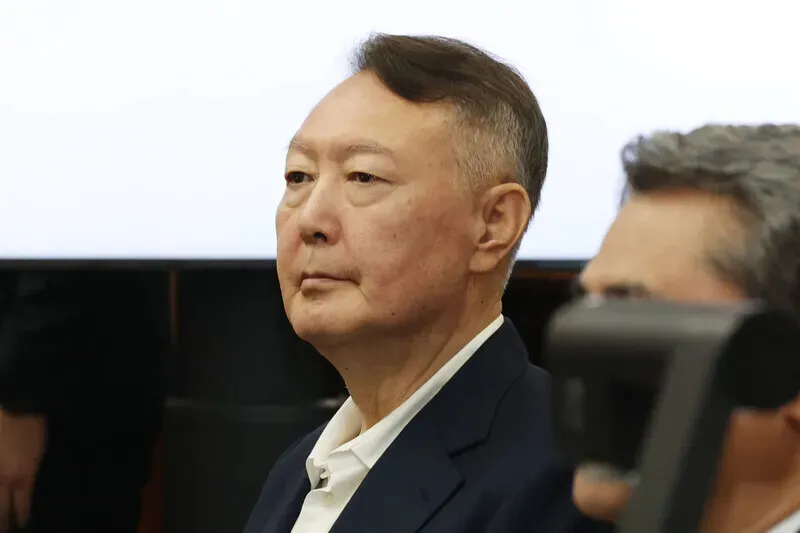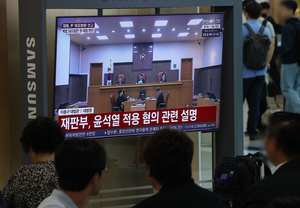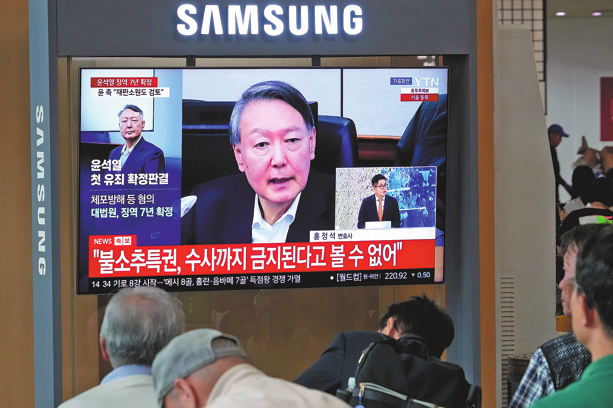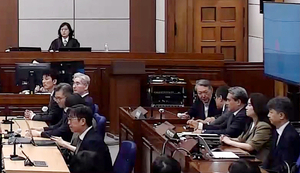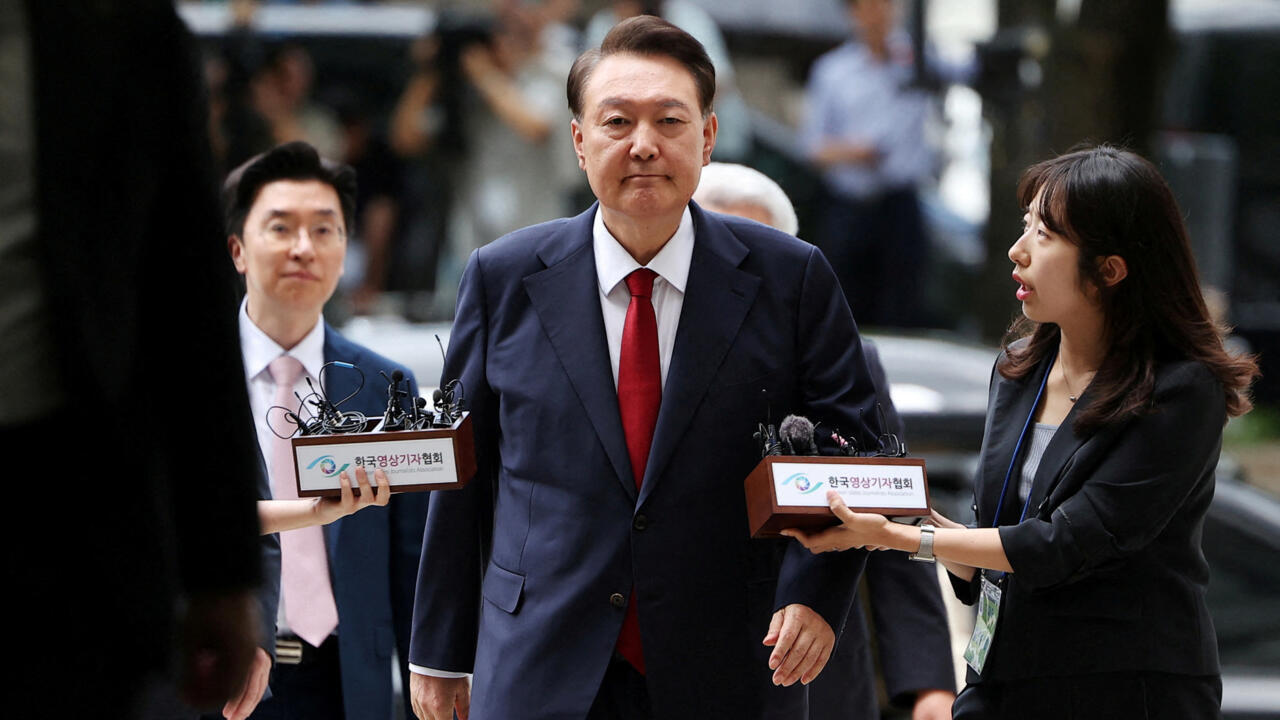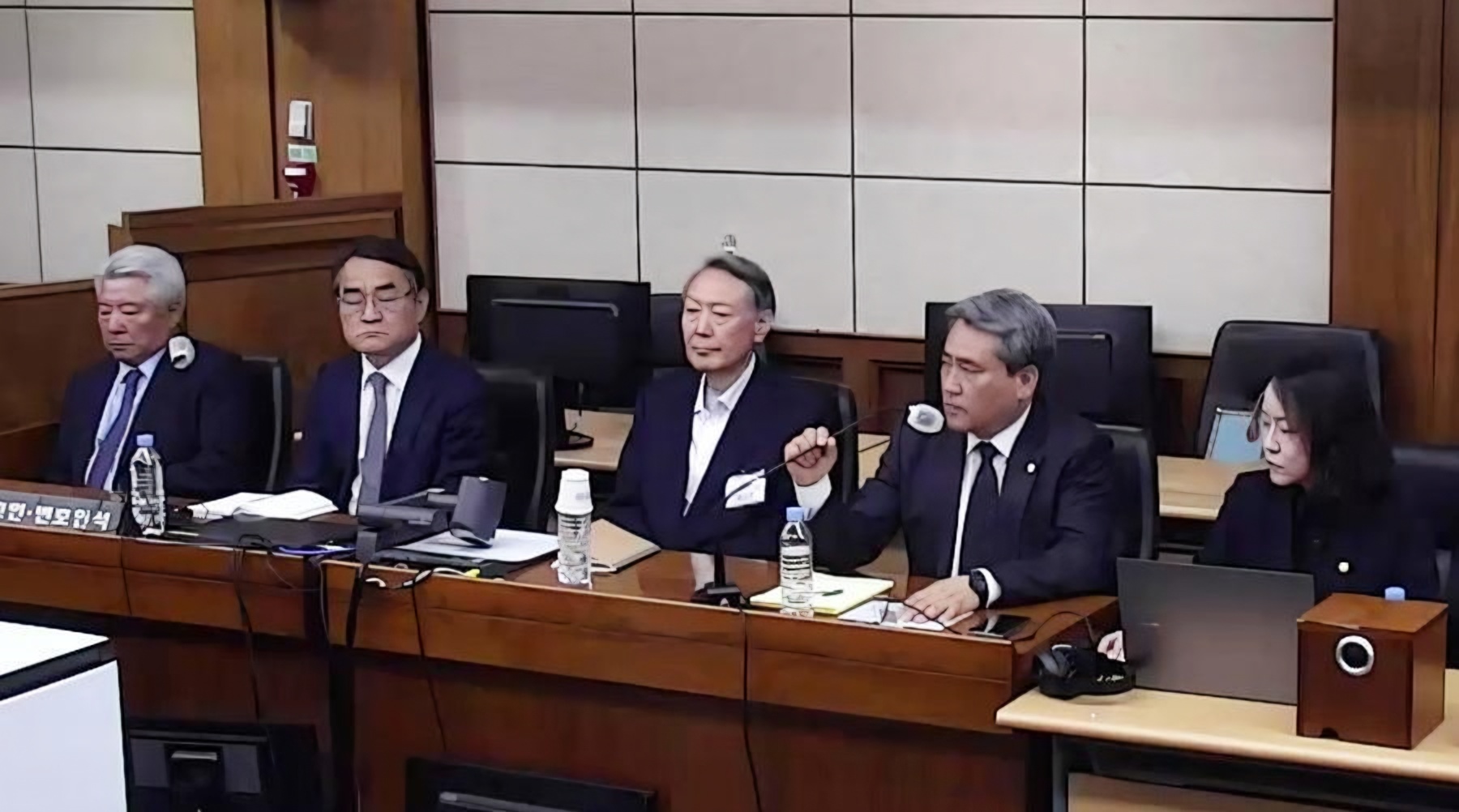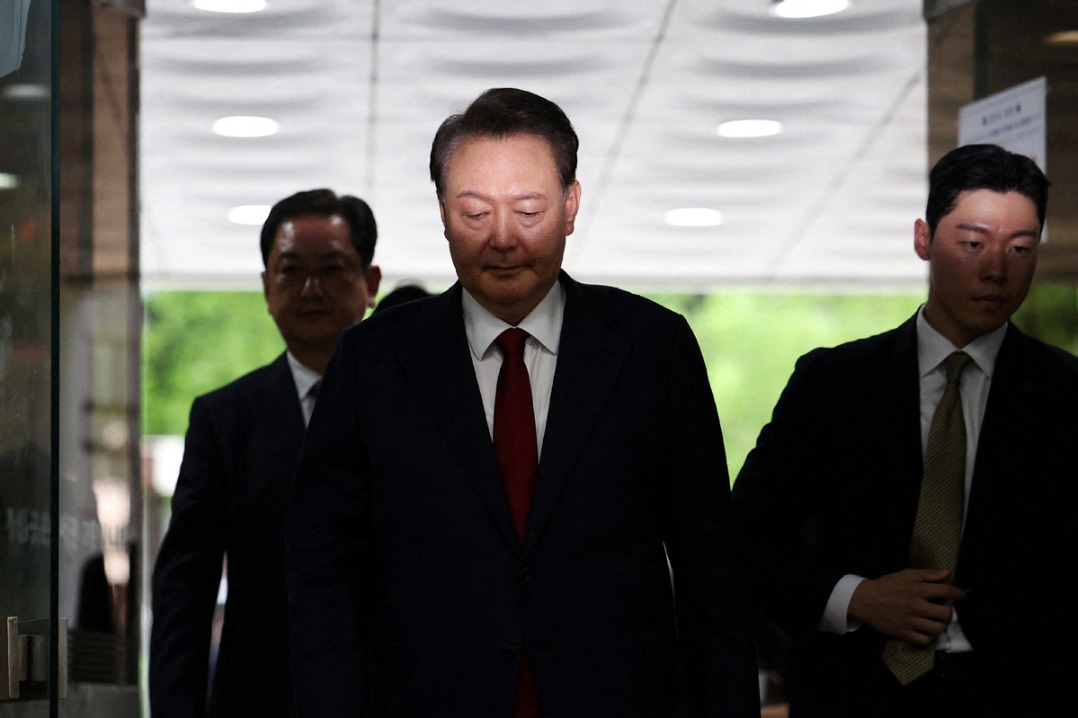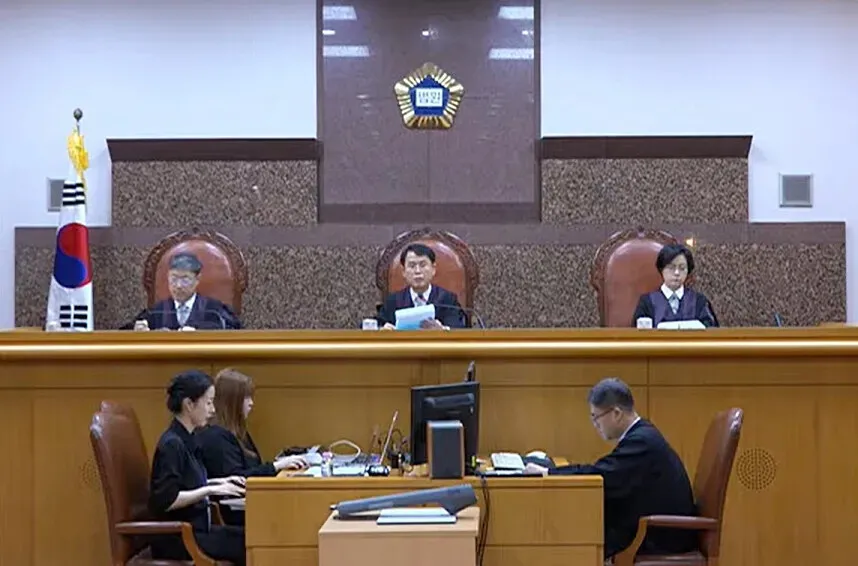
A panel of the Supreme Court reads its verdict in the trial of former President Yoon Suk-yeol on charges of obstructing justice and defying arrest at a hearing on July 9, 2026. (Yonhap)
The Supreme Court on Thursday upheld a seven-year prison sentence for former President Yoon Suk-yeol on charges including obstruction of justice during the investigation into his declaration of martial law in December 2024. The ruling marks the Supreme Court’s first decision on the case, issued 583 days after that fateful night. In upholding this stiff punishment, the court delivered a stern rebuke to Yoon for defying the legitimate enforcement of the law by invoking presidential immunity from prosecution despite having committed insurrection.After martial law was lifted, Yoon withdrew into the official presidential residence in Seoul’s Hannam neighborhood and refused to cooperate with the Corruption Investigation Office for High-ranking Officials. He even urged his security detail to use firearms to block the execution of a court-issued arrest warrant, and invoked presidential immunity from prosecution under Article 84 of the Constitution.Such immunity, however, does not apply to in cases of insurrection or treason, nor does it preclude investigations into the president. Yoon attempted to justify his refusal to cooperate with specious claims that “martial law is a presidential prerogative not subject to judicial review” and that the CIO “lacks the authority to investigate the crime of insurrection.”These claims are so absurd that they make it difficult to believe Yoon really was once the nation’s top prosecutor. Yet his statements threw the country into turmoil as lawmakers from the main opposition People Power Party aligned with him, conservative figures in legal and academic circles, and even conservative media chimed in with similar stances. Public anger also reached a new high after Judge Jee Kui-youn, who presided over Yoon’s lower court trial on charges of leading an insurrection, ordered his release from custody after he had finally been arrested.While the Supreme Court understandably rejected all of Yoon’s “legal technicalities,” judicial condemnation should have come faster considering the unnecessary conflicts the country has experienced.Yoon’s defense team blasted the ruling, saying, “As if pressed for time and even failing to convene a full bench hearing, the Supreme Court’s hasty rejection of our appeal is tantamount to politicization of the judiciary.” Have they no shame? In a ruling by a lower court on the same day, some of the officials who had been indicted on charges of obstructing investigators from executing their arrest warrant on Yoon’s orders — Park Chong-jun and Kim Seong-hun, the No. 1 and No. 2 of Presidential Security Service at the time, and Lee Kwang-woo, the head of the service’s protection bureau — were convicted and immediately taken into custody. The court called their “exploitation of the organization and command structure of the state agency of the Presidential Security Service to prevent the execution of a warrant at length” a “grave offense.”“The defendants, acting in concert, obstructed the lawful course of judicial proceedings and the investigation of Yoon Suk-yeol as a suspect in an insurrection case, thereby effectively nullifying the state’s ability to uphold the rule of law,” the court found.Yoon is no longer a suspect awaiting judgment, but a convicted criminal for whom a prison sentence has been finalized. While serving his sentence, Yoon must undergo correctional and rehabilitative programs and engage in genuine reflection on his crimes. We await the verdicts in his numerous other trials, including that on charges of masterminding an insurrection. Please direct questions or comments to [english@hani.co.kr]