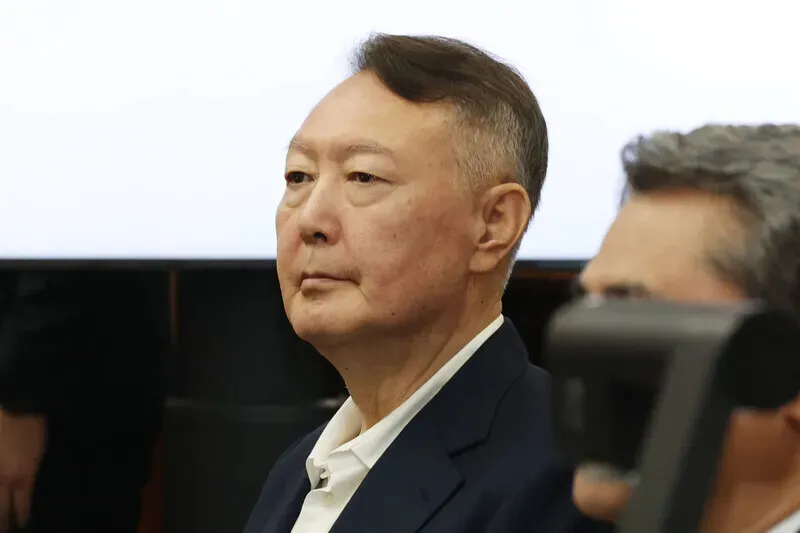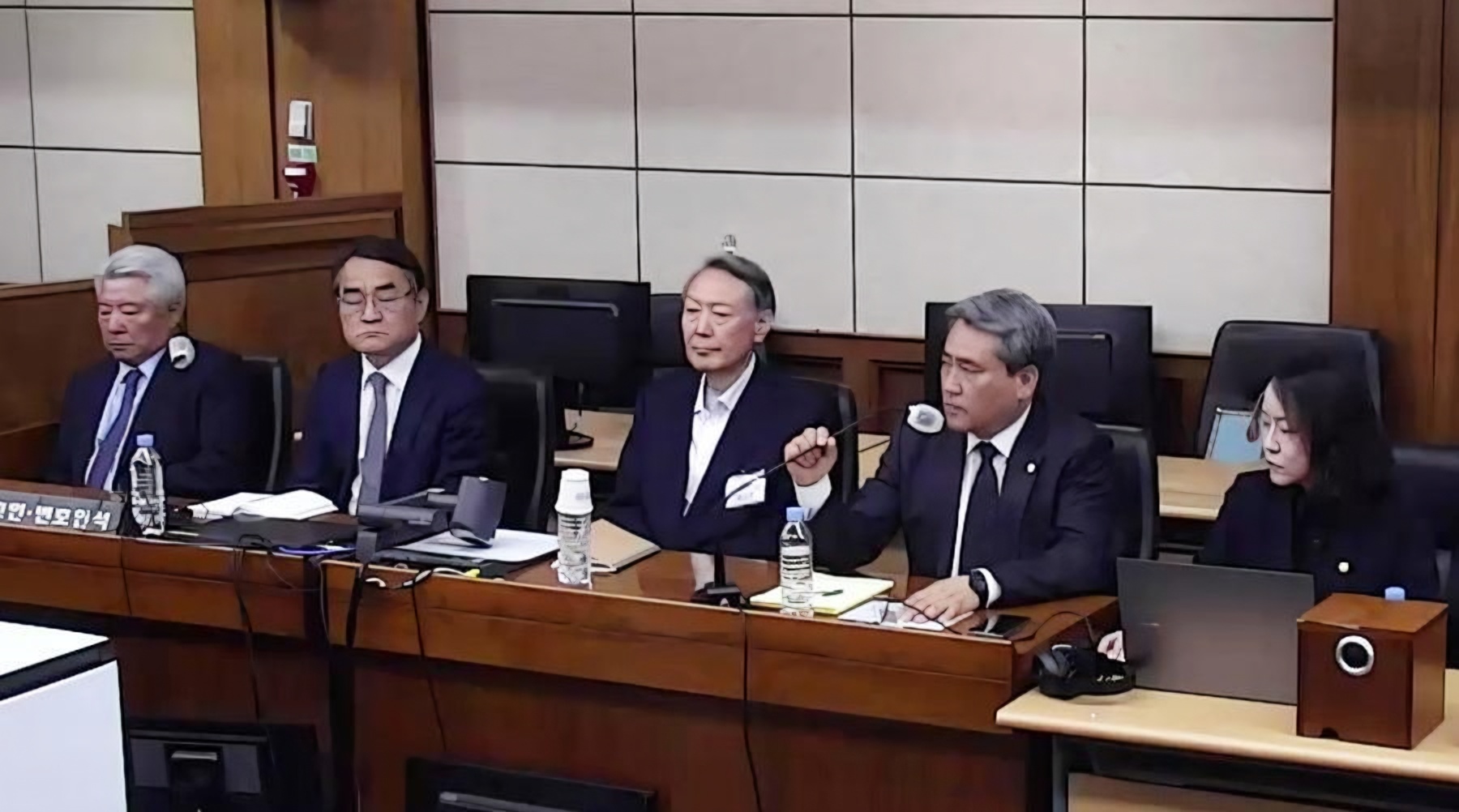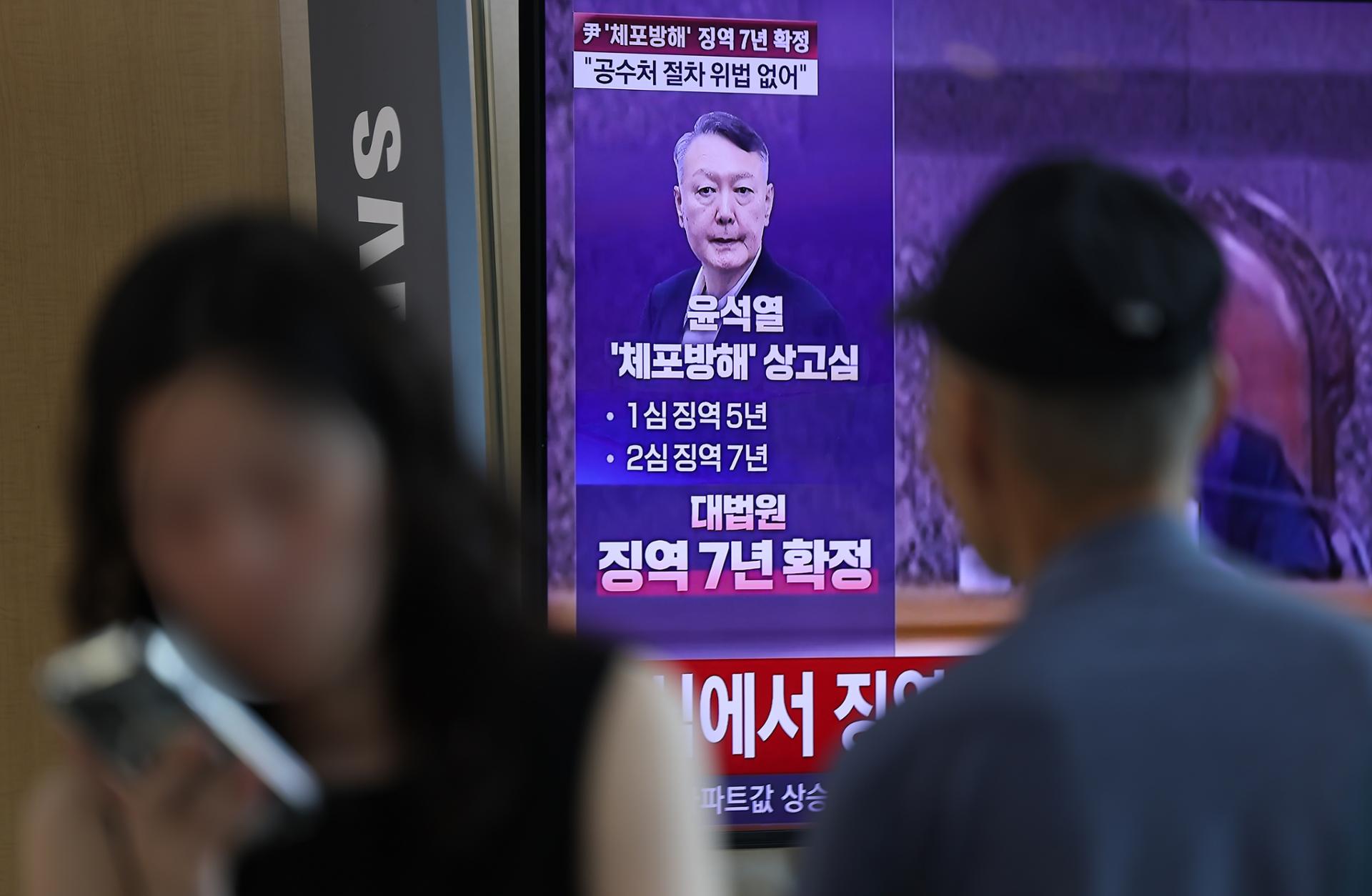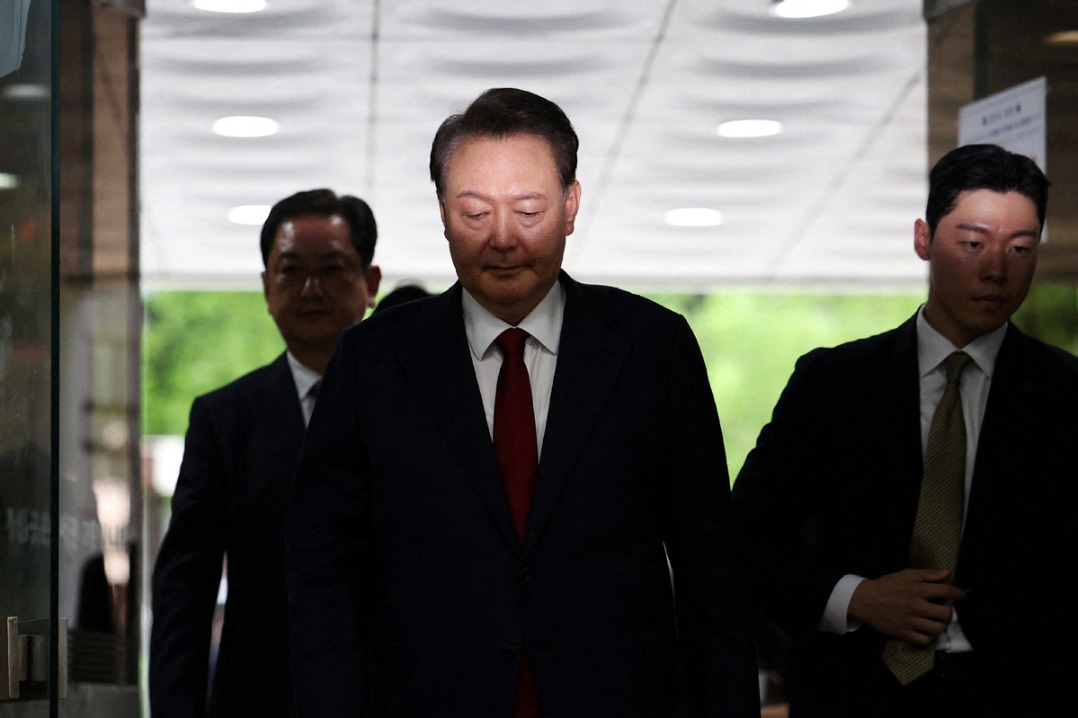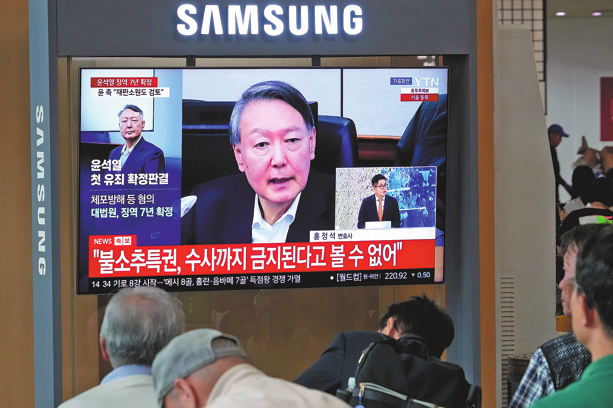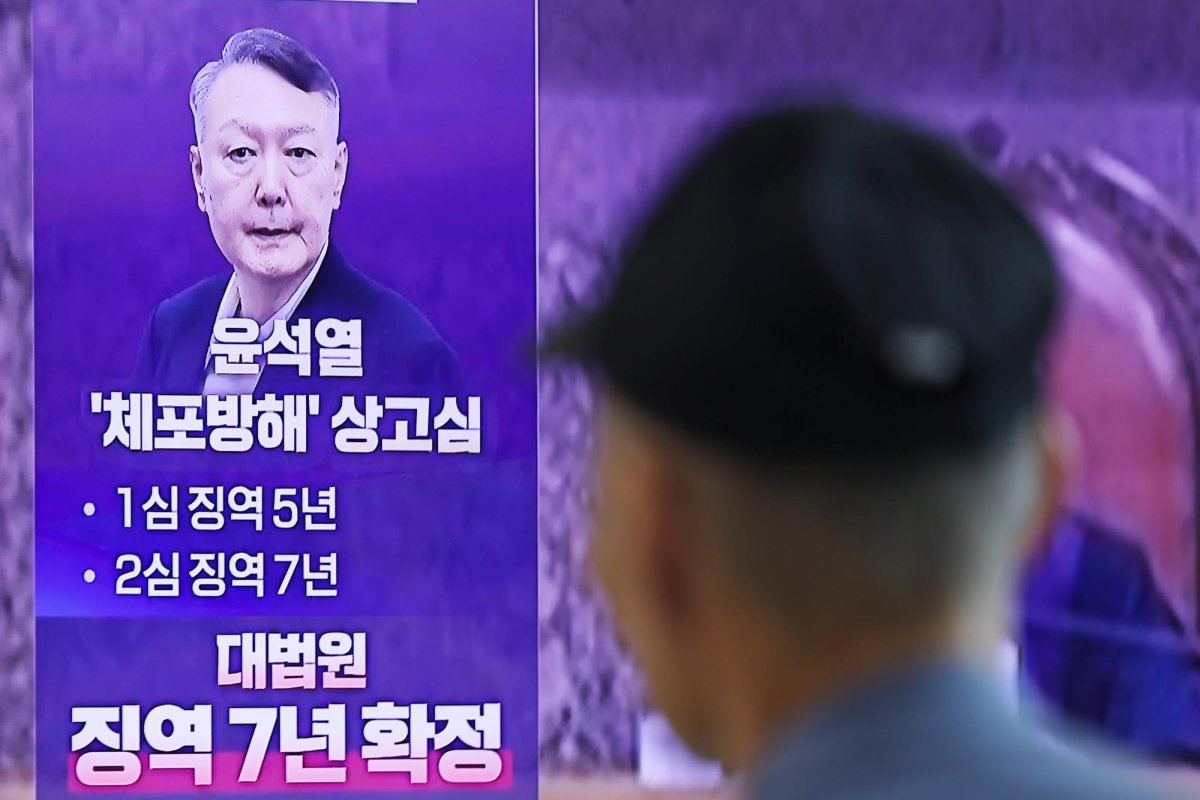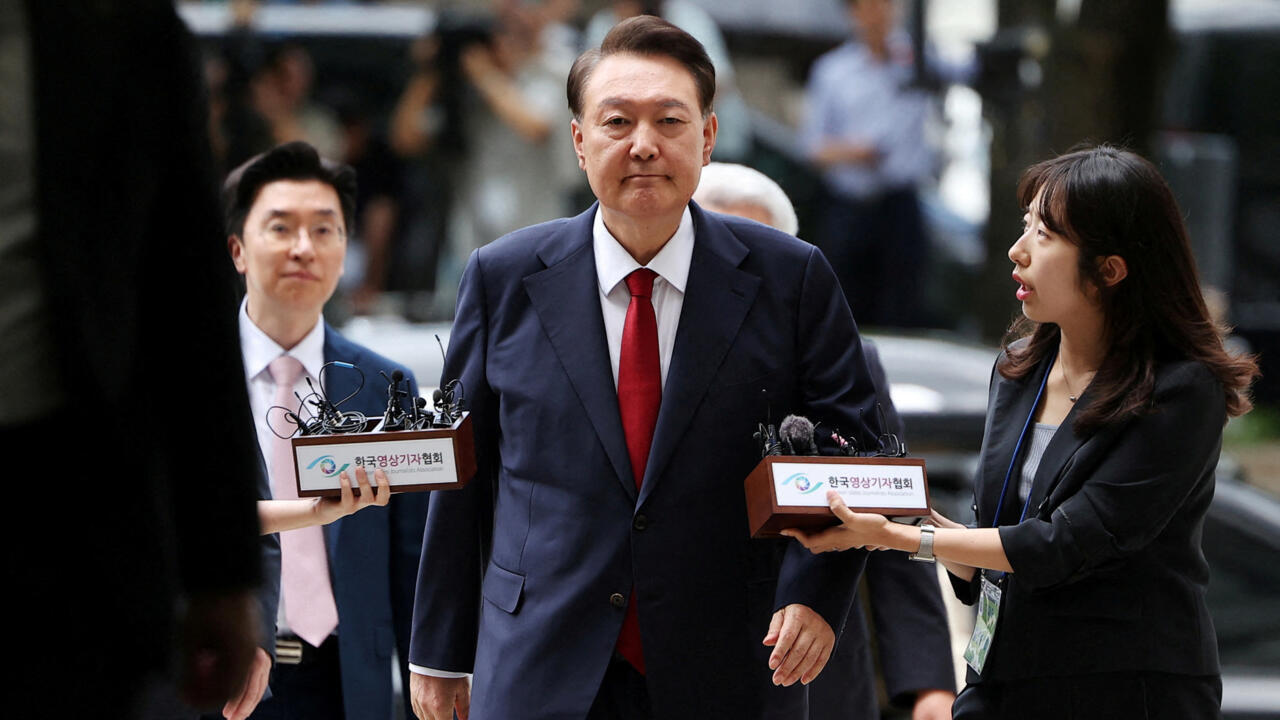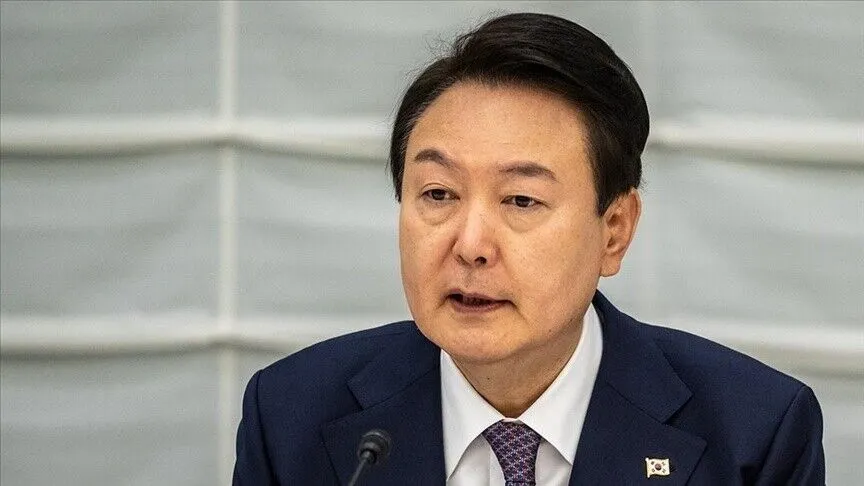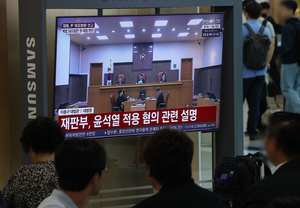
First top-court ruling in Yoon’s martial law-related criminal cases comes 583 days after failed declaration People watch a broadcast of the Supreme Court’s ruling in former President Yoon Suk Yeol’s arrest obstruction case at Seoul Station on Thursday. (Yonhap) The Supreme Court on Thursday finalized a seven-year prison sentence for former President Yoon Suk Yeol on charges including obstruction of an arrest warrant, in the first top-court ruling among the criminal cases he faces over his failed attempt to impose martial law in 2024.The top court dismissed appeals filed by both Yoon and the special counsel, upholding the appellate court’s ruling.“The arguments for appeal largely challenge the lower court’s findings of fact, and there was no error in the lower court’s judgment, including a violation of the rules of logic and experience, an overstep of the bounds of the free evaluation of evidence, or a misunderstanding of legal principles on the establishment of a crime,” the Supreme Court said.Yoon did not appear in court for Thursday’s ruling.Special counsel Cho Eun-suk had sought a combined sentence of 10 years for Yoon on charges including obstructing the execution of his arrest warrant, violating Cabinet members’ right to deliberate on the martial law declaration, issuing false statements to foreign media and ordering the deletion of records from encrypted phones.The Seoul Central District Court initially sentenced Yoon in January to five years in prison.It found him guilty of most charges, including obstruction of the arrest warrant and violating the deliberation rights of several Cabinet members, but acquitted him of some charges related to false statements to foreign media and the alleged false martial law proclamation.Both Yoon and the special counsel appealed. In April, the Seoul High Court increased the sentence to seven years. It found Yoon guilty of abuse of power related to the false statements to foreign media and recognized that he had infringed on the deliberation rights of two more Cabinet members.Ruling could affect insurrection trialThe case turned in part on whether South Korea’s anti-corruption agency could lawfully seek Yoon’s arrest over insurrection-related allegations.The agency, officially the Corruption Investigation Office for High-ranking Officials, does not directly handle insurrection cases. But courts found it could investigate allegations discovered during its abuse-of-power probe.The agency attempted to arrest Yoon at the presidential residence in January 2025. Officers were blocked by barricades and other security measures set up by the Presidential Security Service, according to the courts.Yoon had argued that the agency had no authority to investigate the insurrection allegations and that the investigation, arrest warrant and attempt to execute the warrant were therefore unlawful.But the lower courts rejected that argument, finding no illegality in the investigation or the arrest warrant process.The Supreme Court upheld that view, ruling that the insurrection allegations were discovered while the agency was investigating abuse of power charges, and that it therefore had the authority to investigate related allegations and seek Yoon’s arrest.The top court also rejected Yoon’s claim that the agency searched the presidential residence, which he described as a military facility, without due process by failing to obtain approval from the presidential security chief.The court ruled that the security chief had not provided valid grounds to block the search and arrest attempt.The ruling is expected to affect Yoon’s other trials, where similar questions have been raised about the investigation's legality.
[Breaking] Supreme Court upholds Yoon’s 7-year sentence for obstructing arrest
The Supreme Court on Thursday finalized a seven-year prison sentence for former President Yoon Suk Yeol on charges including obstruction of an arrest warrant, i
552 words~3 min read