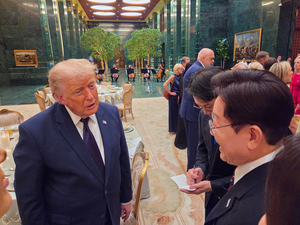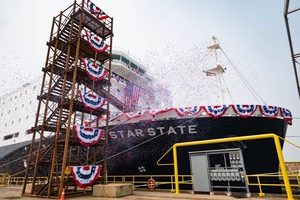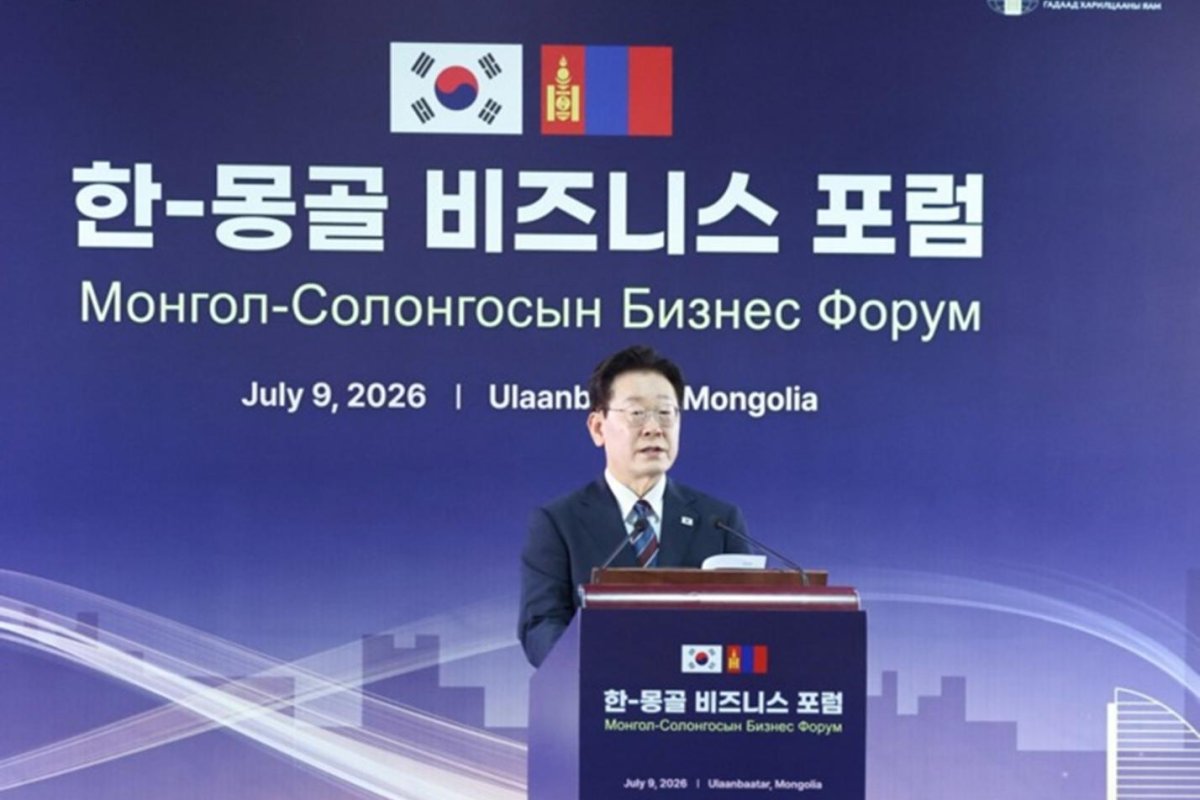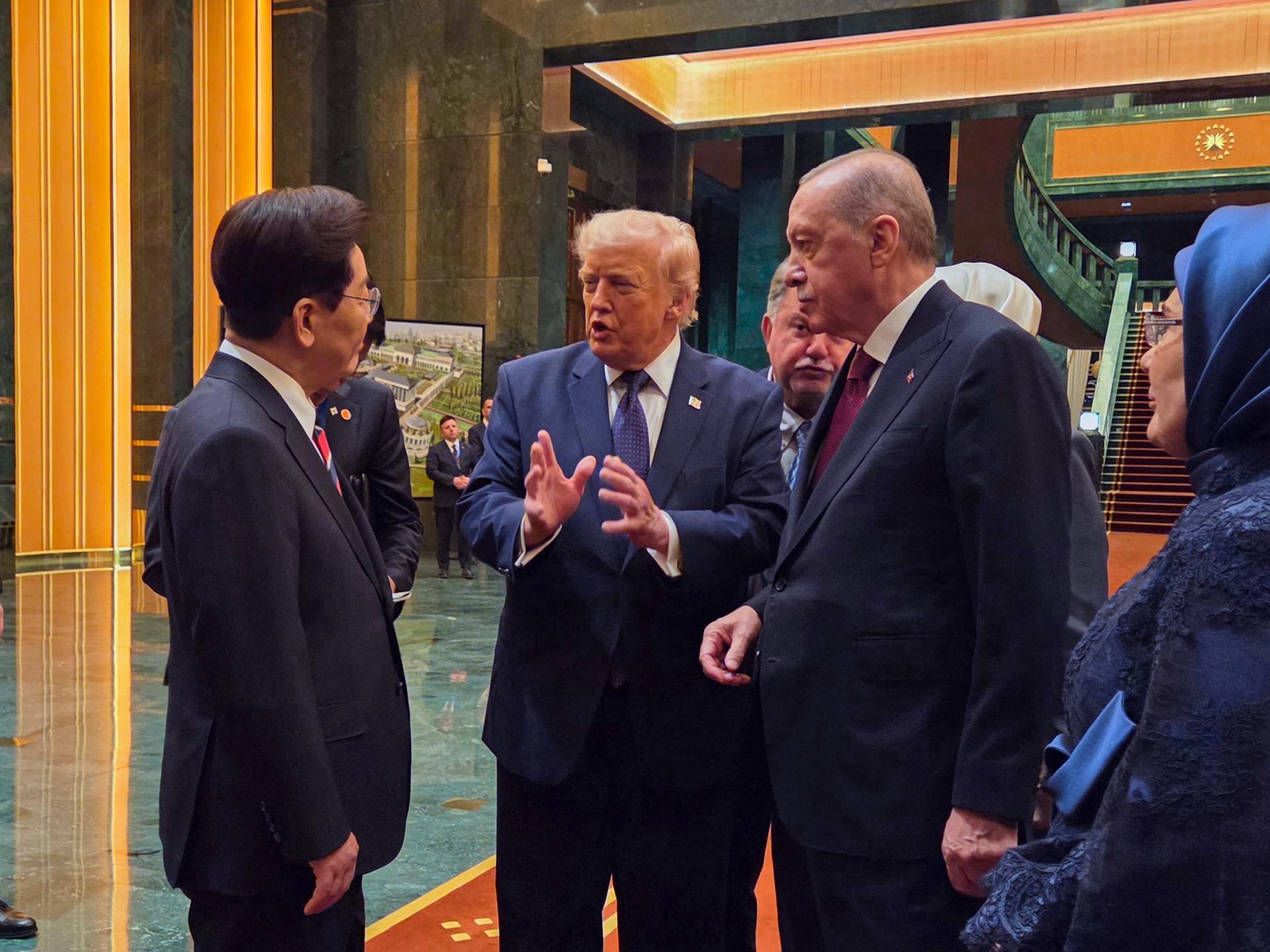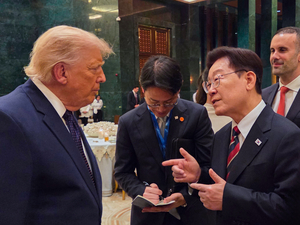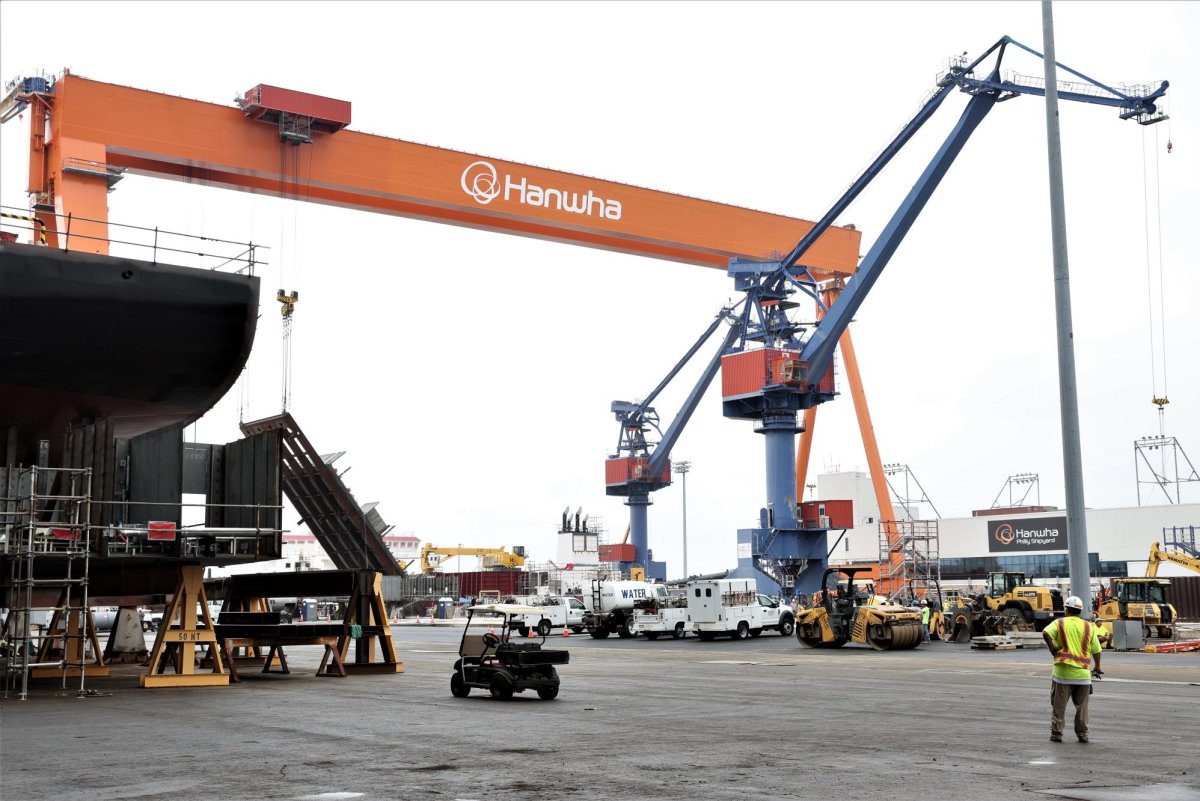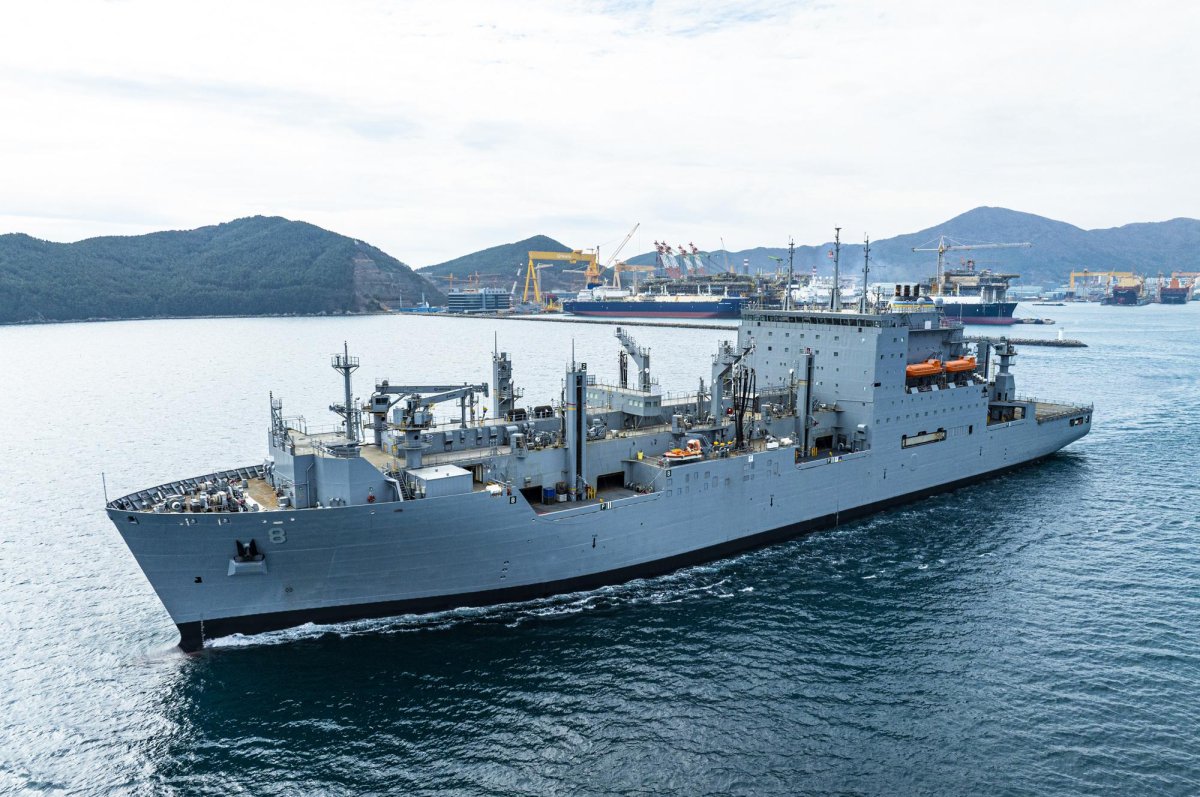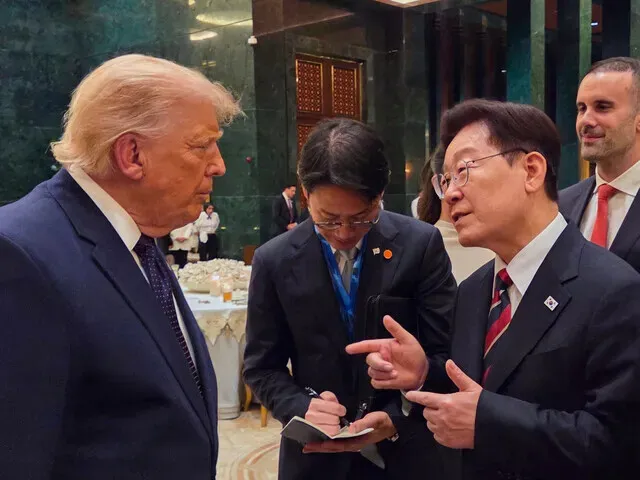
After Korean President Lee Jae Myung held follow-up discussions with US President Donald Trump regarding the construction of warships at the NATO summit, a senior Blue House official stated Thursday that Trump “appears not to have ruled out the possibility” of allowing Korean shipyards to build the ship for the US, while cautioning that further review is needed. A senior Blue House official made the remarks during a briefing in Ulaanbaatar, Mongolia, where Lee is on a state visit, in response to a question on whether the Trump administration is seeking to have Korean shipyards build entire warships or produce ship blocks in Korea for final assembly in the US. “This was not the first time that Trump expressed interest in the construction of military vessels; the issue was first brought up during the Group of Seven summit,” the official said. “The issue was not discussed in a comprehensive manner but included in fragmented pieces of dialogue, as the brief conversation between the two leaders was held during the G7 banquet. We need to work out the details through working-level discussions and identify and address any areas that remain unclear,” they went on. “There is such a variety in ships, which include warships, auxiliary ships, and merchant-type auxiliary vessels, and provisions differ according to the type of ship, so we will have to look into the specifics first,” the official explained. On Tuesday, Lee met with Trump at the reception and welcome dinner hosted by Turkish President Recep Tayyip Erdoğan and his wife during the NATO summit in Ankara, Turkey, where they held follow-up discussions regarding Korea’s construction of naval vessels for the US. This was Lee’s second chat with Trump in three weeks, following their meeting at the G7 summit, which took place in June in Evian, France. At the time, Lee revealed that Trump asked if it were possible to “quickly build 10 warships” for the US, indicating that their more recent conversation followed up on that. Regarding the US State Department’s concerns over Korea’s revised Information and Communications Network Act, the official announced that “adequate communication took place between the two parties, but Korea has more explaining to do.” “Since we are not engaging in discriminatory acts but ensuring justifiable measures to protect the interests of our consumers, we need to continue communications while securing benefits,” the official stated. The revised legislation, which took effect on Tuesday, stipulates that media outlets, YouTubers, and others who distribute illegal or false and manipulated information and cause harm to others are liable for damages of up to five times the amount of the loss. In January, the US State Department expressed “significant concerns” that this could lead to excessive content regulation and “undermine free expression.” By Seo Young-ji, staff reporter
Could Trump ask Seoul to build US warships in Korea?
A senior Blue House official said that Trump gave the impression of being open to Korean shipyards building the vessels
460 words~2 min read