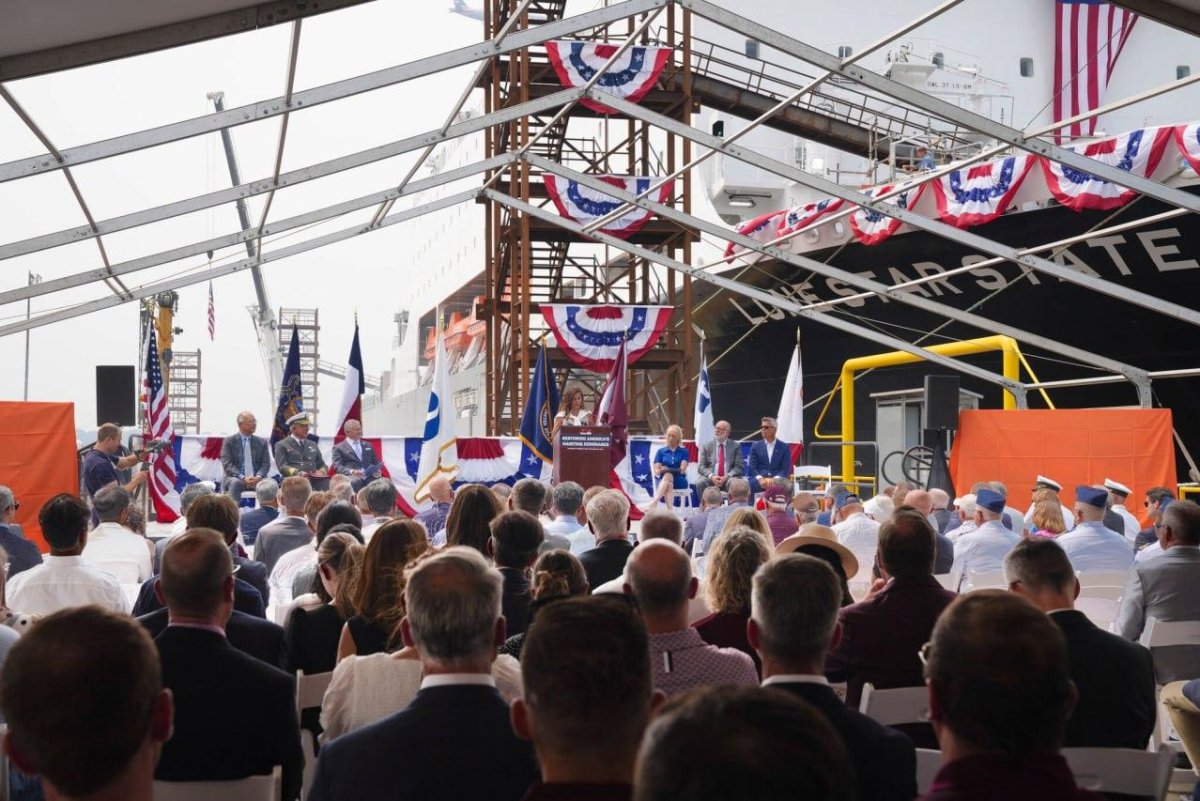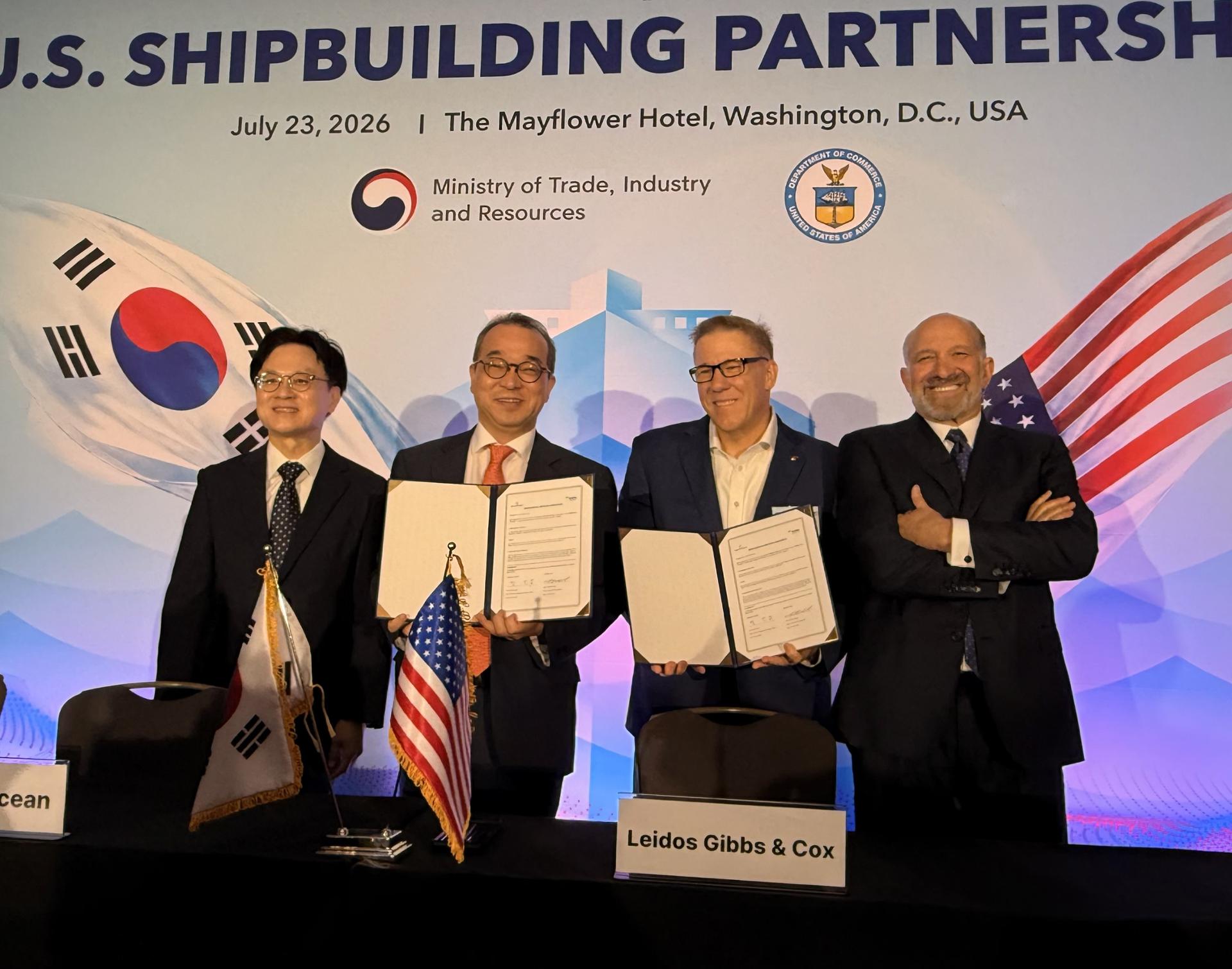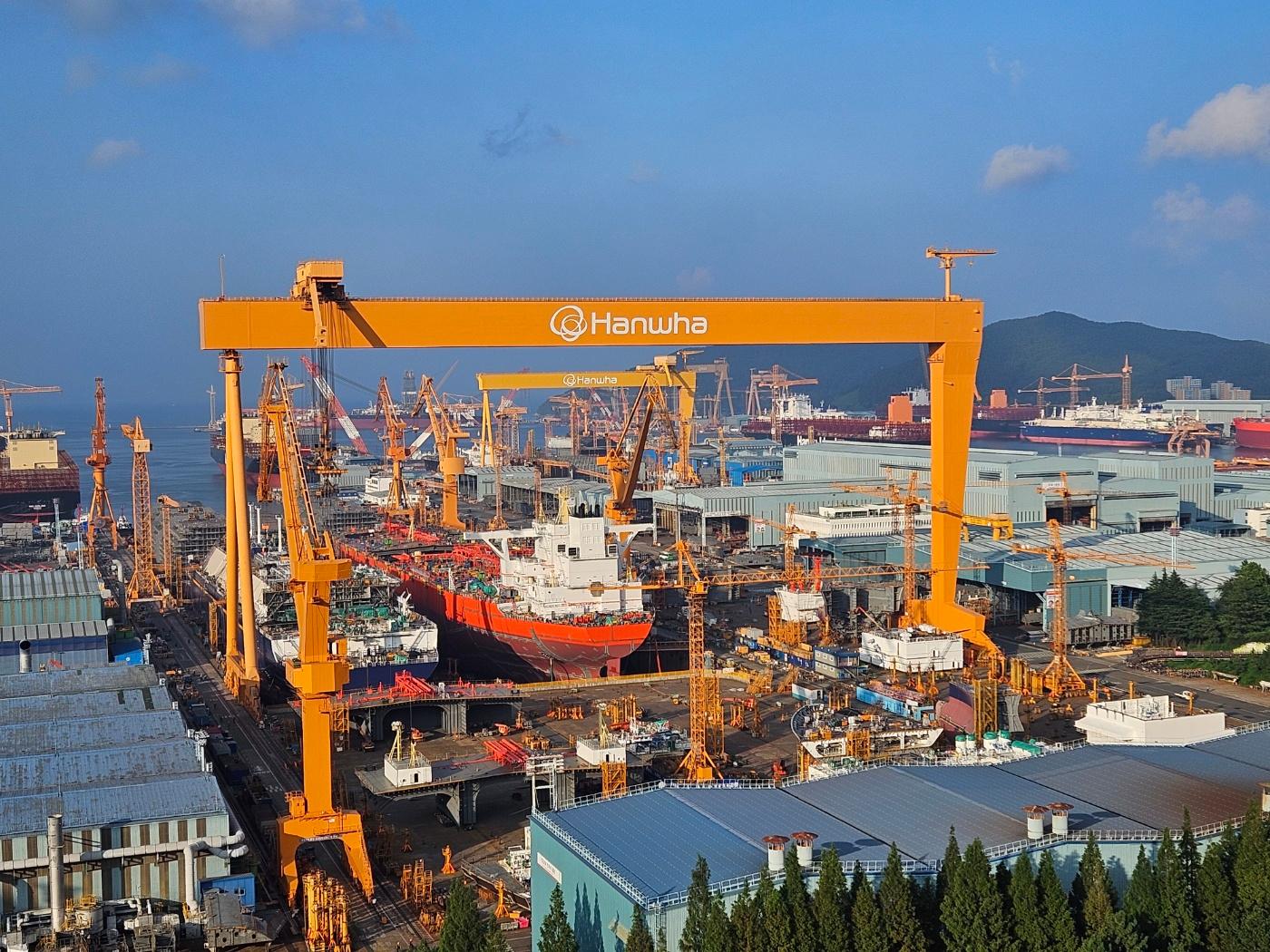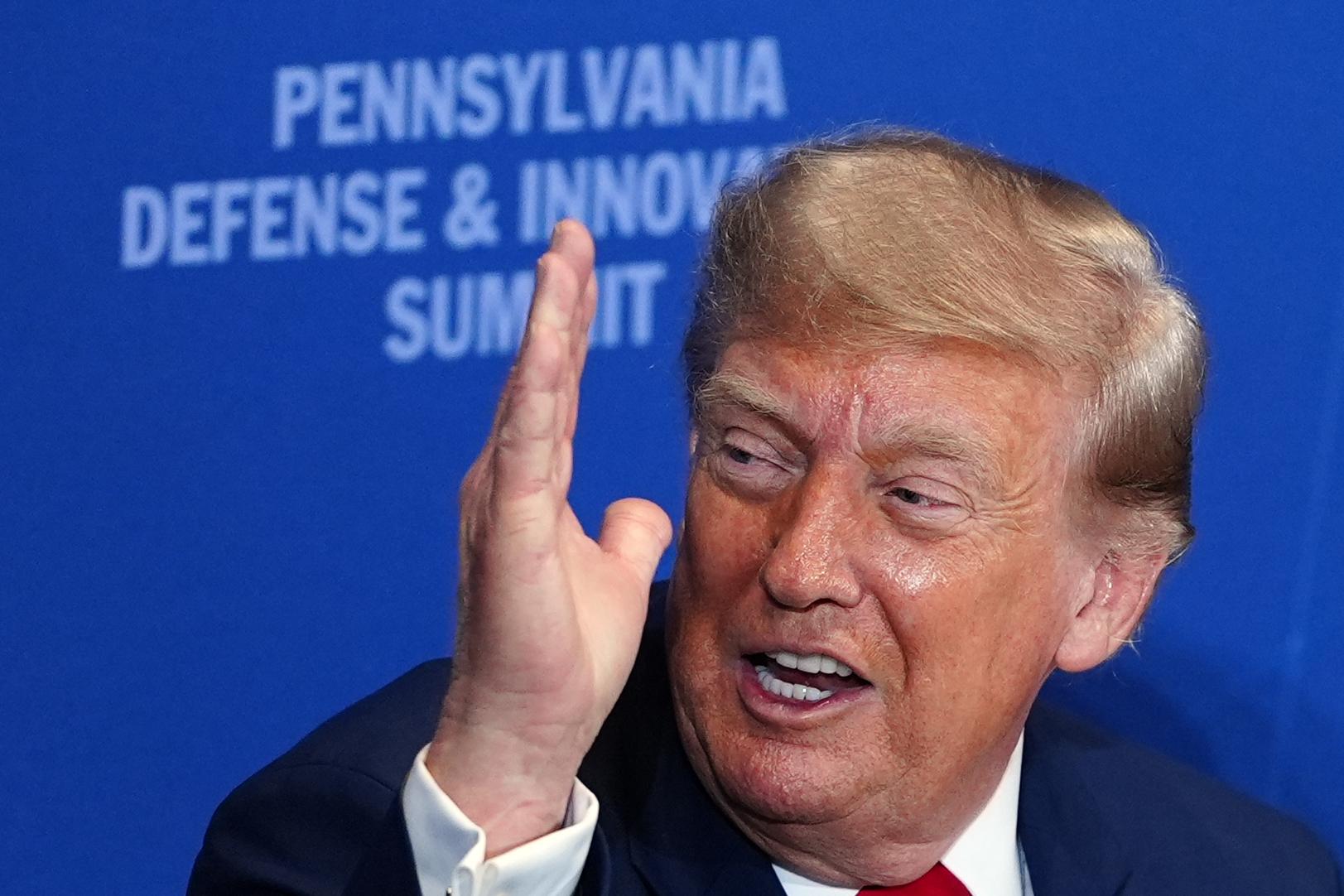
Trump's outreach has raised hopes for Korean shipbuilders, but legal and production hurdles still make US warships built in Korea unlikely The fourth National Security Multi-Mission Vessel, the Lone Star State, is pictured during its naming ceremony at Hanwha Philly Shipyard in Philadelphia on Friday. (Hanwha Group) US President Donald Trump’s repeated mentions of South Korean shipbuilders for its Navy buildup have raised expectations that companies like Hanwha Ocean and HD Hyundai Heavy Industries could play a bigger role in modernizing the country’s aging naval fleet.The momentum is real. Since South Korea and the US launched their shipbuilding partnership under the “Make America Shipbuilding Great Again” initiative last August, the two sides have moved from broad political commitments toward concrete cooperation.The Korea-US Shipbuilding Partnership Center, a joint initiative to strengthen bilateral cooperation in commercial shipbuilding, naval manufacturing and maintenance, repair and overhaul, is set to open in Washington, DC, on Thursday.Hanwha Philly Shipyard, Hanwha Group's US shipyard, has recently won a $2 billion contract to build two missile-tracking vessels for the US military and is investing heavily to expand the Philadelphia facility.Meanwhile, HD Hyundai Heavy Industries has expanded its partnership with Huntington Ingalls Industries, the largest US military shipbuilder, to explore distributed shipbuilding and joint work on naval auxiliary and commercial vessels."We have to build our Navy. We’ve got to get it going,” Trump said at the Pennsylvania Defense and Innovation Summit on July 15.Trump said Washington would “probably look at” companies from South Korea and suggested that the US could purchase some ships made “outside the area.” While he didn’t clarify whether he meant vessels constructed overseas, Trump appeared to leave open the possibility of overseas construction as Washington seeks rapid expansion and modernization of its fleet.The remarks followed reports that Trump had asked South Korean President Lee Jae Myung whether Korea could quickly build 10 US warships during their meeting on the sidelines of the Group of Seven summit last month. The two governments subsequently agreed to continue working-level discussions on cooperation in building US military vessels.The Pentagon and US Navy recently reached out to South Korea’s three major shipbuilders to gauge their capacity to produce combat ships and medium-sized replenishment oilers.The requests for information are not formal tenders and do not guarantee future contracts. Still, they represent a meaningful step, indicating that Washington is seriously examining how Korean shipbuilding technology could be incorporated into its naval expansion.US law is biggest barrierDespite the growing momentum, industry observers say the prospect of South Korean shipyards producing complete US destroyers or frigates remains remote under existing law.US law broadly prohibits the construction of military vessels in foreign shipyards, as well as the overseas production of major hull and superstructure components. Political resistance from lawmakers from shipbuilding states and US labor unions presents an additional barrier.The principal legal hurdle is Section 8679 of Title 10 of the US Code, commonly known as the Byrnes-Tollefson Amendment. Dating to the 1960s, the provision bars US Navy vessels and major components of their hulls or superstructure from being constructed in foreign shipyards, including those in allied countries. “US shipbuilding is protected by powerful legislation, the Jones Act for commercial vessels and the Byrnes-Tollefson restrictions for military ships,” said Retired Capt. Moon Keun-sik, a professor at Hanyang University’s Graduate School of Public Policy and a former submarine captain in the South Korean Navy.“The United States needs to revise these laws quickly if it wants to expand its naval fleet and narrow the gap with China. But changing US law is difficult because it requires congressional approval,” Moon said. “Trump’s repeated comments appear intended to build public support and move opinion in that direction. Without legislative reform, however, it will not be easy for Korean shipbuilders to construct US warships.”There is, however, a narrow exception allowing the US president to waive the restriction for national security reasons, but no president has invoked the waiver to date.Any attempt to use the waiver would likely face stiff opposition from labor unions, lawmakers representing shipbuilding states and other domestic interests. The national security justification would therefore have to be sufficiently urgent to withstand the political backlash.That means under the current framework, building an entire US combat vessel at Hanwha Ocean’s Geoje shipyard or HD Hyundai Heavy Industries’ Ulsan yard is effectively prohibited.Hanwha has a US production foothold through Hanwha Philly Shipyard, which it acquired for $100 million in 2024. But the facility would still need to secure the licensing procedure to build combat ships in the US. Also, expanding its technological capabilities, supply chain and skilled workforce to handle complex naval programs could also take years.The US Navy is openly asking Congress to loosen some of the restrictions.In its May shipbuilding plan, the Navy asked Congress for legislative changes that would authorize the construction of as many as two auxiliary ships overseas and give US prime contractors more flexibility to subcontract the fabrication of large, non-sensitive combat-ship modules, including hull structures, to shipyards in allied countries.The proposal, which would give the US control of the design, while the more sensitive work — such as the final assembly, integration of classified systems, testing and activation — would be performed at domestic facilities, would allow the US to use allied manufacturing capacity while preserving US design sovereignty and security.Congress remains dividedCongress, however, remains divided.The Senate’s fiscal 2027 defense bill proposal provides a limited opening, allowing selected noncombatant and sealift vessels to be built at foreign shipyards.The House version takes a more strict approach, seeking to prohibit spending for ships or major components constructed at foreign yards.The competing provisions have yet to be reconciled, and the final language of the fiscal 2027 defense authorization and appropriations bills remains unsettled.For South Korean shipbuilders, the most realistic near-term opportunity is therefore more likely to come from US-based investment, repair and overhaul work, auxiliary vessels and distributed production of nonsensitive modules rather than complete destroyers or frigates built in Korea, observers say.“Building US Navy combat ships requires a skilled workforce, an established supply chain and high productivity,” an industry official said. “Scaling up production quickly in the US would be difficult. Unless Korean yards are allowed to take part in construction, delivering large numbers of vessels on Washington’s timetable will be challenging.”
Trump wants Korean ships. US law stands in the way
US President Donald Trump’s repeated mentions of South Korean shipbuilders for its Navy buildup have raised expectations that companies like Hanwha Ocean and HD
1,038 words~5 min read