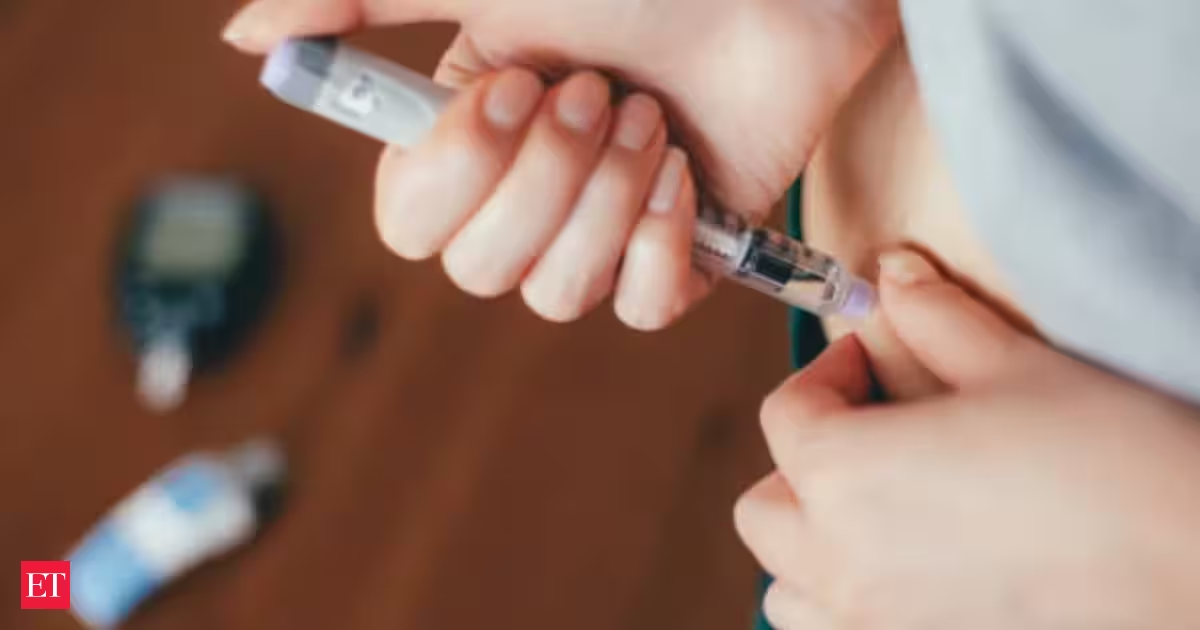
People with diabetes require insulin injections as the pancreas' insulin production declines. To better manage blood sugar levels better, many patients need daily insulin injections throughout the week, every day. However, a revolutionary new injection has now entered the market that needs to be taken only once a week, fundamentally changing diabetes care.ALSO READ: Always exhausted? Endocrinologist explains why your constant fatigue is actually a warning signAwiqli is once-a-week insulin injection. (Representational picture: Freepik)Novo Nordisk India has launched the world's first once-weekly basal insulin, Awiqli, for adults with type 1 and type 2 diabetes. It reduces the injection burden from seven injections a week to just one, bringing greater convenience to diabetes management. This way, it lowers the burden of annual injections, from 365 to just 52.Let's understand what the clinical trials revealed about the injection and how different it is from the rest available in the market, from experts.What did the clinical trials show about the injection?The clinical trial program also included the Indian population. Sharing the findings of the trial, Vikrant Shrotriya, managing director of Novo Nordisk India, said, “In the ONWARDS-1 clinical programme, Awiqli achieved superior HbA1c reduction and time in range compared with once-daily glargine U100. More people with type 2 diabetes reached an HbA1c below 7% without hypoglycaemia. Time in Range, an increasingly important complement to HbA1c, was also significantly increased with Awiqli, giving patients better control throughout the day.”Understanding the weekly injection's concept from an endocrinologist: 7 doubts answeredDr Anima Sharma, consultant in endocrinology at Narayana Hospital, Gurugram, answered some questions for HT Lifestyle about how the once-weekly insulin works, how it differs from daily injections, and who may benefit from it.1. How does Awiqli's weekly dose work?The first is obviously how the injection works, especially since its once-weekly dosage is the key differentiator. Does this mean its basic mechanism for controlling blood sugar is also different? Dr Sharma clarified that it works in the same way as any other insulin. "It attaches to insulin receptors to help cells absorb glucose while telling the liver to slow its own sugar production.”What makes Awiqli different is not how it lowers blood sugar, but how long it remains active in the body. Dr Sharma said, “What sets it apart is longevity: it binds strongly to a blood protein called albumin, which slows clearance and lets one dose last a full week.” This is why once-weekly dosing is possible, because here protein acts as a temporary carrier.2. What are things first-timers need to know for practical use?For practical use, a few questions arise, including where the injection is administered and how it should be taken. The endocrinologist shared that it is injected under the skin in the abdomen, thigh or upper arm on the same day each week.The dosage may vary depending on whether a person is starting insulin for the first time or switching from a daily insulin regimen.Dr Sharma described the weekly dose, “First-time insulin users with type 2 diabetes typically start at 70 units weekly, while those switching from daily insulin usually get seven times their previous daily dose. Since the effect builds up gradually, taking two to four weeks to reach a steady level, doctors adjust doses based on fasting sugar readings rather than daily changes.”3. How does it differ from other injections?Now, you will see many GLP-1 injections in the market gaining traction not only for diabetes management but also for weight loss. But the endocrinologist alerted that they are different.“GLP-1 medicines work by boosting the body's own insulin release and slowing digestion, whereas Awiqli is insulin itself, replacing what the body cannot produce or use effectively,” she helped distinguish the two. “The two can even be used together, along with oral diabetes medicines, but they are not interchangeable. Awiqli remains a basal insulin, managing background sugar levels rather than meal-time spikes.”4. Who benefits the most: people with type 2 diabetes or type 1 diabetes?Dr Sharma said that the clearest benefit is for adults with type 2 diabetes who need insulin but have struggled with daily injections. She also referred to trial findings that showed glucose control comparable to daily insulin, along with higher patient satisfaction due to the convenience of once-weekly dosing.But for people with type 1 diabetes, she had a different take: “The picture is more cautious for type 1 diabetes, where trials showed similar blood sugar improvement but a higher rate of hypoglycaemia, or low blood sugar, so its use needs closer supervision.”5. Is there any short-term side effect?Whenever a new treatment is introduced in the market, concerns naturally arise about the possible side effects. The endocrinologist confirmed that some people may experience a few side effects, although these are generally manageable with proper medical supervision.Giving more details on the side effects, the endocrinologist said, “Hypoglycaemia, or low blood sugar, is the most common side effect, often occurring two to four days after the weekly dose. Other effects include injection-site reactions and thickened, lumpy skin from repeated use at the same spot."6. Where should this injection not be administered?The doctor also cautioned that this injection must only be injected under the skin. “Awiqli cannot be given intravenously, into muscle, or through insulin pumps, and switching from another insulin needs careful supervision to avoid dosage errors,” she said. Moreover, anyone changing from another type of insulin to this one must do so under a doctor's guidance, as the weekly dosage is calculated differently and any incorrect dose may spike risks of complications.7. Is the injection for children with diabetes?Since the trial did not include children, the endocrinologist revealed it is not for juvenile diabetes right now, and it is also advisable to stop it if pregnancy occurs or is planned.In the end, to sum it up, the endocrinologist left with parting, final advice that, along with the weekly dosage of regular diabetes management which you have been doing, must also be continued, such as regular monitoring, lifestyle habits and follow-ups. This weekly injection does not lessen the seriousness of lifestyle-based diabetes management. Furthermore, the suitability of this injection also depends on patients' type of diabetes, sugar control history, and risk of low blood sugar. So the adoption cannot be motivated only by convenience alone.Note to readers: This article is for informational purposes only and not a substitute for professional medical advice. Always seek the advice of your doctor with any questions about a medical condition.
World’s first once-weekly insulin injection launched in India: Endocrinologist shares 7 things to know before switching
Awiqli is a new insulin injection that needs to be administered only once a week. Learn from a doctor about benefits, side effects, and dosage. | Health
1,065 words~5 min read