The Persistent Memory Trap
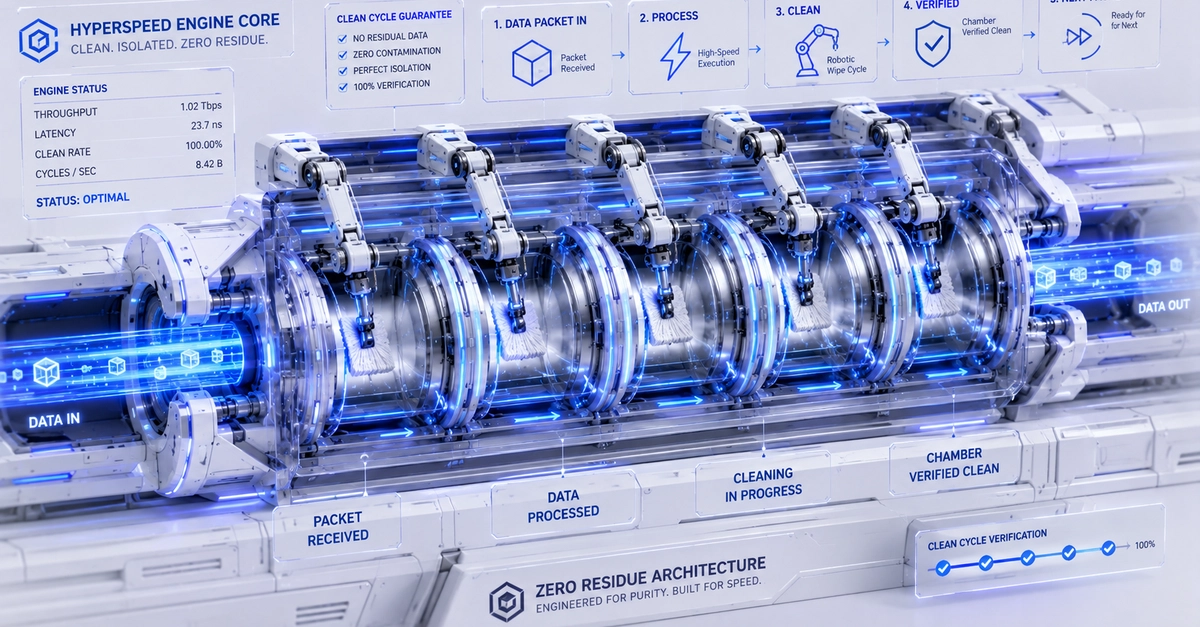
Traditional PHP was designed to die. At Smart Tech Devs, a standard Laravel request spins up, boots the framework, processes the logic, returns a response, and then completely destroys itself, clearing all RAM. This "shared-nothing" architecture makes PHP incredibly stable, but booting the 30MB framework on every single request limits you to around 200 requests per second.
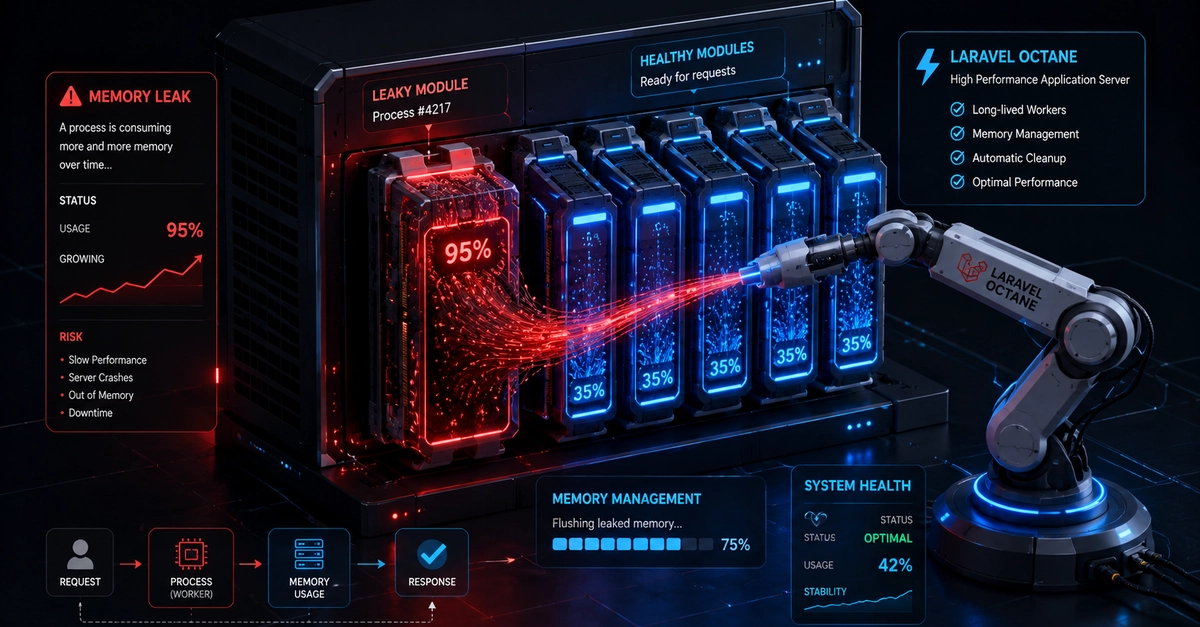
To scale to enterprise levels (thousands of requests per second), you deploy Laravel Octane (using Swoole or RoadRunner). Octane boots your application once, keeps it alive in RAM, and feeds incoming requests through the persistent worker. However, this introduces a terrifying new vulnerability: Memory Leaks. If you append data to a static array or bind user-specific data to a Singleton during Request 1, that data is still sitting in RAM during Request 2. Eventually, your server runs out of memory and violently crashes.
The Solution: Stateless Architecture
To survive in a persistent Octane environment, you must architect your code to be perfectly stateless. You cannot rely on static properties to hold request-lifecycle data, and you must understand how Laravel's Service Container handles dependencies across multiple requests.