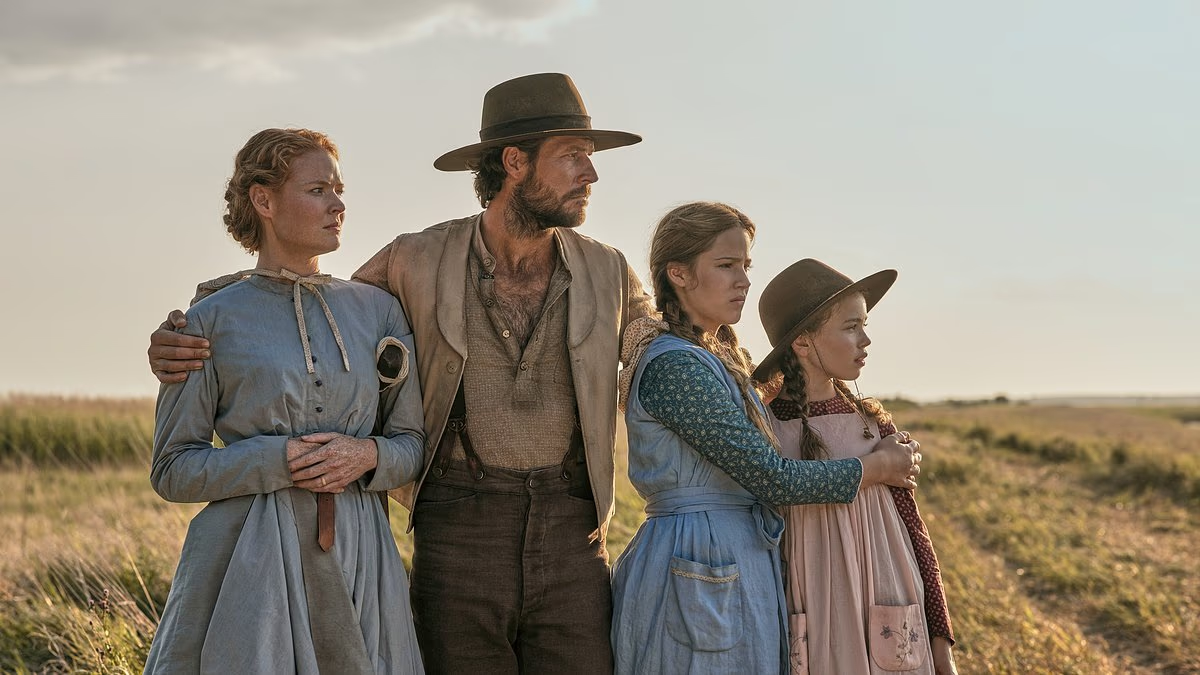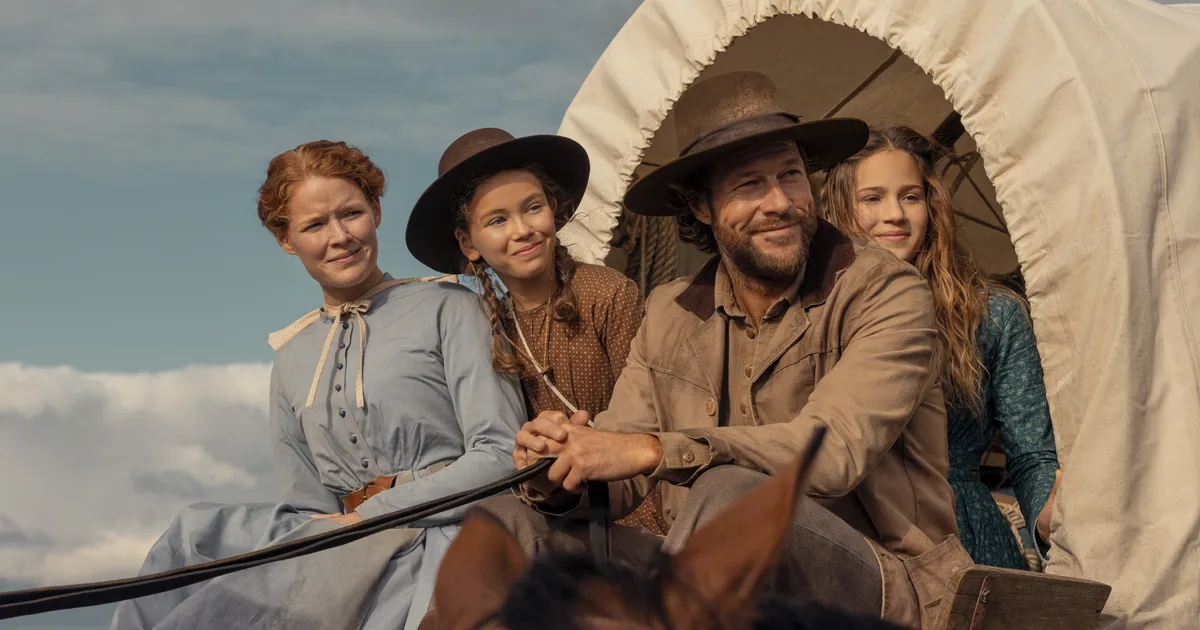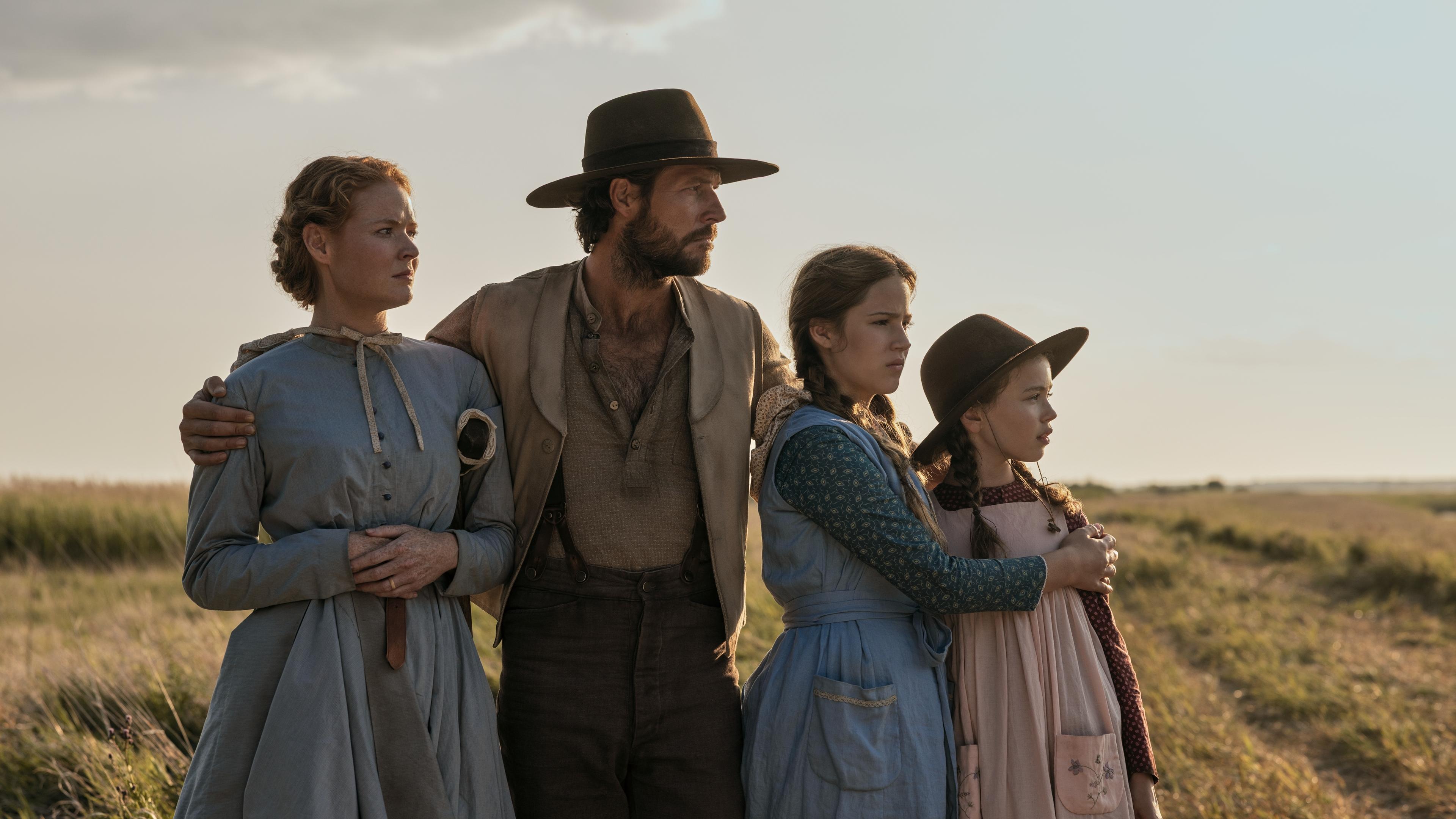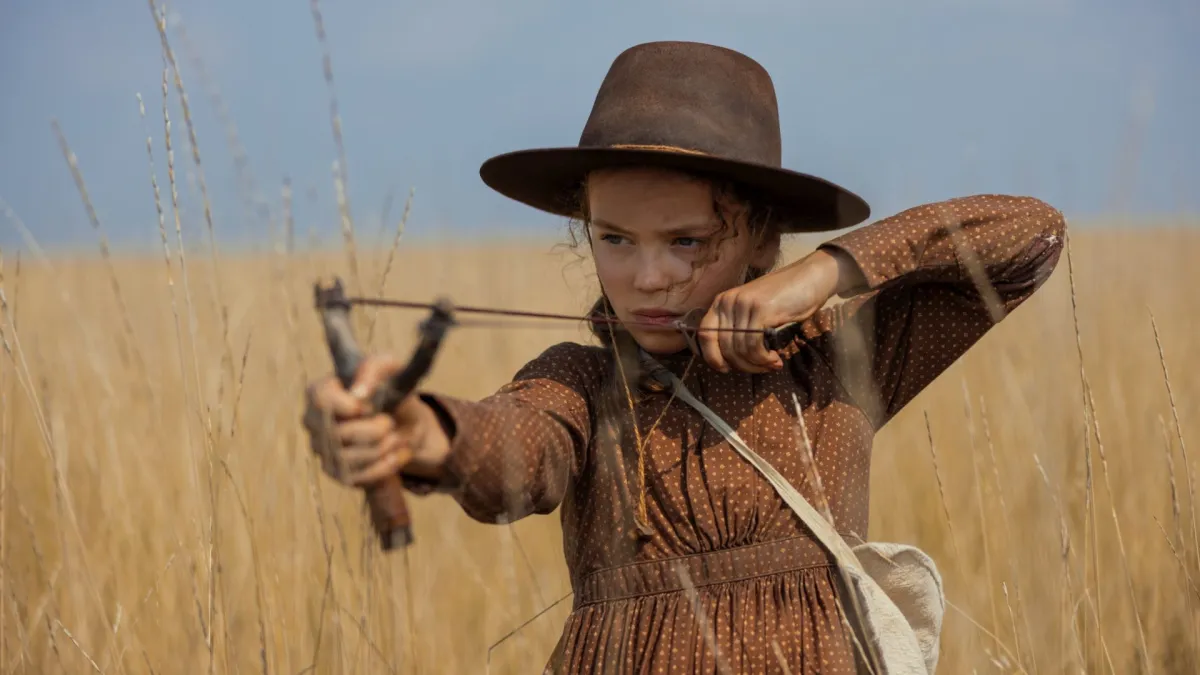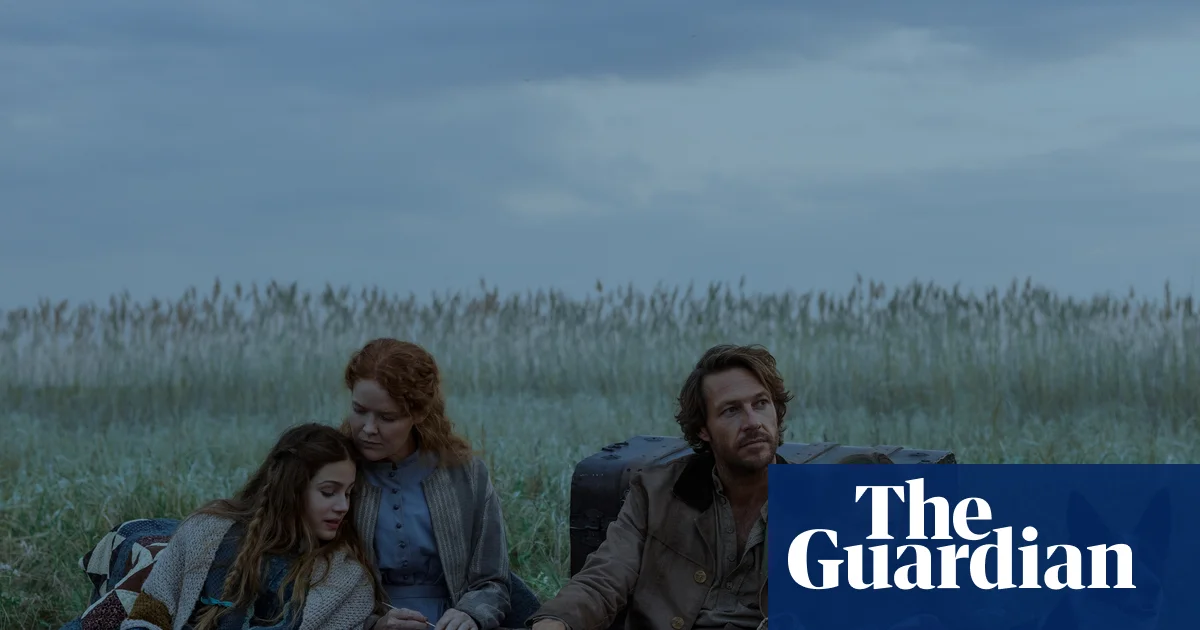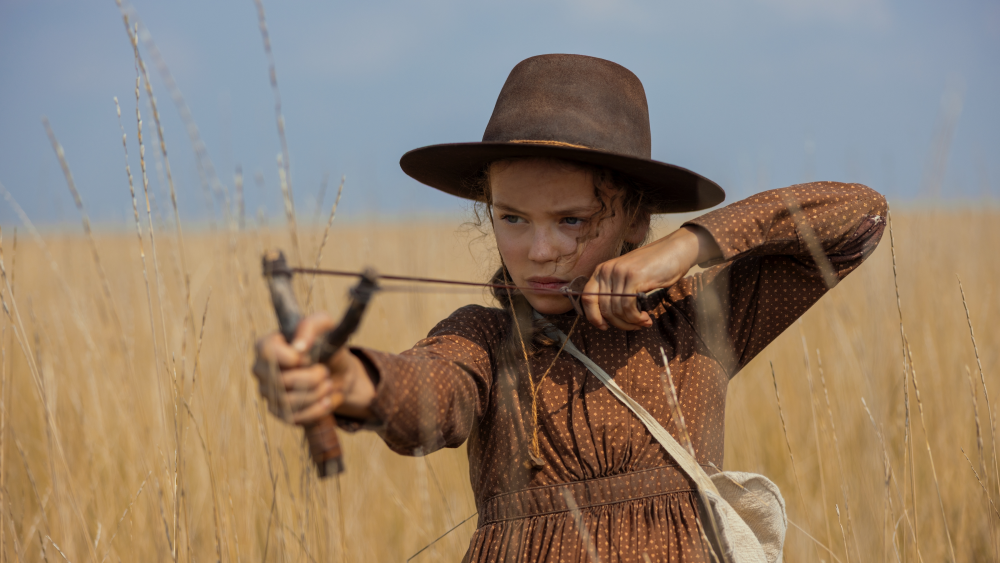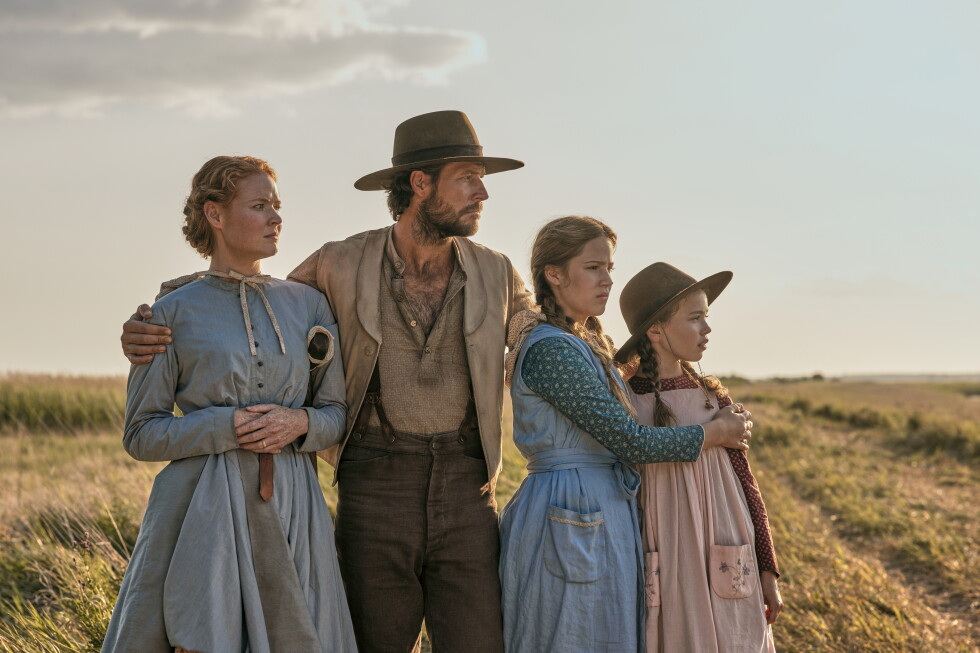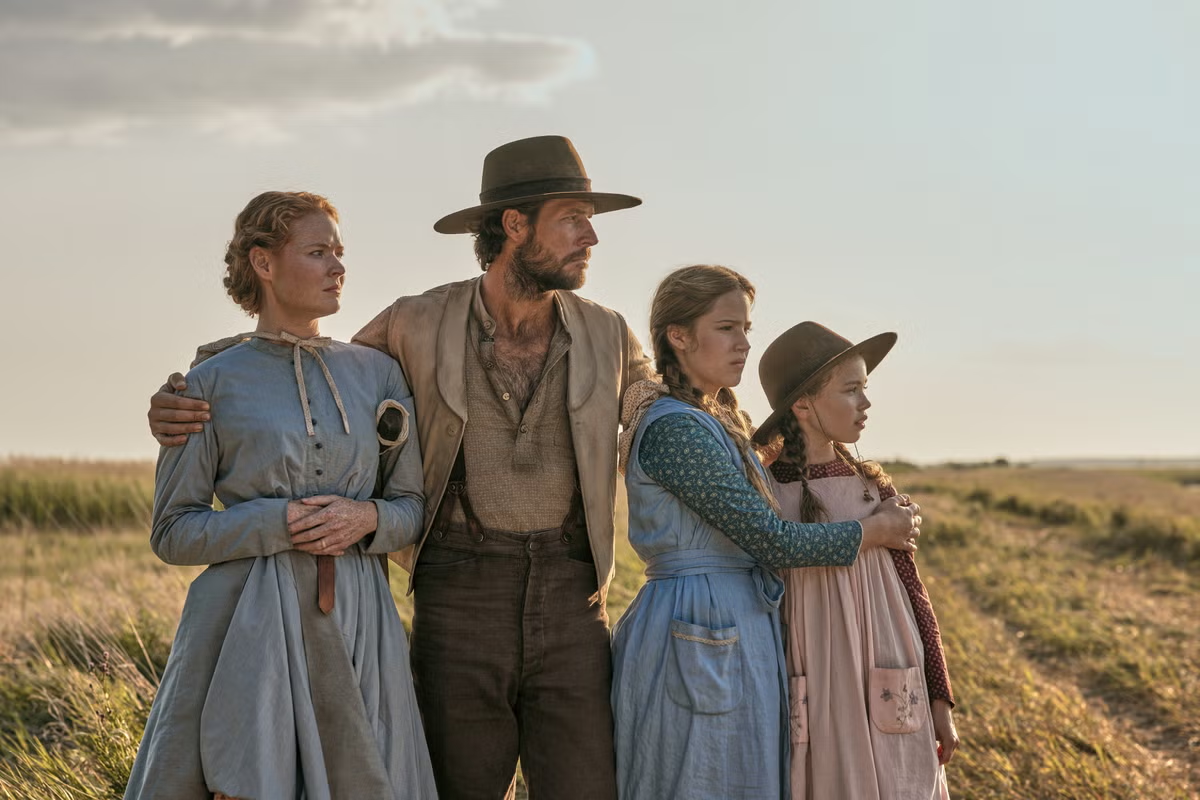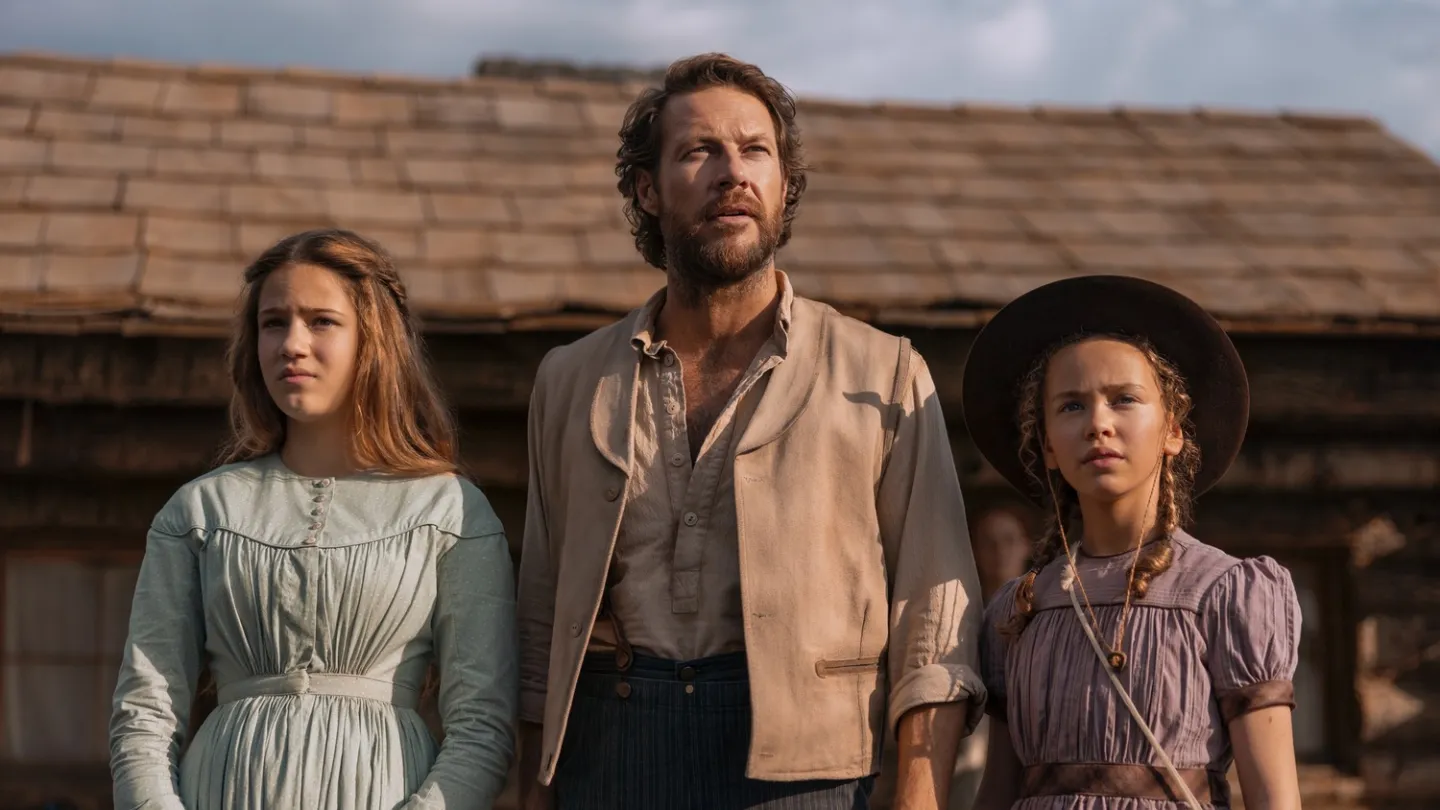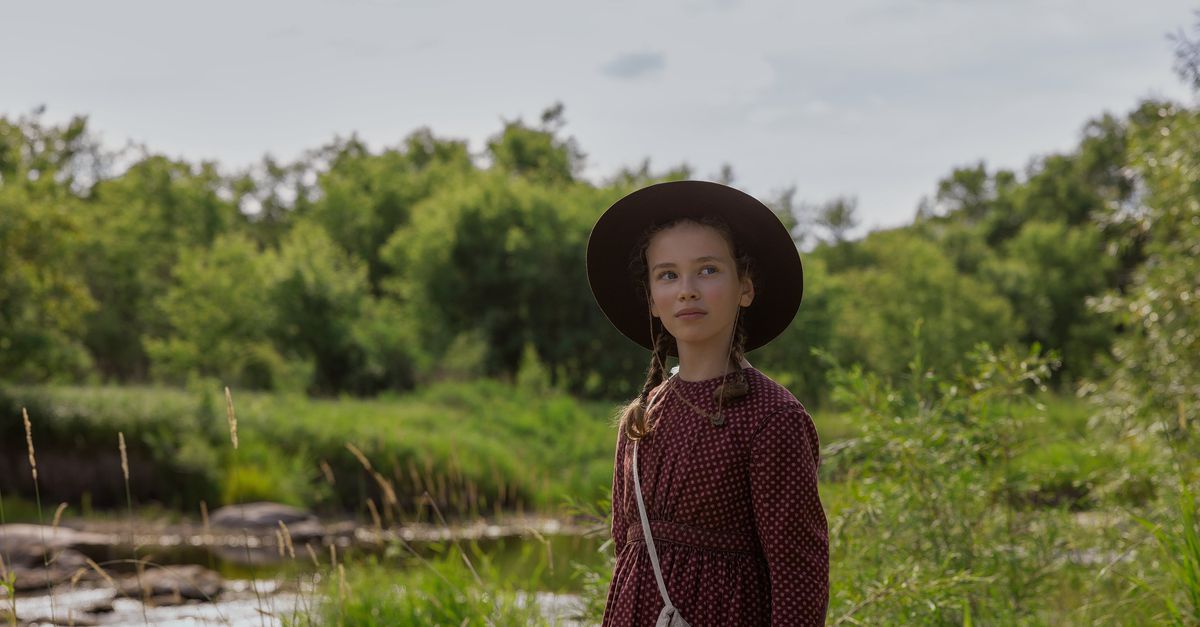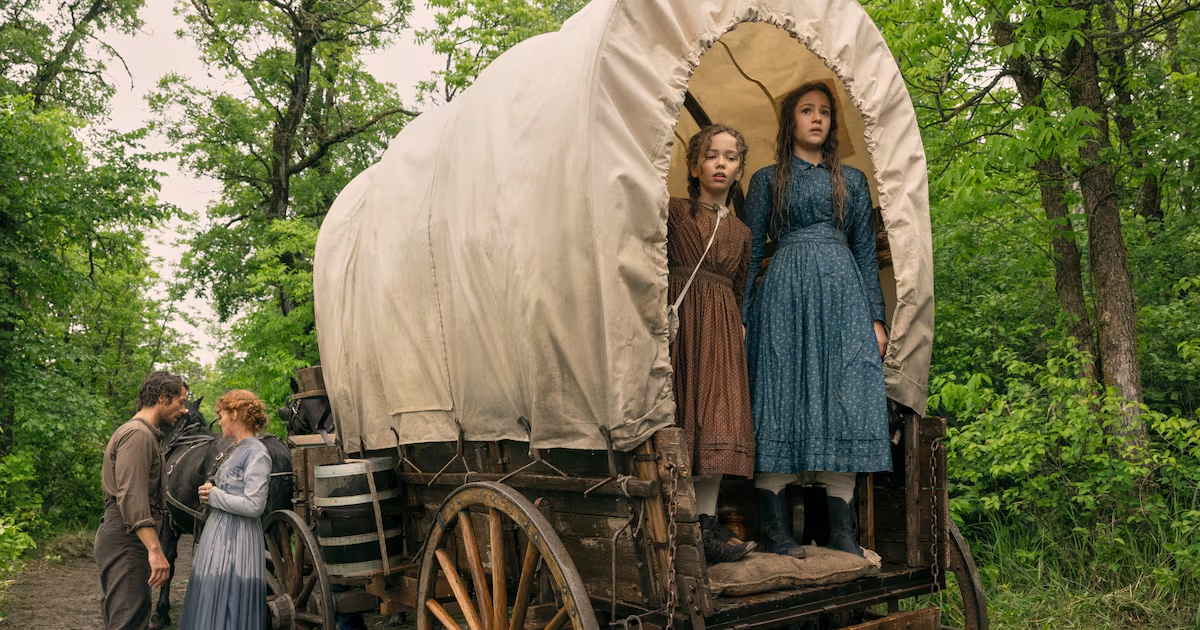
Netflix executive: Little House on the Prairie . . . This could be an excellent franchise. Laura Ingalls Wilder’s ghost: It already is a franchise.Netflix executive: I’m picturing it now. Little House in the Raj. Little House on the West Bank. Little House on the Ulster Plantation.Laura Ingalls Wilder’s ghost: I don’t think people like colonisation these days.Netflix executive: What if we give the Cromwells a cute little girl in a cowboy hat? And an endangered dog!Laura Ingalls Wilder’s ghost: Those were in my version. Wait, the family is called “the Cromwells” now?Netflix executive: And what if we add a family of colonised people who think the Cromwells are just swell and it’s pointless fighting them and they should just give in and wear sensible trousers?Laura Ingalls Wilder’s ghost: Even to me that feels like a stretch.Netflix executive: We’ll mention that it’s land stolen from the indigenous people. And then Pa Cromwell . . .[ Little House on the Prairie on Netflix: This gritty take on Laura Ingalls’ memoirs is no nostalgia bingeOpens in new window ]Laura Ingalls Wilder’s ghost: Pa Ingalls.Netflix executive: And then Pa Ingalls will look sad about it. Very sad. But, unfortunately, there’s nothing he can do.Laura Ingalls Wilder’s ghost: I guess – and I’m just spitballing here – he could choose not to take part in illegal settlement.Netflix executive: But then someone else would just go and do it! It’s like creating superhuman AI that will kill us all. We have to try.Laura Ingalls Wilder’s ghost: That seems like a very fatalistic position. And I’m a libertarian.Netflix executive (sadly): Nobody can do anything about anything, so you might as well do the bad thing. That’s now a valid moral position people can take about all sorts of stuff: AI, the environment, historical discussions of colonialism.Laura Ingalls Wilder’s series of autobiographical novels of pioneer life, in which she and her family illegally settle on stolen land, hasn’t exactly dated well. Of course, that depends on who’s reading them. From some perspectives, it has dated very well indeed. Glossy-haired women in long skirts churning butter in a sunlit pasture? Muscular men who chop logs and hoist rifles on their shoulders but who also have the square-jawed look of people who know the term “leg day” and have been on Zoom screens? (Pa Ingalls has the designer-stubbled face of a man who’s seen an Excel document.) It’s quite popular now.There’s a whole world of sedentary internet folk in gaming chairs who fantasise about the pioneer life even though they curl into the foetal position and weep when they lose their broadband or if someone decides their favourite video-game character is now a person of colour. Give these housebound babies a gun, a horse and, most importantly, a wife with no options and they’re pretty sure they’d do fine in the wilderness.TV feeds into the fantasy. There has been a wave of revisionist TV westerns recently, from Godless to Primeval, that pay lip service to the price paid by Native Americans while positioning the settlers as brave, hardy and ultimately the repository of a great moral message (“Finders keepers”). It’s the American dream of eating cake while still having cake. (If I was Tom Wolfe I would call this The Infinite Yankee Cake Machine and I’d write 10,000 words about it for Vanity Fair in the 1960s.)Little House on the Prairie: Crosby Fitzgerald as Caroline Ingalls, Luke Bracey as Charles Ingalls, Skywalker Hughes as Mary Ingalls, and Alice Halsey as Laura Ingalls. Photograph: Eric Zachanowich/Netflix More recently still there has been a wave of re-revisionist westerns, mainly from the stable of Taylor Sheridan (Yellowstone, Landman), which perpetuate the notion that the real America is out there beyond the chaos of the city, with its “services” and “rule of law”. In the city, if your child is killing rabbits you get them a diagnosis. Out on the frontier, you give then more weaponry. In the city, if your crazy husband wants to drag your family into the wilderness you have a fight and get counselling. On the frontier, you’re too busy fighting wolves and sepsis.In a way, Laura Ingalls Wilder’s books are perfect for this era. They’re advertisements for the pioneer life written years after the fact and coloured by the libertarian leanings of her daughter, Rose Wilder Lane. They are, on one level, compelling portraits of family life, rugged self-sufficiency and the beauty of nature. Look at them there, having the time of their lives, surrounded by predators, scarcity and infectious diseases, not a phone or vaccine in sight. The myth of the American frontier is a persistent one of sturdy Christian family folk striking out to create a new country. But there’s also a world of people out there who know that it involved genocide and ethnic cleansing.How can you reconcile the myth with the reality? You can’t, really. But you could, as the new version’s showrunner, Rebecca Sonnenshine, has done, try retelling it with a different framing, one that humanises the Osage people. It makes me yearn for the open road and good land – Ireland in the 16th and 17th centuries, for example – that I deserve to ownYou can still present the onward progression of colonisation, like the march of capitalism or technology, as inevitable and historically determined, something that Pa Ingalls has no control over. You focus on an Osage neighbour who sees no point in fighting the inevitability of domination and who has chosen, instead, to participate in this new America. You can suggest Osage warriors’ angry responses to land theft are unreasonable.In short, you rewrite the rewrite, accepting the violence that was done to people, make it inescapable and add kinder colonisers who feel sad about it all. You also make the real baddies in the show an old reliable: people with bad teeth.The effect of all this is almost more unsettling than an unapologetic right-wing screed. Because Little House is beautifully made and acted (particularly by Alice Halsey, the 11-year-old who plays the young Laura), helped along by a vulnerable child’s-eye view, gorgeous cinematography and an omnipresent stirring soundtrack.It’s primed for nostalgia, filtered as it is through beloved books and a long-running TV series from the 1970s and early 1980s. Its charm is disturbing. It stretches the Overton window – the shifting collection of ideas and policies that mainstream society considers politically acceptable – to reconsider land seizure.It makes me yearn for the open road and good land – Ireland in the 16th and 17th centuries, for example – that I deserve to own because of my hardworking ways and superior moral mission. Sure there’s hardly anyone there anyway. And if we don’t do it someone else will. We might as well load up the wagon.If that’s the United States’ past, its future, if recent sci-fi shows are anything to go by, is in a bunker after an apocalyptic event. Paradise (Disney+), Fallout (Prime Video) and Silo, with Rebecca Ferguson, which has just returned to Apple TV, all deal with this notion. Far from the wide-open spaces of the idyllic past, the future is underground and involves class struggle and conspiracy theories. Paradise is the most convoluted. Fallout is the most fun. And Silo is probably the most grittily realistic. The main concern I have with the idea that the state might construct such elaborate underground communities is that it currently struggles with basic infrastructure. Not so in the good old days, of course, when Pa Ingalls would whittle you a bunker in the time it took Ma to knit you a hazmat suit.
Patrick Freyne: Look at these kind colonisers, stealing people’s land and feeling sad about it
Netflix’s Little House on the Prairie feeds into the fantasy that settlers have a great moral message (‘finders keepers’)
1,263 words~6 min read