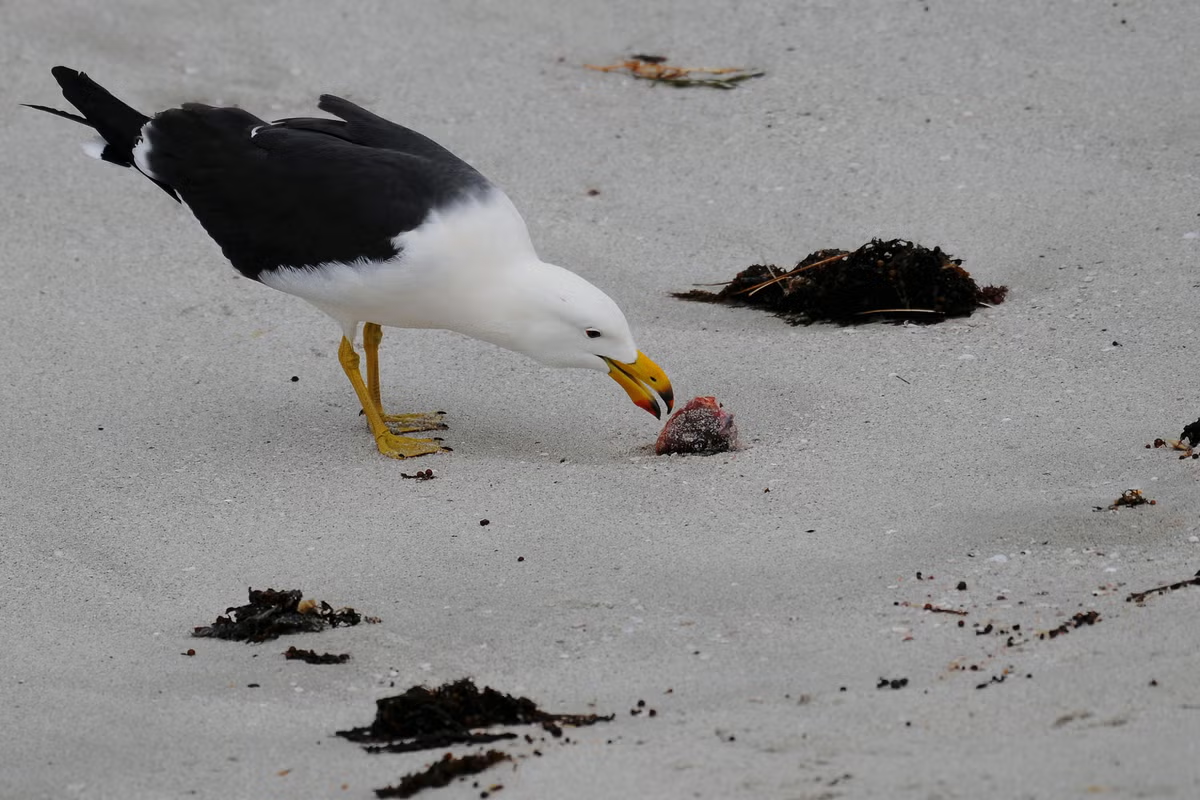
The H5 strain of bird flu has been detected in an Australian seabird for the first time.Previous confirmed cases have involved migratory birds from the sub-Antarctic region.Agriculture Minister Julie Collins said lab testing by the Commonwealth Scientific and Industrial Research Organisation (CSIRO) had confirmed the deadly strain in a greater crested tern found in Robe in South Australia's Limestone Coast.There have also been two further confirmed cases in South Australia (SA) and one in Western Australia (WA), bringing the total number of detections to 12.Collins said there was still no evidence of mass mortality among wildlife and no evidence of any spread to agricultural settings.The minister said SA authorities were "implementing enhanced surveillance in the area where this bird was found", and that further investigation was being conducted to determine how the bird contracted the virus."Our scientists are undertaking further work to establish the potential pathway that resulted in the Australian seabird's infection," she said."[They will] seek to determine whether this particular tern has caught off these migratory birds, if it's the same sort of sequence or not."What we do know is that this is a coastal seabird that has an overlapping coastal range with migratory seabirds that have previously tested positive for H5."While this is a concerning development, it is not unexpected and is another sign that our strong biosecurity system is working."The greater crested tern was found by a member of the public a few days ago, and was reported to the Emergency Animal Disease Hotline.The bird was sent to the CSIRO, which confirmed the case of H5 bird flu, the minister said.Collins said no other dead birds were found nearby.Surveillance working well, vet saysSkye Fruean, chief veterinary officer at SA's Department of Primary Industries and Regions said the spread from migratory to native birds was a concern."We don't know for sure how this bird has contracted H5 bird flu but we can make some fairly safe assumptions based on what we know about the virus," she said."We know that the migratory seabirds have been visiting our shores from the Antarctic regions and some of them have been bringing H5 bird flu with them."These seabirds such as the greater crested tern do have the opportunity to come into contact or interact with those migratory birds, either out at sea when they're feeding on fish, or onshore."Fruean said she was confident that surveillance of sick or dead birds "was working well".Friends of Shorebirds SE public officer Maureen Christie said greater crested terns bred on islands off Robe and Beachport and could also be seen along the rest of the coastline.They also ventured into coastal lakes and the Coorong, she said."We've been saying for several years now that it's not if, it's when, but it's rather devastating when it's actually here," she said through tears.Christie said she was "exceedingly worried" there were no signs on local beaches about what to do if you find a sick bird, like there was for the algal bloom and the outbreak of abalone viral ganglioneuritis in the South East in 2024 and 2025."We still haven't go anything on our beaches," she said.- ABC News
H5 bird flu strain detected in Australian seabird for first time
The H5 strain of bird flu has been detected in an Australian seabird for the first time.
520 words~2 min read