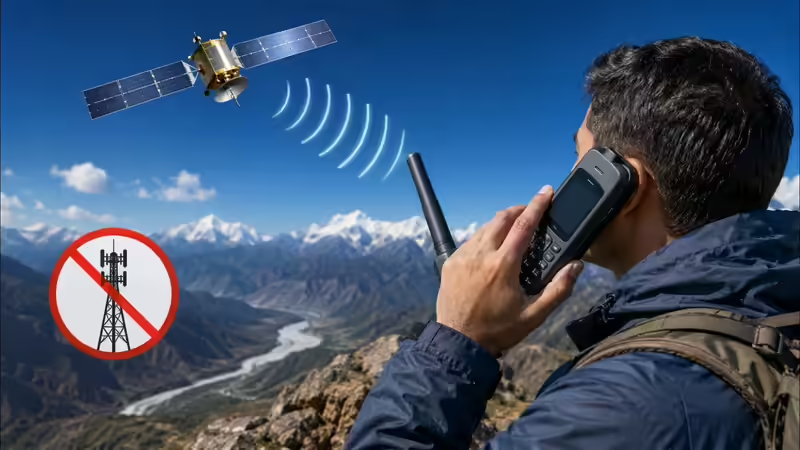
Companies that previously relied on expensive, specialized satellite phones can now equip their remote field teams with standard smartphones, improving communication, monitoring, and safety operations
There is one news story that was almost drowned in the din of events reported recently which elevated the status of the country at par with the international community’s standard on connectivity: Globe Telecom Inc. was given the green light last June 29 by the National Telecommunications Commission (NTC) to commercially operate Starlink’s satellite direct-to-cell (D2C) services nationwide, specifically providing voice, video, and messaging over apps and SMS services. The Philippines emerges as the first in Southeast Asia to offer this kind of connectivity involving Starlink.
Given this development, the country is no longer just metaphorically only one step away from the promised goals of the National Digital Connectivity Plan (NDCP) that was launched by the Department of Information and Communications Technology (DICT) and approved by President Ferdinand “Bongbong” Marcos (PBBM) earlier this year. “It has arrived,” so to speak.
The NDCP is the administration’s comprehensive and nationwide master plan for digital connectivity aimed at delivering faster and lower internet costs, more secure internet services and availability that will finally close the digital divide nationwide.