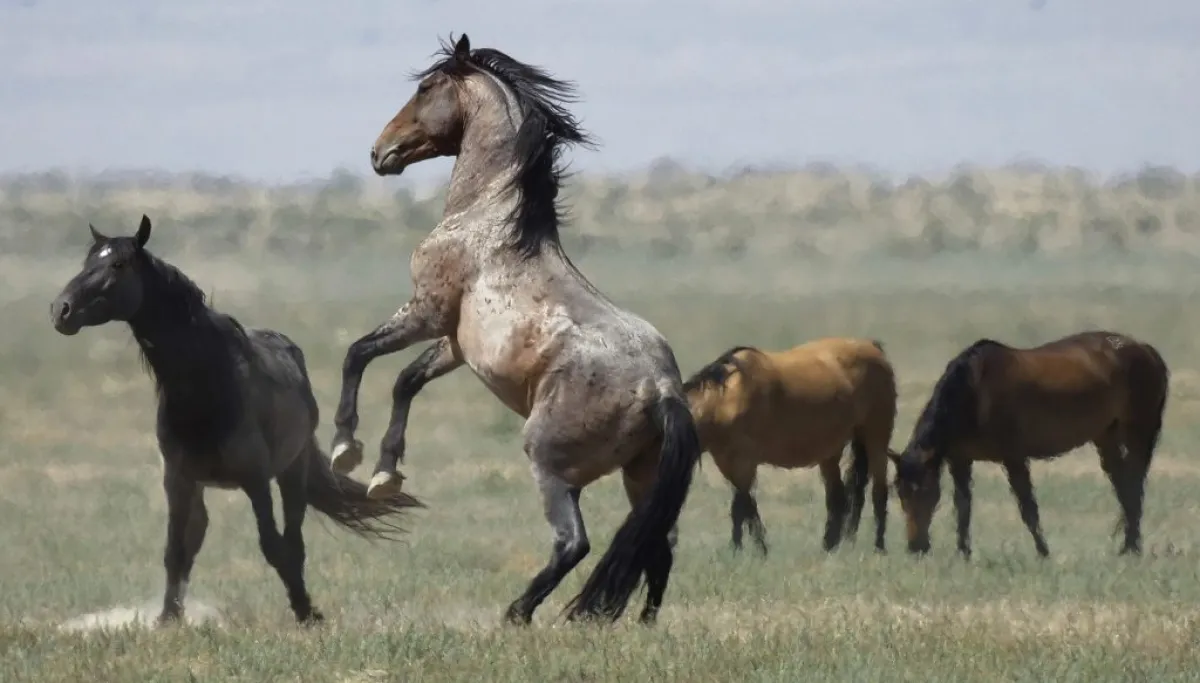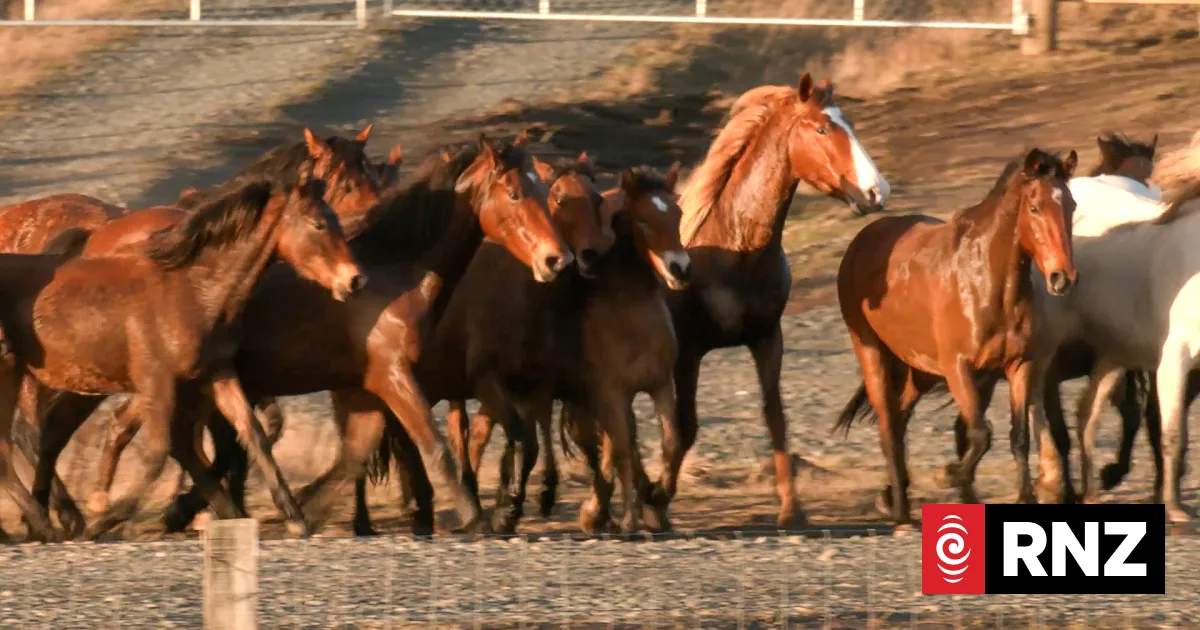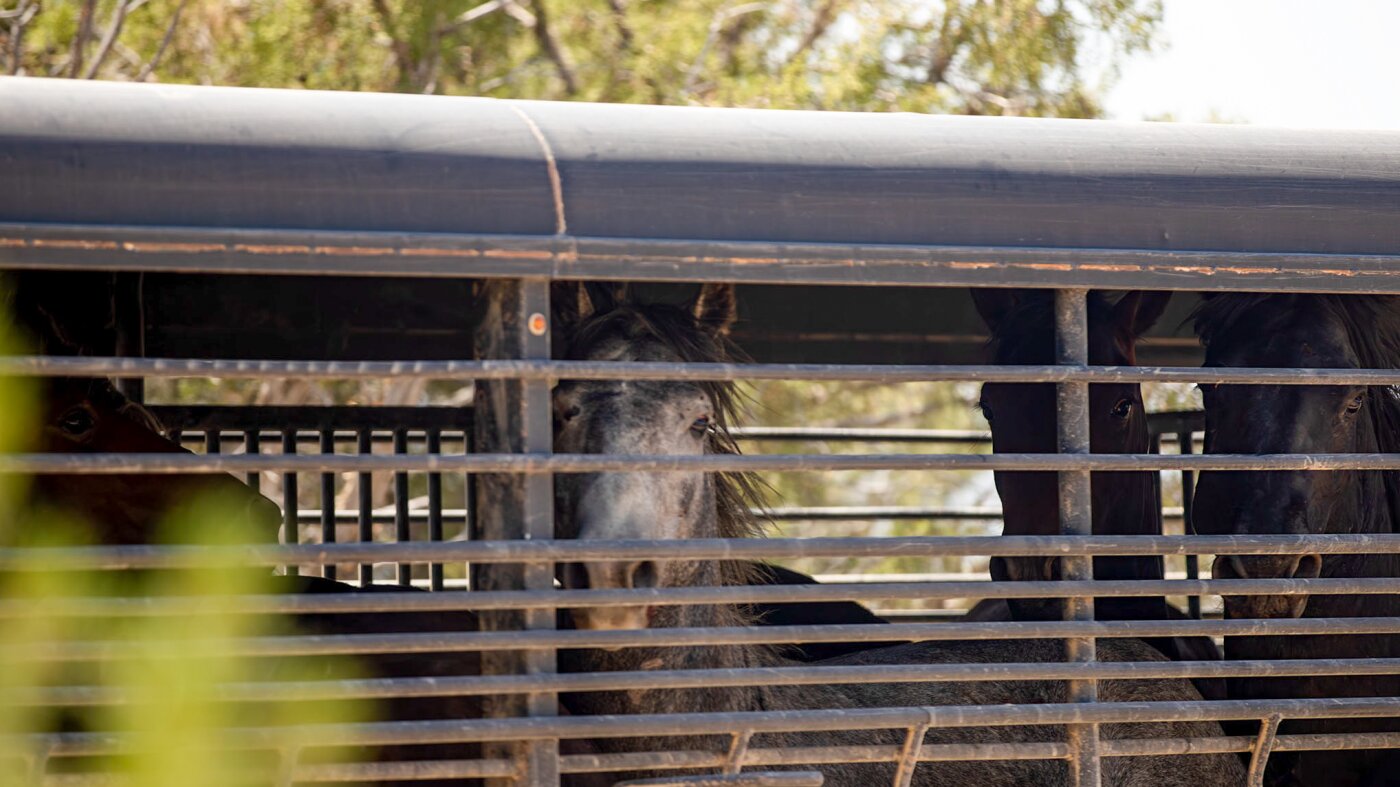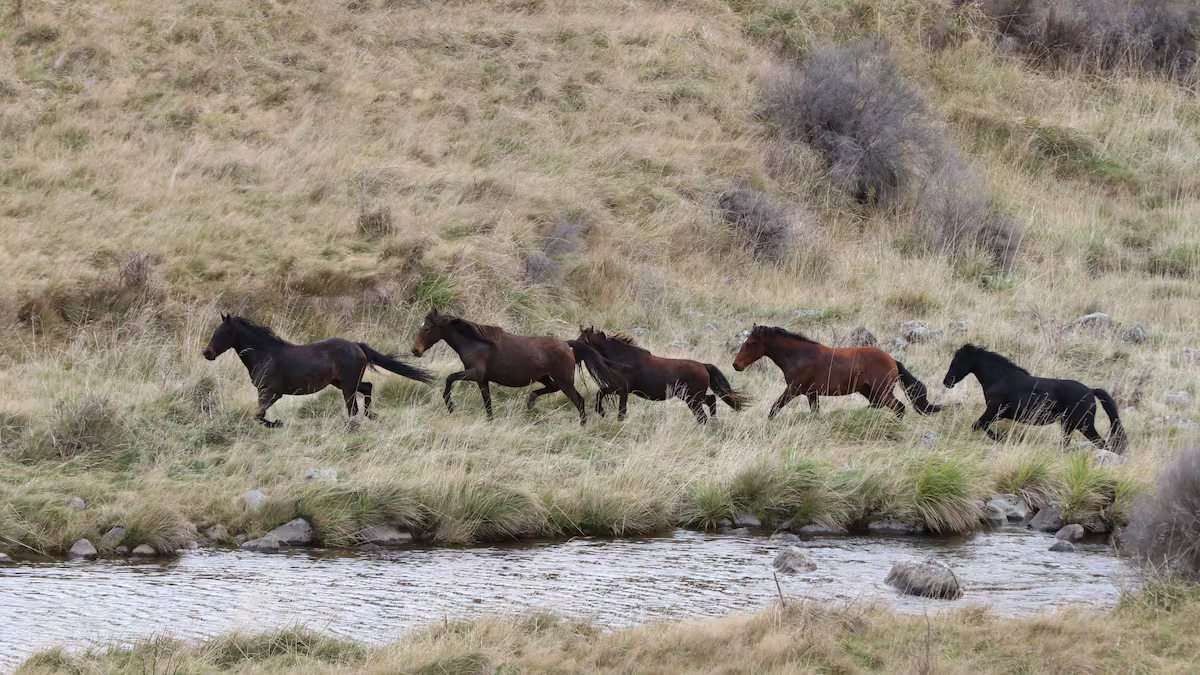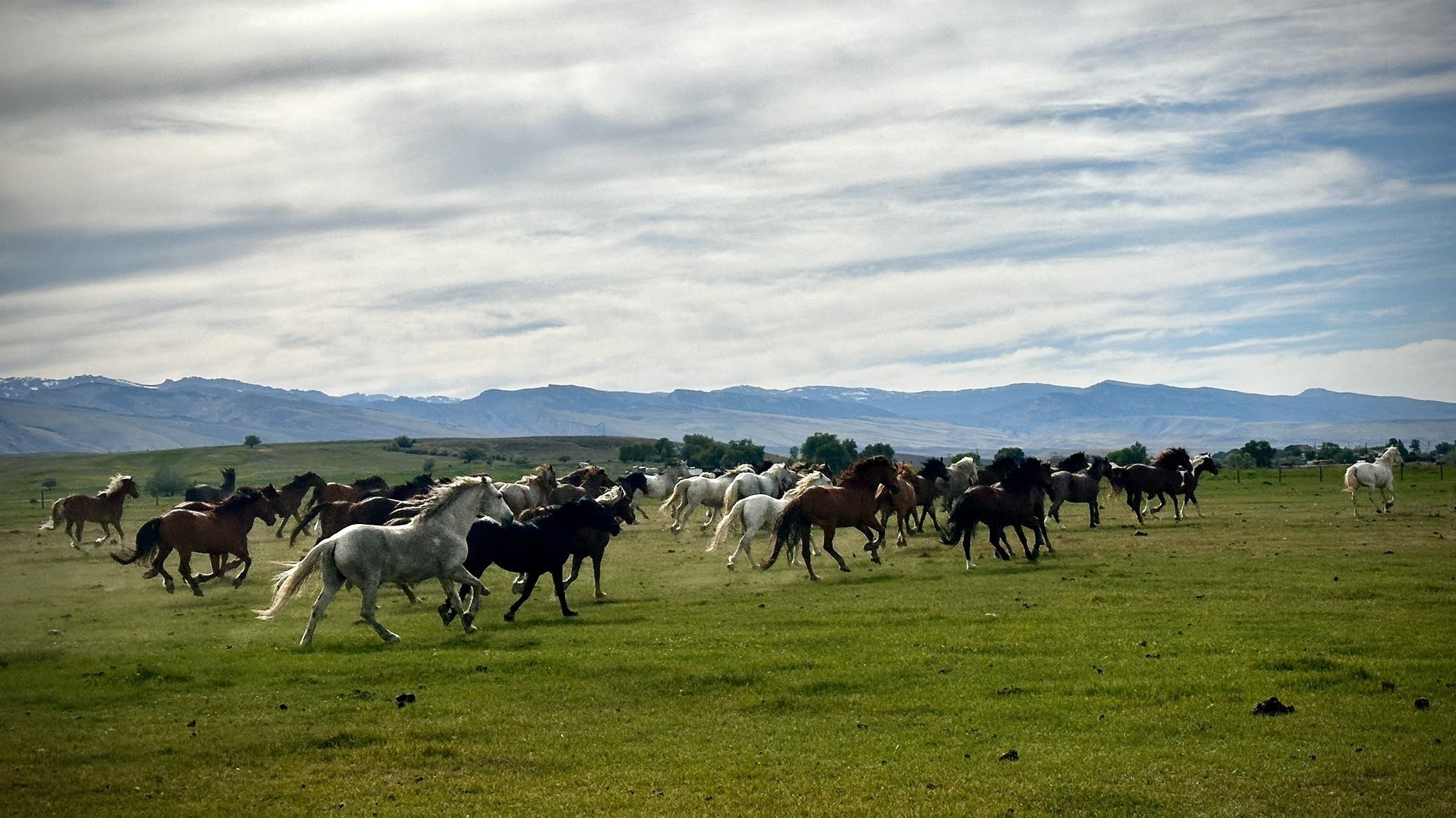
Wild horses are seen as iconic symbols of the American West, where they have roamed the land for half a millennium. In fact, they were there long before the federal government became the dominant landowner. These days, managing the herds falls mostly to the Bureau of Land Management. That federal agency is obligated under the law to both protect these symbols of the West and the land on which they travel. As wild horse herds grow, doing both grows increasingly difficult.Wild horses on private landJust outside of Lander, Wyoming, Dwayne Oldham drove around his ranch in an ATV. In the distance were towering mountain peaks in the Wind River Range. And much closer were fenced, grassy pastures and a herd of horses.“We got three pastures like this,” he said.Dwayne Oldham sits in an ATV on his property outside of Lander, Wyoming. He's paid by the federal government to care for wild horses. Caitlin Tan/MarketplaceAll in all, there are 250 horses — every coat color one could imagine. Oldham, wearing his blue jeans and cowboy hat, whistled to get the horses’ attention, and they perked up. They took off running, snorting and pounding their hooves.These are not Oldham’s horses. They are wild ones that were rounded up off of public lands where the herds were getting too big.“We have a few that are from Nevada, and just a few from Oregon, from California, but majority of them are Wyoming,” he said. This is a business deal with the federal government. Oldham is paid about $250,000 a year to feed, fence in, and get veterinary care for the animals. “We had a 10-year contract,” he said. “We got about three years left on this one, and at that time we will apply to renew.”Who’s paying for them?The federal government makes deals like this all across the country, with about 60,000 wild horses living in either pastures or sometimes cramped corrals. Their care costs around $100 million a year. “That's absolutely taxpayer money, that is not done with donations,” said Rob Godby, a University of Wyoming economics associate professor. Godby said the federal government does not just protect wild horses on public land but other interests as well. “Agricultural producers depend on using that federal land as a source of feed for their cattle,” he said.Ranchers pay for that grass. But Godby noted tens of thousands of wild horses still roaming free on that land are also eating that grass. “And the horses compete with the cattle that we graze,” he said. Public land managers also say too many horses can trample native plants and riverbanks. Plus, their herd sizes grow really quickly. So, the federal government regularly rounds up and removes some of them, putting them in those corrals and pastures. This year it will be 14,000. A lone wild horse on some Wyoming public land.Caitlin Tan/Marketplace“Every time they do a roundup, there's more horses, which means that we're just making a commitment to continue to spend that much money,” Godby said. Each new wild horse in captivity costs roughly $4 a day on the taxpayer’s bill. Godby said there is only one way to stop that. “You've got to get rid of some, and then the question is how?”Weighing difficult optionsSome options for the horses are less desirable than others. “One solution some people offer up is, ‘Hey, why don't we just sell these horses to slaughter, clear out the pens on a mass scale, start fresh from there?’” said Emily Stearns with the American Horse Council. She said loopholes mean some horses end up across the border in slaughterhouses. But the federal government is not directly doing that; it legally cannot. It does try to get the public to adopt the horses, but Stearns said that, too, has problems. “We are limited by the number of people who have the skills to safely handle these horses,” she said.Remember: They are wild animals. “Having a random person coming off the street and adopt these horses is just setting everybody up for failure,” Stearns said. Another option is fertility control to reduce the free-roaming, wild herd sizes. But that will take — you guessed it — more money. When discussing how to wrap up this story, Stearns noted there is no easy solution to the growing population of wild horses in the West. “I wish I really had a punchier exit line for you than that. I very much appreciate that that's not a very exciting way to end it,” she chuckled.What is exciting is still seeing a wild horse roaming through the sagebrush in the middle of nowhere.
When wild horses get rounded up, the taxpayer’s bill grows
About 60,000 wild horses removed from public lands are living out their lives in government funded pastures and corrals across the country. Each one costs about $4 a day.
767 words~3 min read