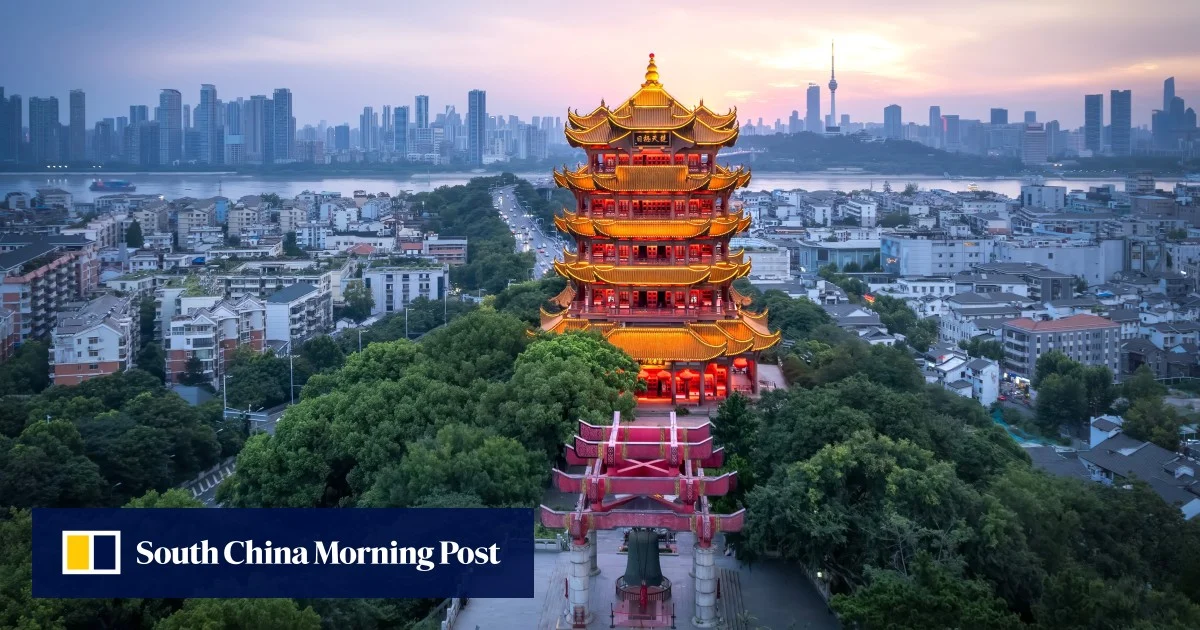
It is daunting to write about Wuhan, where I spent my childhood. This is in part because the city feels too familiar; biking through its winding streets evokes memories of lavishly long summer days. At the same time, the city’s tarnished reputation since the Covid-19 pandemic makes me worry about sounding too eager to parade its charms.The capital of China’s Hubei province was born out of the merging of three towns – Hankou, Hanyang and Wuchang – into one sprawling city. Its location in the heart of China means it has long absorbed influences from all directions.Merchants and labourers once crowded its docks, and around the turn of the 20th century, foreign concessions transformed Hankou into China’s busiest inland port.This history shaped breakfast culture in the city, where locals inhale hot noodles, happily enjoying a combination of sweet, savoury, wheat and rice flavours that divide the rest of China. The same openness defines the streets, where concession-era architecture stands alongside traditional neighbourhoods.Here is an itinerary to get the most out of this eclectic Chinese city where cultures converge.Yuhufen, a Wuhan breakfast dish consisting of thick peppery fish broth poured over thin rice noodles served with youtiao fried dough sticks, at speciality restaurant Wang Ji. Photo: Xiong YangFriday4pm: Dive straight into modern history
Best things to do in Wuhan, China’s breakfast capital - revealed in a new light
Hubei’s eclectic capital on the Yangtze River is famous for its hearty breakfast food and many lakes. Here’s how to spend a weekend there.
212 words~1 min read