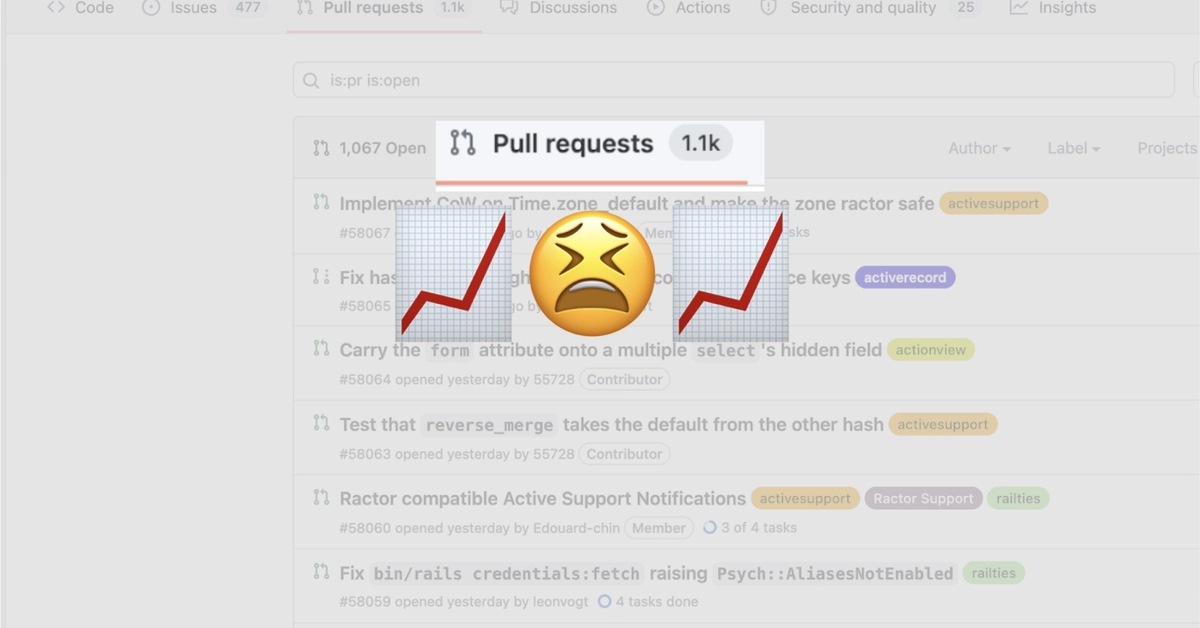
Our team grew this year, and the PR volume has grown with it. Certainly faster than the ticket generation. New people means more code moving through the pipeline. It doesn't mean more context. A lot of mass PRs needed real thought just to read through: what problem this is solving, why this approach, what actually matters here versus what's incidental. That gap, more code, same amount of shared understanding, is where our troubles started.
When reviews got harder and slower, people reached for the tool that could help them attempt to keep pace. We have an AI code review bot that runs as an automated reviewer on every PR now, and separately, plenty of us run different LLM and coding agents of choice locally to draft review comments. Put those two together and you get exactly what you'd expect: a bot commenting on a PR, another bot replying to it. Some of the LLM created reported bugs, were created in the first place with total confidence by a model that had no way to know it wasn't real. That is a real drawback about the AI coding assistance, confident wrongness.
What it felt like
Comments stopped sounding like the colleagues who supposedly wrote them. Verbose. Every possible reference and citation included, whether the moment called for it or not. We're a team that talks about code plainly, in our own words, and PRs started filling up with AI slop.