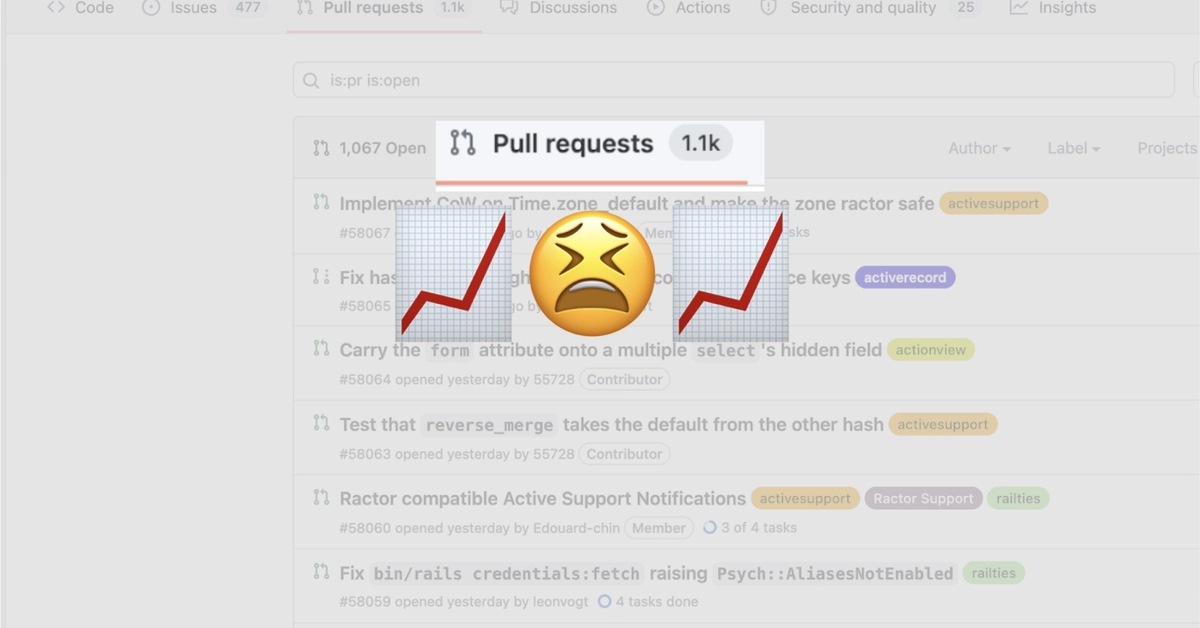
Here's a problem that snuck up on engineering teams in 2025 and is now fully visible in 2026.
AI editors generate code faster than before. That code lands in pull requests. Pull requests need to be reviewed by humans. Humans review code at roughly the same speed they always have, because human attention is not a variable that scales with AI productivity.
The math is simple and uncomfortable: if your team ships 35% more code, your reviewers have 35% more PRs to process with no additional capacity. The bottleneck moved. It moved from "writing the code" to "reviewing the code" — and most engineering teams didn't notice until their PR queues started stretching across days.
AI code generation increases development velocity by 25–35%, but creates a quality gap projected to reach 40% by 2026 as code volume outstrips human review capacity. That 40% figure is not about bad code. It's about code that nobody had time to look at carefully — which is the same problem expressed in a different unit.
AI code review tools exist to close this gap. But they work in fundamentally different ways, catch fundamentally different categories of problems, and cost amounts that range from "included in what you already pay" to "$800/month for a team of 20." The wrong tool doesn't just fail to help — it adds noise that makes your reviewers less effective, because now they're triaging false positives in addition to reviewing actual code.