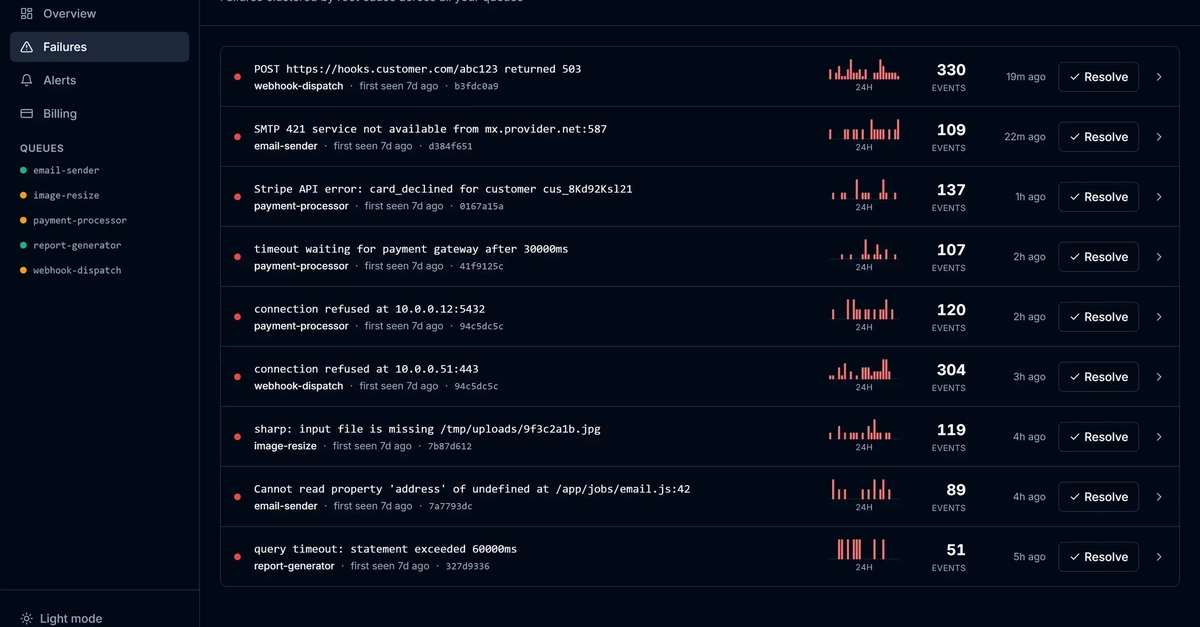
RQ (Redis Queue) is a delightfully simple way to run background jobs in Python. That simplicity is also why teams under-monitor it: it just works, until a downstream API gets slow or a bad deploy ships, and jobs start failing in bulk — quietly. Here's what to watch and how to get alerted before a customer tells you.
RQ failures don't announce themselves
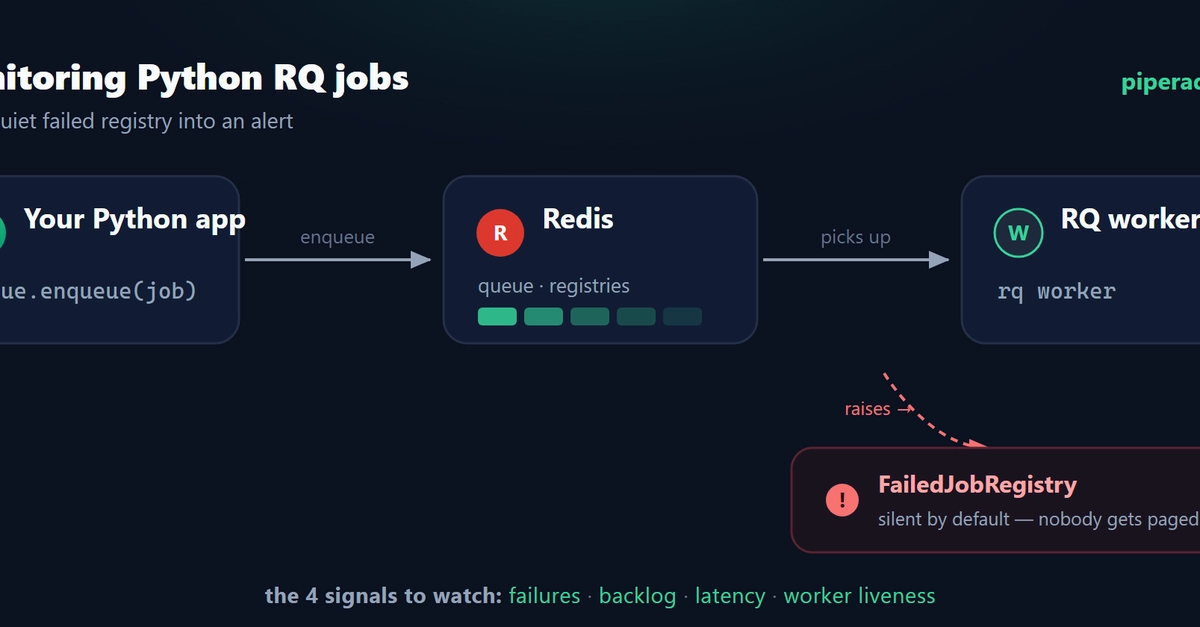
When a job raises, RQ moves it to the FailedJobRegistry and moves on. The worker keeps running; nothing crashes. If you're not looking at that registry, the failure is invisible — the same trap BullMQ, Celery, and every robust queue share. So the job is to reach into the queue's state and turn it into a signal.
The four signals that matter for RQ
Failure count / rate — jobs landing in the FailedJobRegistry over a window.