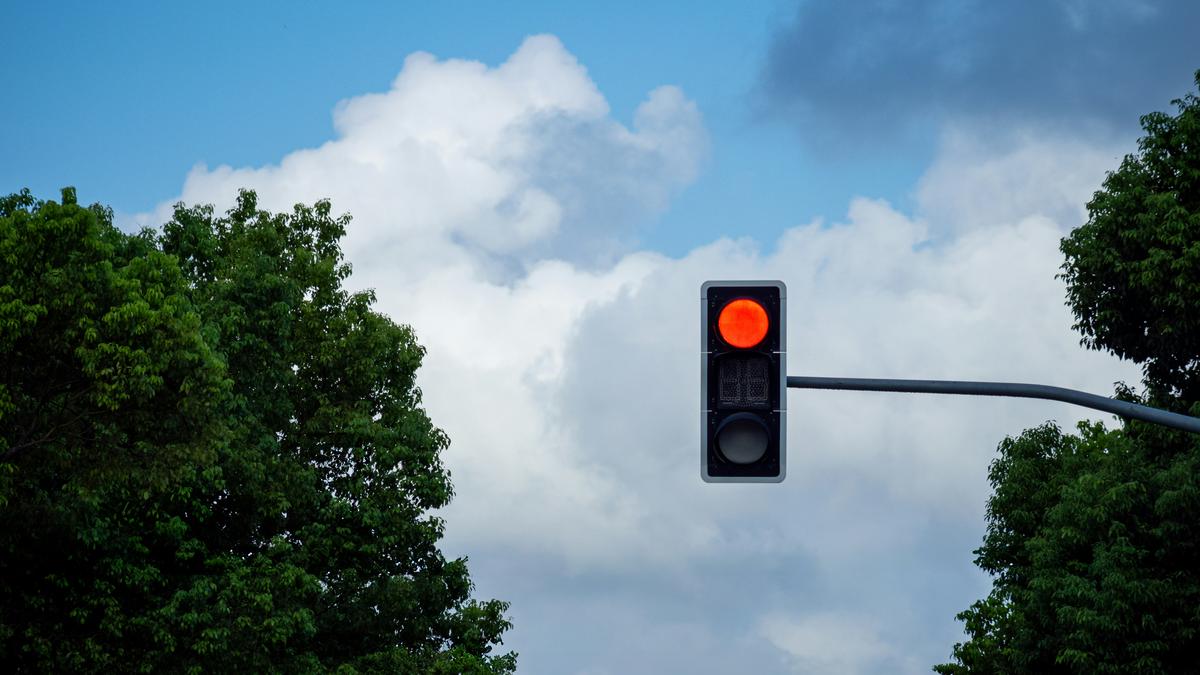
SynopsisLooking up at the sky offers a unique sense of peace and calm. The sky appears blue due to light scattering by atmospheric molecules. Clouds appear white because their water droplets scatter all colors equally. This natural phenomenon gently distracts observers from daily worries. Understanding the physics behind the sky enhances its visual appeal.TIL CreativesWhy the sky is blueThere is a peculiar bliss in surrendering to the sky. One looks up, and suddenly the world below dissolves into insignificance. Above stretches an expanse of utter blue so pure it seems impossible, a canvas unblemished except for the drifting brushstrokes of brilliant white clouds. They float with a serenity that mocks our frantic pace, their slow ballet reminding us that time can be gentle, not a whip.The hypnotic blue itself is not just poetry but physics. Sunlight carries every colour. Yet, when it enters Earth's atmosphere, molecules of nitrogen and oxygen scatter shorter wavelengths more efficiently. Blue light, around 430 nanometres, is scattered about 6x more than red. Violet scatters even more, but our eyes are less sensitive to it, the sun emits less of it, and ozone absorbs much of what remains. So, the heavens wear their familiar blue cloak.Clouds, meanwhile, are white because their water droplets are much larger than the wavelength of light, scattering all colours equally into brilliance.To be mesmerised by such a sky is to be gently stolen from oneself. The scattering of molecules becomes the scattering of worries. ...moreElevate your knowledge and leadership skills at a cost cheaper than your daily tea.Subscribe Now
Why the sky is blue - The Economic Times
Looking up at the sky offers a unique sense of peace and calm. The sky appears blue due to light scattering by atmospheric molecules. Clouds appear white because their water droplets scatter all colors equally. This natural phenomenon gently distracts observers from daily worries. Understanding the physics behind the sky enhances its visual appeal.
258 words~1 min read