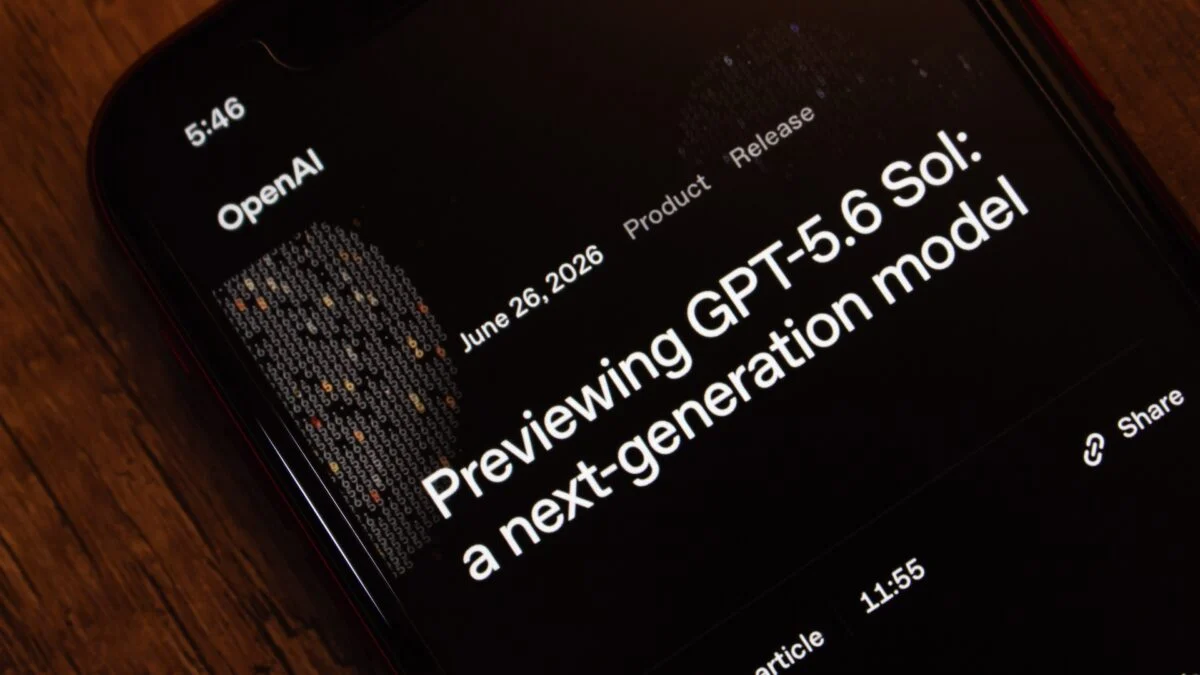
OpenAI is rolling out its latest advanced LLM, Sol, for wide public access. Sol is considered to be at least on par with Anthropic’s Fable, a model whose capabilities (or ownership) stressed out the White House enough to that it was briefly banned from public access.
So how did these models get the ok for release? Short answer: Nobody’s quite sure.
“Frankly, I don’t have visibility into those exact processes, so yes, I don’t feel like I have enough information to say whether they’re adequate or not,” Mina Narayanan, a senior research analyst at Georgetown’s Center for Security and Open Technology, told TechCrunch. “Anthropic did say that they were in conversations with the government, and that they developed a classifier to detect jailbreak attempts, and they’ve implemented defensive gap strategies to prevent future jailbreaks, but exactly what that dialog looked like between the government and Anthropic and OpenAI is unclear.”
Dean W. Ball, a former Trump policy advisor who now works for OpenAI, wrote that “nobody knows what the requirements are to get licensed” in his newsletter last month.
Andy Konwinski, a computer scientist who co-founded Databricks, Perplexity, and the Laude Institute, said he’s never spoken to anyone who understands the process, even employees at frontier labs. “It’s existentially a problem,” he tells TechCrunch. “Safety or not, it’s about who has the power to make decisions—who gatekeeps and decides on permissions?”