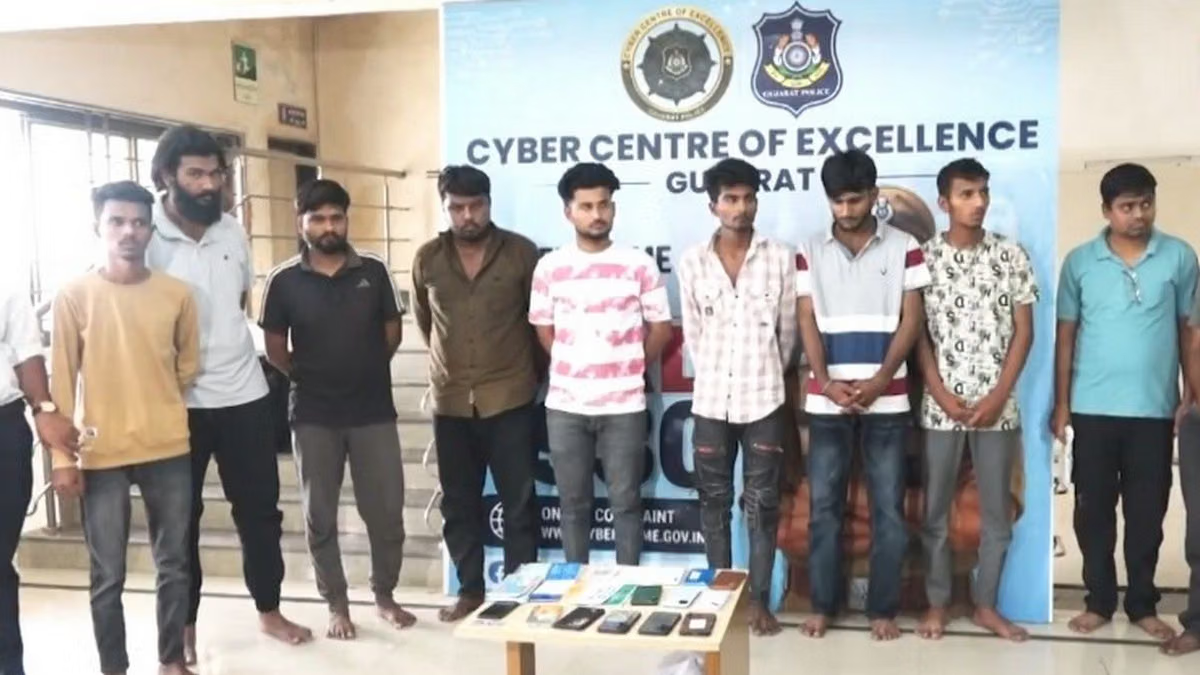
Fifty-five arrests, Rs 802 crore, 22 states. Gujarat Police’s Operation Mule Hunt 2.0 made headlines last week. But the headlines counted the wrong thing.
Look instead at how mule bank accounts were used to channel cyber fraud proceeds. A man in Ahmedabad allegedly registered a bogus firm, opened three bank accounts in its name, and handed them to fraud syndicates. Police linked these three accounts to 253 cybercrime complaints across 22 states and Union Territories, involving over Rs 161 crore. That is the arithmetic of modern cybercrime: one mule account can service crime committed anywhere in India. The fraudster on the phone may be sitting in a compound abroad, but his money must still touch an Indian bank account. That account is the crime’s one fixed address.This is the fact the public debate keeps missing. What we call cyber fraud is not primarily a technology problem. It is a money-laundering operation wearing a technology mask.
The phone call, the fake arrest, the bogus investment app — these are the collection front, endlessly redesigned and impossible to exhaust. The real enterprise is the plumbing behind it: layer the money through rented accounts, break it into small transfers, move it out of reach before the victim finishes dialling the helpline.A generation ago, layering was the craft of specialists — hawala men, shell-company accountants. The mule account has democratised it. Layering is now gig work, a commission paid to anyone willing to rent out his identity documents.Once you see the crime this way, the arrest count stops being reassuring. The mule is the network’s cheapest, most replaceable part — hired labour, often barely aware of what flows through his account. Arrest fifty-five and the syndicate recruits fifty-five more by the weekend, because the supply of people who will lend an account for a few thousand rupees is effectively infinite.No police force can arrest its way through an infinite supply. It can, however, choke the plumbing.