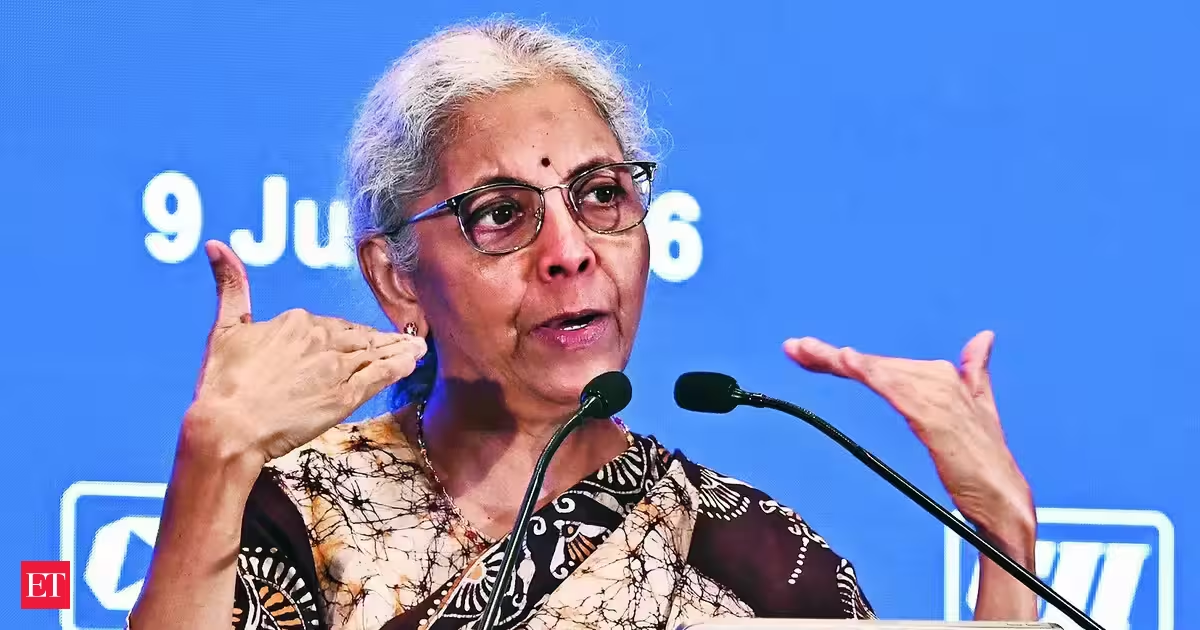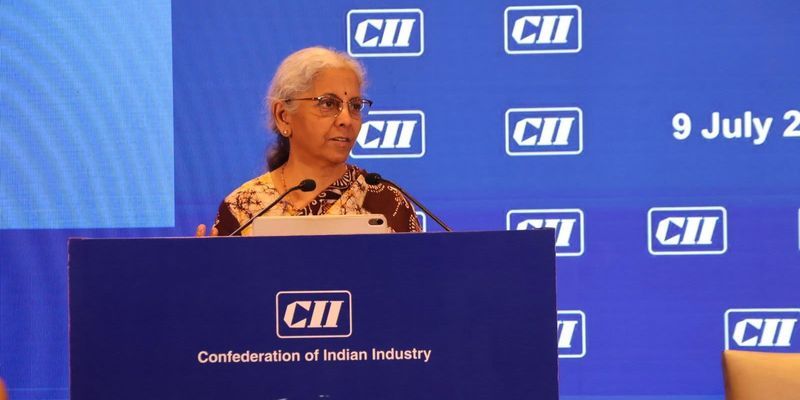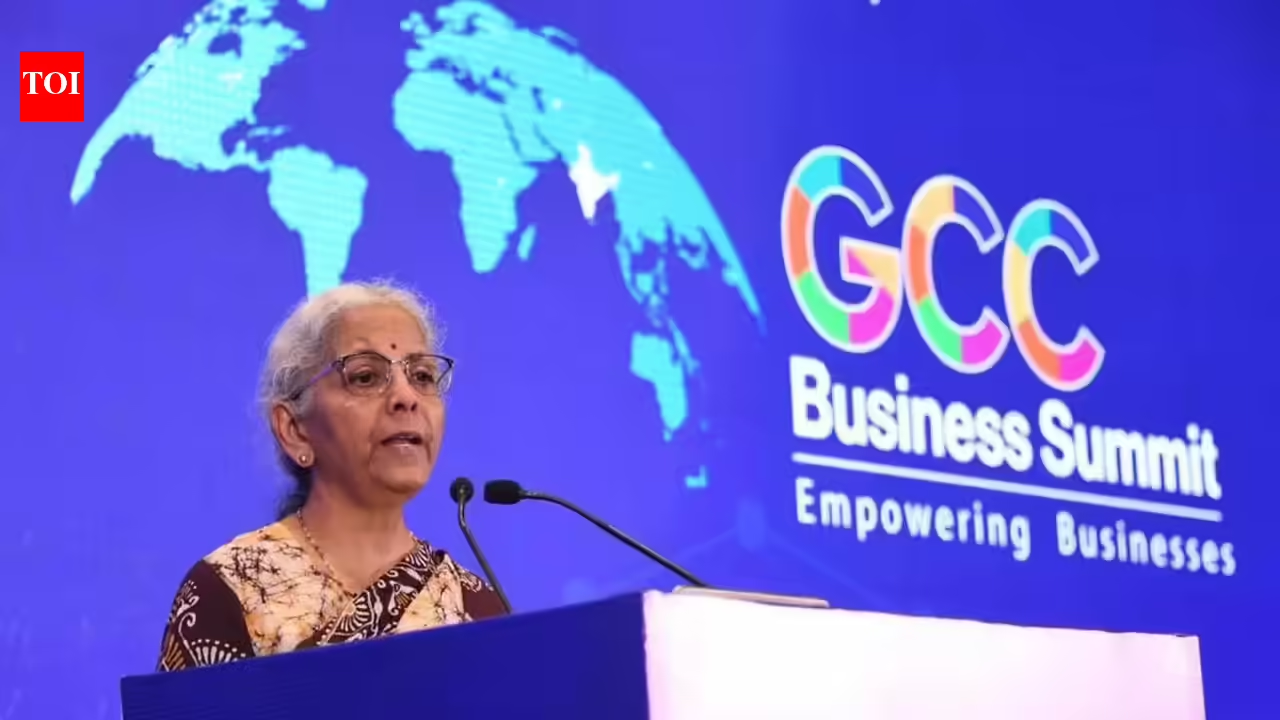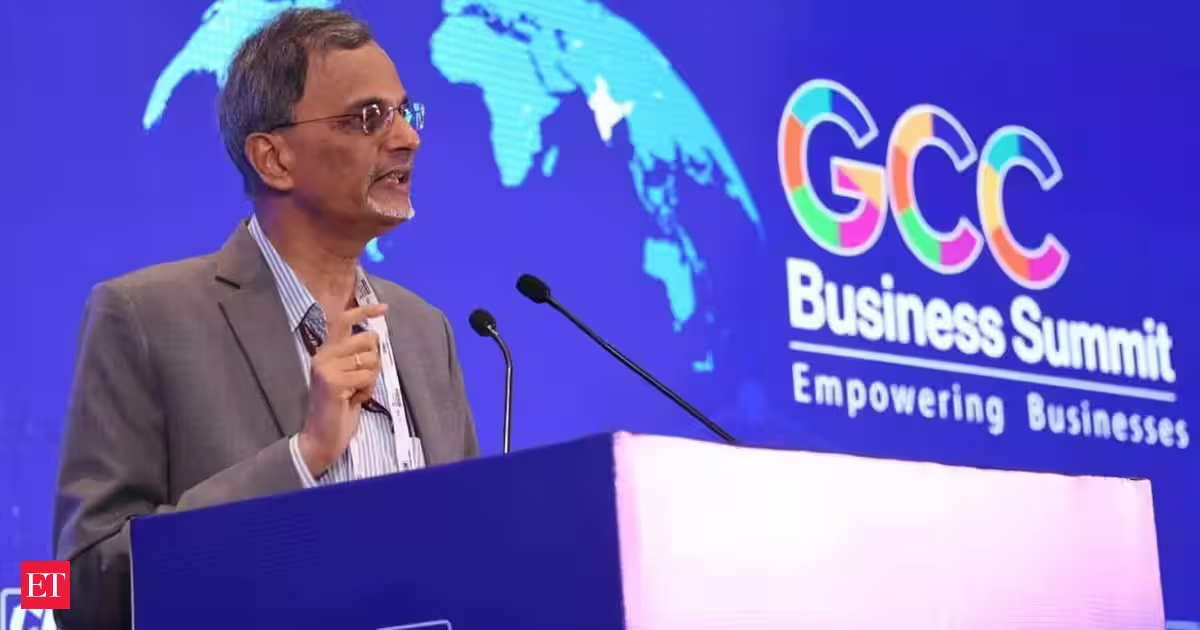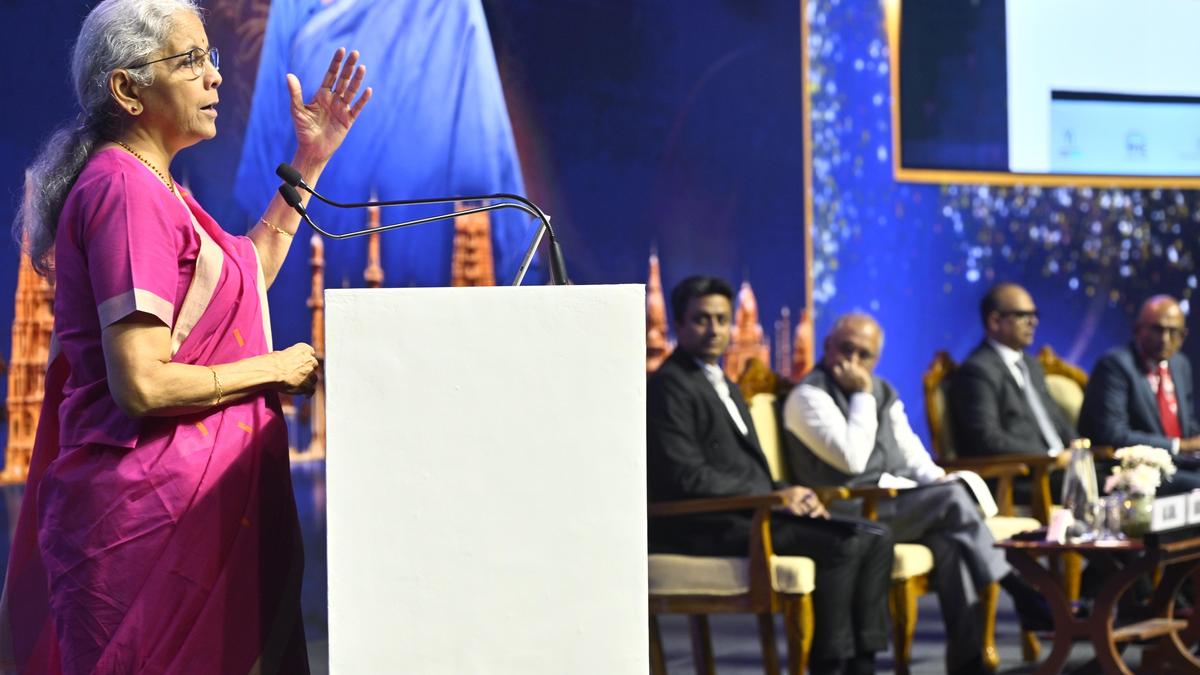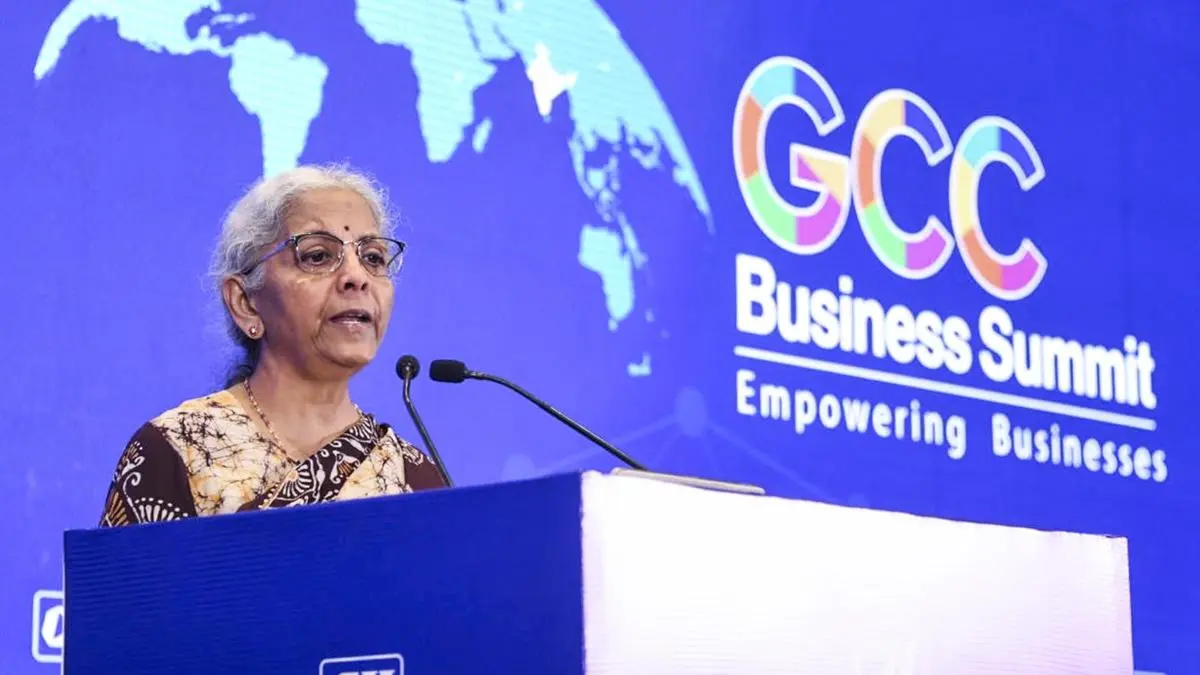
Finance Minister Nirmala Sitharaman addresses the inaugural session of CII GCC Business Summit 2026.
| Photo Credit:
Finance Minister Nirmala Sitharaman on Thursday called for making global capability centre (GCC) to shape the enterprises of the future. She also highlighted that lot of opportunities are yet to be untapped.“Our aspiration is not merely to host the world’s capability centres, but to shape the next-generation technologies, products and enterprises of the future, “she said while the GCC Business Summit hosted by the Confederation of Indian Industry (CII). According to her, that is how India moves from capability to leadership. It is also an important step towards building a Viksit Bharat that is prosperous, innovative, resilient and respected across the world.Talking about the opportunities, she said around two-thirds of the Fortune Global 2000 companies have yet to establish a GCC in India. This is one of the largest untapped investment opportunities before India. The ambition of building an ecosystem capable of supporting around 5,000 GCCs by 2030 is therefore both realistic and achievable. And this is a milestone on a much larger journey. “The next phase of this growth presents significant opportunities in newer geographies, including East and West Asia, Eastern Europe, the Nordic countries and Australasia, she saidShe urged India Inc for greater engagement with the State governments and city administrations. “As GCCs expand into newer locations, such partnerships can help shape infrastructure, skills and institutional support in line with industry requirements,” Sitharaman said while adding that the engagements will help the policymakers appreciate the importance of GCCs.GCC journeyShe listed expectations for next phase of GCC journey. First, continue moving decisively up the value chain by creating intellectual property, lead frontier research, develop AI applications, own product architecture and drive global innovation. Second, deepen engagement with India’s knowledge institutions by having stronger partnerships with universities, start-ups, and centres of excellence ensure that innovation moves seamlessly from laboratories to markets.Third, expand confidently into our emerging cities as tier-2 and tier-3 cities are rapidly developing the talent, infrastructure and innovation capacity required for globally competitive enterprises. In many emerging cities, the transformative economic impact that GCCs can have is still not widely understood. “I would encourage every enterprise represented here to become an ambassador for India’s capabilities. Enterprises that have invested successfully in India are our most credible ambassadors. Their success stories remain the strongest endorsement of India’s GCC ecosystem,” she mentioned this as fourth expectation.And fifth strengthening partnerships with Governments by continue sharing practical feedback on policy, processes, talent and infrastructure so that stronger GCC ecosystem for the future can be created. “India’s GCC journey is much larger than the story of one successful sector. It is about making India indispensable to the world’s knowledge economy and strengthening our long-term economic resilience,” she said.Highlighting the sector’s growth, the minister said India is home to more than 2,100 GCCs, employing over 2.3 million professionals and generating annual revenues of about $100 billion. “The competitiveness, world-class infrastructure, stable macroeconomic management create ecosystem for GCCs,” Sitharaman said while adding that GCCs have become a catalyst for regional development because of their second-order economic impact.Published on July 9, 2026