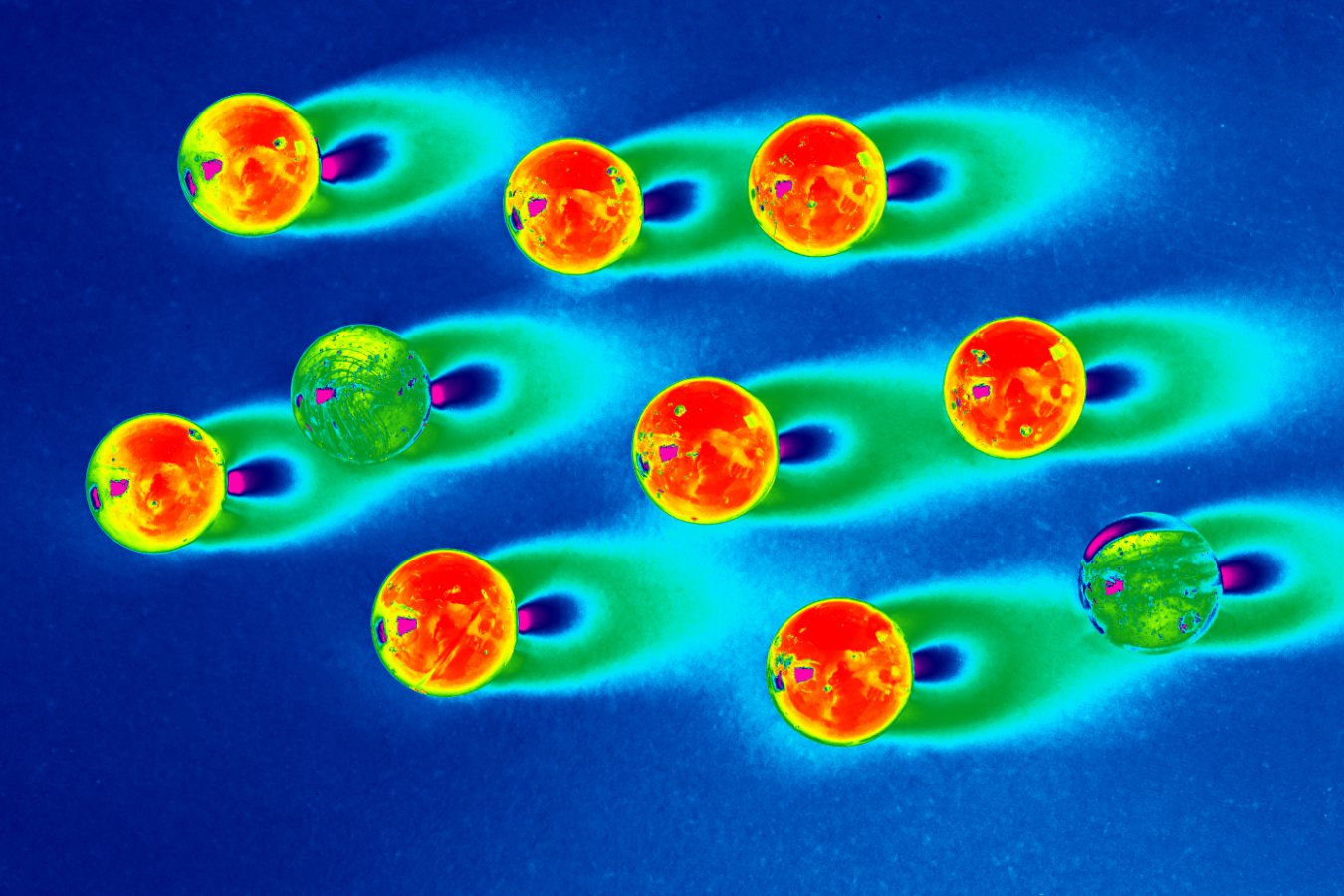
Comparing thermodynamics to marbles and their shadows offers a new way to study the famous theoryPriscila Zambotto/Getty Images
The theory of thermodynamics has helped us understand devices like engines for more than 200 years, but its mathematical foundations have always been a little too imprecise. Now, researchers are putting the famous theory on a firmer footing, with mathematics more commonly used to describe quantum fields.
Among all branches of physics, thermodynamics is among the easiest to connect to everyday life. This is because its development was driven in part by engineers looking to understand and maximise the efficiency of heat engines, which are idealised devices that model a wide range of familiar technologies, including car engines and refrigerators.
But although thermodynamics is a very successful theory, it has historically lacked mathematical rigour, says Bryan Roberts at the London School of Economics and Political Science. He has set out to rebuild it based on mathematical ideas that draw on geometry and quantum field theory, a notable departure from how thermodynamics has long been understood and taught.
Central to Roberts’s remaking of thermodynamics is the concept of “gauge theory”, which typically deals with properties of objects that aren’t directly observable or manipulable.