The initiative not only enables individuals to reconcile and accurately report their overseas income and assets but also strengthens the Income Tax Department’s data-driven compliance framework, said Maheshwari
| Photo Credit:
echoevg
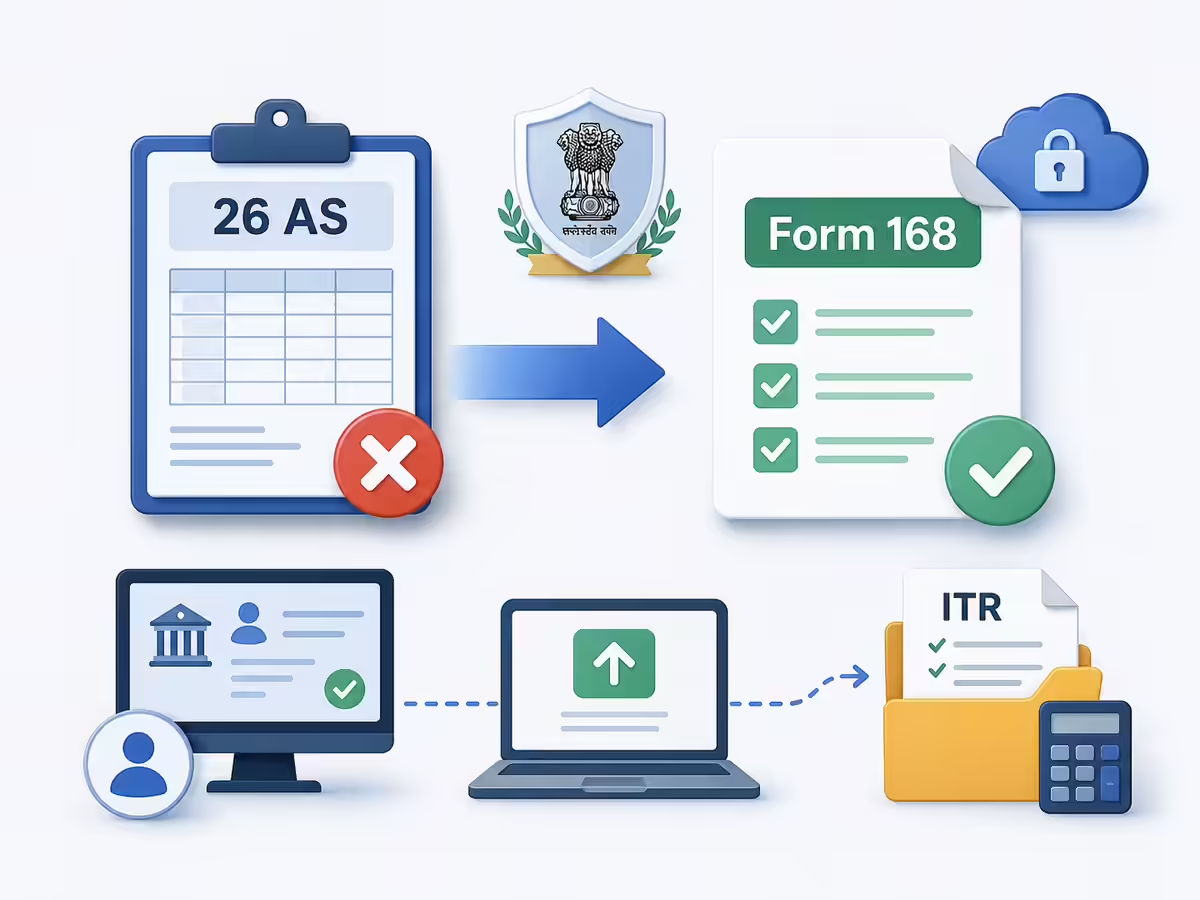
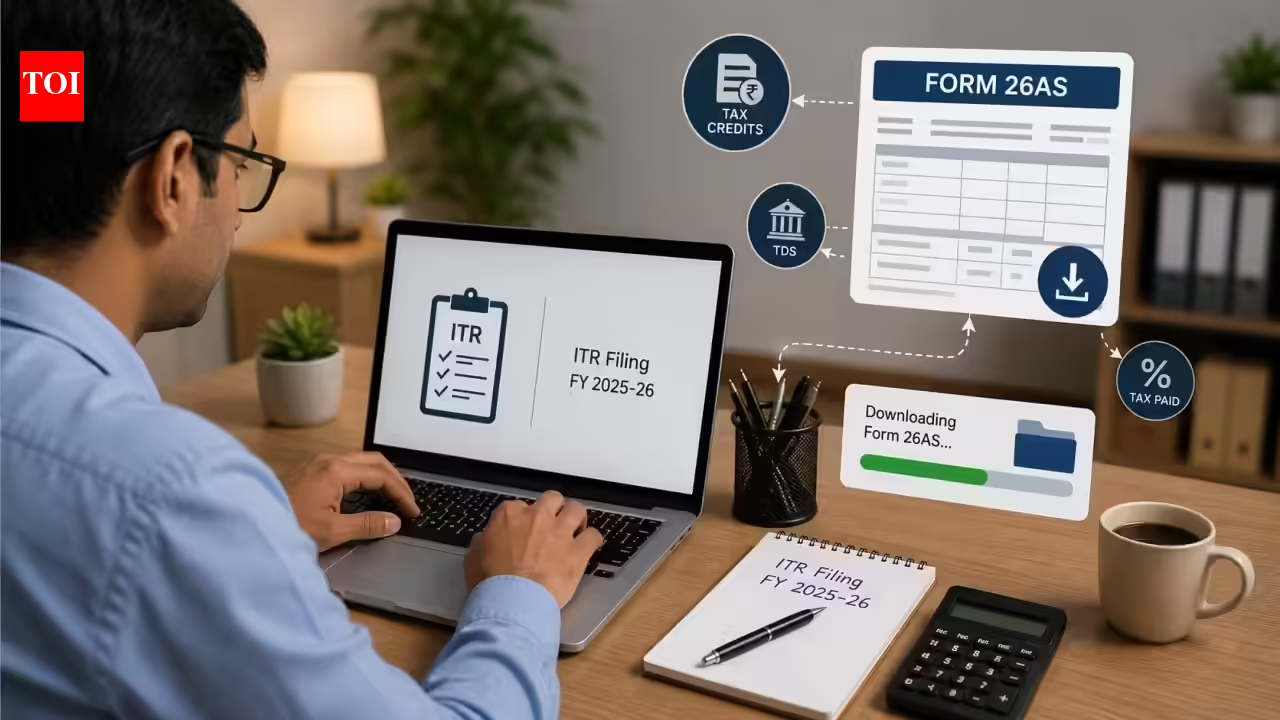
Central Board of Direct Taxes (CBDT) has permitted foreign financial information received under tax treaties (DTAAs) to be reflected in the assesses’ Annual Information Statement (AIS) and Form 26AS.This means overseas financial information will now show up in the tax records of an assessee. Tax authorities can better match foreign income with the ITR. Also, this will help the assesses to disclose overseas income and assets correctly.In two orders, CBDT authorises uploading of information received under AEOI (Automatic Exchange of Information) framework under respective DTAAs (Double Taxation Avoidance Agreement). Accordingly, the information received needs to be uploaded in the AIS within 90 days from the date of end of month in which the information is received. CBDT also authorises DGIT(Systems) to upload the AIS in Form 26AS or the period Jan 1, 2022, to Dec 31, 2022, Jan 1, 2023, to Dec 31, 2024, which is in his possession within 90 days from the date of issue of this order and for the period Jan 1, 2025, to Dec 31, 2025 which comes into his possession within 90 days from the end of month in which the information is received by him.Amit Maheshwari, Managing Partner at AKM Global, called this move as a significant step towards enhancing tax transparency and voluntary compliance. “By making foreign financial information readily accessible to taxpayers, the initiative not only enables individuals to reconcile and accurately report their overseas income and assets but also strengthens the Income Tax Department’s data-driven compliance framework,” he said.According to Ashish Mehta, Partner at Khaitan & Co, the two orders create a framework for reflecting information received under the Automatic Exchange of Information mechanism in statements easily accessible by taxpayers. “In practical terms, taxpayers should expect greater visibility of foreign account and related information already available with the tax department, making timely reconciliation and accurate disclosure even more important,” he said.Experts also have word of advice for taxpayers. “Taxpayers with foreign bank accounts, investments, or other reportable financial assets should proactively review their AIS and Form 26AS and ensure that the corresponding disclosures are appropriately made in their income tax returns to mitigate the risk of future scrutiny,” Maheswari said.Adding to this Mehta opined that given the serious consequences of non-reporting offshore income and assets, this move should encourage better voluntary compliance. “The move is also timely in the context of the recently announced disclosure scheme under the Black Money Act and could support greater voluntary participation once the scheme is operationalised,” he added.Published on July 9, 2026