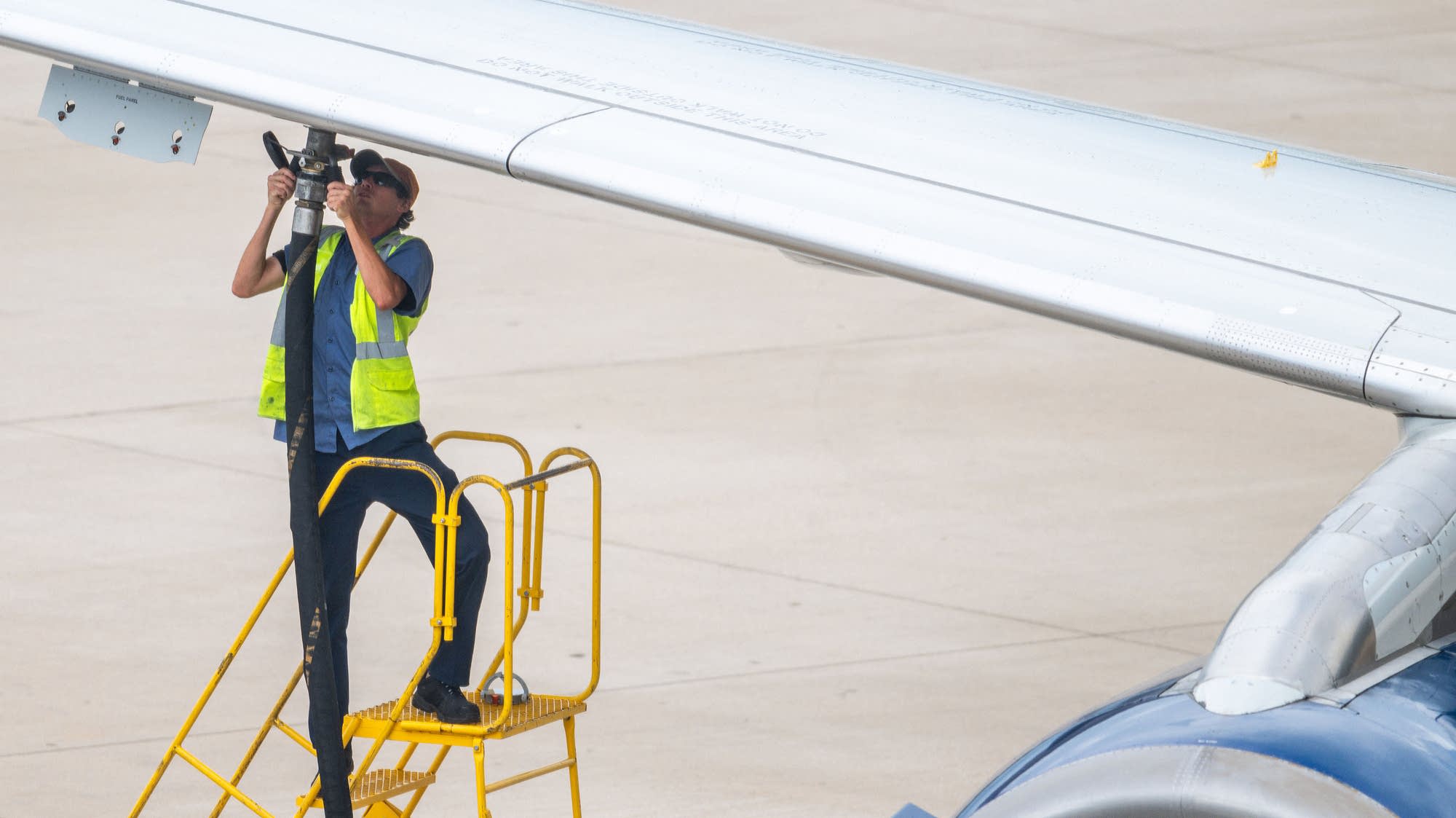
We’re about to get quarterly earnings reports from the nation’s major airlines for the April through June period. That’s the first that fully accounts for the disruptions brought on by the Iran war. Delta Air Lines is scheduled to report on Friday, and United will report next week.U.S. airlines spent nearly twice as much on jet fuel in May as they had a year earlier, $3 billion more in a month, according to the latest data from the Transportation Department. To keep up, airlines are raising prices, according to industry consultant Robert Mann. “They can only charge those fares for future bookings, so they don't really recover the extent of their price, their fuel price exposure for months, if ever,” he said.The “if ever” part has to do with what happens after the busy summer travel season ends. Will people keep buying? Mann isn’t sure. But Meghna Maharishi, an airline reporter with the travel industry trade publication Skift, said that executives appear optimistic — for now. “Based on everything that we've heard so far from airline CEOs and executives, spending patterns still seem to be up for the most part,” she said.And the reason for that, she noted, is that airlines have been focusing on passengers willing to spend: the ones buying first class, business class, and premium economy seats. On the other side of the Atlantic in Paris, Maria Latorre, a sector advisor at Allianz Research, said that, yes, tourists are still coming. And they’re adapting to higher airfares. “Something very particular that happens with this industry is that once a price is accepted, it is very unlikely that it will go down again soon,” she said.Regardless of what is happening with the Iran war and oil markets, Latorre added that prices are likely to be stable and higher for the foreseeable future.
Why airline fares and fees won't be going down anytime soon
Spiking costs mean the money has to come from somewhere.
304 words~1 min read