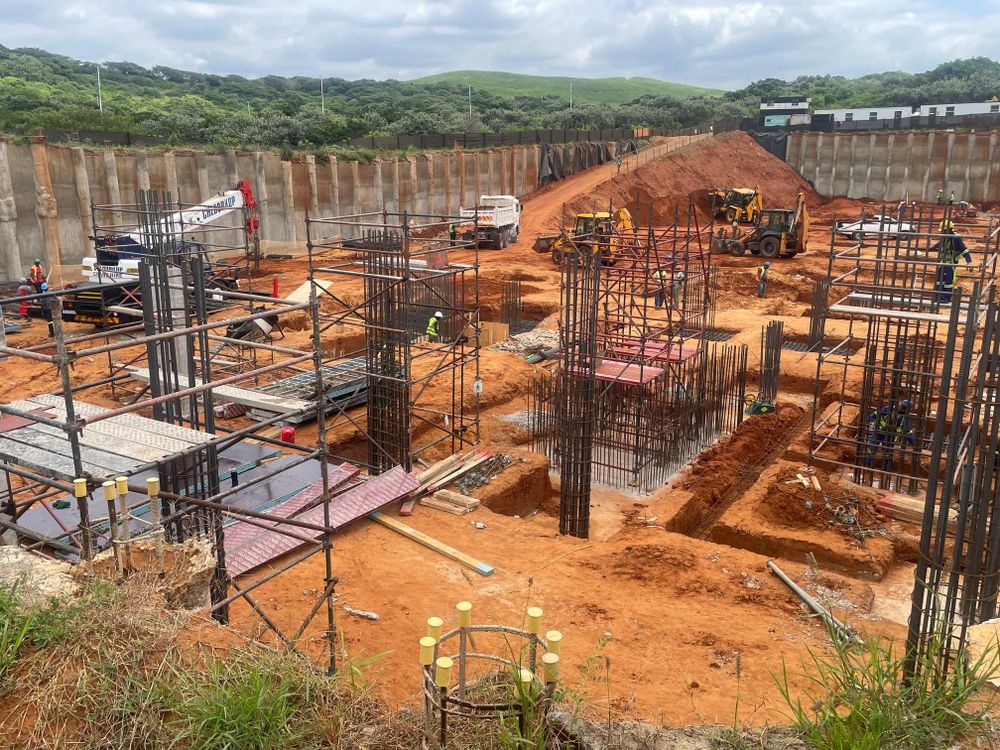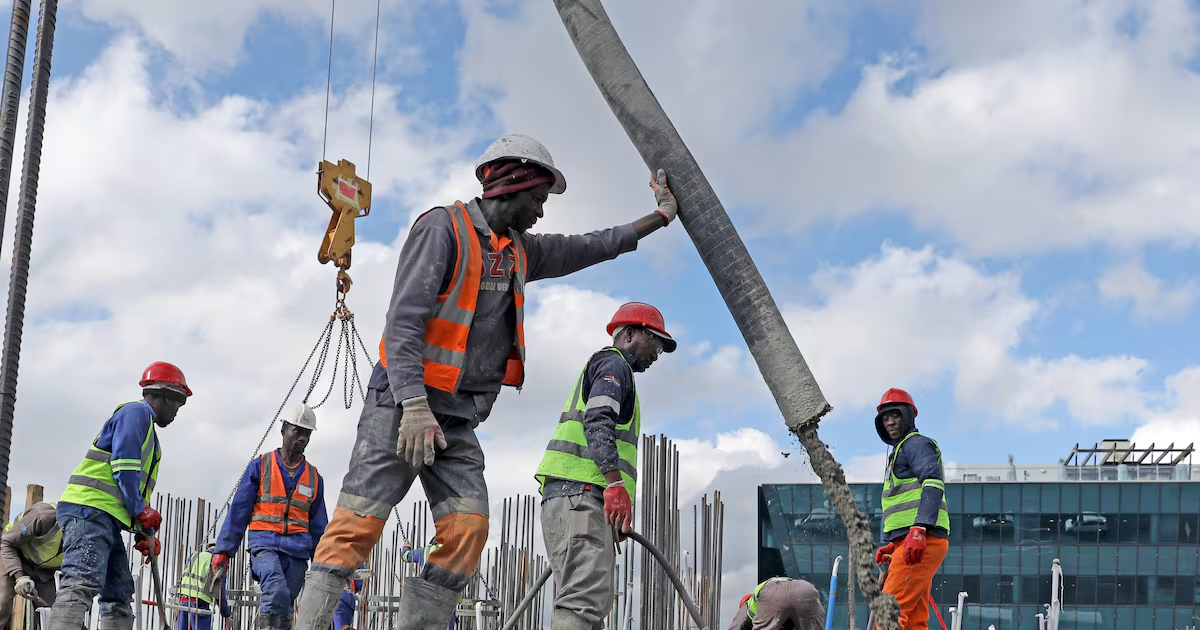
Income from South Africa’s construction industry rose to R605.6bn in 2024, representing an average increase of 8.9% per annum compared with the previous survey undertaken years previously, Stats SA reported on Thursday.However, the agency noted that the sector’s contribution to the economy continued its steady decline, to 2.4% in 2024 from 2.5% the year before and 3.9% a decade earlier.Comparing 2024 and 2020, when the sector’s income was R430.8bn, the biggest increase, R58.9bn, was reported in the construction of civil engineering structures. That was followed by a rise of R33.6bn in the construction of buildings, while the “other building completion” sub-sector was up R24.1bn.The top 100 enterprises contributed 26.7% to total income in 2024, a decline from 27.7% in the survey four years earlier, the data shows.Of the country’s nine provinces, Gauteng, Western Cape and KwaZulu-Natal collectively accounted for 74.5% of income and 67.5% of employment.The construction industry recorded its highest profit margin in a decade at 4.8% in 2024, led by the site preparation component, which recorded a profit margin of 13.2%. “Renting of construction or demolition equipment with operators” reported an 8.6% profit margin, and that for painting and decorating was 6.3%.The number of people employed in the industry rose to 539,056 from 479,071 four years earlier, when the Covid-19 pandemic was laying waste to economic activity. However, the number of people employed in the sector in 2024 was still significantly down from 2017’s 592,125.Small, medium and micro enterprises accounted for 78.6% of total employment and large companies the remainder.“This will also be of interest to policy departments, such as small business development. From these statistics, it is clear that if one promotes small businesses in the construction industry, they will tend to have a significant impact on employment,” Joe de Beer, Stats SA’s deputy director general for economic statistics, said.Jobs evaporateSouth Africa has grappled with high unemployment for decades, and the number of people with jobs fell by 345,000 to 16.8-million in the first quarter of 2026, leading to an overall unemployment rate of 32.7%. Among people aged 15 to 34 years, the rate was even higher — 45.8%.Thursday’s construction industry report was published two days after National Treasury director-general Duncan Pieterse said that sectors such as tourism and construction offer more scope for job creation, given that the dominant divisions in the manufacturing industry are increasingly becoming less labour-intensive.Construction has been in a slump since the boom in preparation for South Africa hosting the 2010 Fifa World Cup evaporated.“We can see that there’s a lot of jobs available in construction and jobs that were created, keeping in mind the base effect from the 2020 [survey] to this 2024 data point,” de Beer said on Thursday.“The difference is that the construction industry has been declining. You will see that we had that slide that started in 2014 that showed how the industry is in decline. What [Pieterse} was actually referring to was that construction is nowhere as large as what it was in 2014 and 2017.”De Beer also highlighted that the sector is a shadow of the glory days from 2005 to around 2007 — before the global financial crisis — as South Africa undertook a raft of projects to improve highways, airports, roads and other transport infrastructure and built or refurbished football stadiums in preparation for the sport’s most prestigious event.“That’s where the job creation happened at that time,” de Beer said.Stats SA’s most recent quarterly labour force survey, published in May, shows that construction was among the seven of 10 industries that experienced a drop in the number of employed people between the last three months of 2025 and the first quarter of this year, with 110,000 jobs shed.Construction mafiaThe industry is also bedevilled by the so-called construction mafia, which came under the spotlight several years ago after disrupting multibillion-rand infrastructure projects around the country.The group, describing themselves as “business forums”, demand a 30% share of project values and often resort to intimidation, extortion and, in some cases, violence to enforce their demands.Earlier this week, public works and infrastructure minister Dean Macpherson welcomed the cabinet’s approval of a national policy instrument aimed at preventing construction project disruptions by the mafia.
Stats SA highlights decline of construction industry’s role in economy
Sector’s income rises but share of GDP shrinks to 2.4% from 3.9% a decade earl;ier
695 words~3 min read