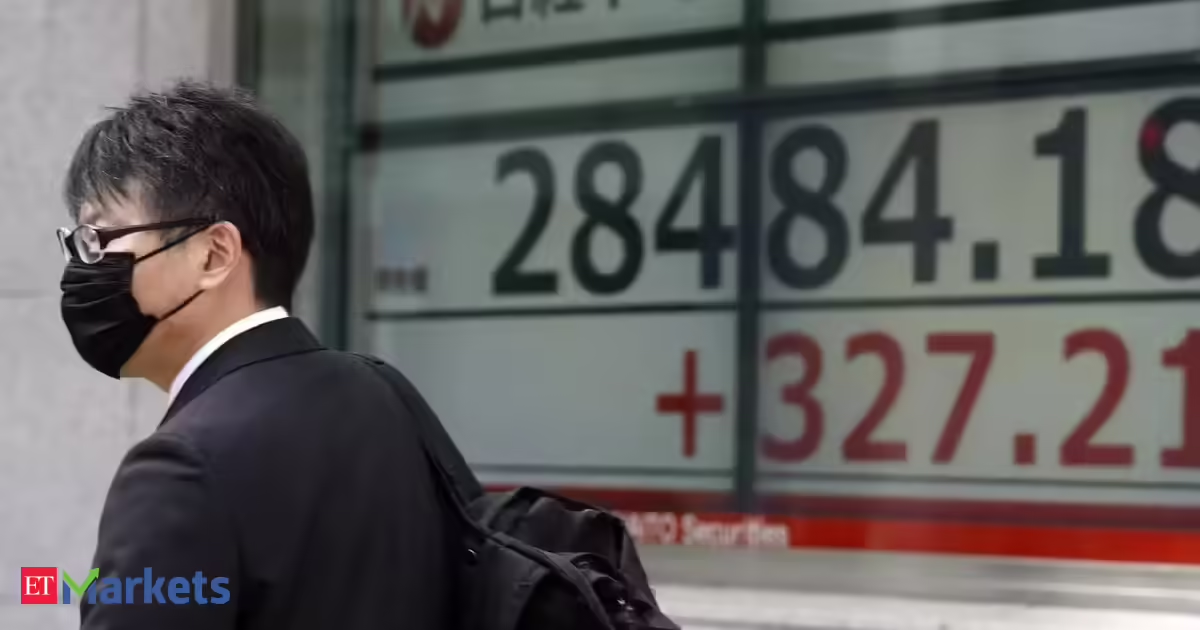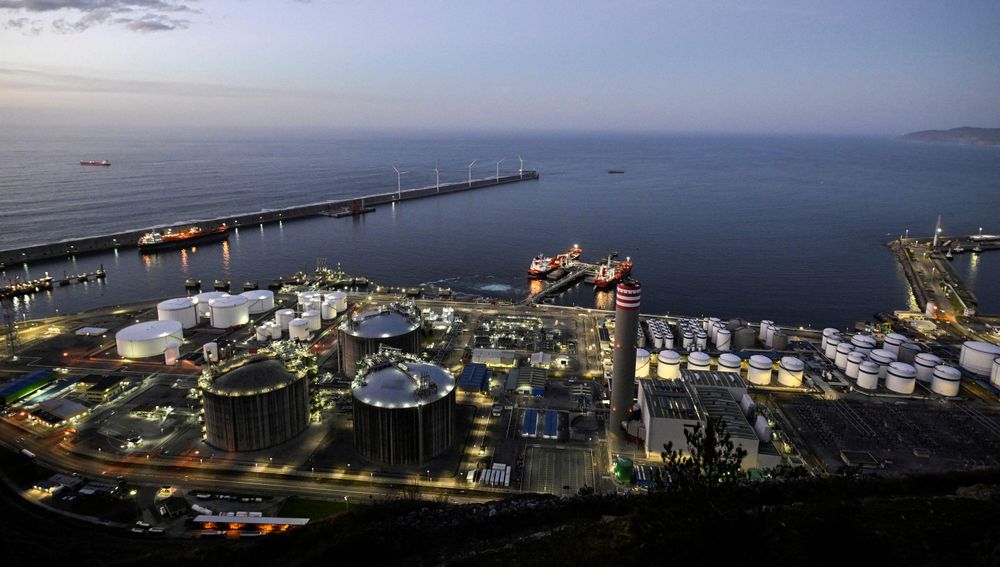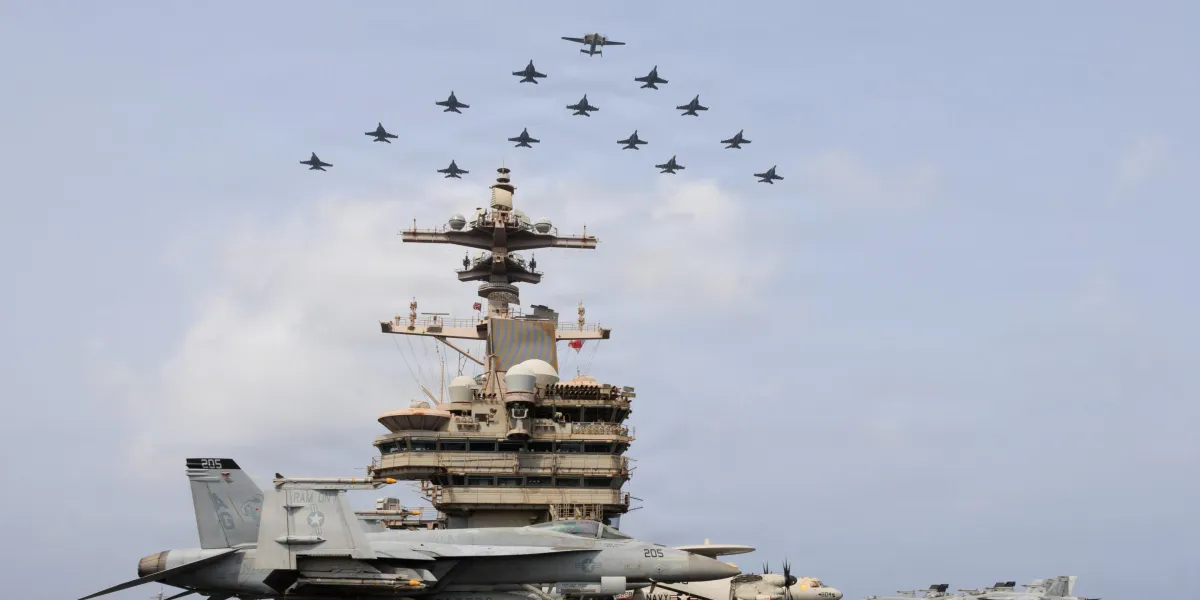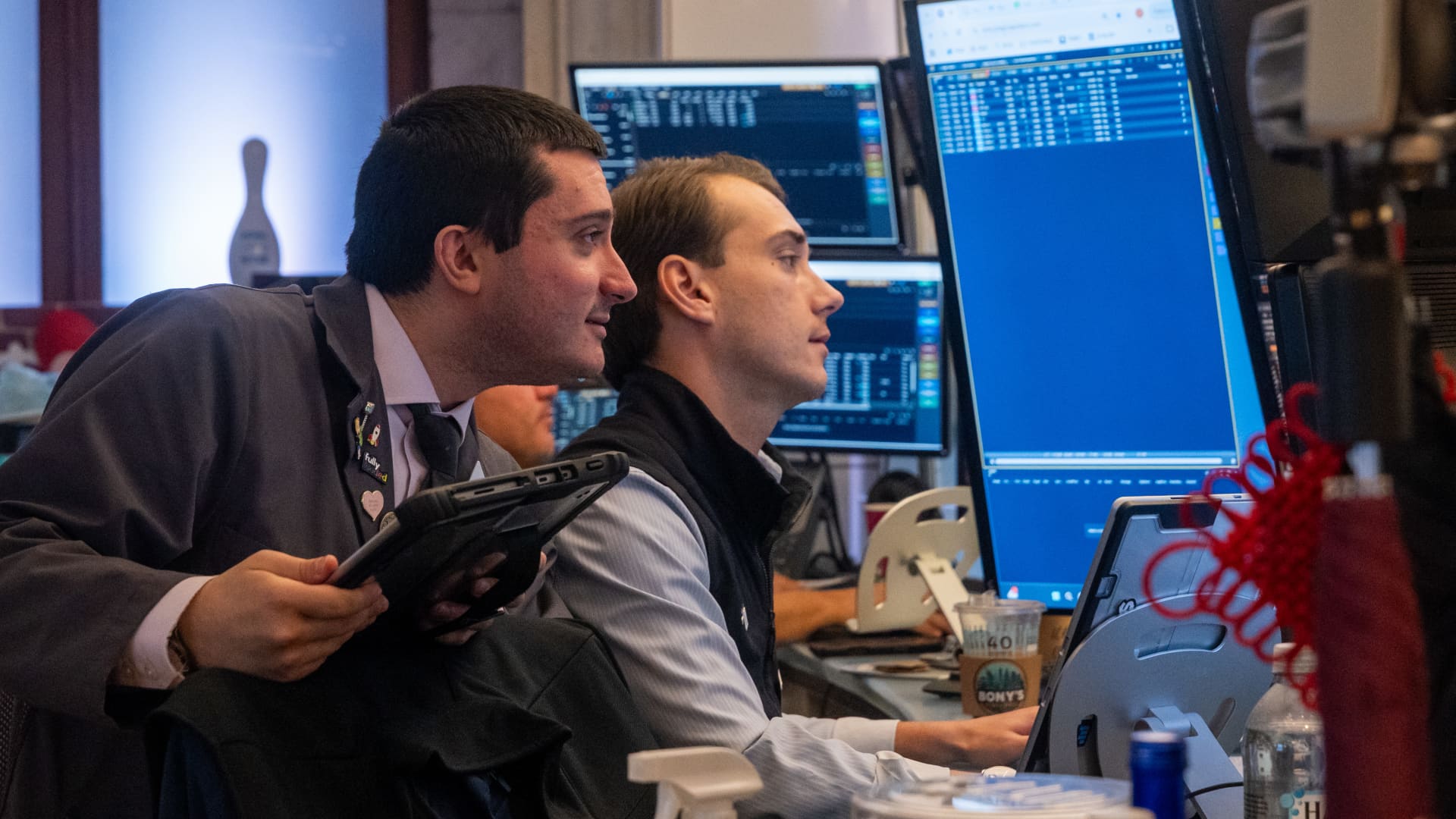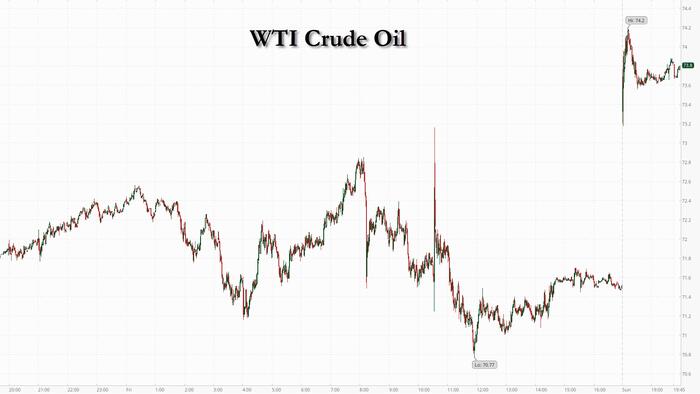
Futures are higher (although off session highs), and oil erased overnight gains as the market moved past the latest Middle-East flare up which saw the US military strike 90 Iranian targets for a second day and Tehran retaliated against American allies in the Persian Gulf. And like during previous escalations, this time nobody believes it will last. As of 8:00am ET S&P 500 futures rose 0.2% and Nasdaq 100 contracts gained 0.6% as semiconductor stocks advanced in Asia, Europe and US premarket trading after SK Hynix drew strong demand for its offering of ADRs. Mag7 stocks are mixed, with META tumbling on a Reuters report the company has signed long-term contracts for memory, networking gear and flash storage, refuting the market's expectation that the company is starting to ease back on capex spending. The FTSE 100 lags and is down 0.8% as AstraZeneca shares slump 9% after its Wainua drug failed to prevent heart problems. . Cyclicals, ex-Energy, are rebounding led by Fins and Industrials. Momentum is poised for another strong day, this time with Beta. Brent traded near $79 a barrel after swinging between gains and losses. Bond yields are down 2bps to up 1bps as the curve twists steeper ahead of today’s 30Y auction; the 10Y yield trades at 4.59%, near a one-month high. Commodities are weaker with Ags and Energy selling off but there is a bid to metals led by Precious. The Bloomberg Dollar Spot Index is also little changed. The kiwi is the strongest of the G-10 currencies, rising 0.6% against the greenback after some hawkish remarks from RBNZ Governor Breman. Precious metals advance along with Bitcoin. Today’s macro data focus is on jobless data and existing home sales with the macro focus shifting to next week’s CPI / PPI, Retail Sales prints as earnings season kicks off. In premarket trading, Mag 7 stocks are mixed (Meta Platforms -0.1%, Microsoft -1%, Tesla +0.2%, Nvidia +0.2%, Amazon -0.6%, Apple -0.2%, Alphabet -0.3%)Ceco Environmental (CECO) rises 3% after JPMorgan initiated coverage of the air-purification equipment provider with a recommendation of overweight, citing its acquisition of Thermon.IBM (IBM) slips 3% as Starbucks is developing in-house tools with the help of artificial intelligence that could replace some software applications it now buys from the company.Ionis Pharmaceuticals (IONS) slumps 19%, while AstraZeneca falls in London, after a late-stage trial of the companies’ gene silencer drug Wainua showed a failure to help prevent heart problems in patients with a rare and potentially fatal disease of the organ.Developers of rival cardiomyopathy drugs gain: Alnylam Pharmaceuticals (ALNY) +17%, Bridgebio (BBIO) +13%.Levi Strauss (LEVI) falls 4% after after the apparel company’s increase to its forecast underwhelmed investors.Mattel (MAT) slips 2% after Goldman Sachs analyst Stephen Laszczyk cut his recommendation on the toy maker to sell from neutral, and cut his price target to a Street-low $12 from $15.Salesforce (CRM) falls 4% after KeyBanc downgraded the software company to sector weight, noting a lack of momentum in the the company’s Agentforce AI product.Simply Good Foods (SMPL) rises 13% after the packaged-food company reported adjusted earnings per share for the third quarter that beat the average analyst estimate.In other news, PepsiCo narrowly missed estimated for second-quarter organic sales growth as the earnings season for the June quarter got underway. Bain Capital has sold its entire stake in flash memory chipmaker Kioxia. AstraZeneca and Ionis Pharmaceuticals’s gene silencer drug Wainua failed to help prevent heart problems in patients with a rare and potentially fatal disease of the organ, sending Ionis shares plunging in premarket trading. Porsche deliveries slumped 16% in the first half, dragged down by weak demand in North America and a decline in China.The calmer mood in markets comes despite an escalation of violence in the Middle East that is threatening efforts to reach a permanent US-Iran peace deal. The US military hit about 90 Iranian targets Wednesday to degrade Tehran’s ability to attack commercial shipping in the Strait of Hormuz. Traders say that while the tensions reflect the fragile nature of the truce between the sides, neither government would want a full-scale return to war and that the parties would likely return to negotiations.“This is the new status quo; it’s an uneasy equilibrium, but an equilibrium nonetheless,” said Geoff Yu, a senior macro strategist at BNY. “You just need to factor in the volatility in your asset allocation.”Global bonds were modestly higher as two days of an oil-driven selloff came to an end. The yield on two-year Treasuries eased two basis points to 4.20%. The dollar was little changed.After Wednesday’s minutes of the Federal Reserve’s June meeting showed that some committee members saw a case for a rate increase, traders will now wait for next week’s inflation data and Chair Kevin Warsh’s testimony to lawmakers for another steer on the path for interest rates. New York Fed President John Williams will take part in a moderated discussion later on Thursday.“The only reason the July meeting wasn’t live was because oil prices were basically where they started the war,” Bob Elliott, chief investment officer at Unlimited Funds, told Bloomberg TV. “That’s changed. The conflict in Iran and the Hormuz problem has not really been resolved.”In tech, SK Hynix’s US listing is said to be more than seven times oversubscribed, as the South Korean memory chipmaker prepares to price its offering later today. With its ADRs set to trade for the first time on Friday, arbitrage investors are without a historical benchmark for what constitutes a normal premium, making it far harder to judge when a spread is attractive or stretched. On the subject of memory, the knock-on effects of ongoing component price inflation could dampen hardware growth expectations, with Citi forecasting 2026 PC units to fall 15% in 2026, and smartphones to decline 12%. As Bloomberg notes, an interesting divergence is emerging under the surface of volatility. While the VIX Index continues to exhibit placid price moves, single stock volatility, expressed through the S&P 500 Dispersion Index, closed at a one-year high on Wednesday.When it comes to AI, massive spending commitments are set to sustain the investment theme around the technology for two to three years, according to BlackRock Inc.’s Helen Jewell, even as tech giants gradually turn cash-flow negative and start raising debt to fund their buildouts. “From an investment perspective, you lean into the AI theme, you do the secondary beneficiaries of that, but you need to diversify those portfolios,” Jewell told Bloomberg TV. “Healthcare, Latam, even the UK.”Consumer stocks are in focus with Costco reporting a deceleration in June comps relative to May, while Levi Strauss is lower in premarket trading after a decent beat and raise report fell short of some expectations for a more punchy forecast. It follows BofA noting that clients had put the most money into consumer discretionary stocks ever last week. In politics, Graham Platner suspended his Senate campaign in Maine following a sexual assault allegation that caused his support from fellow Democrats to collapse. And Democratic infighting is threatening to undermine the party’s midterm targets.Europe's Stoxx 600 rises 0.4% after its worst day since March. Miners and banks are the best performers while healthcare lags its sector peers.The FTSE 100 lags and is down 0.8% as AstraZeneca shares slump after its Wainua drug failed to prevent heart problems. Here are some of the biggest movers on Thursday:Glencore rises as much as 3.9% after Goldman Sachs raised the diversified miner to buy from neutral, citing commodity leverage, earnings upside and valuation support.Nordex shares gain as much as 5.2% after the German wind turbine maker said it recorded 3,054MW of orders in the second quarter, above expectations.Computacenter shares rise as much as 14% to a record high after the UK IT reseller tipped full-year results to be “comfortably ahead” of market expectations, showing it continues to benefit from US hyperscalers’ data center buildout.Admiral Group rallies as much as 2.2% after Goldman Sachs upgraded the car insurance provider to neutral from sell and set a Street-high price target, citing an upturn in UK motor market pricing.Schott Pharma shares jump by a record 22% after the company improved its guidance for the full year, prompting an upgrade at RBC Capital Markets. The stock is trading at its highest level since October.Wolters Kluwer shares rise as much as 7.3% as JP Morgan upgrades its rating on the IT firm to overweight from neutral and lifts its price target, citing a “compelling” valuation and the potential for interest from private equity.Sampo gains as much as 2.3% after the insurer was upgraded to buy from neutral at Goldman Sachs, which sees Nordic markets and an upturn in UK motor pricing driving operating earnings growth through 2029.Erste shares rise as much as 3.4% after Goldman Sachs resumed analyst coverage with a buy rating and a €150 price target.Deutz shares rise as much as 10% after the German engine manufacturer said it agreed to buy closely held military-vehicle maker FFG Flensburger Fahrzeugbau Gesellschaft.Pepco gains as much as 5.2% after the discount retailer reported acceleration of like-for-like sales during the 3Q period ended in June.Playtech shares rally as much as 20% after the maker of gaming software said its performance in the first half was materially ahead of expectations and lifted its full year guidance.Suedzucker shares rise as much as 4% after the German food company raised its revenue outlook for the year.AstraZeneca shares slump as much as 9.9% after a late-stage trial showed the gene silencer drug Wainua failed to help prevent heart problems in patients with a rare and potentially fatal disease of the organ.Capita shares plunge as much as 20% after the outsourcing company warned issues with a contract will hit 2026 profit, leading analysts at RBC Capital Markets to cut their forecasts and price target.Asian stocks swung between gains and losses as concern over renewed Middle East tensions was countered by optimism toward the artificial intelligence trade. The MSCI Asia Pacific Index was 0.1% higher after earlier climbing as much as 1% and falling 0.5%. Most technology shares gained, with SK Hynix and Kioxia Holdings among the major contributors to the gauge’s advance. Mainland China’s CSI 300 Index jumped more than 2% as chip stocks advanced. Shares in Japan and South Korea also rose, while those in Hong Kong and Taiwan fell. Oil fluctuated as traders assessed the outlook for Middle Eastern crude supplies after fresh hostilities between the US and Iran, raising concerns for global energy supplies and posing a fresh challenge Asian economies that are mainly oil importers. Investors are reassessing the sustainability of AI-driven rally, as investors looked to earnings season for the next catalyst. In FX, the Bloomberg Dollar Spot Index is also little changed. The kiwi is the strongest of the G-10 currencies, rising 0.6% against the greenback after some hawkish remarks from RBNZ Governor Breman.In rates, treasuries are mixed with the curve steeper, pivoting around little-changed 10-year sector, as front-end tenors unwind some of their oil-driven losses of the past two sessions. Long-end tenors lag with WTI crude futures extending recent gains after IRNA report that the perimeter of Bushehr Nuclear Power Plant was hit by US projectiles. US front-end yields are about 2bp richer on the day, long-end yields 1.5bp cheaper, steepening 2s10s and 5s30s spreads by 2bp and 2.5bp respectively. 10-year, little changed around 4.58%, trails bunds and gilts in the sector by around 3bp. European government bonds rise with UK and German 10-year yields falling 2-3 bps each. US 10-year borrowing costs are flat.This week’s Treasury auctions conclude with $22 billion 30-year reopening at 1pm, following strong demand for Wednesday’s 10-year note sale; WI 30-year yield near 5.09% is 7bp cheaper than last month’s auction, which tailed by 1.2bp. Focal points of Thursday’s US session include weekly jobless claims data and 30-year bond reopening, on the heels of good demand for Wednesday’s 10-year note sale. .In commodities, brent crude futures are little changed near $78 a barrel having erased earlier gains seen after the US military struck Iran for a second straight day. Precious metals advance along with Bitcoin.US economic data calendar includes weekly jobless claims (8:30am) and June existing home sales (10am). Fed calendar includes Williams (9am) and Logan (1:30pm).Market snapshotTop Overnight NewsUS, Iran Trade Airstrikes as Fears Grow of a Return to War: BBGThe Iran War threatened a food crisis. The next Gulf conflict could do the same: RTRSThe Red Flag That Led to Graham Platner’s Implosion Was Hiding in Plain Sight: WSJMeta to put AI chip into production in September as it looks to double computing capacity, memo shows: RTRSAn Impending IPO Boom Has Sparked FOMO Among San Francisco Home Buyers: WSJChina consumer price growth weakens in June while producer inflation rises to near 4-year high, squeezing manufacturers: RTRSU.S. Targets One of Cuba’s Last Lifelines: Its Army of Overseas Doctors: WSJUkraine’s Six-Part Strategy to Survive the Global Run on Patriot Missiles. Kyiv is trying to mitigate the shortage of missile interceptors that has left its cities exposed to Russia’s ballistic missiles: WSJThe US Senate committee will reportedly vote next week on a bill to toughen the US government ban on Chinese automakers from entering the US market.Counterfeit Air-Bag Parts Are Killing U.S. Drivers—and the Government Can’t Stop It: WSJTrump said he is a bigger fan of SAVE America than the housing bill; Trump said he will be asking for a rehearing by the Supreme Court on birthright citizenship: Truth SocialIran WarUS CENTCOM announced the completion of its most recent round of strikes against Iran, in which forces struck around 90 Iranian military targets. There were reports of fresh explosions in Bandar Abbas, Sirik and Hormozgan. There have also been reports of explosions in Abu Musa Island and Bushehr. Nour news reported that the attack on Bushehr did not cause any damage to the nuclear power plant.The IRGC later announced that two US bases in Kuwait and two base in Bahrain were attacked and threatened that response will be extended to other US bases in the region if the US repeats its attacks.Trump said Iran was just hit very hard and we have many ways to win. He added that he do not know if Iran will honor a deal but Iran wants to make a deal badly.A more detailed look at global markets courtesy of NewsquawkAsia-Pac stocks initially proved resilient to the recent US-Iran strikes, with the majority of indices opening with decent gains. However, as the session progressed, market reversed, with the Nikkei 225 the only index printed gains. The reversal came without a clear driver, which highlights the extreme volatility in equity markets. ASX 200 began trade with losses and continued to trade in the red, however stabilised above 8,700. Energy was the sector outperformer, while Metals & Mining lagged for a fourth straight session.
Futures Rise, Oil Drops As Markets Ignore Latest Middle East Airstrikes
“This is the new status quo; it’s an uneasy equilibrium, but an equilibrium nonetheless. You just need to factor in the volatility in your asset allocation.”
6,082 words~28 min read