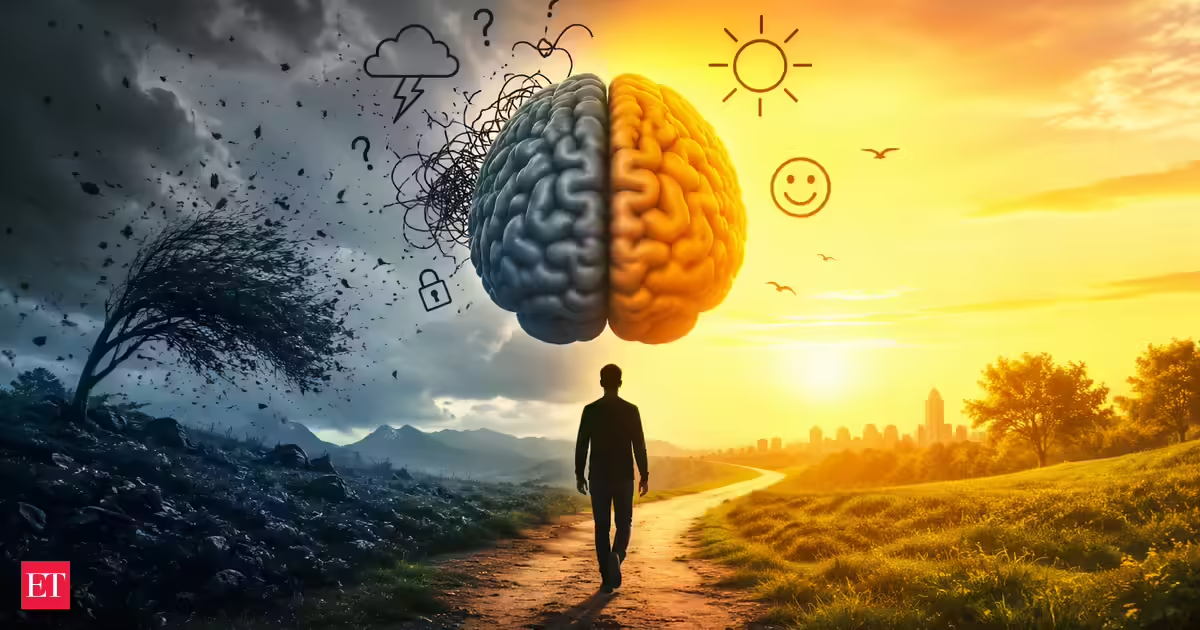
As humans, we aren’t great at trying new things, whether it’s a new food or a new hobby. “On a baseline, I think that we are hardwired to actually prefer routine, because it just makes things easier and more efficient,” said Tim Bono, a lecturer in psychological and brain sciences at Washington University in St. Louis.This is why we easily fall into the pattern of having the same dinners over and over and why we want to take the exact same route to work every day. Routines protect our mental energy and allow our brains to predict what’s coming next, but they can also “shortchange” us, Bono said, and cause us to feel stuck or in a funk. While there is nothing wrong with having a routine, breaking up the expected with some new, unexpected things — or novelty — is a great way to boost your joy and appreciation for life. Therapists say it’s the one thing that’s often missing in many people’s lives.Below, mental health professionals share why novelty is so important and how to add some to your life.Without novelty, your life may feel mundane, or you may feel stuck.“I think too much certainty makes things feel mundane, and it actually causes our brains to stop paying attention as much, from a neuroscience standpoint, which can make us feel numb,” said Rachel Wolff, a licensed psychotherapist and founder of Flow Wellness in Philadelphia.This numbness can come on faster than you’d expect, too. It’s really easy for humans to adapt to their circumstances, Bono said, no matter how excited they were at one point about a new situation.“In fact, there’s a term in positive psychology called ‘hedonic adaptation,’ and it’s the idea that even when things are going great, even when there’s a lot of good things in the world around us ... humans just very quickly and easily adapt to our environment, and stuff that may have used to seem like it was a source of joy ... suddenly, that just becomes normal. It just becomes the routine,” Bono said.“When we introduce novelty, we essentially disrupt that process of adaptation, and it directs our attention to something new and novel and unique, and that itself can be a great source of joy and happiness,” he said.Wolff agreed, adding that “too much familiarity can make experiences feel less meaningful and fulfilling, and there’s nothing wrong with that, but I think novelty and trying new things has a way of waking us up and giving us stimulation that we’re missing.”It’s common for people who stick to a very set routine to feel stuck, Wolff added, and while novelty isn’t the only thing to blame for that feeling, it is really hard to do the same thing every day and not feel stuck.Oscar Wong via Getty ImagesNovelty is an important way to boost your happiness in your day-to-day life.Novelty doesn’t have to be a big change – in fact, smaller changes to your daily routine can be more impactful.While routines are comfortable and necessary, as they offer predictability and stability (two things our brains crave), they can lead to mundanity in day-to-day life. “I think novelty can also be thought about in so many different ways ... it doesn’t necessarily mean taking a whole vacation and going somewhere completely new; it could just be walking in just a slightly different direction, or noticing something a little bit different,” Wolff said.While novelty certainly can be a four-day hiking trip or committing to a new crafting hobby, it can also be something smaller, like making a recipe you’ve always wanted to try or hosting your sisters for game night.“Often, we do focus on the one-time big things, and those can be a lot of fun ... but a lot of our day-to-day happiness is found just in the everyday, consistent, ongoing conditions of life and considering the small modifications that we can be making to that,” Bono said.Small changes are a good place to start. “That’s also something that’s more likely to be within our control, and the things that we are going to be able to incorporate in the long term,” he said.Novelty has benefits from a brain standpoint, too.According to Wolff, “novelty actually activates the brain’s dopamine system,” and dopamine is known as the “feel-good” hormone in the body. “Which is why it feels very rewarding to try something new,” she added.Novelty also activates the same system in the brain that turns on when we accomplish something meaningful or difficult, she said. So just by doing the new thing, you’ll feel good.Newer research also shows that dopamine is involved in the anticipation of a new or rewarding experience, according to Bono. “That’s kind of what novelty does — it’s not just about the experience itself, but it’s about the anticipation of something positive,” Bono added.Novelty “also builds on psychological flexibility. So, when we regularly step into things that are unfamiliar, we actually can build a stronger tolerance for emotions like uncertainty and discomfort, which can pay off when we’re coping with change or facing other types of emotional challenges in our life,” Wolff said.We could all stand to add more novelty to our lives. Here’s how to do it.Seeking out novelty is worthwhile for everyone, and it’s especially valuable if you “find yourself in a funk, or you find yourself not deriving as much happiness from life, or from your job, or from your friends as you historically have,” Bono said. “There’s a good chance that if something used to be a source of happiness for you, but it’s less so today, that part of the culprit could be that you just very quickly and easily adapted to whatever that experience was.”Maybe you need to ask for some new tasks at the job you once loved or need to ask your friends to try different restaurants with you as opposed to going to the same places over and over.“Adding novelty to your life is a very deeply personal choice, and I think it’s really important to honor what novelty actually makes sense for you,” Wolff said.For some, novelty may mean whitewater rafting or skydiving — “big bucket list adventures,” Wolff noted. “But if you’re less of a daredevil and something as simple as trying new food feels new, and even a little anxiety-inducing, that might be your level of novelty.”Again, there is nothing wrong with routine, which helps us get to work or school every day and allows us to easily make a meal for our family. But when we apply routine to everything and never seek out newness, it “shortchanges us,” Bono said. “What it’s really shortchanging is our ability to enjoy everything that life has to offer and really savor and call attention to the good things that are out there.”Novelty allows us to turn off autopilot and recognize the beauty and wonder around us, he added. And while you’re at it, you may pick up some new hobbies and interests along the way.
Experts Say This 1 Thing Is Essential For A Happier, More Fulfilling Life
If you're feeling stuck or always tempted to buy a little treat to brighten your day, this therapist-backed advice is for you.
1,166 words~5 min read